Uganda has secured a huge boost for its long-awaited Standard Gauge Railway (SGR) project after the Islamic Development Bank (IsDB) Executive Board approved financing worth €650.75 million (approximately Shs2.8 trillion), the largest amount ever approved by the bank for a single project in the country.
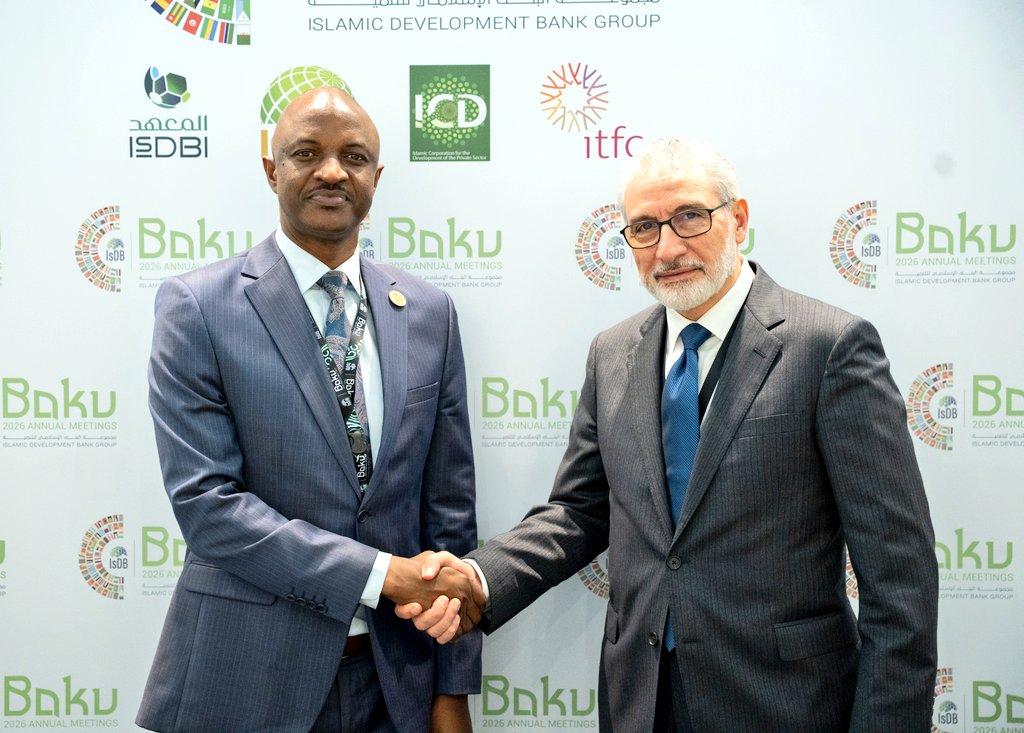
The approval was granted during the 51st Islamic Development Bank Group Board of Governors’ Annual Meetings held in Baku, Azerbaijan, from June 16 to 19, 2026, under the theme, “Regional Integration for Sustainable Prosperity.”

The funding marks a milestone in Uganda’s efforts to modernize its transport infrastructure and strengthen regional trade connectivity through the construction of the Standard Gauge Railway.
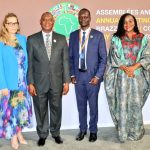
Permanent Secretary and Secretary to the Treasury (PSST), Ramathan Ggoobi, who served as Uganda’s Temporary Governor to the IsDB and led the country’s delegation to the annual meetings, welcomed the approval and reaffirmed government’s commitment to achieving financial closure for the railway project by November 2026.
“The Government of Uganda remains committed to securing financial closure for the Standard Gauge Railway project by November 2026,”Ggoobi said during engagements on the sidelines of the meetings.

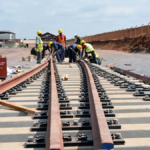
According to the Ministry of Finance, the financing package will support the construction of key infrastructure components along the SGR route, including the 553-metre Jinja Nile Bridge and the 2.12-kilometre Mbuya-Kampala Tunnel.
The project will also include the construction of six railway stations located in Tororo, Iganga, Jinja, Lugazi, Kampala East and Kampala City, as well as three major railway workshops in Kampala East, Jinja and Tororo.
Government officials say these investments are expected to improve cargo transportation, reduce logistics costs, ease pressure on road networks and enhance Uganda’s competitiveness as a regional trade hub.
The latest approval further strengthens the partnership between Uganda and the Islamic Development Bank, which has emerged as one of the country’s key development financing partners.
As of May 2026, Uganda and IsDB had eight signed public sector operations comprising loans and grants worth approximately $896.55 million (about Shs3.3 trillion).
A significant share of this financing is directed towards transport infrastructure projects valued at about $721 million.
Among the projects financed by the bank are the upgrading of the Muyembe-Nakapiripirit Road, the Rwenkunye-Apac-Lira-Acholibur Road, and the development of irrigation schemes in Unyama, Namalu and Sipi.
Other ongoing projects supported by IsDB include the upgrading of the Katine-Ochero Road and associated town roads in Kaberamaido and Kalaki, the construction of Masindi Port Bridge, and the upgrading of roads connecting Kyenjojo, Kihura, Bwizi, Rwamwanja, Kahunge and Mpara.
The bank is also financing the upgrading of the Kumi-Ngora-Serere-Kagwara Road as well as the establishment of regional oncology centres in Arua and Mbale.
During the Governors’ Round Table, Dr. Ggoobi commended the Islamic Development Bank for launching the IsDB Concessional Fund (ICF) in 2026, describing it as a timely intervention aimed at addressing growing development financing challenges facing member countries.
“The fund is crucial at a time when traditional foreign aid flows are declining both in volume and reliability, thereby widening the financing gap,” Dr. Ggoobi said.
He noted that the changing global financial landscape requires multilateral development finance institutions to become more inclusive, adaptive and responsive to the evolving needs of developing countries.
“Given the changes in the global financial architecture, there is a need for multilateral development finance institutions such as the Islamic Development Bank to reform and become more inclusive, adaptive and responsive to the needs of their member countries,” he added.
The approval of the record financing package is expected to accelerate Uganda’s railway modernization agenda and strengthen the country’s ambition of becoming a key transport and logistics gateway for East and Central Africa.