The Government has signed contracts worth Shs10.39 billion to rehabilitate nearly 140 kilometres of district and community access roads across nine districts in Northern Uganda with an aim to improve agricultural production, market access and rural economic development.
The contracts were signed under the Rural Development for Food Security in Northern Uganda (RUDSEC) Project, a five year initiative being implemented by the Ministry of Local Government with support from the Government of Germany through KfW Development Bank.

The works will cover 139.7 kilometres of roads in Lamwo, Agago, Pader, Dokolo, Lira, Oyam, Serere, Soroti and Kaberamaido districts, with construction expected to begin next week following the official handover of project sites to contractors.
The Ministry said the investment is intended to address challenges caused by poor rural road networks, which have for years limited farmers’ ability to transport produce, access markets and participate fully in the economy.
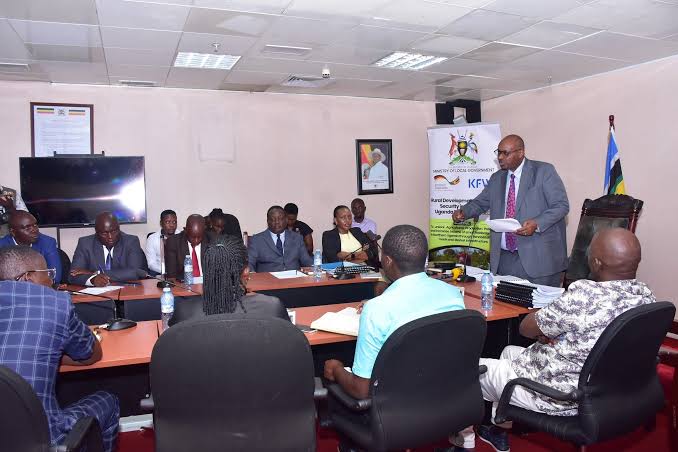
Speaking at the contract signing ceremony, Ministry of Local Government Permanent Secretary Ben Kumumanya said improved road connectivity remains a key foundation for Uganda’s transformation agenda, especially as the country seeks to expand agro-industrialisation.

“Agri-industrialisation is central to Uganda’s journey towards middle-income status. That transformation begins with motorability and accessibility through roads, which facilitate trade, service delivery and other development activities,” Kumumanya said.
The RUDSEC Project is designed to improve rural infrastructure, reduce transport costs, strengthen agricultural value chains and create better links between production areas and markets.
The programme is jointly funded by the Government of Uganda and Germany through KfW Development Bank with a total financing package of US$28 million.
Officials said the upgraded roads will help farmers move agricultural produce more efficiently, reduce post-harvest losses, improve access to schools and health facilities, and encourage investment in rural businesses.
The project is also aligned with Uganda’s National Development Plan IV, which identifies infrastructure development as a critical driver of agro-industrialisation, economic growth and improved livelihoods.
It further supports the objectives of the Parish Development Model, a government initiative aimed at transitioning households from subsistence farming into the money economy through increased production, value addition and access to markets.
The roads to be rehabilitated include Kalongo–Lomoi Road sections A and B in Agago District covering 29.9 kilometres, Corner Ogwec–Tenten Road in Lamwo measuring 21.6 kilometres, and Puranga–Ogonyo–Achola Stream Road in Pader covering 18 kilometres.
Other roads include Agweng–Barlonyo and Akano–Lwala in Lira, Alwimac–Awiri–Asalim in Dokolo, Ochero–Bugoi in Kaberamaido, Atirir–Orungo Border Road in Soroti, and Serere Upper Shops–Akoboi together with Kamod–Otimong–Akobi roads in Serere District.
The Ministry said the contracts were awarded to nine contractors through a competitive procurement process, while three consulting firms will supervise the works to ensure compliance with engineering standards and project requirements.
Lea Associates South Asia (LASA) in partnership with KOM Consult Ltd will supervise works in the Teso sub-region, UB Consulting Engineers Ltd will oversee projects in Acholi, while KOM Consult Ltd will supervise road works in the Lango sub-region.
Kumumanya said the project should be viewed beyond road construction because of its wider impact on communities.
“This project goes beyond constructing roads. It is an investment in decentralisation, improved service delivery, local economic development and better livelihoods for our rural communities,” he said.
He urged contractors to maintain high standards during implementation, warning against delays, poor workmanship and failure to follow environmental and social protection requirements.
“We expect the highest standards of professionalism. Contractors must work closely with district local governments, prioritise local employment, guarantee the safety of workers and surrounding communities, restore borrow pits after construction and fully comply with the project’s Environmental and Social Management Plan,” Kumumanya said.
The Ministry said the contractors will be required to follow national engineering standards, protect the environment and ensure that construction activities do not negatively affect surrounding communities.
The investment comes at a time when government continues to prioritise rural infrastructure as a tool for reducing poverty and strengthening local economies.
Northern Uganda, despite its vast agricultural potential, has continued to face challenges linked to poor transport networks, including high production costs, limited market access and seasonal road inaccessibility.
Government officials believe the RUDSEC Project will help unlock the region’s economic potential by connecting farmers to markets, improving public service delivery and creating opportunities for private sector growth.
The rehabilitation programme is part of broader government efforts under decentralisation, Vision 2040 and other development frameworks aimed at transforming Uganda’s rural communities through improved infrastructure and increased economic participation.