Stanbic Bank
Stanbic Bank
19.2 C
Kampala
Stanbic Bank
Stanbic Bank
Home Blog Page 100

FDC celebrates Nandala Mafabi homecoming, unveils Kampala Lord Mayor candidate

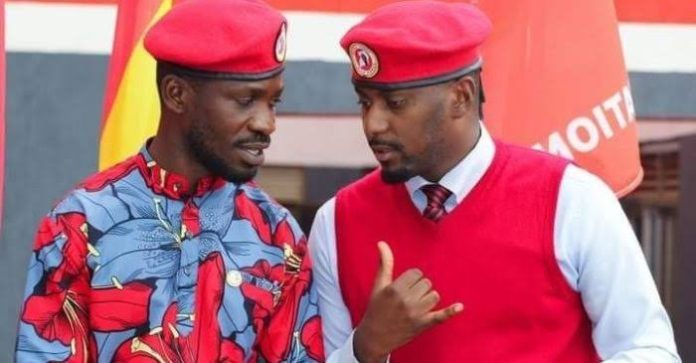
The Forum for Democratic Change (FDC) has hailed the homecoming of its Secretary General, Rt. Hon. Nathan Nandala Mafabi, as a resounding success. The event, held at Mbale Cricket Grounds on August 30, 2025 drew thousands of supporters who warmly received their son back home.

“We wish to thank the people of Mbale and all the towns along where the presidential caravan passed for the warm reception,” the party said in a statement.

The homecoming capped a caravan that began at the FDC Headquarters in Najjanankumbi, Kampala, on August 29, 2025. Party President Eng. Patrick Amuriat Oboi led the journey which encountered heavy tear gas in Iganga, Nakalama and Busembatya. Despite the police confrontations, the caravan pressed on, arriving triumphantly in Mbale.

The religious leaders including Rt. Rev. Patrick Gidudu, retired Anglican Bishop of Mbale Diocese and Sheikh Jowali Isiko of Jinja Muslim District offered blessings to Mafabi and his wife, Mama Flora Nandala.

The event also marked a major political shift, as over 160 NRM defectors publicly crossed over to the FDC. “The FDC Party extends its heartfelt appreciation to the people of Mbale and all the places the candidate visited, from Kampala to Mbale, for their overwhelming support,” the statement read.

During the journey, the FDC President also presided over the official opening of the party’s Buikwe District branch office in Lugazi Municipality and the Iganga District branch office in Iganga Municipality. The party also extended gratitude to journalists who braved difficult circumstances to cover the caravan.

As the 2026 elections approach, the FDC has launched an intensive mobilization and recruitment drive.

“Our extensive leadership structure across the country has been engaging with various leaders and individuals, encouraging them to join the FDC,” the party announced.

Recently, three former NRM parliamentary aspirants joined during the national council meeting, while more than 160 leaders from Bugisu and Budaka followed suit during the Mbale homecoming.

Talks are also ongoing with leaders and former candidates from the NUP, NRM and other parties, especially in Buganda, Busoga and western Uganda, as FDC positions itself to field strong candidates at all levels.

Meanwhile, Kampala Metropolitan aspiring candidates are meeting this week for induction into FDC values and nomination guidelines.

In a related development, Kasozi Ibrahim Biribawa has declared his bid for the position of Kampala Lord Mayor under the FDC ticket. Kasozi, a lawyer with a diploma in law, a Bachelor of Laws and a Master of Laws in Corporate and Commercial Law said his candidacy is rooted in integrity, accountability and results.

“I am deeply grateful for the trust the FDC party has vested in me to hold their flag. I am aware of the responsibilities that come with serving our city, and I am ready to work tirelessly to build a Kampala that is safe, clean, prosperous, and inclusive for every resident,” he stated.

He pledged to prioritize public safety, better infrastructure, improved waste management, job creation, good governance, and social services. “This campaign is about serving with humility, listening to communities, and delivering results that elevate our city for generations to come,” he added.

Over the coming weeks, Kasozi plans to engage with residents across Kampala’s five divisions, business communities, and civil society to present his manifesto in detail.

Stories Continues after ad

Kyabazinga of Busoga announces birth of twin princes

Kyabazinga of Busoga, His Majesty William Gabula Nadiope IV, and his wife Inhebantu Jovia Mutesiare welcome the twins.

The Kyabazinga of Busoga, His Majesty William Gabula Nadiope IV has announced the birth of his twin sons, describing their arrival as a “double blessing” for the royal family and the Kingdom of Busoga.

The Kyabazinga via X (formerly Twitter) expressed profound gratitude to God and the people of Busoga for their support and prayers.

“With profound joy and heartfelt gratitude, I am delighted to formally announce the birth of our twin sons: Prince William Ethan Nadiope and Prince Arnold Eli Nadiope, born on the 27th day of August 2025,” the Kyabazinga said.

He noted that both the newborns and their mother, Inhebantu Jovia Mutesiare in good health and high spirits, bringing great joy to the royal household.

“The arrival of the newborns marks a deeply cherished milestone in our family’s journey, and we are overwhelmed and humbled by the magnitude of this double blessing. Both newborns, along with their remarkable mother, are in high spirits and excellent health,” he added.

The Kyabazinga also extended his appreciation to well-wishers who have shared their goodwill messages with the royal family.

“The outpouring of love, goodwill and prayers from all our friends and well-wishers has been profoundly uplifting, and we remain sincerely appreciative of your continued support,” the statement read.

He further assured the people of Busoga and Uganda at large that the royal family looks forward to formally introducing the young princes to the public at the appropriate time.

“We give thanks to Almighty God for His blessings and abundant grace and for ushering us into this new chapter as a family of four. We look forward to the opportunity to introduce our sons to you in due course. May God’s blessings be upon you all. Busoga Okwisania N’amanhi.”

The joyful news has been met with an outpouring of congratulations from across the country. Speaker of Parliament Anita Among joined in celebrating the royal birth, sending her warm wishes to the Kyabazinga, the Inhebantu, and the people of Busoga.

“Sincere congratulations to you, Isebantu, the beautiful Inhebantu, the royal family, and the people of Busoga on this wonderful news! May the royals bring even more happiness to you and the people of Busoga! Congratulations,” Speaker Among said.

Stories Continues after ad

EC sets nomination dates for 2026 Local Government elections

A voter casting his vote.

The Electoral Commission (EC) has announced that the nomination of candidates for the 2026 Local Government Councils Elections will take place from September 3 to September 24, 2025.

According to EC Chairperson Justice Byabakama Mugenyi Simon, the exercise will run on weekdays from 9:00 a.m. to 5:00 p.m. at gazetted nomination centres across the country.

“The Electoral Commission has appointed 3rd September to 24th September 2025 as the period for the nomination of candidates for Local Government Councils Elections 2026,” Justice Byabakama said in a statement issued on Friday, August 29, 2025.

The process will be conducted in phases according to levels of Local Government Councils. District and City Chairpersons, the Lord Mayor, Councillors, and Special Interest Groups (SIGs) will be nominated between September 3 and September 5, 2025.

Nominations for Municipality and City Division Chairpersons, as well as Councillors and SIGs, will follow from September 8 to September 10, 2025. Candidates for Municipal Division, Sub-County, and Town Councils will then be nominated from September 11 to September 24, 2025.

“All persons aspiring to contest in the Local Government Councils Elections are urged to familiarize themselves with the requirements for nomination for each elective position, as outlined in the guidelines issued by the Electoral Commission,” Byabakama emphasized.

The Commission further advised aspirants to collect nomination forms and guidelines from district offices or download them directly from its official website.

“Aspirants can collect copies of the nomination forms and guidelines from the District Electoral Commission offices across the country, or obtain soft copies from the Commission website,” Byabakama added.

The EC stressed that the exercise is part of its commitment to ensuring a regular, free, and fair electoral process ahead of the 2026 General Elections.

Stories Continues after ad

Uganda, Kenya seal free trade deal to eliminate barriers and boost cross-border commerce

Uganda's State Minister for Trade, Gen. Wilson Mbadi, and his Kenyan counterpart for Cabinet Secretary for Investments, Trade and Industry, Lee Kinyanjui.

The governments of Uganda and Kenya have signed a landmark free trade agreement aimed at eliminating trade barriers, decongesting border posts, and boosting economic cooperation between the two East African neighbours.

The deal, signed last Friday in Mbale City, follows a directive by President Yoweri Kaguta Museveni and his Kenyan counterpart, Dr. William Samoei Ruto, who in July instructed their respective trade ministers to urgently resolve all obstacles hindering bilateral trade.

Kenyan Cabinet Secretary for Investments, Trade and Industry, Lee Kinyanjui, said the agreement ensures that all products between the two countries will now be treated as domestic transfers rather than imports.

“We have adopted that Kenya will treat products from Uganda as though they are from Kenya. So it will just be a transfer from Uganda to Kenya, or Kenya to Uganda, which means it will not attract any duties,” Kinyanjui said.

The Joint Communiqué issued after the ministerial meeting in Mbale on August 30, 2025, underlined that the two countries had agreed to eliminate all tariff and non-tariff barriers, including discriminatory excise duties, levies, and other charges, in line with East African Community (EAC) protocols.

Uganda’s State Minister for Trade, Gen. Wilson Mbasu Mbadi, welcomed the deal, noting that it would break down long-standing obstacles to the free movement of goods and services.

“We are now able to remove or break these non-tariff barriers that were coming through the levy of certain duties that go against the East African Community Treaty and Protocols,” Mbadi said.

The ministers also conducted joint inspections at key border points, including Suam, Busia, Malaba, and Lwakhakha, where they identified operational, infrastructural, and logistical challenges behind persistent congestion.

To address this, they directed border agencies to immediately clear backlogs: at Malaba, congestion must be reduced within 24 hours and maintained at no more than four kilometres, while at Busia, queues should not exceed 500 metres. They also ordered 24/7 operations at all border posts and the removal of unnecessary checkpoints.

On infrastructure, both governments pledged to mobilize resources for critical upgrades, including road works and bridge construction, while fast-tracking the completion of the Suam One-Stop Border Post (OSBP) and improving facilities at Lwakhakha. Uganda also committed to resolving delays linked to weighbridge operations along major corridors.

Kinyanjui acknowledged that past disputes—including Kenya’s bans on Ugandan eggs in 2021 and powdered milk earlier this year—had strained relations but said the new agreement, backed by clear timelines and monitoring mechanisms, marked a turning point.

“We want to ensure that nobody wastes more than two hours at the border… so that our people can trade,” he said, adding that delays had reduced the efficiency of cargo trucks traveling between Mombasa and Kampala.

The communiqué further directed the operationalization of Joint Border Committees (JBCs) and the establishment of a standing joint technical committee to monitor and resolve emerging trade concerns, while also keeping the private sector fully engaged in the process.

Truck drivers, however, raised concerns during the Mbale meeting, alleging that Uganda Revenue Authority officers were demanding bribes of 2,000 shillings (about 50 cents) per truck to expedite clearance.

“They cannot allow you to proceed until you have paid the money,” one driver said.

In response, Kinyanjui announced the formation of a joint team to investigate and address such grievances.

The ministers concluded by expressing appreciation to Presidents Museveni and Ruto for their leadership and reaffirmed that all products originating from either country will henceforth be treated as transfers in line with EAC protocols.

Stories Continues after ad

Businessman Hassan Basajjabalaba endorsed unopposed as NRM’s Entrepreneurs League Chairman

President Museveni talks to city businessman, Hassan Basajjabalaba, as Deputy Speaker of Parliament, Thomas Tayebwa looks on. Mr Basajjabalaba was declared unopposed for the position of chairman of the Entrepreneurs League of the NRM party.

President Yoweri Kaguta Museveni has welcomed the consensus reached among candidates for the position of Chairperson of the National Resistance Movement (NRM) Entrepreneurs League, which has resulted in the unopposed endorsement of Al Hajj Hassan Basajjabalaba for the period 2025–2031.

“I have met with the candidates for the position of NRM Chairperson of the Entrepreneurs League. They have agreed to unconditionally endorse Al Hajj Hassan Basajjabalaba, who is now unopposed,”Museveni announced.

The President commended Deputy Speaker of Parliament, Thomas Tayebwa for facilitating dialogue and uniting the various contenders during a meeting held on August 30, 2025, at State Lodge Nakasero.

“First, I would like to thank Thomas Tayebwa for bringing these factions together and thank all the aspirants for their foresight. As I often say, it is not just about who is in the position, but what can be achieved,” Museveni said. 

He added,“I congratulate Al Hajji Basajjabalaba and commend the other candidates for their selfless act.”

According to a communiqué signed by the aspirants, Sanjay Tanna, Mr. Kakuru Phillip, King Ceasor Mulenga, and witnessed by Deputy Speaker Tayebwa the decision was reached in the spirit of party unity and cohesion, as emphasized by the NRM Chairman.

“Following a dialogue initiated by H.E. Yoweri K. Museveni, Chairman of the NRM, and facilitated by Thomas Tayebwa, we the undersigned candidates for the position of Chairperson of the NRM Entrepreneurs League… have unconditionally endorsed Al Hajj Hassan Basajjabalaba as the unopposed Chairperson of the NRM Entrepreneurs League for the period 2025–2031,” the communiqué read in part.

Stories Continues after ad

Rotary Club, Health Ministry partner to fight against Polio, Malaria and Cancer

Rotary District 9213 Governor Geoffrey Kitakule addressing other participants.

The Rotary District 9213 has reaffirmed its partnership with the Ministry of Health in championing public health causes, with renewed commitments towards ending polio, combating malaria and scaling up cancer interventions.

Speaking on the partnership, Rotary District 9213 Governor Geoffrey Kitakule said the collaboration has already shown remarkable results and will only grow stronger.

“Our Rotary District 9213 and the Ministry of Health have cemented their unity, and the impact is going to be multiplied,” Kitakule said.

The announcement follows an invitation by the Past President of the Rotary Club of Sonde, who also doubles as the Director General of Health Services, Dr. Charles Olara. The two institutions agreed to jointly commemorate World Polio Day on October 24, a reminder that vigilance must remain against a disease that still poses a threat worldwide.

“We agreed to commemorate World Polio Day, keeping vigilance against a disease where even one case is a threat,” Kitakule noted.

Rotary has been at the forefront of the global End Polio Now campaign, investing over US $850 million and supporting the immunization of billions of children across the globe.

In Uganda, Rotary has also expanded its footprint to tackle other pressing health challenges, including malaria, cancer, and access to specialized medical care. Uganda continues to grapple with over 12 million malaria cases annually, and Rotary District 9213, together with Rotaract, has been complementing government efforts through community health days and public health education, in partnership with the Ministry of Health and Malaria Partners Uganda.

Cancer also remains a major public health challenge, claiming 33,000 lives annually. Through the annual Rotary Cancer Run, the fraternity has raised nearly Shs5 billion, which has been used to build facilities such as the cancer ward at St. Francis Hospital Nsambya and radiotherapy bunkers.

“Through our joint health camps, surgical missions, and the Little Hearts Project, we reaffirm that no Ugandan should be left behind in the fight for health, hope, and dignity,” Kitakule emphasized.

The Ministry of Health welcomed Rotary’s continued partnership, noting that collaborations between government and civic organizations remain crucial in addressing Uganda’s disease burden.

This year’s joint commemorations on World Polio Day are expected to further mobilize communities, raise awareness, and strengthen the campaign to ensure Uganda remains polio-free.

Stories Continues after ad

Museveni appoints Justice Jane Frances Abodo as new Principal Judge


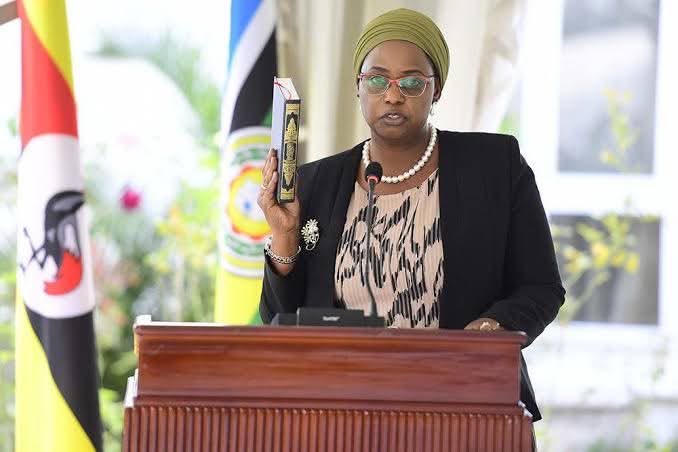
President Yoweri Kaguta Museveni has appointed Hon. Lady Justice Jane Frances Abodo as Uganda’s new Principal Judge, pending parliamentary approval.

In a letter addressed to the Speaker of Parliament and dated this week, Museveni invoked his constitutional powers under Article 142(1) of the 1995 Constitution, acting on the advice of the Judicial Service Commission.

“In exercise of the powers vested in the President by Article 142(1) of the 1995 Constitution, I have, acting on the advice of the Judicial Service Commission, appointed Hon. Lady Justice Abodo Jane Frances as Principal Judge,” Museveni wrote.

“I hereby forward her name and CV to Parliament for approval,” he added.

The authenticity of the letter was confirmed by Farouk Kirunda, the Deputy Presidential Press Secretary.

“I hereby confirm that the letter circulating on social media regarding the appointment of Hon. Lady Justice Jane Frances Abodo as the new Principal Judge is authentic. Her name has been forwarded to Parliament for the necessary approval. I congratulate her,” Kirunda stated.

Justice Jane Frances Abodo is a seasoned judicial officer with an outstanding career in Uganda’s justice system. She has served as the Director of Public Prosecutions (DPP) since April 2020, making history as the first woman to hold the position. Before her appointment as DPP, she was a judge of the High Court and previously headed the Anti-Corruption Division of the Directorate of Public Prosecutions.

Renowned for her integrity and commitment to fighting corruption, Justice Abodo has handled several high-profile cases and has been vocal about strengthening Uganda’s justice system to ensure fairness and accountability.

Her appointment as Principal Judge places her at the helm of supervising High Court judges and magistrates across the country, a role critical to judicial efficiency and timely delivery of justice.

If approved by Parliament, Justice Abodo will succeed Justice Dr. Flavian Zeija, who has served in the role since 2019.

Stories Continues after ad

Bee-Ware Thieves: Masunga Doctors Supernatural Swarm Strikes Fear into Criminals, Retrieves Stolen Goods with a Buzz!

In a world where theft and criminal activities persist, individuals often find themselves helpless, yearning for justice and longing to recover their stolen possessions. Today, we bring you an extraordinary solution that has gained attention for its unconventional yet effective approach Doctor Masunga’s spiritual spells, utilizing the power of nature itself.

Doctor Masunga, a renowned and respected spiritual healer, has tapped into ancient wisdom to create spells that harness the forces of nature to recover stolen items. One such remarkable spell involves summoning a swarm of bees to seek out and attack the thieves responsible for the crime.

With his extensive knowledge of traditional healing practices and the utilization of herbs, Doctor Masunga infuses his prayers with an undeniable connection to the natural world. By performing rituals and invoking spiritual forces, he uncovers hidden truths and empowers individuals to regain what was unjustly taken from them.

The efficacy of Doctor Masunga’s spells has garnered attention and praise from individuals who have found renewed hope in reclaiming their stolen belongings. These remarkable testimonies, combined with the captivating power of nature, have propelled Doctor Masunga into the spotlight of spiritual healing.

One recent incident involved a distraught homeowner named Mark, who had fallen victim to a home burglary. Frustrated with the lack of progress in the investigation, Mark turned to Doctor Masunga as a last resort. With unwavering faith, he enlisted the help of the spiritual healer and witnessed the astonishing outcome.

Following a well-orchestrated ritual, Doctor Masunga set into motion a series of events that would lead to the ultimate recovery of Mark’s stolen belongings. The summoning of a swarm of bees, guided by the spiritual force of Doctor Masunga’s prayers, located the thieves and unleashed their wrath upon them, leading to their capture and Mark’s triumphant retrieval of his stolen possessions.

While some may question the unconventional nature of these methods, the results speak for themselves. Doctor Masunga’s ability to tap into the forces of nature and channel them towards justice has instilled newfound hope for victims of theft and spurred a newfound trust in spiritual healing practices.

In a world riddled with uncertainties, Doctor Masunga’s spiritual spells offer a glimmer of hope for those seeking justice and the swift recovery of stolen items. As the awe-inspiring stories continue to circulate, more and more individuals are turning to Doctor Masunga to restore balance and reclaim what is rightfully theirs.


Contact Us Through:

AFRICA OFFICES
📍 Locations: Uganda, Kenya, Tanzania
💰 Consultation Fee: UGX 42,000
📞 Phone: +256 769 678 458
📧 Email: info@masungadoctors.com
🌐 Website: www.masungadoctors.com

Stories Continues after ad

From 420,000 to 1.3 million visitors: Uganda’s tourism sector to celebrate AUTO’s 30-year milestone

Association of Uganda Tour Operators.

The Association of Uganda Tour Operators (AUTO) will mark 30 years of tourism excellence with a prestigious black-tie gala, the Roots & Routes Tourism Dinner set for Thursday, October 17, 2025 at Mestil Hotel in Kampala.

Under the theme “Roots & Routes: Celebrating Uganda’s Past, Present & Tourism Future”, the event will bring together key players from the public and private sectors, including the Ministry of Tourism, the Uganda Tourism Board (UTB), the Uganda Wildlife Authority (UWA), and industry leaders, for a night of recognition, collaboration, and networking.

Tourism continues to play a vital role in Uganda’s economy, contributing significantly to GDP, creating jobs and sustaining livelihoods across communities. It remains one of the country’s most dynamic sectors, offering vast potential for growth and investment.

Speaking ahead of the celebrations, David Kiwanuka, Manager Branding at Centenary Bank emphasized the role of tourism in community development and the bank’s commitment to sustainability.

“Centenary Bank is traditionally known for banking services, but we also believe in corporate social investment. Every year, we dedicate 2% of our profits to communities, and tourism is a key part of that commitment,” he said.

He added that tourism, much like banking, is about people, the planet, and profits and therefore communities must remain central.

He noted, “When we support marathons, Martyrs’ Day or even the Cancer Run, these are tourism activities too because they bring people together and attract visitors. By healing communities, we create a stronger society. AUTO is the vehicle driving tourism across the country, and as a bank with the largest network nationwide, we pledge to continue walking this journey together.”

Reflecting on AUTO’s three-decade journey, Bonifence Byamukama founding Lake Kitandara Tours & Travel recalled the association’s humble beginnings. He noted that when it was founded over 30 years ago, there was a pressing need for an organized body to safeguard professionalism and discipline in the industry.

“Uganda could not build a credible tourism sector without an association. Tourists entrusted us with thousands of dollars, often for safaris booked years in advance. It was critical to guarantee that their investment was safe and that tour operators were trustworthy. From our early offices at Nkrumah Road to where we are now, AUTO has grown into a respected institution,” he said.

Byamukama applauded the successive leaders who have carried the mantle, maintaining standards and integrity in the sector. “AUTO has endured because of discipline and discretion, and that is why we are here today, stronger than ever.”

Uganda Tourism Board Chief Executive Officer Juliana Kagwa praised AUTO for its contribution to the industry and described it as the backbone of Uganda’s tourism.

“We celebrate AUTO at 30 because without tour operators, our visitors would not have a reliable way to reach our parks, rivers, forests, mountains, and wildlife. AUTO is the vehicle through which Uganda’s beauty is experienced,” she said.

Kagwa likened AUTO’s role to the agricultural cooperatives that once powered Uganda’s cash crop economy.

She said, “Just like coffee and cotton were built through cooperatives, AUTO brings together communities, value chain players, and the private sector to drive tourism. At UTB, we recognize this and remain committed to working with tour operators. AUTO is the future of tourism in Uganda, and we do not take your contribution for granted.”

Acting Commissioner for Tourism Development in the Ministry of Tourism, Lyazi Vivian reflected on the industry’s growth over the past three decades and praised AUTO for its pivotal role.

“When you talk about 30 years of existence and reflect back on what was happening then, you really appreciate the journey we’ve traveled. Uganda was bringing in about 420,000 visitors. Last year, we declared 1.3 million arrivals, and this year promises to be even better,” he said.

Lyazi applauded tour operators for their tireless efforts in promoting Uganda on the global stage noting, “We want to thank you very much because you are the foot soldiers. You are the people who go out there, seek the client, and convince them that Uganda is a beautiful place worth visiting. Out of 197 countries all competing for the same tourist, you have ensured that Uganda gets its fair share, and that is no small achievement.”

He stressed that government recognizes the importance of tourism as a driver of economic transformation.

“Tourism is now at the forefront. Everybody is talking about it, and it is truly Uganda’s low-hanging fruit. It is what is going to transform this country,” Lyazi noted, urging AUTO members to rise to the challenge of turning this vision into reality.

Looking to the future, he said the ministry is working closely with partners to strengthen the sector, including financial institutions such as the Central Bank and other non-traditional players in tourism. He also underscored the role of technology in keeping Uganda competitive.

“We are digitizing because the way we consume, attract visitors, and transact is changing. Thank you for embracing these new technologies as we position ourselves in the global market,” he said.

Lyazi rallied stakeholders to join the forthcoming celebrations urging, “On the 17th, we shall all be there in big numbers to celebrate AUTO’s milestones. It has not been an easy journey, but together we shall continue shaping tourism as one of Uganda’s greatest success stories,” he pledged.

The Roots & Routes Dinner will not only celebrate AUTO’s legacy but also honor outstanding contributions, strengthen partnerships and highlight the potential of tourism as a driver of economic transformation. As AUTO turns 30, stakeholders agree that its role will be even more crucial in shaping a sustainable, inclusive and globally competitive tourism industry for Uganda.

Stories Continues after ad

Greater Kampala road projects test World Bank’s social safety standards

Mr Deus Mukalazi.

By Mukalazi Deus

Board Chair, UBUNTALISM GLOBAL

The World Bank’s commitment to protecting vulnerable people affected by development projects is being put to the test in Uganda, where the implementation of the Greater Kampala Metropolitan Area Urban Development Programme (GKMA-UDP) is raising serious concerns. In particular, the practice of soliciting “voluntary land donations” from affected persons—often under pressure—and the lack of compensation for business disruption expose troubling gaps in the application of the World Bank’s own Environmental and Social Framework (ESF), especially its standard on Land Acquisition, Restrictions on Land Use and Involuntary Resettlement.

While urban infrastructure development is a necessity for economic transformation, the process by which these developments occur should not come at the expense of the rights and livelihoods of the very people the projects are meant to benefit. Reports from communities affected by the GKMA-UDP indicate that residents and small business owners were “encouraged” to donate portions of their land for road expansion projects. The encouragement, however, was not always as voluntary as it sounds. In several cases, those who questioned the process or declined to “donate” were allegedly told that the project would bypass their area or that they risked losing future benefits. In other words, consent was conditional and coercive—a clear violation of the ethical and legal standards that should guide any development effort funded by a multilateral lender like the World Bank.

The World Bank clearly says that if people are forced to move or lose their land or way of earning a living, the harm should be kept as small as possible and they must be paid and helped to recover. Even in cases where land is donated, the standard requires that such donations be fully informed, completely voluntary, and well-documented. More importantly, the standards emphasize that economic displacement—such as loss of income from business closures or interruptions—must be adequately compensated. Unfortunately, in Kampala, businesses have been shut down or severely affected by ongoing road construction, without any form of support or compensation. Small traders, kiosk operators, and even formal businesses have been displaced with no clear path to recovery.

The issue here is not just about legal compliance—it’s about fairness, dignity, and the credibility of the World Bank’s social safeguards. The World Bank has long positioned itself as a champion of development that does no harm. Its Social and Environmental Safe guards is designed to ensure that projects it finances uphold international standards of social justice, particularly in fragile or lower-income countries. But when people are pushed to give up land without adequate alternatives, and when business livelihoods are disrupted without compensation, these safeguards are reduced to a paper promise.

The challenge is compounded by weak national enforcement mechanisms. Uganda lacks a clear and enforceable legal framework requiring compensation for economic displacement in urban development. In such a vacuum, it is incumbent upon international funders to ensure that their projects do not contribute to impoverishment or social conflict. Otherwise, the very projects meant to reduce inequality end up exacerbating it.

What is particularly concerning is that this is happening in Kampala—a city striving to modernize and become a beacon of urban growth in Africa. Urban transformation should not be pursued through shortcuts that ignore human impacts. Instead, it should be grounded in inclusive planning, meaningful consultation, and rights-based implementation. Any approach that relies on coercing citizens into land surrender or ignoring the economic shocks of displacement risks breeding long-term resentment and undermining public trust in both local authorities and international development partners.

It is also a wake-up call for the World Bank to strengthen its oversight mechanisms. It is not enough to have policies on paper. Effective monitoring, community grievance mechanisms, and independent third-party evaluations must be built into every stage of project implementation. Civil society actors, media, and local advocacy groups should be empowered to monitor compliance and report violations.

The Greater  Kampala roads project should prompt the World Bank to reassess how “voluntary” donations are being used as a loophole to avoid compensation. In high-pressure environments where communities are desperate for services, or where political messaging creates fear of exclusion, the term “voluntary” becomes deeply problematic. The Bank must develop stricter definitions and clearer safeguards around land donations to prevent abuse.

For Uganda, this is an opportunity to build a more just and equitable approach to urban development. National institutions should take this moment to review existing laws and introduce robust provisions that require compensation for both physical and economic displacement, even when land is not formally titled. Informal economies are the backbone of urban livelihoods, and they deserve protection.

In conclusion, the ongoing road projects in Kampala are more than just an infrastructure story—they are a litmus test for how seriously the World Bank and national actors take the issue of social protection in development. Ignoring the pain and loss of affected persons not only contravenes global standards but also erodes the legitimacy of development itself. If the World Bank is to maintain its credibility as a pro-poor development partner, it must urgently intervene, investigate the implementation gaps in the GKMA-UDP, and ensure that all affected persons are treated with the fairness and respect they deserve.

No one should be made to choose between a better road and their livelihood. Development must not demand such trade-offs.

Stories Continues after ad