Stanbic Bank
Stanbic Bank
16.2 C
Kampala
Stanbic Bank
Stanbic Bank
Home Blog Page 101

Uganda hosts the 15th IFATSEA Africa Regional meeting at Speke Resort Munyonyo

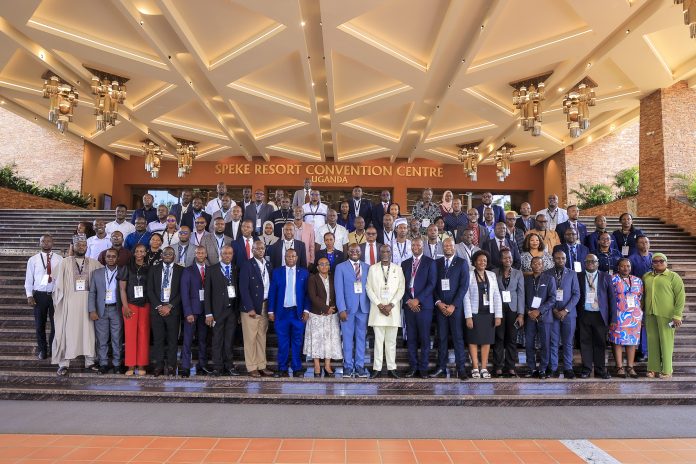
The Uganda Civil Aviation Authority (UCAA), through the Uganda Air Transport Safety Engineering Association (UGATSEA), is hosting the 15th International Federation of Air Traffic Safety Electronics Associations (IFATSEA) Africa Regional Meeting, running from June 17–19, 2025, at the Speke Resort Convention Centre, Munyonyo.

Held under the theme, “Digital Transformation in Communucation, Navigation and Surveillance (CNS)/ Air Traffic Management (ATM): Strengthening Air Traffic Safety Electronics Personnel (ATSEP) Competencies for a Safer and Sustainable Future,” the conference brings together safety engineering professionals from across the continent to advance collaboration, innovation, and competency development in aviation.

Engineers are the unsung heroes of air navigation safety. Their contributions ranging from the maintenance of CNS systems to leading digital transformation efforts are critical to maintaining safe and efficient skies.

Speaking on behalf of the UCAA Director General at the opening of the meeting, the Director Airports and Aviation Security, Eng. Ayub Sooma, said the Authority takes pride in the innovations of its in-house engineering teams, who have developed indigenous solutions such as the Aeronautical Billing System, the Computerized Maintenance Management System (CMMS), and the Balanced Scorecard Strategy Tool, among others which are a testament to Uganda’s growing capability in delivering sustainable aviation technologies.

He added that in line with global best practices, Uganda has also adopted advanced Air Navigation technologies, including use of satellite-based systems under Performance-Based Navigation (PBN), Direct Routing, which reduces emissions and flight time and Continuous Climb and Descent Operations, which enhance fuel efficiency, passenger comfort, and environmental sustainability.

Speaking on behalf of the Minister of Works and Transport, the Chairman of the Uganda CAA Board of Directors, Hon. Justice Steven Kavuma underscored the importance of regional collaboration and knowledge-sharing to position Africa not just as a participant but as a leader in global aviation innovation.

The event is attended by over 100 participants from the African continent.

Stories Continues after ad

Gov’t offers interest-free loans to women and vulnerable groups

The government has increased direct funding to vulnerable groups, including interest-free loans for women entrepreneurs, as part of efforts to promote inclusive economic development.

Ramathan Ggoobi, permanent secretary and secretary to the treasury at the Ministry of Finance, said the government is determined to eliminate intermediaries and ensure public resources reach those most in need.

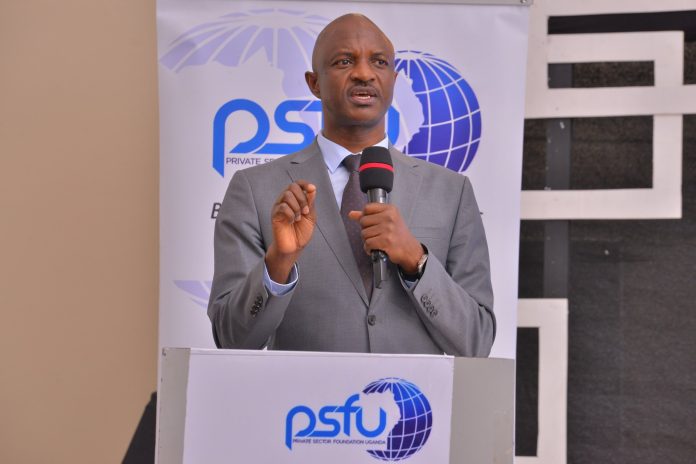
Speaking at the Private Sector National Post-Budget Dialogue, Ggoobi said the government will disburse funds directly to beneficiaries using digital systems.

The government’s Generating Growth Opportunities and Productivity for Women Enterprises (GROW) project will soon roll out interest-free loans targeting women in refugee-hosting districts, Ggoobi said.

The Ministry of Finance has supported over 2,540 women through GROW, with plans to scale up the program further in the next fiscal year.

A digital monitoring system, dubbed “EYED,” will track funds to individual enterprises and households, reducing misuse and ensuring productive use of development finance.

Ggoobi cited a reduction in income inequality, with Uganda’s Gini coefficient dropping from 0.41 to 0.38 over four years.

The government has earmarked 11.4 trillion shillings for health, education, social protection, and access to safe water, Ggoobi said.

Private sector leaders called for more targeted investment, systemic reforms, and increased access to affordable credit to unlock real impact.

Experts expressed cautious optimism about the government’s direction but urged more deliberate focus on implementation and local content.

Stories Continues after ad

Court martial back as Museveni signs UPDF amendment bill, 2025 into law

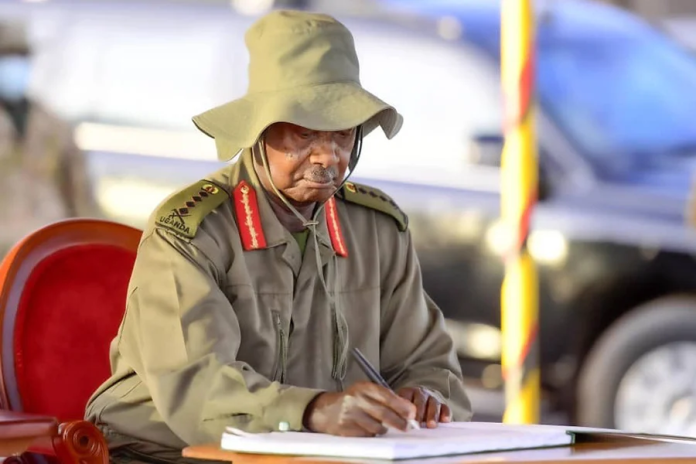
President Museveni signs a visitation book in one of the barracks.

President Yoweri Museveni has signed the Uganda People’s Defence Forces (UPDF) Amendment Bill, 2025 into law, officially reinstating military trials for civilians just months after the Supreme Court ruled the practice unconstitutional.

Confirmation of the assent was made in a letter seen by Eagle Online dated June 13, 2025, from the Office of the Clerk to Parliament, Adolf Mwesige Kasaija. The letter, addressed to the Chief Justice, Minister of Defence and Veteran Affairs, and the First Parliamentary Counsel, states, “Please receive a copy of The Uganda Peoples’ Defence Forces (Amendment) Act, 2025, duly assented to by H. E. the President for your necessary action and retention.”

The new law allows civilians to be tried in military courts under specific circumstances, including offences such as unlawful possession of military weapons, espionage and acts that threaten UPDF operations or national security.

This legal development rolls back a landmark Supreme Court ruling issued in January 2025, which had declared that military courts lack jurisdiction over civilians. The court had ruled that such trials violate the constitutional right to a fair hearing and ordered all civilian cases to be transferred to civilian courts, a decision celebrated by legal activists and human rights groups.

Despite the backlash, the government insists that the new provisions are essential for maintaining national security and that safeguards have been embedded in the legislation to ensure the rights of civilians are respected during military court proceedings.

However, the law’s passage raised criticism among opposition leaders and civil society organizations. On May 20, 2025, Leader of Opposition Joel Ssenyonyi led a walkout from Parliament in protest of what he termed a “sham process.”

“When you bring a bill like this, you must give time for public input. This is a shame,” Ssenyonyi said at a press briefing following the walkout. “Letters were sent to stakeholders this very morning asking them to attend. That is not proper consultation.”

He accused the Speaker of locking out key stakeholders, including the Uganda Law Society, political parties, and civil society from a process that should have been consultative and transparent.

“The Speaker had promised to avail time for proper consultation, but over the weekend, the joint committee was already processing the bill. This means stakeholders were locked out and their views ignored,” he charged.

Ssenyonyi also cited procedural violations, arguing that concerns raised during the Bills Committee stage would come too late in the legislative process. “Once you go to the committee stage, you cannot go back to gather stakeholder views. That is why we are calling this a sham process,” he said.

The opposition vowed to challenge the new law in court, arguing that it undermines constitutional protections and disregards a binding Supreme Court judgment.

Stories Continues after ad

Ex- Police Commander Nixon Agasirwe charged over Joan Kagezi murder, remanded to Luzira

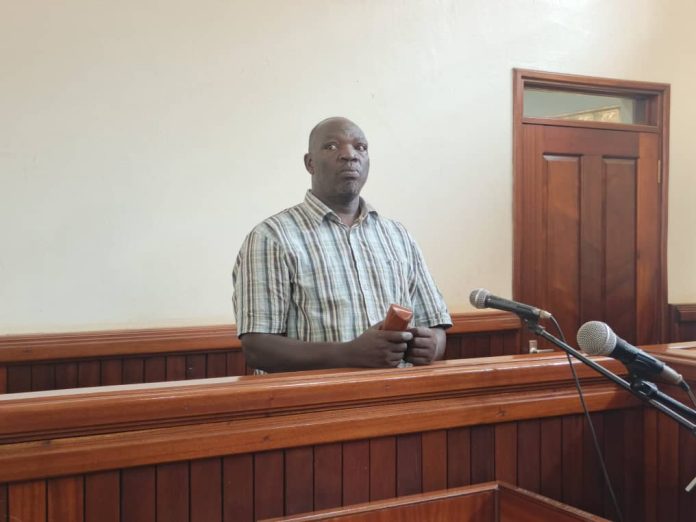
SSSP Nixon Agasirwe in the dock at Nakawa Court before he was charged with murder of Joan Kagezi.

The former commandant of the Uganda Police Special Operations Unit, Senior Superintendent of Police (SSP) Nixon Agasirwe, has been charged with the murder of Senior Principal State Attorney Joan Kagezi and was remanded to Luzira Upper Prison until July 8, 2025.

Agasirwe appeared before the Nakawa Chief Magistrates’ Court Esther Nyadoi on Monday, 16 under heavy security, days after his dramatic arrest on Thursday, June 12, 2025, following fresh leads in t he long-running investigation into Kagezi’s assassination.

The former police officer, once one of the most powerful figures in the security establishment, stood solemnly in the dock as charges were read to him.

Agasirwe was not allowed to enter a plea, as murder cases fall under the jurisdiction of the High Court. Court proceedings were also adjourned to the same date after Agasirwe’s lawyer failed to appear.

Joan Kagezi, then head of the International Crimes Division in the Office of the Director of Public Prosecutions (ODPP), was gunned down on the evening of March 30, 2015, in Kiwatule, a Kampala suburb, as she drove home with her children. Her murder sent shockwaves across the country and attracted international condemnation. Kagezi was at the time leading high-profile prosecutions involving terrorism, including the 2010 Kampala bombing suspects linked to al-Shabaab.

Her assassination was widely viewed as an attempt to intimidate Uganda’s criminal justice system and obstruct the pursuit of justice in complex security-related cases.

Agasirwe’s name has occasionally surfaced in controversial security operations over the years, including allegations of involvement in illegal detentions and extra-judicial acts, though he consistently denied any wrongdoing. His arrest comes amid renewed efforts by security agencies and prosecutors to resolve unresolved high-profile murders.

Agasirwe’s trial could potentially unearth powerful revelations regarding the circumstances surrounding Kagezi’s death and the individuals who may have orchestrated it.

The Director of Public Prosecutions (DPP), Jane Frances Abodo, recently reaffirmed her office’s commitment to securing justice for Kagezi and her family. “Joan was not just a prosecutor—she was a pillar of justice, and we will not rest until justice is done,” Abodo said at a recent memorial held in her memory.

Stories Continues after ad

Uganda among 36 countries added to the US travel ban watchlist

US president Donald Trump-greets Uganda's President Yoweri Museveni before a luncheon.

Uganda has been listed among the 36 countries the United States has lined up for sanctions

The reasons cited include questionable security and lack of a cooperative government.

Other African countries in the list include Angola, Ethiopia, Egypt, Gabon, Gambia, Djibouti, Mauritania and the Democratic Republic of Congo.

The entry of people from seven other countries like Burundi, Cuba, Laos, Sierra Leone, Togo, Turkmenistan and Venezuela – has also been partially restricted.

During his first in office, US President Donald Trump announced a ban on travellers from seven Muslim-majority nations, a policy that went through several iterations before it was upheld by the Supreme Court in 2018.

Some countries, the cable said, were not cooperative in facilitating the removal of its nationals from the United States who were ordered to be removed.

Some countries were overstaying the U.S. visas their citizens were being granted.

Other reasons cited were that the nationals of those countries were involved in acts of terrorism in the United States, or antisemitic and anti-American activity.

“We are constantly reevaluating policies to ensure the safety of Americans and that foreign nationals follow our laws,” a senior State Department official said, declining to comment on specific internal deliberations and communications.

Stories Continues after ad

Ivan Kabeedha picks nomination forms, vows to champion grassroots voices in Nakawa West

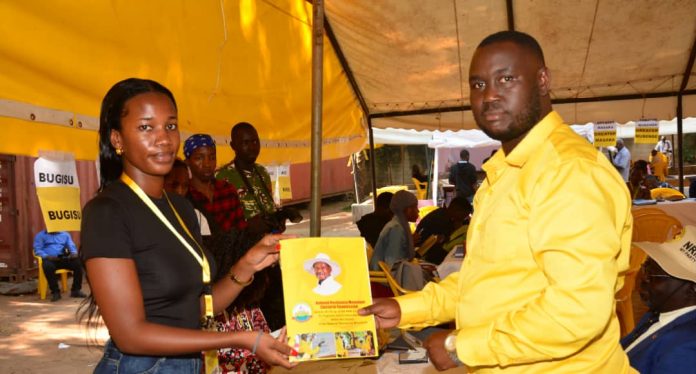
Mr Ivan Kabeedha receiving nomination papers from NRM electoral staff at party Secretariat.

Ivan Kabeedha, a rising political figure rooted in humble beginnings and grassroots activism, has officially picked nomination forms to contest in the NRM primaries for the Member of Parliament seat in Nakawa West Constituency.

Born on May 11, 1988, in Banda Zone 2, Kabeedha is the son of the late Mike Kefa Higenyi and Edisa Babita Naigaga. His early education began at Waterford Primary School in Nabisunsa, but following the passing of his father, he relocated with his mother to Luuka District where he completed his Primary Seven at Kiyunga Primary School.

He later pursued secondary education at Springdales S.S in Bugiri (O-Level) and Greenhill S.S Bugiri (A-Level), before enrolling at Nserester Business School in Masaka for a diploma in Hotel Management. He would later join Kyambogo University, where he earned a qualification in Library and Information Science.

Kabeedha’s political journey began in youth leadership, where he actively engaged in mobilization and grassroots work. Over the years, he has served with several high-profile political figures and participated in organizing community-led initiatives across Nakawa Division.

“I come to this race with no godfathers—but with God the Father, and the unshakable belief that the voice of the ordinary citizen matters,” Kabeedha said while picking up his nomination forms.

“From Banda to Bukoto, Kiwatule to Kyambogo, I have listened. I have walked your streets, shared your stories, and understood your struggles. And it is with that spirit that I step forward—not just to contest, but to serve—with humility, integrity, and action.”

Kabeedha’s entry into the race signals a new wave of candidates determined to return public service to the people. His campaign will focus on education, youth employment, community health, and transparency in service delivery.

He now calls on the people of Nakawa West to walk this journey with him: “Let this not be my journey, but ours—For a Nakawa West that works. For a future we can all believe in.”

Stories Continues after ad

Equity Bank launches ethics drive in Uganda to strengthen accountability

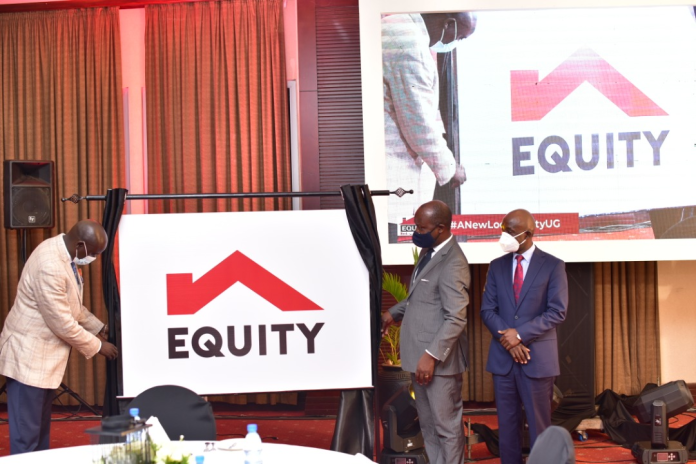
Equity Bank Uganda top executives during the rebranding of new logo December, 2020.

Equity Bank Group has expanded its comprehensive ethics and accountability program to Uganda with an aim of redefining corporate governance in East Africa.

The initiative shows the bank’s regional strategy to embed transparency, integrity and responsible leadership across all its operations.

Initially launched in Kenya, the ethics initiative has now been rolled out in Uganda, with Managing Director Gift Shoko underscoring the bank’s renewed focus on building a fair and transparent workplace where ethical behavior is the standard, not the exception.

“We are creating a culture where integrity is embedded in everything we do. It’s about more than rules; it’s about mindset,” Shoko told employees.

The initiative, introduced by Equity Group CEO Dr. James Mwangi during a recent investor briefing, includes sweeping reforms such as enhanced internal audits, rigorous performance evaluations, robust conflict-of-interest screening, and mandatory ethics training programs.

Crucially, the bank is also deploying advanced reporting tools and strengthening its whistleblower protection mechanisms to ensure staff across all branches—including those in Uganda—can raise concerns securely and without fear of retaliation.

David, a compliance officer at Equity, noted that the policy applies to all levels of staff:

“The fact that even senior staff are subject to the same standards has sent a strong message. It means no one is above accountability now.”

This regional ethics drive extends to Equity’s operations in South Sudan, Tanzania, and the Democratic Republic of Congo, positioning the bank as a pioneer in redefining ethical leadership in the financial sector.

Ugandan employees have welcomed the move, viewing it as a sign of serious leadership intent. Sarah, a customer relationship professional in Kampala, shared her optimism:

“This new move is restoring our pride in the workplace. It’s reassuring to know that performance and integrity actually matter.”

Analysts say Equity’s transparency-first approach is breaking from traditional industry norms where internal issues are often dealt with quietly. By openly embracing ethics as a core business pillar, Equity Bank is setting a new benchmark for regional financial institutions.

The reform is not just compliance-focused; it reflects a shift toward proactive, values-based governance that aligns with the evolving expectations of modern stakeholders.

As part of this transformation, the bank has even opened public channels for reporting misconduct, a move that demonstrates confidence in its systems and a willingness to be held accountable.

With this expansion into Uganda, Equity Bank is not only strengthening its internal controls but also sending a powerful message about the kind of leadership it believes East Africa’s banking sector needs.

Stories Continues after ad

Museveni: Digitized number plates are for national security, not EPS fines

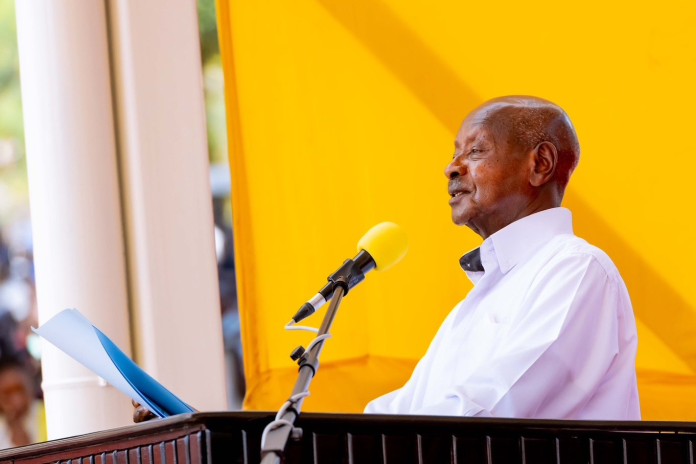
President Museveni.

President Yoweri Kaguta Museveni has emphasized that the government’s push for digital number plates is a critical national security measure aimed at combating crime, not a revenue-generating initiative through fines.

Museveni made the clarification yesterday during the reading of the 2025/26 national budget at Kololo Ceremonial Grounds noting that the issue at hand goes far beyond financial penalties.

“The issue concerning number plates is not about fines; it is fundamentally about crime prevention,” he said.

His comments come in the wake of public uproar over the implementation of the Automated Express Penalty System (EPS Auto) which raised complaints from road users, including taxi operators and truck drivers.

The President expressed deep concern over the growing threats to public safety, stating that the lack of traceable vehicle identification has hindered law enforcement from responding effectively to criminal incidents.

“I will not accept Ugandans dying because of inadequate infrastructure,” Museveni said, adding that a system capable of real-time vehicle tracking is urgently needed.

He noted, “Every vehicle must have a digitized number plate that can be traced by a central authority, allowing for the monitoring of cars and boda bodas present in specific areas.”

The new digital number plate system is part of the government’s efforts to enhance surveillance and intelligence capabilities, particularly in urban areas where motorcycle and vehicle-assisted crimes have surged in recent years.

“This matter transcends financial considerations; it is primarily about security,” Museveni reiterated.

He added, “People are acting with impunity, and this concern extends beyond mere fines. It is about ensuring the safety and security of all Ugandans.”

The Ministry of Works and Transport responded by suspending the EPS Auto for one month from June 12 to July 12, 2025 to allow for more public engagement and correction of regulatory gaps.

While the temporary suspension of the EPS Auto module has made headlines, President Museveni was keen to separate the number plate digitization initiative from EPS, clarifying that the technology is not a revenue-generating scheme, but a national imperative for safety and crime deterrence.

Stories Continues after ad

Why America’s spending priorities wipe out global health progress

Mr Bob Marley Achura

By Bob Marley Achura (PhD)

Global Health Policy Expert | June 2025

In 2024, Americans spent $17.13 billion on toilet paper. That’s not a typo.

It’s more than three times what the U.S. government spent on health aid to the entire African continent, home to over 1.4 billion people facing some of the world’s most devastating disease burdens.

Let me give that some context.

While U.S. grocery carts were filled with soft, two-ply comfort, Africa received just $5.82 billion in health support from the U.S., a figure that had to stretch across HIV treatment, malaria prevention, maternal health services, pandemic preparedness, and fragile public health systems in over 50 countries.

Zoom in on Uganda. This small East African country received $471 million in U.S. health aid in 2024.

It supported over 1.3 million people living with HIV/AIDS, kept thousands of health workers employed, and sustained national disease control programs. But in early 2025, aid cuts slashed over $160 million from that support. Clinics closed. Lives were put at risk. Frontline heroes lost their jobs.

Compare that to the $17 billion that went into American bathrooms.

What This Tells Us!

This isn’t an attack on personal hygiene. It’s a plea for global perspective.

Budgets are more than accounting tools—they’re moral documents. And the U.S. budget tells a story where domestic convenience outweighs international survival. It’s a sobering reality: the lives of millions in Africa depend on political winds in Washington, while comfort items enjoy consistent consumer loyalty.

But this isn’t just a moral failure—it’s a strategic one.

When the U.S. pulls back from global health investment, it creates power vacuums that authoritarian rivals are quick to fill. China is expanding its influence in Africa not just with infrastructure, but with medicine, research, and long-term health partnerships. Every dollar the U.S. divests from health diplomacy is a dollar it hands to its competitors, at the cost of human lives.

A Call to Recalibrate

Imagine redirecting just 10% of toilet paper spending, $1.7 billion, to global health programs. Uganda’s health budget could double. Regional laboratories could expand. Millions more could receive treatment, vaccinations, and basic care.

This is not about charity. It’s about shared survival.

Diseases don’t respect borders. Ebola, #COVID-19, and drug-resistant TB have shown us that. The next outbreak could emerge in a poorly funded clinic in Gulu, and land in Chicago days later. Strengthening Africa’s health systems is strengthening America’s biosecurity.

What Needs to Happen?

We need U.S. policymakers to stop treating global health aid as a luxury and start treating it as critical infrastructure. Health funding should be predictable, protected, and scaled, not cut with every political shift. Citizens must also demand that their tax dollars reflect a world they want to live in, interconnected, compassionate, and prepared.

The choice isn’t between toilet paper and treatment. The real choice is between short-term convenience and long-term consequences.

The U.S. has the resources to do both. The question is: Does it have the will? 

Bob Marley Achura is a global health and development policy expert with over two decades of experience in reproductive health, health systems strengthening, and donor coordination across sub-Saharan Africa.

Stories Continues after ad

UMEME audited financials reveal Shs511b loss, seeks Shs1t buyout

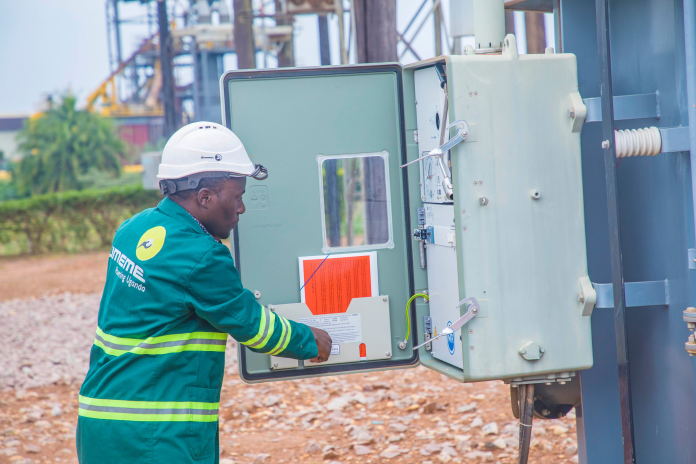
UMEME employee operating a system in one of the previous incidents before company closed.

Umeme Limited has reported a net loss of sHS511 billion for the year ended December 31, 2024, marking it a challenging final year in its 20-year electricity distribution concession in Uganda.

The concession reached its natural end in March 2025, triggering a complex transition process that significantly impacted the company’s operations and financial performance.

“This is the 20th year of the Company’s Electricity Distribution concession in Uganda. The concession reached the end of its natural term in March 2025,” the Board of Directors stated in the company’s audited financial results.

Throughout 2024, Umeme focused on critical transition processes involving staff, ICT systems, distribution assets, and service continuity. These activities, coupled with the pending recovery of outstanding claims from the government, weighed heavily on the company’s bottom line.

“The effects of the concession end, transition processes and outcomes have had a significant adverse impact on the overall performance of the Company,” the Board said. “The effects were notably in the form of lower staff productivity levels, increased operating costs and significant provisions in relation to financial assets pending final determination.”

The macro-operating environment added further pressure, with inflation, regulatory constraints, and rising financing costs taking a toll. Safety remained a top priority, though the company registered 18 fatal accidents linked to unauthorized power usage, poor domestic wiring, and vandalism.

Despite the headwinds, electricity demand grew by 10.8% to 4,674 GWh, driven by increased grid connections and economic activity. A total of 219,656 new customers were connected in 2024, pushing the total to 2.2 million. Energy losses dropped to a historic low of 16%, a marked improvement from 38% at the start of the concession in 2005.

Operating costs per kilowatt-hour sold rose by 18.2%, reflecting expanded operations and end-of-concession activities. The company also completed critical infrastructure projects, including upgrades to substations in Hoima and Jinja, and installation of dedicated lines to regional referral hospitals.

On the digital front, Umeme rolled out a new Yaka Management System in December 2024, integrating various billing and customer service platforms.

“The system further enhances the customer experience, revenue protection and staff productivity,” the company noted.

Revenues grew by 5.4% to Shs2.3 trillion, bolstered by a 10.8% rise in electricity sales volume. However, the company made provisions amounting to Shs329 billion for disputed financial assets related to the Buyout Amount claim under its concession agreement with the Government of Uganda.

“In accordance with IFRS Accounting Standards, we provided for the unadmitted and disputed component of the Buyout Amount,” the Board stated. “The Company resolved to recover this amount through the arbitration process to be conducted in London, United Kingdom.”

With increased amortization costs of Shs699 billion and expected credit losses soaring from Shs1.6 billion to Shs361 billion, Umeme’s total assets dropped from Shs2.35 trillion in 2023 to Shs1.39 trillion in 2024. Finance costs declined by 35% to Shs29 billion following the full repayment of term loans in 2023.

“The income tax charge for the period was a credit of Shs92 billion compared to a charge of Shs3.9 billion in 2023,” the report noted.

The report added, “The credit in 2024 was due to the loss incurred by the Company due to the provisions noted above.”

No dividend has been declared for 2024, a reversal from the previous year’s payout of Shs54.2 per share.

Following the formal handover of the distribution network to the Uganda Electricity Distribution Company Limited (UEDCL) on March 31, 2025, Umeme is now pursuing recovery of the remaining Buyout Amount.

“As communicated in the public notice of 2nd June 2025, the Company is seeking to recover the balance of the outstanding Buyout Amount payable to it in the sum of $292 million (Shs1,051 billion) plus contractual interest, through the international arbitration route,” the Board affirmed.

Stories Continues after ad