Stanbic Bank
Stanbic Bank
21.5 C
Kampala
Stanbic Bank
Stanbic Bank
Home Blog Page 114

MTN and Smart Girls Foundation graduate 298 youths in tech and vocational skills

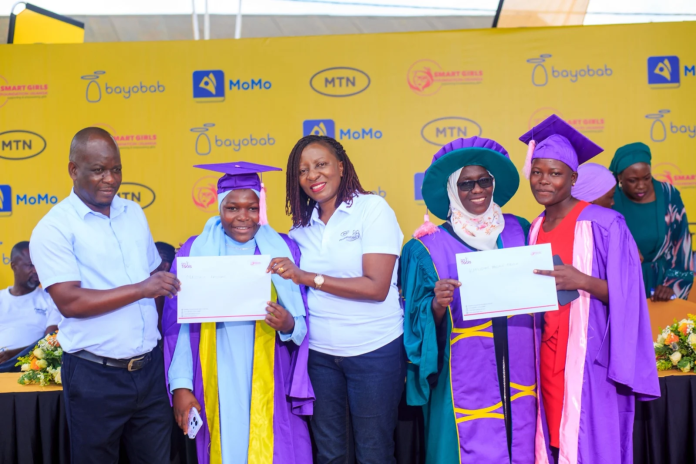
MTN Uganda, in partnership with Smart Girls Foundation, has successfully graduated 298 young people under its flagship “Girls in Tech” and ”Girls with Tools” programmes. The initiative is aimed at reducing youth unemployment and closing the digital skills gap in one of Africa’s youngest nations.

The 2025 cohort included 248 female youth trained in ICT and digital skills, alongside 50 trainees who were equipped with vocational competencies in traditionally male-dominated trades such as electrical installation, plumbing, and tailoring. These efforts fall under MTN’s Ambition 2025 strategy, which seeks to accelerate Africa’s digital transformation and enhance youth empowerment across the continent.

“Today, these graduates prove that change is not only possible; it is happening,” said Juliet Kakayi Nsubuga, Managing Director of Bayobab Uganda, MTN Group’s fibre and digital infrastructure unit. “They are equipped to lead Uganda’s digital future, and we are proud to stand with them on this journey.”

Uganda faces a youth unemployment rate of 16.3 percent, according to the Uganda Bureau of Statistics. The situation is even more challenging for young women, who often face barriers such as limited access to technology, technical skills, and financing.

Since 2019, MTN Uganda and Smart Girls Foundation have trained over 1,100 young people, the majority being female, in ICT and digital literacy, and an additional 116 in vocational skills. The programme supports Uganda’s Vision 2040, the Fourth National Development Plan (NDPIV), and the UN Sustainable Development Goals, particularly those focusing on education, innovation, and gender equality.

“This partnership has scaled significantly over the past few years,” said Jamila Mayanja, Founder of Smart Girls Foundation. “We started with 30 girls in mechanics. Today, we’re talking about hundreds of young women stepping into high-potential sectors like tech and energy.”

Graduands shared powerful testimonials. Nicholas Otim, an ICT trainee, said, “I now have the confidence and technical knowledge to launch my own digital skills training centre for youths in my community.”

Similarly, Maria Nakibule, a plumbing graduate, described the programme as life-changing, noting that it gave her a “clearer path to income and independence.”

Government officials present at the graduation commended the initiative’s alignment with national priorities.

“What we’re seeing here is not just training; it’s transformation,” said Maria Lubega, Deputy Resident District Commissioner, Kasangati Town Council, Wakiso district. “This is the kind of public-private effort that can shift the narrative for our youth.”

MTN’s investment in these initiatives—alongside others such as the MTN Ace Programme and the MTN Skills Academy—reinforces its commitment to digital inclusion, ensuring that young Ugandans, especially women, are not left behind in the fast-growing digital economy.

Stories Continues after ad

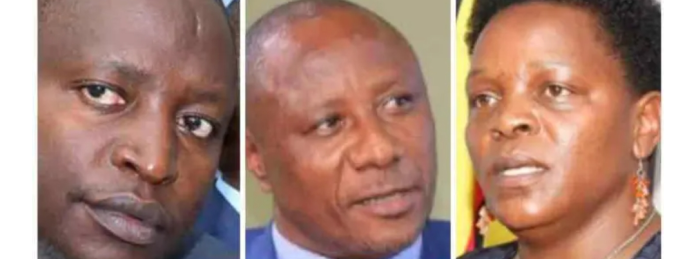
What Next? Ten ministers lose in NRM primaries ahead of 2026 elections

VOTED OUT: Bahati, Kabbyanga and Mutuzo.

In the heavily contested National Resistance Movement (NRM) party primaries ten ministers serving in the cabinet have lost their bids for parliamentary seats. These losses, coming just months before the 2026 general elections raise pressing questions about the future roles of these political heavyweights and the internal dynamics within the ruling party.

Among the ministers who were unsat is Musa Ecweru, the State Minister for Transport, who was defeated in Amuria County. Ecweru’s loss is viewed as a significant upset given his longstanding influence in the government’s emergency and humanitarian response efforts. He has represented Amuria County in the August House for three terms (15 years) before joining parliament, he served as a Resident District Commissioner.

Other notable cabinet members who lost include Jennifer Namuyangu, the State Minister for Bunyoro Affairs. She first joined parliament in 1994 when she was elected youth representative for Eastern Uganda to the National Resistance Council.

Dr. Joyce Moriku Kaducu, the State Minister for Primary Education was also ousted highlighting a shifting political landscape that appears less forgiving even to established incumbents.

Victoria Rusoke Businge, the State Minister for Local Government, and Peace Mutuzo, the State Minister for Gender, Labour and Social Development also failed to secure party tickets reflecting wider voter dissatisfaction with certain government policies and representation.

Trade and Agriculture portfolios also suffered setbacks for the NRM. David Bahati, the State Minister for Trade, Industry and Cooperatives (Industry) lost his re-election bid in Ndorwa West. Bahati, a key architect of Uganda’s industrial policies, had been considered a stalwart within the party’s economic team. Bahati, a turned State House ‘Pastor’ has been Ndorwa West legislator for 20 years.

Similarly, Fred Bwino Kyakulaga, the State Minister for Agriculture representing Kigulu County was defeated amid rising concerns over agricultural reforms and their impact on rural livelihoods. Bwino, a former spy turned politician hasn’t enjoyed government perks like most of his cabinet colleagues.

Fredrick Ngobi Gume, the State Minister for Cooperatives also lost his seat in Bulamogi North West. The cooperative scandal seems to be after the minster.

In the technology sector, Godfrey Kabbyanga, the State Minister for ICT and National Guidance was voted out in Bukonzo West signaling possible people’s belief is going down in the government’s digital transformation agenda.

Rose Lilly Akello, the State Minister for Ethics and Integrity, was among the other ministers who failed to secure their party nominations, underscoring a broad rejection of several incumbents across different sectors. Akello replaced former State Minister for Ethics and Integrity late Simon Lokodo both at cabinet level but also in the same constituency.

Another causality of the political fatigue is Energy State Minister Peter Lokeris. He lost his Chekwii County seat. He has been a legislator for over two decades and a minister at the same time.

These losses come at a critical time for the NRM which seeks to consolidate its grip on power amid growing opposition forces and internal party dissent. The election results may prompt President Museveni and his inner circle to rethink their political strategies and possibly reshuffle the cabinet to maintain cohesion.

The question of who comes back as an independent candidate remains in their hands as they restructure their efforts to secure the seats in parliament.

Stories Continues after ad

Vipers SC appoint Belgian Ivan Minnaert as Head Coach on two-year deal

Vipers Sports Club proprietor Lawrence Mulindwa unveils the Belgian tactician Ivan Jacky Minnaert as their new head coach on a permanent two-year contract.

Uganda Premier League champions Vipers Sports Club have announced the appointment of Belgian tactician Ivan Jacky Minnaert as their new head coach on a permanent two-year contract running until the end of the 2026/27 season.

The 58-year-old coach arrives as the Venoms prepare to build on their recent success and strengthen their squad ahead of the upcoming campaign. Minnaert replaces the interim duo of John ‘Ayala’ Luyinda and Fred Muhumuza, who managed the team during the 2024/25 season after the dismissal of Serbian coach Nikola Kavazovic just three matches into last season.

Luyinda and Muhumuza were instrumental in guiding Vipers to a historic domestic double – winning both the Uganda Premier League and Uganda Cup – marking only the second time in the club’s history they have achieved the feat. The pair will now remain at the club as assistant coaches, working closely alongside Minnaert.

Minnaert joins Vipers from Liberian Premier League side Fassell Football Club, whom he led to the league title in the 2024/25 season, finishing 11 points clear of their closest rivals, Heaven Eleven FC. His recent success adds to an already impressive coaching resume across Africa and Europe.

Prior to Liberia, Minnaert helped Libyan giants Al-Ittihad Tripoli secure the championship in the 2020/21 campaign. He has also managed several other clubs including Spain’s Union Estepona CF and CD San Roque, Mali’s Djoliba AC, Kenya’s AFC Leopards, and Rwanda’s Rayon Sport FC – where he had two separate spells.

His extensive African experience further includes stints at AS Kaloum Star in Guinea Conakry, Mukura Victory FC in Rwanda, and South Africa’s Black Leopards FC.

Minnaert holds a UEFA Pro License, the highest coaching qualification available, underscoring his tactical expertise and professionalism.

At Vipers, he will be expected to build on the club’s continental ambitions, with the aim of securing a second-ever qualification to the CAF Champions League group stages. His previous record in CAF competitions includes: CAF Champions League: 3 wins, 1 draw, 1 loss, CAF Confederation Cup: 4 wins, 2 draws, 2 losses and CAF Group Stage: 2 wins, 3 draws, 1 loss

The club hopes that Minnaert’s wealth of experience will propel Vipers to new heights both domestically and on the African stage.

Stories Continues after ad

Museveni urges UPDF to master the science and art of modern warfare 

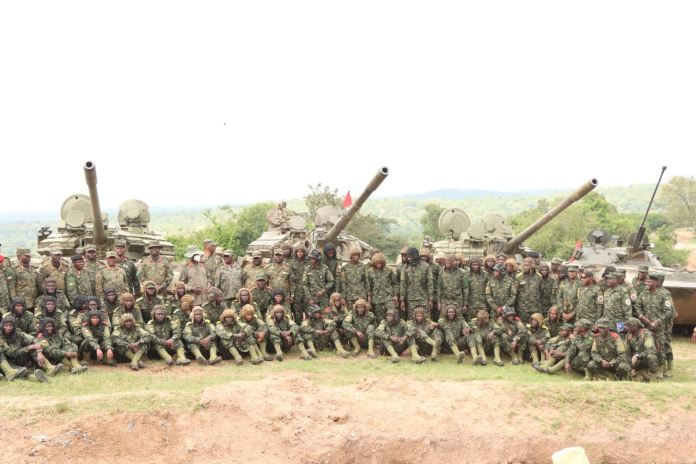
President Museveni and CIC pose for a group photo with Armoured Platoon, Armoured Technical and Crew Courses graduands.

President Yoweri Museveni who is also the Commander-in-Chief of the Uganda Peoples’ Defence Forces (UPDF) has urged the military to deepen its understanding of modern warfare, stressing that victory on the battlefield depends on mastering both the science and the art of military operations.

He made the remarks while officiating at the graduation ceremony of 413 officers and men who completed the Armoured Platoon, Armoured Technical and Crew Courses, and Wheeled Infantry Fighting Vehicle Course at the Mechanised Warfare Training School in Karama, Mubende District. “War is both a science and an art,” President Museveni said. “Science in the form of the equipment used, and art in the way you organise and employ it. Science always influences the organisation and tactics.”

President Museveni traced the evolution of armoured warfare from the mid-19th century, beginning with the introduction of the machine gun during the Crimean War (1854–56). He noted that the weapon’s devastating impact rendered cavalry obsolete and led to the widespread adoption of trench warfare.

“The machine gun chased the horses from the battlefield. That’s why armies resorted to trenches,” he explained.

Museveni described the invention of the tank as a strategic response to trench warfare, combining firepower, protection, and mobility in a single platform. “The tank was seen as a miracle solution; it brought the arrow (firepower), the shield (protection), and the horse (mobility),” he said.

He added, “That is why the tank was very decisive in the Second World War.”

He noted that today, the battlefield is increasingly shaped by precision-guided munitions, unmanned aerial vehicles, and integrated combat systems. As such, he advised the UPDF to adopt a “packaged” approach to combat, bringing together a range of capabilities to enhance operational effectiveness.

Turning to discipline, the Commander-in-Chief warned against corruption within the ranks, especially the mismanagement of fuel, lubricants, and spare parts. “If you sell lubricants, fuel, or spare parts, that’s corruption, and corruption kills,” he cautioned.

He encouraged soldiers to live healthy lives, avoid alcohol and drug abuse, and take proper care of their equipment. “Love yourselves by staying healthy. Love your equipment by maintaining it properly,” he advised.

President Museveni commended the UPDF leadership for its commitment to training and infrastructure development.

“I’m glad the CDF and his team are working on a number of fronts: training, but also infrastructure because they’ve been building barracks and other training facilities,” he said.

He pledged government support for upgrading the local road network to improve access and reduce dust. The roads include routes from Lusalira, Kasanda, and Kasambya through Kabamba and Makore.

The President praised the various commandants for environmental conservation efforts and acknowledged the historical significance of the area.

Representing the Chief of Defence Forces, Gen Muhoozi Kainerugaba, the Deputy Chief of Defence Forces, Lt Gen Sam Okiding, thanked the President for his guidance and strategic foresight.

“Today we have witnessed another level of firepower in our country. The precision we have just witnessed speaks volumes, and it is my humble request that we maintain it,” said Lt Gen Okiding.

He urged the graduates to treat their equipment as an essential partner in combat. “There is a big secret between the equipment and the soldier. When you deny the equipment its lubricants and you divert them, the equipment will deny you victory. And what happens? You’ll die,” he warned.

Lt Gen Okiding revealed that training institutions are being restructured into centres of excellence, with new infrastructure projects set to begin in line with the President’s vision of building a modern, capable force.

 “Our people will be having accommodation. Not only that, we are also looking at capacity and capability building,” he added.

Brig Gen Peter Chandia, the Commandant of the Mechanised Warfare College-Karama, praised the graduates for their resilience and commitment throughout the training. “I am confident that they are capable of skilfully employing mechanised resources in operations in the contemporary battle space,” he said. 

He thanked the Chief of Defence Forces for prioritising troop welfare and ensuring the school is adequately equipped for multiple concurrent courses.

He also reminded the graduates to remain ready for deployment at any moment. “Be prepared to serve your country with total commitment, honour and integrity,” Brig Gen Chandia said.

Stories Continues after ad

Electoral Commission adjusts presidential nominations to September

Justice Simon Byabakama, EC Chairperson.

The Electoral Commission (EC) has announced an adjustment to its 2025/2026 General Elections presidential candidates’ nominations dates to September, 23. 

Originally scheduled for October 2 and 3, the nomination of presidential candidates will now take place on September 23 and 24, 2025, according to Justice Simon Byabakama, Chairperson of the Electoral Commission.

“The Electoral Commission has adjusted the dates for the nomination of candidates for Presidential Elections 2025/2026, which was earlier scheduled to be conducted on October 2 and 3, 2025. The nominations will now take place on September 23 and 24, 2025,” Byabakama stated.

The Commission also reminded the public and all aspirants of other key nomination dates under the General Elections roadmap. The nomination of candidates for Local Governments, including Special Interest Groups (SIGs), will take place from September 3 to 12, 2025. Nomination of candidates for Parliamentary Elections is scheduled for September 16 and 17, 2025, while candidates for SIG Representatives to Local Governments will be nominated between December 8 and 12, 2025.

“The Commission further takes this opportunity to remind aspirants for the various elective positions and the general public to take note of the following key dates under the Roadmap for the General Elections,” Justice Byabakama added.

However, EC Tightened Academic Verification Rules for Aspirants, noting by law, candidates seeking to be elected as President, Member of Parliament, Mayor, or District/City Chairperson must possess a minimum academic qualification of Advanced Level (A-Level) or its equivalent.

“The Electoral Commission wishes to draw the attention of all those who wish to stand/contest for election… that they are required, by law, to have a minimum qualification of Advanced Level (A Level) standard or its equivalent,” the EC noted.

Aspirants who obtained their academic documents outside Uganda must have them verified by the National Council for Higher Education (NCHE), working in consultation with the Uganda National Examinations Board (UNEB). Those who lack A-Level credentials but possess other qualifications that they claim are equivalent must obtain a Certificate of Equivalence from NCHE.

“Aspirants who have obtained the certificate of equivalency from NCHE are required to establish the respective academic qualifications by submitting to the said NCHE certificate to the Electoral Commission Headquarters or to the District Electoral Commission Office in the district where the person wishes to contest, at least two months before nominations,” the EC emphasized.

The Commission clarified that aspirants with A-Level certificates obtained in Uganda, those with higher qualifications whose A-Level was also attained in Uganda, and those with qualifications that included A-Level certification from the former UNEB, will not be required to verify their credentials through NCHE.

Additionally, the EC noted that those holding university degrees or other higher education qualifications are not required to obtain a certificate of equivalence unless their A-Level education was obtained abroad or via non-traditional education pathways.

The Electoral Commission has urged all aspirants to comply with these verification requirements in a timely manner, warning that any failure to meet the academic standard at least two months before nomination will result in disqualification from the race.

Stories Continues after ad

Winners and losers in NRM party primaries

Maj. Guma Gumisiriza won Ibanda North.

Losers

David Bahati-Ndorwa West

Jenifer Namuyangu-Kibuku

As the country gears up to the 2026 general election early next year, internal political primaries are realigning key individuals who are likely to stir the nation’s leadership for the five years ahead.

The National Resistance Movement (NRM) party having governed Uganda for the last three decades and half looks better placed to retain their governance of the Uganda as per the results coming from its primaries.

Why NRM poised to retain leadership

Judging from fielding of candidates across all the constituencies and organised internal elections means that the party will have less challenges ahead of the general elections which is advantageous to the party as compared to other political parties.

The internal party primaries are also threshing credible candidates that will compete against candidates from other political parties. This process further solidifies and markets the party across the nation.

So, with the outcome of the internal primaries for card holders at constituency out, means that some of those already declared card winners will be legislators at the national assembly.

Below is the list of notably winers and losers

Winers     

Gen. Henry Tumukunde-Rukungiri Municipality

Phiona Nyamutoro – Nebbi Woman MP

Thomas Tayebwa – MP, Ruhinda North County in Mitooma District

Anita Among – Woman MP, Bukedea District

Matia Kasaija – Buyanja County, Kibaale District

Jim Muhwezi – MP, Rujumbura County, Rukungiri District

Molly Kamukama – Woman MP, Kazo District

Moses Ali – MP, East Moyo County in Adjumani District

Iddi Bassajja – Bushenyi-Ishaka Municipality

Annet Katusiime Mugisha – Woman MP, Bushenyi District

Robinah Nabbanja – Woman MP, Kakumiro District

Sylvia Alinaitwe – Woman MP, Rukiga County

Jane Frances Acilo – Woman MP, Oyam District

Moses Balyeku – Jinja West

Joseph Mugenyi – MP, Burahya County in Kabarole

Frank Tumwebaze – Kibale East

Jackson Kafuuzi, Kyaka South

Ephraim Kamuntu – Sheema South

Sylia Katooko Damba – Kibuku Woman MP

Edson Rugumayo – MP, Ntoroko County

Mbaziira Richard – MP, Jinja South East

Faridah Nambi – Kawempe North

Micheal Mawanda – Igara East

Steven Shyaka Gashaija – Entebbe Municipality

Rebecca Kyarampe Namanya – Mitooma District

Elioda Tumwesigye – Sheema North MP seat

Dickson Kateshumbwa – Sheema Municipality.

Adrine Mwebesa – Woman MP, Sheema

Kahinda Otafiire – Ruhinda County

Arthur Kazoora – Ruhinda South

Dennis Namara – Buyaga West

Jessica Alupo – Katakwi District Woman MP

Counsel Cohen Kyampene – Igara West

Rebecca Kadaga – Kamuli District Woman MP

Nathan Byanyima-Bukanga North

Umar Nangoli-Mbale North 

Kabuye Kyofatogabye-Nakaseke Central

Emmanuel Rwashande-Lwemiyaga 

Guma Gumisiriza-Ibanda North

Muyanja Mbabali-Bukoto South

Oboth Oboth-West Budama Central

Amelia Kyambadde Mawokota County

Lydia Wanyoto Mbale City

Herbert Burora-Nakawa West

Fred Ruhindi-Nakawa East

Charles Ayume-Koboko Municipality

David Kabanda-Kasambya County

Rebecca Kadaga-Kamuli

Sam Engola-Erute South

Daniel Kananura-Kira

Moses Magogo-Budiope East

Kaliisa Kyomukama-Ibanda

Sarah Najjuma-Nakaseke

Crispus Kiyonga-Bukonzo West

Losers

David Bahati-Ndorwa West

Jenifer Namuyangu-Kibuku

Musa Ecweru-Amuria County

Obiga Kania-Terego County East

Peter Lokeris-Chekwii County

Martin Mapenduzi – MP, Gulu West in Gulu District

Winfred Bagaaya Akiiki – Woman MP, Fort Portal City in Kabarole

Joyce Moriku Kaducu – Woman MP, Moto district. 

Stories Continues after ad

NRM primaries mean a green light to 2026 general elections

NRM Electoral Commission chairman, Dr. Tanga Odoi.

The National Resistance Movement (NRM) internal elections held today have once again cemented the ruling party’s reputation as Uganda’s most organized and politically grounded force. From the scale of voter participation to the ripple effect across towns and rural areas, these primaries have created a path that now unmistakably leads the country toward the 2026 general elections.

In what can only be described as a show of unmatched political mobilization, thousands of NRM supporters turned up at polling centres across the country. The familiar sea of yellow took over villages, school grounds, churches and open spaces while the rest of the country, especially major towns and trading centres came to a virtual standstill.

NRM Electoral Commission boss, Dr. Tanga Odoi told Eagle Online that what is being reflected in these party primaries is the underground work the party has been implementing through grass root mobilization.

“Yes we are working and it’s good that the population appreciate our work. The party mobilized well and also government led by President Museveni has implemented the manifesto”

The low traffic congestion in cities, empty shopping arcades, and half-functioning transport systems were clear evidence that much of the nation had migrated, physically and emotionally to the grassroots. While Kampala, Masaka, Jinja and other urban centres were calm, it was the rural districts that heated with democratic energy.

Uganda has long been known for its vibrant and at times, tense electoral cycles. But today’s exercise was anything but. It was defined by discipline, preparation and mass participation. These internal elections often overlooked in other political formations were treated with the seriousness of national elections, complete with polling agents, observers, party registers and in many places, orderly queues.

The reality is that in Uganda’s political landscape, winning the NRM primary is in most constituencies equivalent to securing a place in Parliament or local government. As such, these primaries carry enormous weight. They attract national attention and have increasingly become a bellwether for the broader democratic process.

More importantly, this year’s elections have revealed critical truths about the state of Uganda’s political readiness. First, they highlight the NRM’s continued grip on the population particularly in rural areas. No other party in Uganda can pull off a single-day, nationwide exercise with such reach and impact. Second, they provide an early insight into the political mood of the electorate; who is engaged, who is organizing and who may already be coasting into 2026.

Unlike many past electoral exercises that have been marred by logistical chaos or pre-election anxiety, this process was marked by pure coordination. The smooth transportation of voting materials, the orderly setup of polling centres and the general calm observed across the country signaled a level of maturity and focus within the NRM structure. This is a party that has internalized the value of electoral preparation.

Furthermore, the psychological impact of these elections cannot be underestimated. By taking the political process back to the villages away from Twitter threads, television debates and urban elite commentary, the NRM has reminded the country where real political power lies. The turnout alone is evidence that the grassroots still drive national direction.

For opposition parties, today’s event should serve as both a warning and a wake-up call. The NRM has not just started preparing for 2026, it is already halfway there. While other political groups are still ironing out internal squabbles, the ruling party is consolidating structures, mobilizing communities and shaping the narratives that will define the next election.

If the NRM primaries have shown anything, it’s that this party continues to understand the tempo of Ugandan politics. The strategic use of visibility, the decentralization of political power and the early engagement of voters have set a standard that other parties must now work hard to match.

The road to the 2026 general elections has officially been opened. The NRM has lit the path and if today is any indication it intends to lead the way all the way to the finish line.

Stories Continues after ad

Victoria University launches Bugembe’s 20-Year music legacy concert

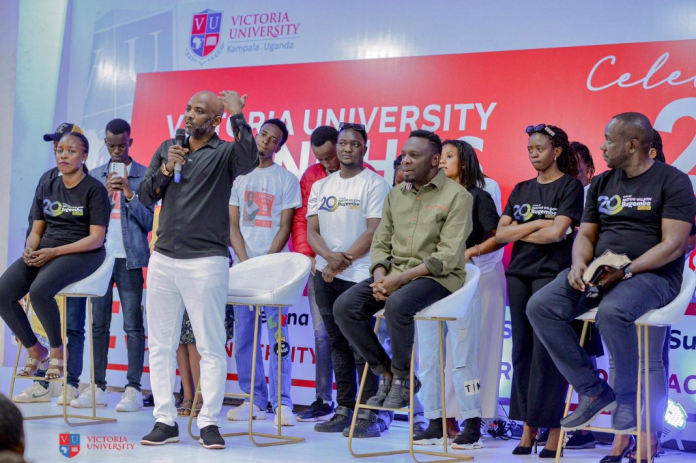
Prof. Lawrence Muganga, Vice Chancellor of Victoria University at the Bugembe’s 20-Year music legacy concert.

Victoria University on Wednesday launched celebrations to mark 20 years of Pastor Wilson Bugembe’s music ministry, turning a student orientation event into a powerful platform of testimony, resilience, and vision for the future.

The university officially flagged off the upcoming August 8, 2025, concert at Kampala Serena Hotel, in a moment that merged inspiration with academic orientation for over 1,000 freshers admitted for the July–August intake.

Speaking at the launch, Pastor Bugembe recounted his personal journey from the streets of Kampala to the pulpit and stage, sharing how his faith and the kindness of strangers changed his life after he was orphaned as a child.

“I lost my parents at a very young age and ended up on the streets,” Bugembe shared.

He added, “One day, someone took me to church. I received a mattress and clothes from church offerings. That simple act gave me hope. That was the start of my journey.”

Bugembe, now a household name in gospel music and the lead pastor at The Worship House in Nansana, expressed deep appreciation to Victoria University and MTN Uganda for being the first to officially sponsor his landmark concert.

“This is the first university ever to sponsor one of my concerts—and not just any university, but one that is truly transforming lives,” he said. “Prof. Muganga has taken in five children from my orphanage on full scholarships. I pay nothing. That’s what it means to walk in God’s love.”

The event was also a stage for Prof. Lawrence Muganga, Vice Chancellor of Victoria University, to deliver a resounding call for innovation, purpose, and real-world experience.

“You’re not here just to cram notes and pass exams,” Muganga told students. “You only spend about 15 hours a week in class—use the rest of your time to build, solve problems, and create value.”

He highlighted the university’s commitment to technology and practical skills, pointing out that all students receive laptops and are encouraged to fully embrace digital learning tools. “This is a digital-first university. Our graduates will thrive in the Fourth Industrial Revolution,” he emphasized.

Muganga also urged students to engage with the university’s Career and Employability Office (CEO), calling it the bridge between academic life and the job market.

“The CEO team will help you become job creators, not job seekers. Learn how to turn your knowledge into income,” he added.

The afternoon also included a brief impromptu performance by Bugembe, who led students in a joyful worship session, with a few lucky attendees earning free concert tickets for singing along.

Bugembe didn’t just reflect on his past; he offered spiritual guidance for the future, quoting Psalm 23 and reminding students of the power of faith in uncertain times.

“You can’t live without a shepherd. A life guided by God is protected and purposeful,” he said. “Even a cow that’s been kicked into a ditch can rise if someone helps it. So can you, if you walk with God.”

Bugembe also called on churches to formalize their operations to protect believers from fraud.

“Appoint senior, knowledgeable leaders and form advisory committees to guide decisions,” he advised. “There must be accountability in faith.”

The “20 Years of Pastor Bugembe” concert now officially backed by Victoria University and MTN Uganda promises an evening of worship, reflection and celebration. Early bird tickets are available via the MTN MoMo app at UGX 120,000, and VIP tables go for UGX 3 million.

With its latest engagement, Victoria University has cemented its reputation as a forward-thinking, values-driven institution. It stands not only as a center for academic excellence but also as a beacon for social responsibility and spiritual grounding.

As Prof. Muganga put it: “We’re here to nurture leaders who are spiritually grounded, practically skilled, and future-ready.”

And as the countdown to August 8 begins, Bugembe’s journey reminds Uganda’s youth that with faith, resilience, and the right support, no background is too broken for a comeback.

Stories Continues after ad

Uganda, partners reaffirm commitment to end HIV as 2025 estimates inform shift to sustainable response

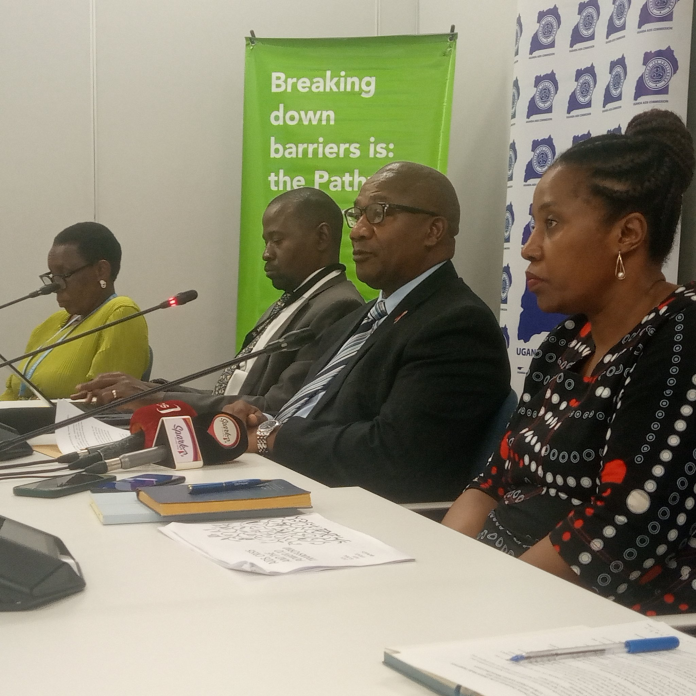
Uganda, partners reaffirm commitment to end HIV as 2025 estimates inform shift to sustainable responseimage.png

Uganda’s renewed fight against HIV has gained fresh momentum as the country releases its 2025 HIV estimates with strong reaffirmations of support from the U.S. President’s Emergency Plan for AIDS Relief (PEPFAR), UNAIDS, and the Ministry of Health. The data-driven review is shaping a national strategy focused on sustainability, integration, and long-term resilience in the face of declining external aid.

Speaking at the dissemination of the latest figures, Mary Borgman, the U.S. PEPFAR Country Coordinator for Uganda, underscored the critical role of the 2025 estimates in guiding investments and targeting interventions:

“The 2025 HIV estimates provide critical data to guide financial investments and evidence-based interventions, ensuring that resources are targeted effectively to reach those most in need and to bend the curve towards ending HIV as a public health threat.”

She praised Uganda’s progress in reducing new infections and expanding treatment access, while also reflecting on the enduring partnership between the two nations.

“Uganda has made remarkable strides in reducing new HIV infections and improving access to treatment,” she said.

She added, “We commend the strong partnership between Uganda and PEPFAR, which has spanned over 20 years, within the broader 60-year partnership between the United States and Uganda.”

Borgman revealed that PEPFAR has invested over USD 6 billion into Uganda’s HIV response, backing programs that include prevention of mother-to-child transmission, care and treatment services, and health system strengthening.

However, she cautioned that domestic investment remains insufficient, affecting key health system pillars. She emphasized the need for sustainable, country-led solutions:

She said, “As countries achieve their targets, external assistance should gradually transition towards domestic responsibility. The 2025 estimates offer an opportunity to refine strategies, prioritise interventions, and mobilise resources to address remaining gaps in the HIV response.”

She further noted Uganda’s collaboration with UNAIDS and the Ministry of Health on a sustainability roadmap.

“We call on all stakeholders including government, civil society, implementing partners, the private sector, and communities – to work together to sustain progress, innovate, and ensure impactful interventions.”

“The United States remains committed to its partnership with Uganda to achieve better health outcomes, end HIV as a public health threat, and make the region healthier, more prosperous, and more secure.”

The Ministry of Health has announced a bold move to integrate HIV services into general healthcare, as part of a long-term sustainability strategy aimed at reducing dependency on donor funds.

Peter Mudiope, the Coordinator of HIV Prevention, explained the shift and said that Uganda is aligning its strategies with global and regional approaches similar to those implemented in Kenya, Rwanda, and Botswana to ensure continued progress in fighting HIV.

On February 7, 2025, Permanent Secretary Dr. Diana Atwine issued a directive for all government health facilities to phase out stand-alone HIV and TB clinics. Now, primary healthcare clinicians are required to manage HIV, TB, non-communicable diseases, and mental health conditions as part of a holistic model.

“The previous model was heavily reliant on external funding. The integration approach is intended to optimise resources and improve patient care.”

Mudiope emphasized that integration aligns with how health workers are trained.

Mudiope said, “Integration is not a new concept. Medical training equips clinicians to manage all diseases. Patients often suffer from multiple conditions simultaneously, such as HIV, mental health challenges, and hypertension.”

The Ministry has already issued integration guidelines, begun training health workers, and reorganized patient flows in outpatient departments. He also highlighted the Chronic Care Model, which links facility-based services with community support for better viral suppression.

“Patients who are not virally suppressed are followed up at community level by peers, Village Health Teams (VHTs), or extension workers to provide counselling, adherence support, and household interventions, including nutrition.”

Pilot programs in the Acholi region have already shown promising results, raising HIV testing positivity from 3% to 15%.

Other initiatives include partnerships with local pharmaceutical companies, such as Quality Chemicals and Ntinda-based firms, to locally produce HIV medicines and test kits. The Ministry is also working with private pharmacies to distribute HIV prevention commodities like PrEP, condoms, and self-test kits.

“New prevention tools such as long-acting injectable PrEP are being introduced to reduce the burden on patients who previously had to visit health facilities monthly.”

Mudiope noted that government health financing is increasing, and efforts to pass a National Health Insurance Scheme are underway to further bolster sustainability.

Global Push to End AIDS by 2030 Gains Urgency

Meanwhile, Jacqueline Makokha, UNAIDS Country Director for Uganda, emphasized that while progress has been made, the global community is not on track to meet the 2025 targets.

“This is not the time to cut back. It is the time to increase efforts in the last mile towards 2030 to save 2.9 million potential new infections and 1.3 million AIDS-related deaths. We must ensure no one is left behind.”

Makokha reported that in 2024, there were 41 million people living with HIV, with 1.3 million new infections, half of them in Sub-Saharan Africa. Though deaths declined by 50% globally, including a 60% drop in Africa, children and men continue to lag behind in treatment and viral suppression.

“Globally, only 63% of children living with HIV know their status, 55% are on treatment, and 47% are virally suppressed. Among men, 84% know their status, 73% are on treatment, and 69% have achieved viral suppression.”

She praised Uganda for its gains, noting the country’s improved life expectancy at 72 years above the regional average and urged acceleration in the elimination of mother-to-child transmission.

On funding, Makokha reported a 12% rise in international financing for HIV in 2024, the first increase since COVID-19, bringing hope but also caution:

“Funding restrictions could reverse gains, taking us back to infection and death rates last seen in 2000.”

The 2025 HIV estimates serve as a call to action for Uganda and its partners. With a shift toward integrated care, local manufacturing, and community-led approaches, the country is laying the groundwork for a resilient, self-sustaining HIV response but global solidarity and domestic commitment remain essential to reach the finish line.

Stories Continues after ad

Strongholds: NRM Bigwigs set for smooth return to parliament

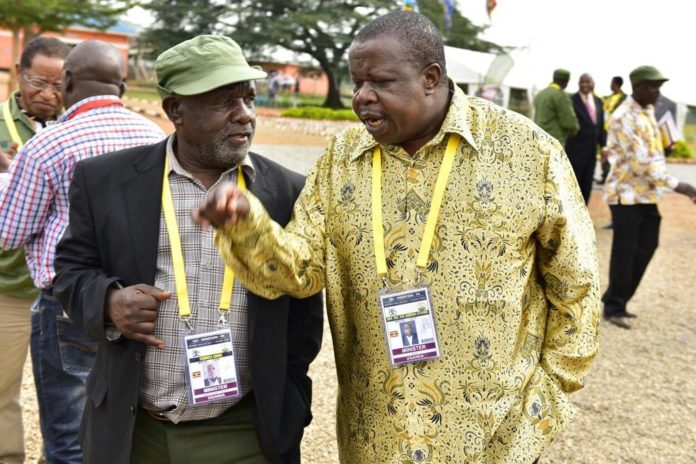
Internal Affairs Minister Gen Kahinda Otafiire (R) consults with cabinet former colleague Hajji Abdul Nadduli, while at the cabinet retreat in Kyankwanzi. He is set to bounce back with a resounding victory.

The ruling National Resistance Movement (NRM) is holding its much-anticipated parliamentary primaries today. Over 2,000 candidates are competing across 519 constituencies, with 353 direct seats and 146 district Woman MP Positions up for grabs.

Top-tier contenders in the spotlight and are likely to return to parliament for their great deeds in the constituencies are;

Dr. Jane Ruth Aceng, Health Minister and current Woman MP for Lira District, defending her seat.

Frank Tumwebaze, Minister of Agriculture and incumbent Kibaale East MP.

Minister Frank Tumwebaze


Anita Annet Among, Speaker of Parliament, contesting for Bukedea District Woman MP, however, she is unopposed and has already secured her seat but she goes on to race in the position of Second National Vice Chairperson (Female) on the Central Executive Committee (CEC).

Jessica Alupo, Vice President and former Woman MP, again on the ticket to defend her seat.

Thomas Tayebwa, Deputy Speaker, aiming to return as Ruhinda North MP.

Gen. Kahinda Otafiire, Minister of Internal Affairs and Ruhinda County MP.

Gen. Moses Ali, Second Deputy Prime Minister and MP for Adjumani West.  

Dan Atwijukire Kimosho, MP Kazo Constituency, Kazo District is also likely to return to the house.

Matia Kasaija, Minister for Finance, Planning and Economic Development, Member of Parliament for “Buyanja County”, Kibaale District. 

Former Security Minister, Gen. Henry Tumukunde.

Daudi Kabanda of Kasambya constituency is seeking his second return to parliament.

Amos Lugoloobi, currently the state minister for finance and MP Ntenjeru North County.

Robinnah Nabbanja, Prime Minister and also the MP for Kakumiro.

Also in the running are other state ministers—Hanifa Kawooya, Henry Musasizi, Phionah Nyamutoro for woman MP Nebbi District, Esther Anyakun, Diana Mutasingwa, and Mwine Mpaka—all aiming to clinch parliamentary tickets.

Minister Esther Anyakun

However, the security is tight as polling kicked off at 10 am, with measures in place to curb malpractice. The Uganda Police deployed senior commanders and anti-riot units to priming districts, warning against violence and vote-buying .

Incidents have already emerged: In Kamuli district Sowedi Egumbye, husband to woman MP aspirant, Sarah Auma was shot dead on a Wednesday night which police described as an act of election-related violence.  

Gen. Henry Tumukunde in Rukungiri was reportedly in good support.

Violence in Jinja: Clashes erupted between supporters of Charles Kabule Sande and Shaban Okumu in Butembe, with police making arrests

In Lwemiyaga County, the ground is good though the voter turn-up was still low. Despite reports of shooting during campaigning, the police have heavily camped in the area to ensure smooth running of the elections. The incumbent candidate, Theodore Ssekikubo, and a bigwig in NRM is likely to return despite the strong energy from the opponent Brig. Gen. (Rtd) Emmanuel Rwashande

Winning today’s primaries is pivotal, victors will represent the NRM in the January–February 2026 General Election. Defeated aspirants have a five-day window to file petitions with the party tribunal

For NRM giants a primary win would secure their ticket to the next term of political service but a loss poses a strong likelihood of political exit rather than independent runs.  

Stories Continues after ad