The Minister of Works and Transport, Gen. Edward Katumba Wamala, has revealed that at least 27 major road and bridge projects across Uganda have been suspended due to a crippling government funding shortfall.
The Minister, who presented to Parliament a statement on the state of roads in the country on Wednesday, 30 July 2025, attributed this to delayed payments and land acquisition issues, affecting projects like the Masindi-Biiso and Kabale-Kiziranfumbi oil roads, Kampala-Mpigi Expressway, and Kampala-Jinja Highway.
“As of July 2025, 27 projects have been affected by either full suspension or significant reduction in progress. These include 18 fully funded by the Government of Uganda, where contractors have suspended or slowed down works due to delayed payments, and nine externally financed projects, where delays are primarily attributed to the Government’s inability to provide timely counterpart funding,” he said.
The funding shortfall is attributed to a massive gap of Shs2.472 trillion in the financial year 2025/2026, where only Shs682 billion of the required Shs3.153 trillion was provided. The government is also carrying over Shs1.071 trillion in arrears from previous years, accumulating commercial interest and monthly cost claims from contractors.
The situation is further complicated by land acquisition issues, with Shs443 billion needed for compensation and enabling access to sites, which has grounded externally funded projects.
“The cumulative effect of these suspensions and delays has led to slow absorption of project resources, exposure to financial claims, risk of asset deterioration, and reputational concerns,” he stated.
The minister said that Uganda’s road infrastructure is deteriorating rapidly, with 1,993 kilometers requiring urgent periodic maintenance and 260 kilometers needing rehabilitation.
“If not implemented, these roads degrade and instead require rehabilitation, which costs about Shs2.59 billion per kilometer, three times the periodic maintenance cost,” he warned, adding that “This could result in a preventable fiscal loss of up to Shs180 billion.”
Gen. Katumba warned that if not urgently addressed, these disruptions will compromise Uganda’s ability to deliver critical national infrastructure and maintain the existing network.
The minister called for urgent financial intervention, emphasizing the importance of the road network to economic growth, regional integration, and service delivery.
Despite the urgency of the situation, Parliament was unable to hold a substantive debate on the matter after it emerged that none of the ministers from the Ministry of Finance, Planning, and Economic Development were present to respond to the funding concerns raised in the report.
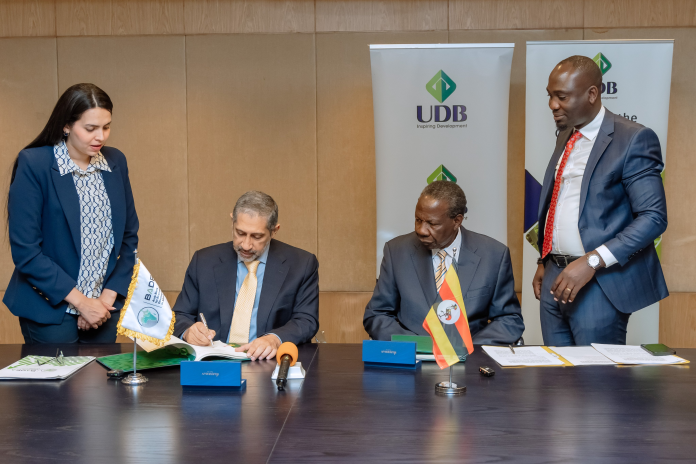
H.E. Abdullah Almusabeeh, President of BADEA, and Matia Kasaija, Uganda’s Minister of Finance, Planning and Economic Development, during the signing ceremony.
The Government of Uganda has signed two Facility Agreements totaling $150 million (approx. Shs570 billion) to support private sector development in Uganda.
On the sidelines of the 41st Board of Governors Meeting of the Trade and Development Bank Group (TDB Group), the Arab Bank for Economic Development in Africa (BADEA) and the Government of Uganda
The agreements were signed on Thursday by H.E. Abdullah Almusabeeh, President of BADEA, and H.E. Matia Kasaija, Uganda’s Minister of Finance, Planning and Economic Development.
Of the total amount, Shs100 million (approx. Shs380 billion)—secured under BADEA’s Private Sector window—will be channeled through the Uganda Development Bank Limited (UDB). These funds will be used for on-lending to key economic sectors, including agro-processing, infrastructure, manufacturing, healthcare, and education.
Speaking at the signing ceremony, H.E. Abdullah Almusabeeh emphasized the strategic importance of the partnership:
“Today’s loan agreement with the Government of Uganda is a prime example of how governments can leverage BADEA’s diverse financing instruments—across public sector lending, private sector support, and trade finance—to empower their private sectors and advance national development goals.”
The agreement underscores both parties’ commitment to fostering inclusive economic growth through strategic investment in Uganda’s productive sectors.
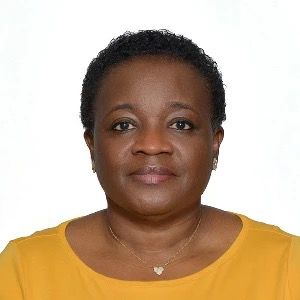
New World Bank country manager for Uganda, Dr. Francisca Ayodeji Akala.
The World Bank has named Nigerian health and development expert Dr. Francisca Ayodeji Akala as its new Country Manager for Uganda, effective August 1, 2025.
She replaces Mukami Kariuki, who completed a four-year tenure. She will be based at the World Bank Country Office in Kampala.
Akala, widely known as “Ayo,” will oversee the World Bank’s $4.5 billion portfolio in Uganda, which includes 18 active projects spanning energy access, education, health care, and refugee livelihood support.
She will also lead the bank’s ongoing dialogue with the Ugandan government and civil society, aligning development support with Uganda’s national priorities under Vision 2040 and the Third National Development Plan.
In an official statement, the World Bank said Akala “will lead the design and implementation of the World Bank’s evolving support program and daily dialogue with the government.” The bank added that it “will continue to align its support with Uganda’s development priorities and focus on helping to foster faster, more resilient, and inclusive growth that will create more, better, and more inclusive jobs.”
Akala brings over 25 years of experience in strengthening health systems and public service delivery across Sub-Saharan Africa, South Asia, and the Middle East. Her expertise includes immunization, HIV/AIDS, malaria, non-communicable diseases, and malnutrition.
She has led major initiatives in fragile and conflict-affected states and was a core member of the World Bank’s flagship Human Capital Project.
Before her appointment in Uganda, she served as the practice manager for Health, Nutrition, and Population in 13 countries across Eastern and Southern Africa. She has also held roles as a senior health specialist in the Western and Central Africa and South Asia regions, and as a public health specialist in the Middle East and North Africa.
Akala holds a medical degree from the University of Ibadan, a Master of Public Health from the University of Lagos, and a Master of Health Services Management from the London School of Hygiene and Tropical Medicine.
She assumes the role as Uganda tackles complex development challenges, including youth unemployment, poverty disparities, and rising health care demands. Her leadership is expected to support the bank’s growing focus on human capital development and inclusive service delivery.
The World Bank emphasized its commitment to working closely with Uganda to unlock sustainable growth opportunities.
“We are confident that Ayo’s leadership will further strengthen our partnership with Uganda and help scale up impact in areas critical to economic transformation and social inclusion,” the statement added.
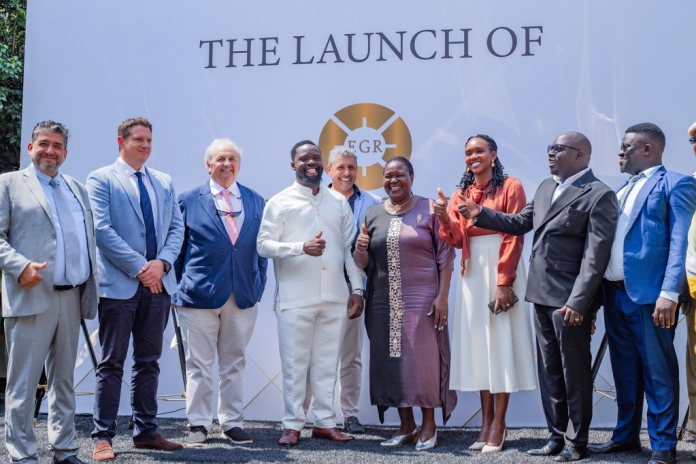
Uganda’s efforts to maximize its mineral wealth for national development have gained momentum with the official launch of Euro Gold Refinery (U) SMC Ltd, the country’s third licensed gold refinery.
The state-of-the-art facility, located in Kampala was commission in a high-profile event attended by the Minister of Energy and Mineral Development, Ruth Nankabirwa and state minister for Minerals, Phionah Nyamutoro.
“Today, with the Minister Nyamutoro, we officially opened Euro Gold Refinery (U) SMC Ltd in Kampala,” announced Minister Nankabirwa on X (formerly Twitter).
She added, “One of the only three licensed refineries in Uganda, this milestone strengthens our minerals sector through value addition, job creation, formalized trade and increases revenue.”
The facility is seen as a significant step in Uganda’s shift from exporting raw materials to refined products, in line with the country’s vision 2040 development blueprint. With a secured 79.8 square-kilometer gold mining concession in Yumbe district, the refinery is licensed to trade, refine and export gold.
Minister Nankabirwa emphasized the refinery’s importance in Uganda’s ambitious plan to grow the economy from a $50 billion GDP through industrialization and sustained resource management.
“As a country, we are ready for responsible mineral beneficiation,” she said.
She added, “Refineries like Euro Gold reaffirm our commitment to transparency, indu8strialization and attracting credible investors for sustainable growth in our mining industry.”
Her colleague, Nyamutoro echoed the message of inclusivity and empowerment.
“The ministry shall offer all the necessary support to see that more citizens are directly involved in mineral beneficiation, “she said.
The Euro Gold Refinery is also expected to benefit over 400,000 Ugandans employed in artisanal and small-scale mining, with a ripple effect on nearly two million people who depend on the sector indirectly. The facility promises a transparent and regulated platform for miners to trade their gold , providing a safer alternative to exploit and illicit networks that dominate the informal economy.
Additionally, the refinery is aligned with the Bank of Uganda Domestic Gold Purchase Programme aimed at boosting foreign reserves by allowing the central bank to buy refined gold locally.
During the launch, Bernard Feni, the refinery’s Director presented Nankabirwa with refined gold samples symbolizing appreciation for her ministry’s support and the refinery’s pledge to innovation and excellence.
As the country takes firmer control of its resources, the commissioning of Euro Gold Refinery marks a new chapter in value addition and economic transformation through responsible mineral development.
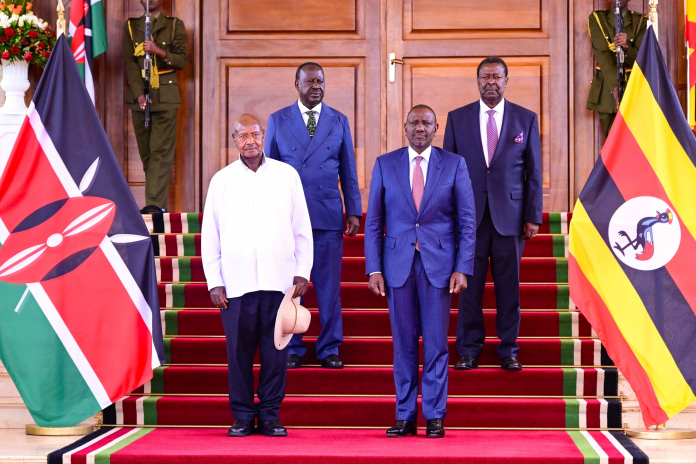
Presidents Museveni and Ruto of Uganda and Kenya respectively, are joined by former Kenyan Prime Minister Ralia Odinga and Cabinet Prime Secretary Musalia Mudavadi after singnal several trade pacts in Nairobi.
Ugandan President Yoweri Museveni and Kenyan President William Ruto have acknowledged that trade restrictions among East African Community (EAC) member states are hindering the region’s economic progress.
In a joint press statement yesterday at State House Nairobi, the two leaders voiced concern over partners’ reluctance to fully open markets to one another, a practice they said perpetuates a cycle of barriers. Their discussions covered trade, security, and regional peace, occurring amid a surge in non-tariff barriers (NTBs) that suppress the region’s trade potential by nearly three times its capacity.
President Museveni urged the region to “wake up” and make “rational” decisions about trade and the economy. He highlighted Uganda’s landlocked status, along with South Sudan, Rwanda, Burundi, Central African Republic, Chad, and Ethiopia, questioning the effectiveness of leadership that doesn’t prioritize market access for goods and services.
“If you are not solving the issue of access to the market… how will you solve that?” Museveni posed at the press briefing. “Whoever is president, you will solve that. When you produce goods and services, the next question is who buys? If you don’t answer that and you are a leader…the future is very bleak. I am glad the region is waking up.”
President Ruto said their talks focused on “persistent Non-Tariff Barriers (NTBs) that hinder the flow of goods and frustrate the objectives of regional integration under the EAC framework.” While specific countries weren’t named, the meeting followed Tanzania’s move to ban foreigners from 15 “small business” economic activities and reintroduce an industrial levy on goods from partner states, moves condemned by the private sector.
Despite internal squabbles, including ongoing trade disputes between Kenya and Uganda over products like milk and poultry, Ruto affirmed the EAC’s role as a model for regional integration. “We emphasise the centrality of unity, economic convergence and shared prosperity as guiding principles for deeper integration,” he said.
According to the EAC secretariat, intratrade among members rose by 9.35% in 2024 to $15.2 billion (about Shs54.2 trillion), making up 12.17% of the total trade volume. However, experts from the East African Business Council suggest this could reach 60% if member states fully implemented common external tariffs and eliminated NTBs, potentially unlocking $63.4 billion (about Shs226.1 trillion) in regional trade.
The two presidents stressed the need for principled, practical, and timely resolution of these barriers, citing their direct impact on livelihoods, especially for farmers and small traders. A Joint Monitoring Committee (JMC) is scheduled for a mid-term review in October to address cross-border trade issues.
During Museveni’s visit, the leaders reaffirmed their commitment to strengthening regional institutions and advancing EAC objectives: the Customs Union, Common Market, Monetary Union, and ultimately, Political Federation. They also signed eight new agreements covering trade, energy, mining, tourism, agriculture, animal industry, fisheries, aquaculture, investment promotion, and transport. This includes an MoU for cooperation between the Kenya Bureau of Standards and the Uganda National Bureau of Standards to enhance scientific and technical capacity.
The leaders also reiterated their commitment to regional peace and stability, agreeing to close collaboration in conflict resolution efforts.
President Ruto announced a major industrial initiative: “Kenya and Uganda have agreed to establish the largest steel factory in the region. This joint project will reduce our reliance on steel imports and allow us to produce for export.” President Museveni reiterated his call for East Africa and the wider continent to consolidate markets and strengthen local production, drawing parallels with the United States’ prosperity through its large market. He also reaffirmed Uganda’s commitment to resolving the Migingo fishing issue.
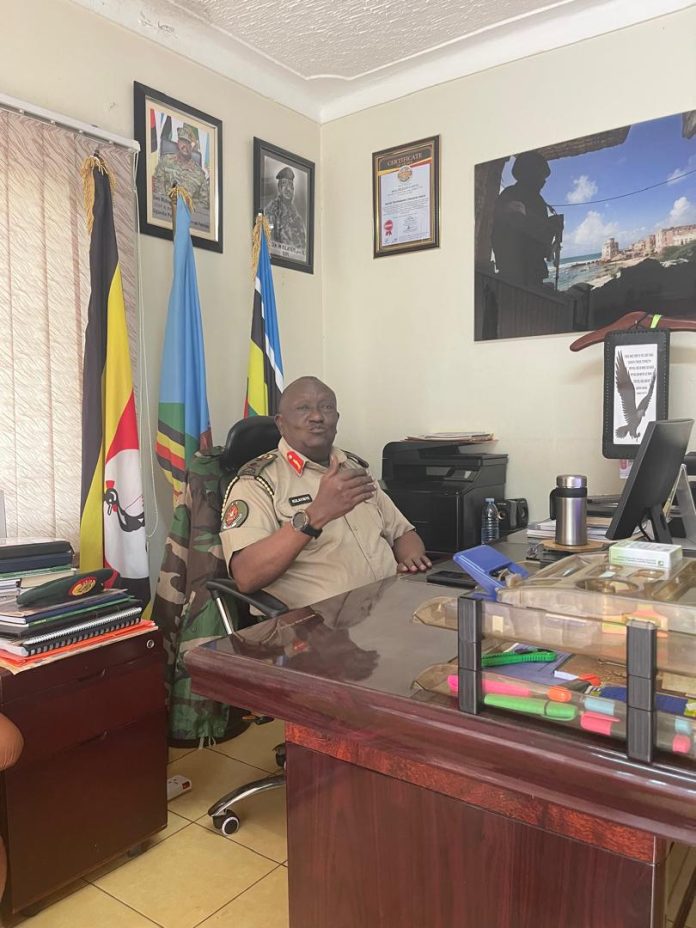
Maj. Gen. Felix Kulaigye, UPDF/Ministry of Defence and Veteran Spokesperson, during the interview with Eagle Online at his office at Mbuya.
The Chief of Defence Forces, Gen. Muhoozi Kainerugaba, has been praised by the leadership of the Uganda People’s Defence Forces for the rapid transformation taking place at the UPDF headquarters at Mbuya, but also across the country.
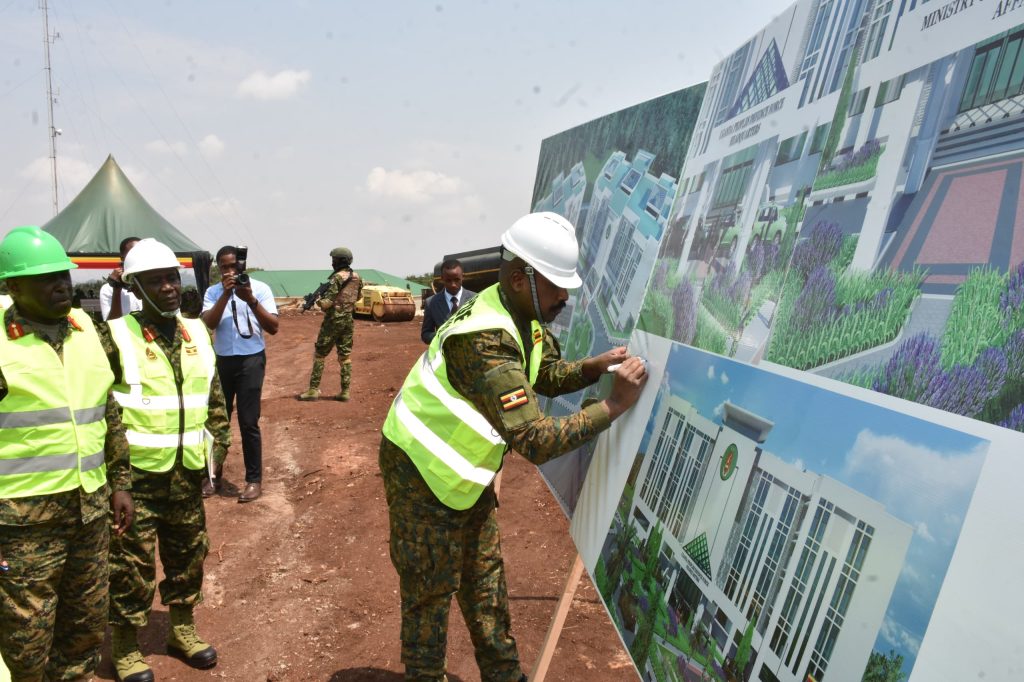
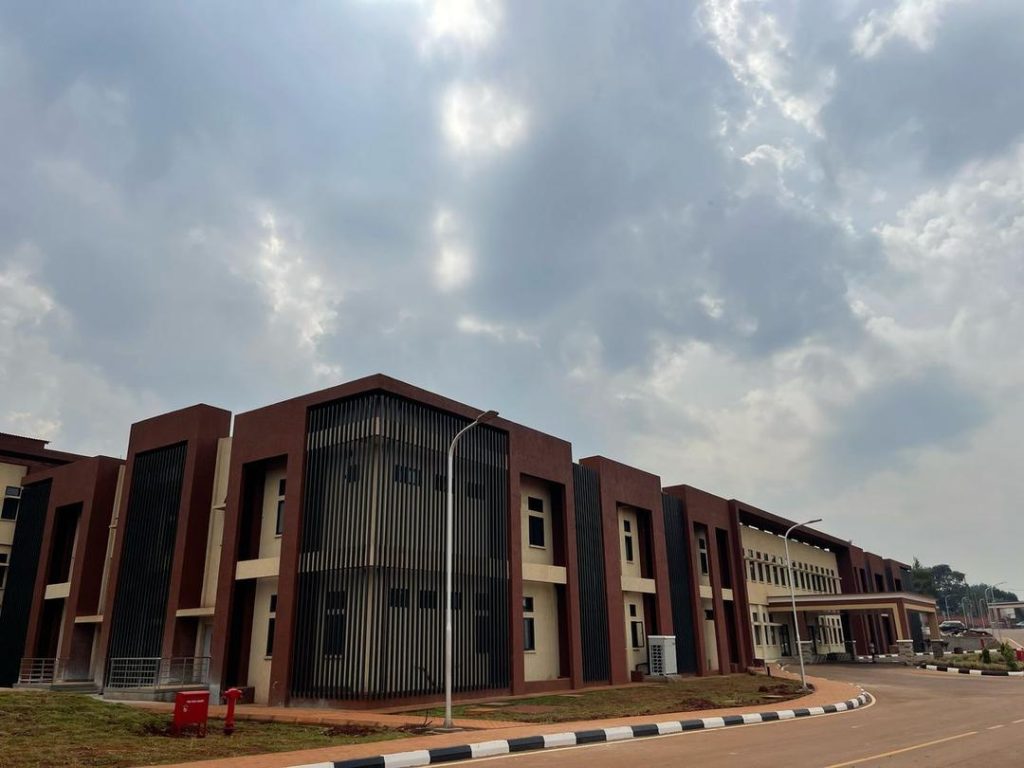
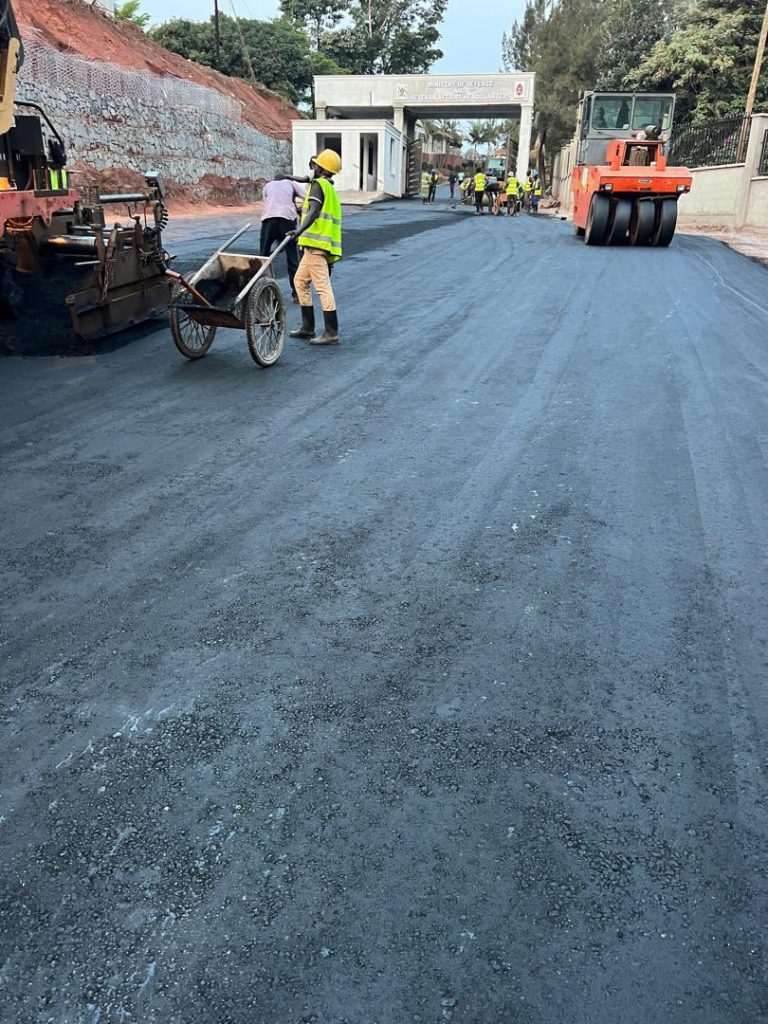
Under Gen. Muhoozi’s leadership, UPDF has registered major developments at Mbuya, and some of these include the fencing of the entire headquarters, construction of the new Quarter Guard, plus the ongoing construction of the new block offices for the top leadership.
In an exclusive interview with Eagle Online, UPDF, and Ministry of Defence, and Veteran Affairs Spokesperson, Maj. Gen. Felix Kulaigye reveals why UPDF is unstoppable on its transformative path.
“Without doubt, Gen. MK has cracked the whip. He’s responsible for this better gate and fence you are seeing. You can’t remove that from him. We had no quarter-guard to talk about, but now you can see what you are seeing. We didn’t have a fence, now we have one. The discipline, you saw the real competition in the competition, and those are aimed at bringing the soldiers’ alertness to the top,” Gen. Kulaigye said
Adding “The new headquarters? Individuals and collectively. Then the new headquarters are coming up. He wants it in two years to be complete and so that you are not squeezed in this small room when you come to interview me. You know, in this country, the military has not been given the priority it deserves in the public domain”.
Gen. Muhoozi has initiated several projects concurrently, benefiting the welfare of low-ranking soldiers.
“So, it wasn’t until recently that even at the individual welfare level, efforts came in. General Muhoozi Kainerugaba, when he was Commander Land Forces, had houses built in barracks at the unit level. Now it’s across every brigade. We are building battalions, homes for battalions under those brigades, and so, the brigade stays together as a family. No, we just don’t stay that way; it’s only the senior officers who live outside. And that’s being done at the welfare level; housing is at a very high level”.
In the same interview, UPDF highlighted why it will actively participate in elections by enhancing police monitoring of elections during this electoral period.
Below is the full interview with UPDF Spokesperson, Maj. Gen. Filex Kulaigye
Good morning, General. Good morning, Richard. Congratulations on your promotion.
Thank you.
And welcome back from leave. We’ve been missing you in action.
The much-needed leave. Sure. With 37 years of service, I’ve never taken such a long leave.
Wow. So, this was indeed very necessary. Doesn’t it accumulate?
I wish that were the case. I don’t know whether the new law, the amended (UPDF) Act, helps us with the capturing, that’s because our comrades in civil service have a choice to leave, we don’t. But at least we now have a new leave for June. I think this is two months, one month. and the others like that. I wish there were an estimated leave or payment instead of leave. I was sacrificed to serve you, so you brought yourself some of those things before God. But thank you. God has been gracious.
So, sir, we want you to inform the country on how you could… describe the current situation in the country, both nationally and along our borders.
The country is secure, stable, and growing. That one nobody should doubt. That does not mean there are no challenges that come up. However, I want to assure the citizens that, whatever threat may arise, we have built the capacity to deal with it. Either forestall it, that’s mitigation, stop it before it happens, or mitigate it if it has happened. Because you have two stages. You have a stage of deterring. That’s the word I was looking for. You have the stage of deterrence to deter a threat from being executed by the enemy. If you can’t deter, at least you can mitigate the action so that it has less devastation than intended by the one who did it. The third one… is now dealing with the consequences of the activity once it has happened. as we have been growing, the guidance of the commanding chief, the CDF’s focus, it’s about building capacity to have those three, to be able to do to that, mitigate and handle consequences if it has happened. and I can assure the country, people should be assured, you are secure and you will continue being secure.
Now our borders, besides the small arms proliferation, because of the instability in the neighborhood, in the West, in the North, as you know, in South Sudan, and Northwestern Kenya, there are small arms that keep coming into the country. And those are times the crimes of murder, armed robbery, and cattle rustling. But those who are qualified to be a national security threat, no. Our police and intelligence can be on top of the situation through collaboration. And maybe this will also answer some of the questions you asked. The jointness. CDF Gen. Muhoozi Kainerugaba has now put in place regular security meetings of all agencies, not everybody, but the chiefs. And I am privileged to be a member of that forum where we compare notes, we get information, we get intelligence, and we have agreed on the way forward jointly. You know, one of the reasons why the September 11 (2010 Kampala bombings) succeeded was rivalry between agencies. This one gets information, keeps it from the others. But when you have joint planning, joint briefing, then you have no reason to want to be said to be the best. You’re not trying to be, as the president says, pygmies competing among themselves about this one and the other. We are scoring in the same goal. We are serving the people of Uganda. We are serving Uganda; we are serving the commanding chief. Why do you want to compete? It’s a team. And our team captain is the CDF, who must score to ensure that the objectives of the Commander in Chief, as President of the Republic, go through or succeed. Because security is not an end in itself. It’s a means to an end. It’s a facilitator for development.
And when you see the population explosion, you see the economy growing by leaps and bounds. despite the international situation, despite the regional instabilities, to show you there is something being built in this country. And that’s the cohesion of security, the security agencies, and this is thanks to leadership.
MAN ON MISSION: Chief of Defence Forces of the Uganda Peoples’ Defence Force (UPDF), Gen. Muhoozi Kainerubaga, who is credited with the ongoing development in the army.
What are the UPDF’s main security priorities at the moment, especially about emerging threats such as terrorism, cyberattacks, and transnational crime?
Those you have mentioned are persistent challenges across the globe. Terrorism, cybercrime, transnational. Especially today, the issue of drugs. drug trade, all the way from Latin America to Africa, and here to the Far East. The best way of dealing with these challenges is to build capacity and intelligence to be able to monitor them. Two, the capacity to investigate once you have a suspect. And then three, if it gets to a national scale, then you must have the security capacity to deter the ramifications of this criminality. But more so, cybercrime. Because cybercrime can cripple. Cybercrime can cripple your security mechanisms. Because once they hack into your security mechanisms, they will collapse.
There’s a colleague who was telling me his phone was hacked. He can’t access his email, can’t access his WhatsApp. Now you imagine deterring or failing an institution like UPDF from accessing itself. So, we have endeavoured to build a capacity both technically and in terms of human resources to be able to cope with the threats, and that’s why you heard over the central bank’s haste. What do people think is just automatic? No, the country has built the capacity to mitigate such situations when they happen. Otherwise, you will see things go down, and they may be difficult to recover from for a long time. We have been building capacity, and you see, after the 2004 Defense Review and Reform, we were able to identify the future threats to the country. And we realized that 75 % of those were non-military. Cybercrime is not in the military. Transnational crimes, drug trade, and human trafficking are not human. Food security it’s not human and military in nature, but it’s real. It’s a security threat. That’s why you realize that the creation of OWC was actually to address some of these challenges that you have been able to identify.
And priority number one has been food security. You may realize that we have not had a serious famine in this country for about 10 years now. By God’s grace, but two, there were deliberate efforts to deal with these challenges, to plan and prepare ourselves. So, cybercrime is a real threat. There was even an attack either in the US or the UK, they were talking of some Chinese company. The best way is not to imagine the enemy will not come, but to make yourself invisible. And that’s what we are doing. Transnational, we need the nationals to be alert, because they use citizens. Now you hear of people being arrested in China, and they are asking the government to rescue them. But you are involved in the transnational crime elsewhere, and it’s punished by death. Because of the consequences of drugs, my brother is that the population gets destroyed. And the population being destroyed is the younger generation. We’ve cut Haiti. We’ve cut Haiti, thank you very much. It has now led to the collapse of the state. it’s a very serious matter that we must involve the citizens through mobilization, through mass communication, and media channels.
The unionists have a very big role to play. Although… The common thing with traditional media now, across all social media, it’s all from information, is disinformation, and it is other things. So, build capacity, mobilization for national consciousness to these crimes, and then three, where there is instability, like we have in our neighborhood, support efforts to bring stability.
That’s our involvement in DRC; that’s our involvement in South Sudan. In pursuit of Pan-African ideology, but ultimately, whose goal are you serving? The stability of your country. We’ve seen joint operations like Operation Shujaa in Eastern Congo.
Can you give an update on Uganda’s current military movement beyond its borders, and what objectives have we achieved?
Very good question. First of all, we celebrate the achievement of Operation Shujaa.
What are these?
One, ADF was 30 kilometres from our border. It’s no longer. Two, the population in western Uganda, along the western border, was always on the tenterhooks. Of course, at that time, there was infiltration. Three, the population inside Congo had been displaced. ADF was able to have gardens to farm cocoa, harvest coffee, besides the other means was… which enabled them are able to access money. So, they were able to make money to sustain their operations, to finance their operations. Schools had been closed; worshiping places were no longer functional. Even mosques, as long as you don’t subscribe to the extreme psychology, your mosque will be closed. All these are now functioning in Ituri, and part of North Kivu.
Two, the operation to the Western border. You remember the case of the school where the children were burned. Because the concept was that you have a force operating in DRC, but you also need the zonal force back home. And that’s how we recruited the LDUs, you should remember, after that school attack. That’s the first part of Operation Shujaa. Now, beyond Operation Shujaa, we brought in another operation, where we had to move into northeastern Congo. There were two cases, not two states, but two situations. Situation number one was the tribal conflict in Ituri between the Hema and the Lendu. And the genocide was unfolding. The same towards the Mahagi. And that’s how the decision was taken to now deploy on top of Shujaa, you have this operation going on to calm the situation at the request of the DRC government. And the results have been there, the areas are calm, the population is going about their business in these areas where the militias were massacring people based on ethnic lines. So, we have averted the genocide. Yes, we are dealing with our enemy, the ADF, but we have also supported our neighbours to pacify the areas that are near our border. Again, I want to repeat for the sake of appreciation from our people, that it’s because we have built the capacity that your country can afford to go to an operation outside using our organic resources. And it surprises me, allow me to say this, people decided to condemn. Why? Why is Uganda in the Congo, Sudan, in Somalia. Why not Uganda? If we are talking about African solutions to African problems, it can’t be just a cliche. It must be put into action; we must walk the talk, as the saying goes. If Africans have problems. We have no business sitting at home. Even our traditional wisdom said it. A neighbour’s house on fire will affect yours if you don’t go to put it out. Why should an African suffer? And the fellow Africans are simply lamenting. They don’t stop at folding hands. They lament. And they expect somebody from outside Africa to come and solve the problem? No. They must do it. So, we have built capacity based on that understanding that we are for Uganda and the rest of Africa. Before this operation, Shujaa has enabled us to open up Congo for business, and the roads that are being constructed.
We survived the financial breakdown of 2009 because of regional trade. You can’t see the benefit of regional trade, and you don’t promote it. First, infrastructure. Because of the roads in Congo, goods would spend weeks on the road due to the bad roads. Now, our perishables can also be sold because we are the food basket of this region. Perishables can go, and therefore, Operation Shujaa has opened up Eastern Congo in terms of infrastructure. And if it wasn’t for the situation in Kivu, even the roads in there and Goma would have been done. Unfortunately, that one has stopped because of the instability in that area. What I want to conclude this point with is that wherever UPDF is, you will see positive results in terms of stabilization.
Can you provide a hint about our operations in South Sudan, where we have gone to support our sister, the young country?
First of all, historically, we are the guarantor of peace in South Sudan as a country. Our president has a responsibility as a Pan-African, but also as a commitment that leaders gave him to ensure that the young country called South Sudan, survives. And if we have not studied from our own experience, people should see that building stability is a consequence of consensus. Consensus will only be built when you have a state that initiates it. If a state is threatened, it must deal with survival first. Now, when you’re a neighbour, and you wish your neighbour well, you must see where it is a priority, survival of the state. And we are doing very well. We have averted the crisis in terms of that regard. Twice, there have been attempts at genocide. We have been able to avert it. And now what we are looking forward to is the peace process for these insurgencies to come on board, as has been done before. And again, our president has been facilitating this.
There’s a joint mechanism there, where we are represented by a general who is doing that to ensure that the terms of the regional leaders of IGAD that were supposed to be followed in implementing peace, the peace process in South Sudan is implemented. And you can’t do that when the government is under threat of collapse. So, we are doing well on that front, and by the way, from our resources again. So, our legislators ought to appreciate that this mission is an important one for human stability, but two for our economy. We have our businessmen and women who are trading in South Sudan. And you have not heard of recent attacks on trucks on Juba Road, thanks to our being here in South Sudan.
How is Somalia? Because we… heard the funders, the European Union and Americans, saying they are withdrawing, and AMSOM should stop. And then at the same time, the Somali government says, No, we still need them. Are we at the crossroads, or are we remaining in Somalia?
Ordinary, that’s a crossroad because the African Union did not have the financial capacity to sustain that mission. But your readers may recall that we entered Somalia when there was no UN, and there was no European Union to support the mission in 2007. General Elwelu’s battle group and Maj. Lev Karuhanga’s first commander, the Somalia peace, Levi Karuhanga, there was no dollar, there was no water, there was no UN logistical support. But we sustained the mission until others came. So, for us, we are aware of threats of withdrawal, stopping work, because we have our economic challenges as well.
The bottom line, you must enable the Somali people to stabilize. And the fact that we have been able to hold six elections since the mission started it’s a plus. and you cannot afford to pull out at this time. Then the latest is that there are some forward bases which had been lost by the national army, and those who had surrendered. They had been lost to Al-Shabaab. We have embarked on operations to recover them. And last week, we recovered one forward base, being something, their names are a bit sophisticated, but it was… being an urban operation, it’s never easy. You know, fighting in urban areas. To take even one building can take you a week or two. But we have succeeded in securing it, albeit at the loss of about seven of our comrades. But the enemy lost 30. And the amount of equipment recovered from there is incredible.
It’s just testimony that these guys are getting funding from some sources. So, on that front also, we are doing very well. yes, first of all, we talked about the slowdown, but Somalia is bigger than Uganda, and you’re talking of growing down from 12,000 troops. To what? And what are they going to do? What happened is that our Commander-in-Chief rejected that notion, and for him, he said, if it’s about money, we shall look after our troops. So, we retained part of the force that is on the army’s pay, purposely to make sure that our soldiers are not swallowed up there. And anyway, the sustainability of the mission has begun. So, if we are talking of stabilizing Africa, then we can’t afford to pull back and say, because the other ones are afraid to give us the money, we give up. I think these three countries in West Africa are giving us the example: Mali, Guinea, and Burkina Faso. We had better be able to sustain our missions for the good of Africa.
How is the UPDF working to improve civil and military relations, particularly in areas affected by past situations such as Karamoja and Northern Uganda?
First and foremost, like I said earlier, security is the first step for development. with stabilization in Northern Uganda, you have seen the explosion of development in Northern Uganda. Gulu city is growing faster than Kampala. Are you aware? Yes, yes, that’s true. And I want to thank the people of Gulu because their city is the cleanest in the country. So, I almost want to use the word dividend of the war. There has been an avalanche of business in Northern Uganda, and of course, the fact that it’s neighbouring South Sudan. So, one is the facilitation of the government programmes that are aimed at improving the lives of the people. The Minister of Northern Uganda is busy at it. Two, OWC, is busy at it. And that’s why we have been dealing with these areas where famine was common. Northern Uganda was where NGOs were flying their flags, but it’s no longer the case. They are no longer the source of hope, but our government, people are also making their own lives better. And you can see that a social transformation is taking place in Northern Uganda. We have also had occasion to have interaction through seminars and conferences at the universities, in the institutions of higher learning, and with the civic leaders at the command level, at the political level, and also in the public relations department. Our constant engagement in the airwaves is purposed to enable to mobilization of people, first of all to sustain the peace but to work for their own better for domestic income. And I want to salute the government because of these programs, and now currently the PDM.
That is where the other programs did not score as we expected, we are seeing results of PDM at the micro level, at individuals, which shows you what they have done with their own money. And that is very important for the financial inclusion objective. So that you have a population that’s not in poverty anymore. And I would like to report, we’re talking of 39 households, I mean 61 % of households being outside the money economy. Now it’s the reverse, it’s 39 outside the money economy. 61 % are in the money economy. So, we have enabled socioeconomic programs to succeed.
Previously, there were no government departments in Karamoja. They all operated from Mbale. Now, we have fully fledged operations of all the judicial, public service, banks, hotels, and more so, now mining, agriculture, and then the cattle. There is something that I don’t know whether people have observed. One of the reasons cattle had been depleted three, four years ago from Karamoja was not because of the wrestling. No, after the successful disarmament that ended in 2009, the cattle trade in the region shot to the roof, to the sky. I remember following that, I saw many vehicles coming from Kotido, bringing cattle down south. So, a cow became a commodity. It was no longer a casual symbol. And some were going to Kenya. And the people were saying, No, it’s because of wrestling. No, wrestling had ended. Now theft began because the cow became lucrative for many purposes.
However, there is also improvement in coordination with our neighbours in Kenya, which has enabled the drastic fall in cross-border raids and thefts that have helped to deter the Turkana and the Pokot from exploiting the disarmament on this side of the border. And so, there’s a big improvement, a big improvement in stability, and we are seeing growth being registered in Karamoja.
CDF Gen. Muhoozi Kainerugaba signing an artistic impression of the new MoDVA headquarters at the groundbreaking ceremony.
There have been public concerns over human rights in security operations. What steps has UPDF taken to ensure accountability and professionalism among its personnel?
First of all, I want to celebrate the ability of the public to know what’s going on. It’s because of the freedom of expression and it’s right that is being sustained. But two, we are very cautious of anything that will injure our relations with the population. For the record, we regard ourselves as fish and the water is the population. No fish can survive without water, and so the army cannot survive without the population. Those who have been found to behave, that has controlled our code of conduct, we have brought them to book. The concerns are there because now we have the media open and able to access our operational theatres, and it’s something for us to celebrate. But two, it’s not a desperate situation. These are isolated cases compared to where we are and how we relate to the public. Moreover, the fact that we share our media resources with the population wherever we are, especially by treating the sick and educating the children. And those are very important basic human rights that we sustain with the operation. Those who err in terms of being errant in terms of behaviour in operations are individuals, and they are punished.
I have said elsewhere, it’s important to check the people we are giving the army because we are recruiting from society. So, if I miss it here, is there a need to interrogate where I have come from? How did I grow up? Whether I brought it up or I simply grew. Good, that makes a difference, and so, yes, we are concerned, some individuals have misbehaved, but remember, the old philosophy was, if somebody is stubborn or reckless, send him to the army. The other ones will manage him. But you have lived with this individual for 24 years, and you expect us to change him in nine months? Why are you doing yourself a disservice by empowering a rogue? We’d rather have the rogue arrested by the police to be charged or sent to rehabilitation, if you need rehabilitation, and you have people who are your best, your cream, to be handling your national security. But to answer your question directly, we are concerned with some individuals who come to misbehave, and we are harsh to them.
Recently, you issued a statement clarifying fake news about UPDF recruitment. How big a challenge is misinformation to the military, and how is UPDF adapting to the digital era?
My brother, that’s a very serious challenge. Someone wrote, I’m forgetting the name, said that anybody serious in planning for future wars should know that the future wars are going to be fought in the media. I remember the chief of the first forces of Ethiopia was here, and when I was introduced to him, he asked me that same question. How are you coping with the change in social media? So, it’s across the globe. What have we done? One, we’ve trained ourselves in understanding the digital era. Two, we’ve deployed resources, and I will inform you, the people the bureaucrats do not appreciate this challenge. And when there is rationalization of the budget, the first target is the money for communication for reduction. So, you understand, therefore, that the people who are doing the planning do not understand modern times, and so many of the times we have had to do things the physical way.
You mitigate your financial inability with the physical presence, as you have to go everywhere to explain to yourselves, explaining what the institution has done. But… The best way of dealing with this is engagement is going to the very field. Social media has no gatekeeper and so you must be on top of the situation that anything that has just been put up, deal with it. Because like this video, it’s a video of last year and the conmen are using it to con people, but I get amazed that I say every… TV interview I have, I put on my headdress because there’s a difference between the cap of a Major General and the Brigadier General. You can see there are two. The Brigadier General and the Major General are different. But even officers have asked me, How authentic is this? I said, but look at the head. It’s a big challenge. We need resources. We need commitment that anything, whether it has come out at midnight or 1 am, by morning, you have already cleared the air, or you become the source. The most important thing for me, the best way, would have been the source. You are already the first source, but we have citizen journalism now. Everybody has a camera and a recorder. Everyone will give a story right now, and some even misinform deliberately, but two or three, it’s beyond the military. The challenge of mature politics or immature politics is that political actors in Africa are not as mature as elsewhere. If somebody’s not in the government, then that government should collapse, and where is it going if it collapses, and where will he go? I’ve told people before that a failed state is dangerous for both those in government and those in opposition. So, it’s important that all of us work for the stability of the government. You can air your challenges, your disagreement with the government, with the state, but the bottom line, I mean, let people see what happens in Israel. When there’s a challenge, they are all one. Even in Kenya, when there was a challenge, they were all together. I think we need civic education yesterday. So, politics is not seen as a game of life and death but as a means to leadership, not self-aggrandisement.
I mean, if people got the sense of selling their properties because he or she is going to contest, it means they are looking for a business. It’s no longer in service. So, the need for civic education will help us deal with issues about content. Content creation on social media is the way people have gone, whether the content has any value or not, whether it’s the truth or a lie, they don’t care. Now, this information has been used as a political tool. Kulaigye is dead. And even when Kulaigye is seen alive, the fellow has no courage to apologise. Now, for me, I don’t blame him. I blame those who follow, and if Richard lies three times, then I can’t… You have to be able to realise that this is not somebody to follow. But our people are so gullible. After all, information is seen to be the main source of facts, even when… They are lacking.
So, it’s a challenge, but we need to train ourselves; we are training. Fourthly, we have a communication strategy that seeks to establish communication hubs across the country. The purpose of these communication hubs is now coming into play. We want to create communication hubs, regional communication hubs. That if somebody is in Soroti. Under the UPDF, and Ministry of Defence and Veteran Affairs. If somebody is in Soroti, you are able to access information from UPDF, and Mbale will disseminate it to Soroti, to Kumi, to Tororo. You have another one in Gulu to deal with that. You have another one in Moroto to deal with the Karamoja sub-region. The whole intention is the implementation of the Access to Information Act, number one. But two, citizens’ education. Number three, improve civil-military relations. Number four, security collaboration with the wananchi. Because if you have information, you simply go to the district in Kumi or the district in Katakwi, and Katakwi passes it to sub-county A. And the assets are immediately given because we shall be coordinated both online and through other means.
Five. acquisition of equipment, modern equipment. We have been wanting to have our own TV and radio station. We made challenges with the powers, but the leadership of the ministry is serious about this step. So that we have news coming from the military, news from the Ministry of Defence, so that there’s no longer speculation. You create content for yourself and create content for the citizens for awareness, because remember what our principle is? An effective, efficient and accountable defence force. Now, accountability is done through parliament and communication. Those are the mechanisms in place.
As we approach the 2026 elections, what role will the UPD play in maintaining peace and security during the electoral process?
Military Referral Hospital-Mbuya due for opening.
You know, this seems to be the promised year, like a promised land for the Israelis. We always up our game according to the tasks, the challenges of the time and the tasks that are at hand. The role of the UPDF, first and foremost, is to deter inextricable aggression. And when a country is in an election, it’s like a patient with low immunity. It’s vulnerable. So, we must be in fact some places where they even close the borders, but you notice Uganda has never closed their border during elections. Why? Even on the polling day, borders are open because of the high alertness we put our forces on. But number two, election security. The primary actor is the police, but even if they deploy every policeman up to the IGP, they are not enough to guard all… There are about 7,000 polling stations. Yes. Already you can see, even if you are deploying 111, the police… The blue force is also silent for the police. So, we normally support the police in elections for election security. They man the polling centres, we man the surroundings, but for that matter, therefore, we must work on coordination, cooperation, and collaboration, both at information collection, before the elections, during, and after. Point four, like I said earlier, not everybody wants success; someone may see that I’m losing, then all of us must lose it. I have used the analogy of co-wives. If you can’t have him, all of us should lose. So, some would want to just end this thing. And for us, we must deter, like I said, deterrence is the preference. And so, deployment is for deterrence. That’s why, you see that during elections, there’s a lot of pressure on the men and women in uniform. It’s not to intimidate. If anything, we have endeavoured to make sure we are as easy. So, we intend to support the police in ensuring election security.
Some critics argue that the military is sometimes seen as partisan during elections. What measures are in place to ensure that UPDF remains neutral and professional throughout the 2026 election?
First of all, Richard, that is a fallacy. We never carry out a referendum within the UPDF to know who supports where. And as you notice, recruitment is national. From Kisoro to Kabongo, to Karenga. From Busia to Koboko. We never ask during recruitment as to which political party they will join. Because we are the national army. people construe loyalty to the Commander in Chief as supporting the political party. They are not the same. Okay? But that’s withstanding, even then, we do educate our troops on how to conduct themselves in collections. But as you know, human weakness, man is man, and some individuals will show interest in particular candidates. I’ll give you one particular case: There was a case where a general then supported a candidate who was against the candidate of the leading party. One, he had violated our code of conduct, and two, now he’s even misleading the public, and we told him, that Comrade, here you have gone overboard, and he said, But this is my relative, this is my uncle. I have no choice. He said, Yes, you have to do it, then you must do it outside the barracks. He wasn’t even in the barracks; he was back in the constituency. But you must not be associated with the uniform, and so, in his own words, he packed his army vehicle, removed the uniform, and began, now, door-to-door, which itself is against the professional standards. However, that’s how alert we are to partisan politics. But, so, we do educate, we do monitor, and then we have what others don’t have, political education. The purpose of political education is to show our troops where the country has come from, where it is and why it is here, and where we want to go, and how to get there. Now, you cannot do this if you are busy dividing them along political lines. One of the reasons why we chased places of worship in the barracks was exactly that, to avoid religious divisions. But you know, people say, oh, the UPDF is a partisan. These individuals may show bias because we are voters but too, but we also have interests and if we’re the smallest animal that can have interests, how about an army officer? strictly, we must remain non-partisan. And we ensure that.
New face of entry to Defence and Veteran Ministry at Mbuya, which has since been completed.
How do you draw this line of loyalty with the Commander in Chief? and then to Uganda because it seems it’s quite difficult?
Yes, you, as an army officer, are loyal to the Constitution; you must remain neutral. Again, you have a Commander in Chief whom you must serve. Yes. But he’s also a competitor in the race. Yes. You have his competitor who is sending barricades of accusations against him and all. So, how do you draw that line? First and foremost, we must know that we have bond issues. For instance, I am the public communicator for the Ministry of Defence and the UPDF. If matters are political, that’s no go for me. Okay? Except to clarify where we have been dragged in unfairly.
But two, even if I have a sympathy for the commanding chief as an individual, I only wish him well. I cannot act against others. But, too, there’s something you said about the relationship between the Commander-in-Chief and Uganda. That presupposes the Commander-in-Chief’s interests are for Uganda. We saw it in South Korea. But you saw what the military did. Exactly. You saw what the military did. And for us, the day the interests and maneuvers of the Commander-in-Chief are against the interests of the people, you will say contradiction. That’s inevitable, because it is Uganda’s first. And fortunately, our Commander-in-Chief has a proven record of having Uganda more than many of us, if not all of us.
Can you, (UPDF), at any given time, do what the South Koreans did, if a Commander-in-Chief goes against the interests of the country?
I don’t want to be misunderstood. But at all times, Uganda’s national interest will remain paramount. Thank you.
Has UPDF begun special preparations to coordinate with electoral and situational bodies ahead of the 2026 polls?
Yes, like I said, we have joined together and we have a duty for our security agencies, police intelligence, and the army. And we not only get briefs, but we also plan for events, as you have to see the recent big ceremony on Martyrs, where Namugongo was blessing the pilgrims, both Catholics, Anglicans, and Muslims. We successfully pulled off that mission. Not because there were no threats, actually threats were very high because Munyonyo was an example, but when you see the coordination and cooperation between all these agencies, it’s a testimony of what is going to happen. But I want to inform citizens, let people not worry about where we shall be. Our job is professional, and we want to ensure that every Ugandan has the right to vote. You know the recent bomb attacks have raised the issue of violence.
Why can’t security nip these attackers in the bud before the strike? The attackers come close to their targets, including places of worship and markets.
But you have said exactly what we have done. We have stopped these fellows before they execute their mission. The Kalerwe and the Munyonyo are his testimony, and like I’ve told you, to me, that is the success of intelligence. And of course, there have been talks of, see this is a mere creation to make sure you get funding, however, as long as you’re enjoying peace, you never know what security agents do. But I want to assure you, Richard, there are human beings in this country who spend nights awake to ensure that this country is secure.
Resources have been deployed purposely to build the ability to secure Uganda, and that tells me the threat across the world, but it’s not a sufficient reason for us to fear.
There are fears that the recent arrests of security operatives are linked to infiltration by enemies. How true is this?
it’s a false. No, it’s not infiltration. Yes, there are arrests, but not because of infiltration. It’s because of errors in our actions as individuals at the individual level. Two, mistakes we make out of maybe selfish interests. I summarized it as actions that are contrary to professional standards because it’s a neutral activity that may have been the reason for arrest, but it’s a matter that is being investigated.
However, the cause of the arrest is that people acted unprofessionally. But about infiltration, no. We are not infiltrated. There are errors, operational errors that were made at the individual level.
Mbuya (Ministry of Defence and Veteran Affairs, UPDF headquarters) now looks new, nice gate. We’ve also heard fewer negative stories about corruption and undersized uniforms. What is the logic behind the new trends? Do we attribute this to the new leadership of the Chief of Defence Forces under the leadership of Gen. Muhoozi Kainerugaba (Gen. MK)?
Without doubt, Gen. MK has cracked the whip. He’s responsible for this better gate and fence you are seeing. You can’t remove that from him. We had no quarter-guard to talk about, but now you can see what you are seeing. We didn’t have a fence, now we have one. The discipline, you saw the real competition in the competition, and those are aimed at bringing the soldiers’ alertness to the top. The new headquarters? Individuals and collectively. Then the new headquarters are coming up. He wants it in two years to be complete and so that you are not squeezed in this small room when you come to interview me. You know, in this country, the military has not been given the priority it deserves in the public domain. Although the efforts of the Commander-in-Chief said the same, we needed to build the army. So, it wasn’t until recently that even at the individual welfare level, efforts came in. General Muhoozi Kainerugaba, when he was Commander Land Forces, had houses built in barracks at the unit level. Now it’s across every brigade. We are building battalions, homes for battalions under those brigades, and so, the brigade stays together as a family. No, we just don’t stay that way; it’s only the senior officers who live outside. And that’s being done at the welfare level; housing is at a very high level.
Professional standards are a key for anybody who is working. Training has high priorities, as well as that, but this time around, the other day, we even had the… virtual graduation or pass outs. We had never heard that before. That all training schools can pass out at the same time. And the Commander-in-Chief is presiding without necessarily flying from point B, coolness to the Chief of Defense Forces. In one year, the man is making tremendous inroads, and if anybody… Can’t see, he needs to go and see an eye specialist.
What is it that he is doing that the past leaders, CDFs, were unable to do?
He’s doing what others may not have achieved, not have achieved because of the time, yes, we appreciate that those of you out there who have visited here, see quite a total change.
At this rate, if you maintain him (Gen. Muhoozi) for the next 10 or so years, don’t you think UPDF will be a praiseworthy force?
You don’t need 10 years. Even in five years, UPDF is unstoppable. You see, each one of us has abilities that are different from the others. Each one of us has different skills that enable us to achieve what we want better than the others. The others were also oriented; they did build structures, and he’s building on what they did. You can’t say they did nothing. They did. They made their contribution, and he’s built on top of that.
But the speed depends on who he is, he is, and he has grown within the ranks, and he’s at the centre of knowledge. He’s been with the source of this wisdom himself, and so, he has been nurtured.
There is a saying that the mango does not fall far from the tree.
What are the UPDF’s key modernization or reform priorities over the next five years?
One, welfare, because we have been behind. Accommodation has been behind. We have already, I forgot to tell you, we are now producing our food as a force. We are growing our maize and are no longer buying maize elsewhere, but we are buying from ourselves. So, money goes back to the consolidated fund, and so that is now a cycle.
Money is not getting out of the government; it’s building capacity. So, we are saving on food. We are yet to move on to textiles, uniforms, but we are now making equipment in Nakasongola. or the vehicles, bombs. We are making special use of fertilizers. So, we have made strides in building the capacity of the ministry and the UPDF. So, the priority is sustaining that growth because we are not yet where we want to be. Technology is changing, and so, we have to keep updating our equipment, updating what we use for both combat and non-combat activities.
But three, constant good relations with the people of Uganda, and that remains a priority. We cannot afford to have a recent relationship with the people decline. If anything, we must invest in building a better image. And lastly, before you leave that one, our international engagements are growing. And by the way, we are on the market. We have now been requested to train Central Africans. And they’re here. We have brought them for training.
Wasn’t it Equatorial Guinea the last country UPDF was engaged in training?
Yes, we are still there, but the Malians are now here; they came for training. So, our international image, besides the tourism sector, has also promoted the image of Uganda as a UPDF. Now, we must sustain that. It requires resources. It requires commitment.
With more young people entering the security space, what is the UPDF doing to attract, train, and retain the next generation of professionals?
Gladly, we don’t have to make an effort to attract; we have thousands that come. That fake video made people call and call, and I keep getting calls. When are you going to recruit? So, it means this is the chance to inform you and your readers, we are going to recruit next month. What should the candidates have? And we’re not going to recruit very few. We’re going to recruit over 10,000 men and women. Fortunately, we don’t have to advertise ourselves. We only have to give information so that people know where and when to go. And we are aware, we have been instructed by the Commander in Chief that we are also another employment avenue. They need to find jobs also in the UPDF. And now, since we’re expanding our operations, since we’re expanding our activities beyond the 90 military activities like construction, like in research, both in medical and outside medical, we need scientists.
So, we are going to recruit, and like I said, because of the manpower coming out of universities, thanks to the expanded education, we don’t have to advertise. But what is important, we need to engage so that the candidates who come are the best for this country in terms of character.
What message do you have for Ugandans, especially the youth, as we move towards a highly anticipated electoral season amidst regional instability?
First and foremost, elections are a very important activity. In fact, in Australia, if you don’t vote, you are fined, but here we are not yet there. So, I would appeal to everyone of us to exercise his or her right and choose our leader. But two, once you decide to do so, choose the person who is worth representing you. Go and cast your vote well knowing that you can decide who leads you, to decide who represents you is done on the polling day, and after that, you are dependent on the fellow you sent, whether he’s the best or he’s a buffoon, you can’t change until five years. And then when you have not made the right decision, you begin lamenting, they are not helping us, but you are not representing them. So, take voting as important as your own life. Choose those who will represent you effectively, and thirdly, people need to know that Parliament is a very important institution in governance and in national development. So, the people who sit in that parliament must be equal to the task. Not only of representation, but oversight. Now you can’t do oversight when you don’t understand what the government does, so send effective people who are equal to the task. And hold them accountable.
What exactly are you saying, since it’s a very important activity?
Every citizen must respect the activity, voting or elections must be respected. And so, anybody who is seen as wanting to destabilize the electoral process must be apprehended early enough. That requires coordination, collaboration, and cooperation with the security agencies and the leadership, the civic leadership in the areas, villages, parishes, and sub-counties. Fortunately, every level has leaders. By the way, one of the leading countries is Uganda, because out of the five people in a district, four are leaders. So, we have an avalanche of leadership. And therefore, my appeal is that leaders and the leaders alike work together to ensure a successful election. Lastly, there must be a winner; the winners must be gracious enough in their victory, but the losers must be disciplined enough to accept the loss and plan for the next.
The very last thing I would say is that, or part of this one, if you have grievances, the procedures are there. Courts are there to air your grievances. There is no need for violence. Because what I want to say, and without fear of contradiction, anybody who tries violence will be dealt with sternly. We have seen a failed state elsewhere; we cannot afford a failed state or a failing state. And people have been predicting Uganda’s failure for a long time because they don’t understand us. They do not understand our ability because we don’t go to shouting what we are capable of. But certainly, instability can happen. The world is unstable. We all need to work together to ensure the sustainability of what we already have.
Recently, parliament enacted a law, which was consented to by the president, the UPDF Act. Among the issues raised, there was the donning of attire that is similar to or similar to military clothing. As a force, what do you have to say about that?
The law has already been accepted, too? The viewers need to switch now. Hello. And so, something’s always ready for implementation. But still, we have to appoint courts now. Exactly. is yes. So we have to appoint courts following the guidelines issued by the Supreme Court. And that is already being done in terms of proposals for people to man these courts at all levels. But three, there was a question that you haven’t asked me whether it’s trying civilian things. Exactly, that was the next one. Allow me to bring out our disappointment in the military. There are beautiful things, these amendments brought in that are ignored by this one small thing about tribal civilians. First of all, the trial of civilians is optional. If you don’t commit, you are not subject to mental law. If you are working with us, because if you work with us, you are subject to mental law. But if you work with us and you behave according to the law and the guidance given, you will go to the civil court. Oh, you are not even going to the court because you have followed the guidance you have been given. But this law brought in the following achievements. One. veterans had been thrown there to no one’s concern. Now they are back and they now recognise as having a contract with the government of Uganda. Two, a veteran who retired in 1994, will earn the same pension as a person retiring now who is of the same rank. If a major general retired in 1999, and say if he has been getting only Shs30,000 as pension, now he’s going to get what is equivalent. Retiring now means earning a pension. Sure, knowing how veterans have been miserable, why can’t we celebrate this? Instead of going for this small thing that’s only for isolated incidents. This is affecting thousands of citizens who have retired since 1991. Four, veterans now are going to have the entitlement to government hospitals, government schools for their children. You are not going to say, ah, before you retired, you are not entitled to this. No. Already, we are implementing barriers. If a veteran dies, or if an officer, we have been giving them a decent burial. Now it is formalized. It’s no longer out of sympathy. It’s legal. I think those are the ones I can highlight. So, the implementation has begun with the proposals for those to run the courts, but two are also now budgetary to cater for these new developments that the law has captured. When do you expect the military courts to be in place? I think by August we should be seeing these courts in place. Nominations are being made for approval. command level and finally to the Commander-in-Chief. It’s no longer just us alone.
Lastly, what is our dissection rate as a force?
Interestingly, the dissection rate has gone down because of now better pay. know, previously, somebody lived in the jungles and they came home for Shs140,000. Even though it was increased to Shs280,000, last year it was Shs380,000 for a private soldier. However, currently, a private is earning Shs660,000, and it’s still ongoing. The increments have been gradual. So, it’s attractive to remain. And once you have better working conditions, you have housing for your family, you know, I’m where my wife and children are, you can be relieved when you’re in operations, that’s why we are recruiting every year to have sufficient numbers, you have no reason to desert. That’s a good song. Thank you very much. You’re welcome. Thank you.
The Forum for Democratic Change (FDC) has officially endorsed its Secretary General, Nathan Nandala Mafabi, as its presidential flag-bearer for the 2026 general election, following the voluntary withdrawal of party president Patrick Oboi Amuriat.
Amuriat agreed to step down in a bid to maintain party unity and boost FDC’s strategic positioning ahead of the polls.
Speaking shortly after stepping aside, Amuriat said, “I have therefore taken the decision to step down and support Rt. Hon. Nathan Nandala Mafabi as our Flagbearer. For unity. For progress. For the good of the party.” In a Facebook statement, FDC’s official communication team reinforced that the selection was part of a deliberate effort to avoid internal fractures and present a unified front for the 2026 elections.
Nathan Nandala Mafabi, born on January 17, 1966, hails from Sironko District and holds degrees in economics, statistics, law, and education including postgraduate qualifications in legal practice and tax administration from prestigious institutions like Makerere University and the Uganda Management Institute. A seasoned politician, Mafabi has represented Budadiri County West in Parliament since 2001, winning five consecutive terms with strong majorities most recently securing 85% of the vote. During his tenure, he served as Leader of the Opposition (2011–2020) and chaired key parliamentary committees such as the Public Accounts Committee and the Committee on the Economy. He also holds the position of Vice Chair of the Parliamentary Network on the World Bank & IMF.
Mafabi’s reputation as a finance-savvy, principled leader with deep grassroots support and strategic acumen has made him a trusted figure within FDC and beyond. His professional background and record of public accountability have earned him widespread respect, even among political opponents. As an accountant, lawyer, and long-serving MP, Mafabi is often praised for his sharp intellect, incorruptible stance and unwavering commitment to public service.
The decision to back Mafabi reflects FDC’s desire to heal past divisions and unify ahead of a pivotal election where Uganda faces a crowded field including Yoweri Museveni (NRM), seeking an unsurpassed sixth term; Robert Kyagulanyi Ssentamu (Bobi Wine) of the National Unity Platform; Maj Gen (rtd) Mugisha Muntu of the Alliance for National Transformation; and other opposition leaders like Mathias Mpuuga, Norbert Mao and Joseph Kabuleta.
Within FDC, sources confirm that elders had long urged consensus to avoid a repeat of previous leadership rifts that led to defections and weakened the party’s electoral standing.
This moment marks a critical rebranding phase for FDC. Supporting a seasoned legislator with robust technical and political credentials signals a shift toward a more unified, professional, and campaign-ready platform.
FDC has announced plans to unveil a detailed campaign roadmap in the coming months, outlining national mobilisation strategies, thematic priorities, and candidate deployment across constituencies. As Nathan Nandala Mafabi takes up the mantle of FDC’s 2026 presidential hopeful, all eyes are on how the party will rally behind his candidacy. Will this internal realignment revive FDC’s electoral credibility and unify Uganda’s opposition? Time will reveal whether Mafabi’s blend of experience, integrity and grassroots mobilisation can break the long-standing incumbency.
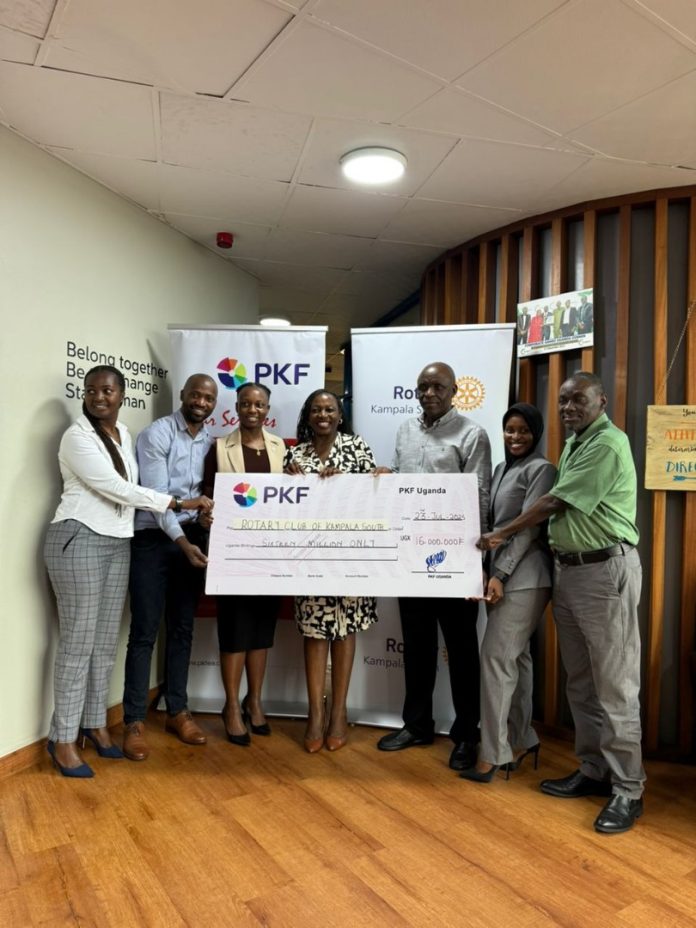
PKF Uganda has partnered with Rotary Club of Kampala South with a Generous Shs16 million Contribution towards the upgrade of the Mengo Hospital Dialysis Centre. Established in 2022 through a partnership with the Rotary Club of Kampala South, the Mengo Dialysis Unit began with three dialysis beds and has since carried out over 3,000 dialysis sessions.
Currently, the unit serves approximately 14 patients per day, offering affordable and accessible care to individuals with kidney disease.
Speaking about the Shs16 million donation from his office, Rotary District Governor of District 9213, Geoffrey Martin Kitakule, reaffirmed Rotary’s commitment to supporting the unit in its expansion and affordability efforts. He thanked PKF Uganda for Uniting For Good with the Rotary Club of Kampala South in supporting such a noble cause that aligns with the core values of Rotary to extend affordable health care services to the public.
This donation by PKF will support the center to acquire machines that will further lower the costs of Dialysis although the Dialysis costs at Mengo Hospital remain the most affordable in the country but are still out of reach to many.
President Faridah Namutebi of the Rotary Club of Kampala South extended her sincerest gratitude to PKF Uganda for their continued generosity and dedication to the Rotary Kampala South shared mission. This additional Shs16,000,000 will further empower the Rotary Club of Kampala South to continue this vital work and expand the Dialysis center, to touch more lives.
“ This is a testament to the power of partnership and the incredible impact we can make when we work together. Let’s celebrate this fantastic news and look forward to the even greater good we can achieve with PKF Uganda’s continued support!” President Faridah Namutebi Rotary Club of Kampala South
The set up of Mengo Dialysis Unit was initiated to address the critical need for affordable dialysis—a challenge both locally and globally. We call on all partners to help us lower these costs so that even the average Ugandan can access this essential care. President Faridah Namutebi said.
This year, Rotary District 9213 has campaigned under the hashtag #RotaryEyamba to show the impact Rotary has on the Ugandan community, and the partnership with PKF Uganda is a testimony that Rotary is indeed Uniting for Good with like-minded partners, and it is here to help improve lives.
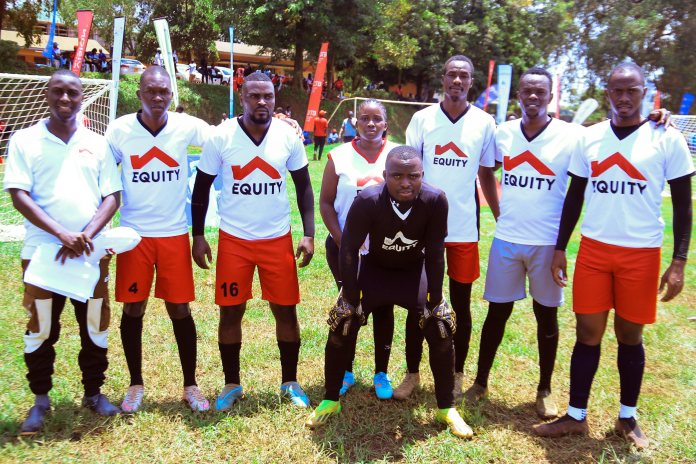
The Equity Bank team in the second season of the Corporate. Sports Network
The Luzira Prisons Grounds came alive with energy and camaraderie on Sunday, July 27, 2025 as Equity Bank Uganda made a vibrant appearance at the second season of the Corporate Sports Network (CSN), under the theme “Networking Through Sports.”
More than 40 companies gathered for the action-packed day, featuring football, basketball, darts, netball, volleyball, swimming, and fun games creating a dynamic platform for corporate networking through athletic competition.
Equity Bank Uganda, a new entrant to this year’s CSN season, embraced the spirit of the event with remarkable enthusiasm, living out their motto: “We don’t just support sport. We live it.” Their staff took to the pitches and courts with full energy, competing in multiple disciplines and bonding through the power of sport.
Equity’s football team delivered a spirited performance in the 7-a-side matches, which emphasized inclusivity by requiring at least two female players on the field. While match scores for Equity Bank were not fully published, their coordination, teamwork, and competitive flair were evident throughout the games.
In basketball, the bank’s team showcased agility and strong court presence, going head-to-head with seasoned teams such as MTN Uganda, the 2022 category champions. Though scores were not released, Equity’s display reflected a strong commitment to wellness and active engagement.
Darts, a new addition to the CSN lineup following high demand from CEOs and executives, also saw Equity Bank’s staff step up. With focus and steady hands, they tested their precision skills in what proved to be a popular new feature of the league.
The day brought together a diverse range of competitors, including returning champions Centenary Bank, Absa Bank, Uganda Bureau of Statistics (UBOS), Electricity Regulatory Authority (ERA), Uganda Red Cross, Uganda Revenue Authority (URA), Hotel Africana, and first-time participants such as Autochek Uganda and Kyambogo University. Hotel Africana, notably, was the overall winner of the 2022 season with 326 points.
Beyond the main games, fun and recreational activities such as tug-of-war, sack races, and swimming added to the festive atmosphere. While full results from the July 27 event are yet to be published, Equity Bank Uganda’s enthusiastic involvement highlighted their growing role in the corporate wellness and networking space.
The CSN season continues with upcoming fixtures scheduled at key venues, including Mandela National Stadium, Hamz Stadium Nakivubo, and Makerere University Business School.
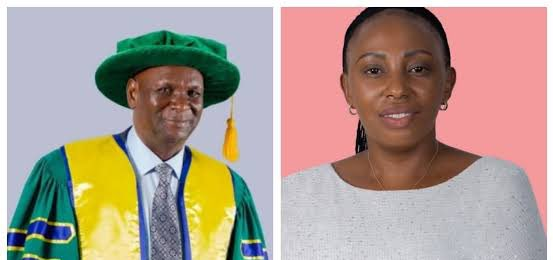
Prof. Badru Kateregga and his wife, Mrs. Jolly Shubaiha Kateregga are in a bitter fight over property and DNA results that indicated that one of the children didn't match the father's results.
Mrs Jolly Shubaiha Kateregga has firmly denied allegations by her estranged husband, Professor Badru Kateregga, the founding Vice Chancellor of Kampala University claiming she stole vehicles, land titles and other property from their matrimonial home and allegedly transported them to Rwanda.
In an official statement titled Response to False Claims made by Professor Badru Kateregga Regarding Property and Land Titles, she stated, “I … categorically reject and strongly condemn the continued falsehoods being circulated by Professor Badru Kateregga, particularly the recent claims that I stole property from our matrimonial home … and allegedly transported them to Rwanda.”
She clarified that all the referenced property remains intact and secure at their Buziga residence which she currently shares with their children.
She revealed, “None of the property has been moved, sold, or transferred unlawfully … The repeated statements alleging that I have stolen property … are completely baseless, unsupported by any evidence, and intended to mislead the public.”
Mrs Kateregga further explained that the Buziga home is jointly registered in both their names and cannot be sold or mortgaged without mutual consent as provided by law. She accused Prof. Kateregga of waging a media war instead of seeking legal redress.
She added, “Instead of using formal legal channels to resolve any grievances, Professor Kateregga has chosen to wage a media war, continually making unverified and false claims in the public domain. This is not only irresponsible but a clear abuse of his stature and influence.”
Meanwhile, Professor Badru Kateregga, founder and Vice Chancellor of Kampala University, has publicly accused his wife of stealing property worth approximately UGX 2 billion, including a Range Rover Vogue, a Land Cruiser V8, a Jeep, important academic and university documents and cash. He also claims she and her associates are illegally attempting to sell their Buziga home and other prime land, despite caveats and warnings published in local newspapers.
“I have been made to understand that my house at Buziga and various plots of prime land are being put on sale without my consent … despite existing caveats …,” he said.
Professor Kateregga further alleges that police have failed to act on a directive by the Inspector General of Police (IGP) to investigate an attempted murder claim he made against Mrs. Kateregga and to help him regain access to the home from which he fled in September 2024. According to him, his complaints have been ignored and law enforcement has not intervened as expected.
The Uganda Police Force, however, has dismissed these allegations as false and misleading. Police spokesperson Rusoke Kituuma stated that the case was thoroughly investigated and found to be a civil dispute over jointly owned matrimonial property. The file was forwarded to the Office of the Director of Public Prosecutions (ODPP), which guided that the matter is best handled in civil court.
“The domestic dispute … was brought to the attention of the Uganda Police on November 7, 2024. Following receipt of the complaint, the matter was fully investigated under CID HQRS/GEF 306/204 … Upon perusal, on February 18, 2025, the ODPP guided that the family differences are rooted in property ownership … which is out of control of Police and can best be handled by a civil court,” the police clarified.
Police emphasized that they have no authority to evict Mrs. Kateregga without a court order and are acting in accordance with legal procedure. Additionally, CID Director AIGP Tom Magambo denied claims that he visited the couple’s Buziga home or held private meetings with either party, calling such accusations “malicious blackmail.”
Mrs Kateregga has called upon the media and public to treat the allegations with the contempt they deserve and to respect the dignity of her family during this trying time.
“I remain committed to protecting what lawfully belongs to me and my children, and I will continue to defend myself against all forms of defamation, intimidation, and misinformation. I trust that in due time, the truth will prevail, and justice will take its course,” Mrs. Kateregga said.
With both parties standing their ground and law enforcement declining to intervene in what has now been confirmed as a civil matter, the dispute appears headed to court as the only avenue for resolution.