Stanbic Bank
Stanbic Bank
25 C
Kampala
Stanbic Bank
Stanbic Bank
Home Blog Page 143

Controversy surrounds Prof. Badru Kateregga’s allegations against wife amid on-going investigations

Professor Badru Kateregga, the founder and Vice Chancellor of Kampala University, is at the centre of public attention following a series of allegations he made against his wife, Mrs. Jolly Shubaiha Kateregga. In multiple media appearances, Prof. Kateregga accused his wife of assaulting him and forcefully evicting him from their marital home in September 2024. He also claimed she was attempting to wrest control of his businesses, including Kampala University.

However, a detailed investigation and access to medical and legal records present a different picture. Medical reports from International Hospital Kampala (IHK) indicate that the injuries Prof. Kateregga referenced particularly the scars on his head were a result of neurosurgical procedures performed in September 2024. The procedures were undertaken to address blood clots and other longstanding medical conditions, according to medical staff familiar with the case.

Sources close to the family revealed that Mrs. Kateregga had been instrumental in her husband’s care over the years, arranging treatment both locally and abroad. Around the time Prof. Kateregga claimed he was assaulted and detained at home, he was seen in public, attending various events alongside his wife. Video footage reportedly shows him leaving his home unaided, conversing on his phone, and showing no signs of physical injury.

It is further understood that Prof. Kateregga had been experiencing persistent headaches in the days prior to his hospitalization, and his wife had tried to persuade him to seek medical attention—efforts he initially declined. He was later admitted to hospital by his older children, leading to the emergency surgery. Following his discharge, Prof. Kateregga opted not to return home, instead moving into a rented residence where he reportedly spent time with his children from previous relationships.

Sources indicate that the couple had on-going domestic disagreements, but the allegations of physical abuse came as a shock to Mrs. Kateregga. “I was deeply hurt and surprised to hear those claims. I have never laid a hand on my husband and would never do so. I was raised to respect him and stand by him, especially in times of illness,” she said when contacted.

In December 2024, Prof. Kateregga filed an assault and domestic violence complaint at CID Headquarters in Kibuli. Police investigations, however, found no supporting evidence, and the Directorate of Public Prosecutions (DPP) dismissed the case due to lack of merit.

As the fallout continued, Mrs. Kateregga filed an application in the Family Court at Makindye seeking maintenance for their three minor children, citing prolonged absence and neglect. During the proceedings, Prof. Kateregga requested a court order for DNA testing, which Mrs. Kateregga did not oppose. The DNA tests were scheduled to be conducted on April 8, 2025, at the Government Analytical Laboratory. The court also directed Prof. Kateregga to provide financial support for the children in the interim.

On the issue of Kampala University’s ownership, documents reveal that Mrs. Kateregga is a legally recognized shareholder and director. A forensic handwriting report has confirmed that attempts to remove her from the company’s records were executed using forged signatures and backdated documents, raising concerns of fraud and corporate malpractice. The alterations had reportedly replaced her position with some of Prof. Kateregga’s older children.

In a recent incident that raised further eyebrows, a photo surfaced showing Prof. Kateregga posing with several armed counter-terrorism officers, which some interpreted as an effort to project intimidation amidst the escalating domestic and corporate disputes.

Prof. Kateregga sitted surrounded by several counter terrorism guards.

Observers and stakeholders have expressed concern that the on-going saga could tarnish the image of Kampala University, an institution that has already been navigating various internal challenges.

Despite the public nature of the disputes, some voices have called for restraint and the pursuit of justice through appropriate legal and administrative channels. As the situation develops, both legal and institutional implications remain to be seen.

Stories Continues after ad

Electoral Commission reschedules display of voters’ registers ahead of 2026 general elections

The Electoral Commission has announced the rescheduling of the Display of the National Voters’ Register and the Registers for Special Interest Groups (SIGs) in preparation for the 2025/2026 General Elections.

Originally slated to begin on April 17, 2025, the display of the National Voters’ Register will now commence on April 25, 2025 and conclude on May 15, 2025. Similarly, the display of the Registers for Special Interest Groups — including Youth, Persons with Disabilities, and Older Persons — will also begin on April 25, 2025, but conclude earlier on May 8, 2025.

Justice Simon Byabakama Mugenyi, Chairperson of the Electoral Commission, emphasized the importance of the exercise, saying, “The Electoral Commission is mandated under Article 61 (1)(e) of the Constitution and Section 18 and 20 of the Electoral Commission Act to compile, maintain, revise, and update the National Voters Register.”

He added that the adjustment follows a revised roadmap for the upcoming elections.

“This exercise is a critical step to ensure that the Register is accurate and reflects all eligible voters ahead of the General Elections.”

Justice Byabakama also clarified the schedule for handling recommendations on inclusions and deletions by the respective Parish Tribunals, which will now run from Friday, May 16 to Monday, May 26, 2025.

The Commission called upon all stakeholders and eligible citizens to actively participate in the exercise:

“We appeal to all stakeholders in the electoral process to participate in the display exercise and to adhere to the guidelines that will be issued for the exercise being conducted in preparation for the 2025/2026 General Elections.”

The Display of the Voters’ Register provides an opportunity for the public to verify their details, raise objections regarding ineligible voters, and ensure the accuracy of the electoral roll before it is finalized.

Stories Continues after ad

Entebbe Airport registers over 178,000 passengers in March 2025

Entebbe International Airport received a total of 178,383 international passengers in March 2025, statistics by the Uganda Civil Aviation Authority indicate.

Entebbe recorded 83,661 arriving and 94,722 departing passengers, an average of 5,754 passengers per day.

This means the March 2025 international passenger traffic was slightly higher than the total of 171,990 passengers recorded in the same period of March 2024 by 6,393 passengers.

However, the previous month of February 2025 recorded a total of 161,095 international passengers, which was lower than the 175,630 recorded in the same month of February 2024.

Vianney Luggya, the UCCA spokesperson, said it has so far been a year of highs and lows, marked by varied passenger traffic patterns, with January 2025 recording 216,740 international passengers, the second highest traffic recorded in a single month in the history of the airport.

“The March 2025 growth is partly attributed to Uganda’s hosting of international conferences, tourism promotion, the coming on board of new air operators like Flynas, which commenced direct flights between Riyadh and Entebbe in January 2025 and Uganda Airlines’ sustained operations on new routes, among others,” he explained.

In relation to cargo, Entebbe International Airport recorded 1,965 metric tones of imports and 3,887 metric tones of exports, a total of 5,852 metric tones of cargo. Exports continue to record higher figures than imports, which increases foreign exchange earnings, among other economic benefits for the country.

Stories Continues after ad

NRM MP Flag Bearer elections set for July

Richard Todwong, NRM Secretary General
The National Resistance Movement (NRM) has released its electoral roadmap ahead of the 2026 general elections, placing Members of Parliament and party flag bearers at the center of its July 2025 internal elections.

Speaking at the party headquarters on Kyadondo Road in Kampala, NRM Secretary General Richard Todwong revealed that the party has so far registered 20.7 million members, accounting for approximately 40% of Uganda’s population. He described the roadmap as a significant milestone in preparing the party structures and leadership for the upcoming national polls.

“We are launching this roadmap today to guide our members on the activities that the party is going to undertake as we build momentum for the general election,” said Todwong. “This is a very important milestone in the party.”

According to the schedule, Members of Parliament and aspiring party flag bearers will express interest between June 2and 15, 2025. Nominations will be conducted from June 17 to 30, followed by joint campaigns running from July 1 to 14. Polling will take place on July 16, 2025. The party emphasized that this phase is central to its preparations, calling on all leaders and aspiring candidates to prioritize unity, transparency and mobilization.

The electoral process will begin at the grassroots, with village-level and LC1 Chairperson elections scheduled to commence with the expression of interest and nominations from April 24 to 30, 2025. Campaigns will take place from May 1 to 5, with polling set for May 6, 2025. The NRM Electoral Commission Chairperson described this day as one that will see the country “painted yellow” as members return to their villages to actively participate in party building.

Special interest groups, including youth, persons with disabilities, and older persons, will express interest and be nominated between May 19 and 21. Their campaigns are set for May 22 and 23, and polling will be held on May 24.

Local government structures will follow in a phased approach. Municipality and city division mayors will express interest from June 2 to 15, with nominations taking place from June 17 to 30. Campaigns for these positions will run from July 1 to 14, and voting is scheduled for July 24, 2025.

Local government councils at LC4 level, including municipality and city division councillors, will express interest between July 28 and August 4. Nominations will be held from August 5 to 9, campaigns from August 10 to 17, and polling on August 18. For LC3 councils, town councils, and municipal divisions, expressions of interest will follow the same dates, with campaigns running from August 10 to 14, and elections on August 15.

The party’s National Conference, the highest organ of the NRM, will convene from August 22 to 25, 2025. During this conference, the party will nominate its presidential flag bearer, elect members of the national executive committee, and endorse candidates representing special interest groups.

The final leg of the roadmap includes nominations by the National Electoral Commission. These will begin with NRM EC nominations from September 3 to 12. The party’s National Commission will nominate its parliamentary candidates on September 16 and 17, while the Electoral Commission will nominate presidential candidates on October 2 and 3, 2025.

Todwong urged party members across the country to pay close attention to the timelines, remain engaged, and uphold party values throughout the process. With its vast membership and deeply rooted structures, the NRM is confident in its readiness to mobilize and compete effectively in the 2026 general elections.

Stories Continues after ad
Karamoja farmers receive 55 walking tractors to boost food production

The Food and Agriculture Organization (FAO) of the United Nations, in partnership with the Ministry of Agriculture, Animal Industry, and Fisheries (MAAIF), on Monday handed over 55 walking tractors to farmers from the region.

The handover ceremony took place at the National Agricultural Mechanization Referral Centre in Namalere, Wakiso District. The event was part of the “Fostering Sustainability and Resilience for Food Security in the Karamoja Sub-region” (F-SURE) project, which aims to bolster the region’s capacity to open land and improve food production.

Dr. Antonio Querido, the outgoing FAO Country Representative in Uganda, emphasized the transformative power of mechanization.

“This equipment will revolutionize the lives of its recipients. We firmly believe mechanization is key to transforming Africa’s agri-food system. For too long, we’ve relied on manual tools like the hand hoe, resulting in inefficient production systems,” he said.

Jointly designed by FAO, MAAIF, and UNDP, the F-SURE project targets key challenges in Karamoja. Dr. Querido noted that the project has already reached over 12,000 farmers through various components, including technology adoption to increase productivity.

Eng. Waneloba Francis, representing the MAAIF Permanent Secretary, reaffirmed the government’s commitment to inclusive agricultural growth. He said the government is particularly focused on ensuring that the Karamoja sub-region is not left behind. To achieve this, they are promoting a shift from traditional pastoralism to agro-pastoralism, where both livestock and crop production can thrive. He stressed the importance of sustainable practices such as water provision and pasture development closer to homesteads, aiming to reduce conflicts and improve co-existence between crop farming and livestock.

Dr. Paul Ayella of MAAIF explained that the project is structured into two major components. The first component, implemented by UNDP, focuses on developing supportive policies and incentives at the district level to improve crop and livestock production, food value chains, and integrated natural resource management. The second component, led by FAO, is centered on increasing land under integrated and sustainable land management practices, boosting the productivity of the Karamoja landscape. It also introduced frameworks for resilience monitoring and integration into production systems.

Kotido LCV Chairperson, Mr. Lotee Paul Komol, expressed gratitude on behalf of the region.

“On behalf of the people of Karamoja, I extend my deepest gratitude for the strong support you’ve provided to Uganda, particularly our region. FAO has been a vital partner in Karamoja’s development,” he said.

He also lauded the Ministry of Agriculture for its central role in national development, urging the ministry to fast-track additional support for livestock and irrigation, including the construction of megadams in each of Karamoja’s nine districts.

The donation includes 55 walk-behind tractors equipped with attachments such as ploughs, seed planters, and trailers. In addition, over 40 water boilers and irrigation kits will support improved water management and boost resilience in the region.

The project will also provide training for farmer groups on how to operate the equipment and adopt sustainable agribusiness models. FAO technical advisors will continue to work with these groups to ensure proper operation, maintenance, and long-term impact of the machinery.

“We’ll continue working with these groups to guarantee the project’s long-term impact,” said Dr. Querido.

As the project moves forward, the tractors will be distributed among smallholder farmer groups through farmer field schools to promote mechanization at the grassroots level. The Ministry of Agriculture has pledged to establish strong support structures to ensure sustainability and efficiency in equipment use.

The people of Karamoja are hopeful that this initiative will bring lasting transformation to their livelihoods and food systems.

Stories Continues after ad

Uganda requires shs23tn to achieve universal electricity access

Uganda has unveiled an ambitious plan to achieve universal electricity access by 2040, but bridging the gap will require a staggering UGX 23 trillion in new energy infrastructure investments.

This was revealed by State Minister for Energy, Sidronious Okasaai Opolot, during the 2025 Energy Access Investment Forum (EAIF) held at Speke Resort Munyonyo Kampala.

Speaking during the Energy Access Investment Forum (EAIF) 2025 in Kampala, Okasaai acknowledged that despite major investments totaling over USD 1.5 billion in the past decade, the funding gap remains wide.

“We’re investing across the generation, transmission, and distribution segments, but we need greater collaboration and financing—especially from the private sector—to deliver on our promise of universal energy access,” Okasaai said. He cited Uganda’s vast potential in hydro, solar, wind, and geothermal resources, noting that the government’s free electricity connection policy is a key tool to accelerate household access by 2030.

Held under the theme “Accelerating Sustainable Energy Investment in Africa,” the three-day EAIF 2025 convened hundreds of energy leaders, financiers, and policy makers. The event was co-hosted by the Alliance for Rural Electrification (ARE) and the European Union through its Global Gateway Initiative, with support from GET.invest.

The focus is not only on traditional grid expansion, but also on off-grid and clean energy solutions. Okasaai highlighted key initiatives like the Uganda Energy Access Scale-up Project (EASP), funded by the World Bank, which supports mini-grids, solar systems, and clean cooking technologies—particularly in refugee settlements and rural communities.

“This is about productive use of electricity, not just lighting homes,” he said. “We want to power businesses, schools, health centres, and boost economic activity.”

ARE CEO David Lecoque echoed this vision, stating, “We need to create an enabling environment for investment. The energy transition in Africa is not only possible—it’s already happening, and Uganda is a key part of that.”

Private sector voices at the forum stressed the need for credit access, risk guarantees, and technology transfer to make Uganda’s energy goals bankable. Carol Koech of Schneider Electric noted that empowering local entrepreneurs and ensuring affordable financing would unlock major gains in access and sustainability.

On the diplomatic front, EU Ambassador Jan Sadek reaffirmed the bloc’s commitment: “We’re supporting Uganda not just with grants, but also concessional loans to scale access, promote clean cooking, and protect the environment for future generations.”

Uganda’s plan is aligned with SDG 7 and the Paris Agreement, and comes as global leaders move to triple renewable energy capacity by 2030. The momentum from events like M300 in Tanzania, where over USD 50 billion was pledged for energy access globally, suggests that countries like Uganda could ride the wave of blended finance and green innovation to close the energy gap—if the right policies and partnerships are in place.

Stories Continues after ad
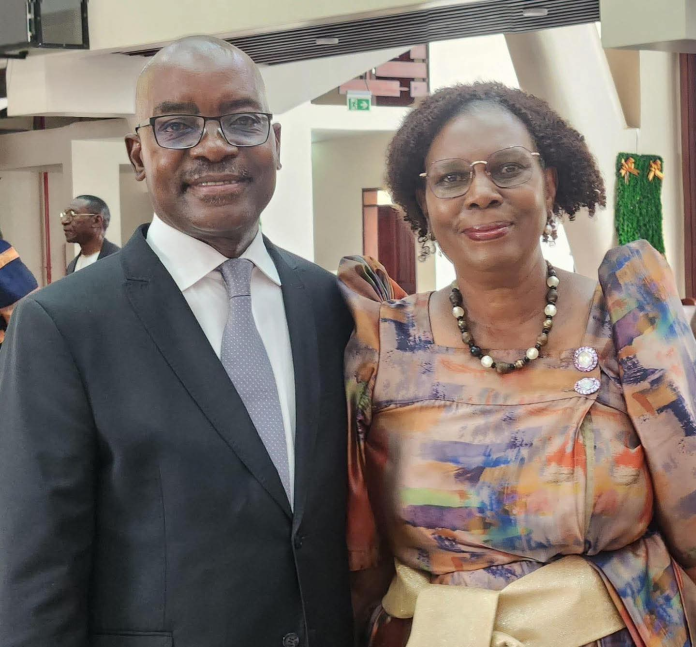
KENYA: Gachagua accuses police of plotting assassination attempts

Kenya’s Deputy President, H.E. Rigathi Gachagua, has made serious allegations against top security officials, accusing them of orchestrating attempts on his life and unleashing violence against him, his family and supporters.

In the letter dated April 15, 2025, addressed to the Inspector General of Police, Mr. Douglas Kanja Kirocho and copied to President William Ruto, international human rights bodies and key diplomatic missions, Gachagua says the threats he faces are not only credible but well-coordinated and deliberately ignored by the very institutions mandated to protect him.

“You are clearly perpetuating crime and violence,” Gachagua wrote in reference to the IG, warning that continued silence and inaction could plunge Kenya into “political instability and breakdown of law and order.”

Gachagua lists a series of disturbing incidents allegedly aimed at ending his life. These include attacks at church services, prayer rallies, and public gatherings — many of which he claims were facilitated or executed by uniformed and non-uniformed police officers working with criminal gangs.

“On 28th December, 2024 in Shamata, Nyandarua County, an inspector of police flanked by organized criminal gangs threw teargas canister at me to scatter my supporters and create a fertile avenue to attack me with assassination intent,” he stated.

In another event on January 18, 2025, during a prayer rally in Nyeri Town, Gachagua says an attack gang hijacked the meeting while his spouse, Pastor Dorcas Rigathi, was preaching. He claims his motorcade was later trailed and his staff harassed in Naivasha in a separate incident on March 29, 2025.

“Not a single police officer responded despite the police station being a few meters from the church,” he wrote, describing an April 6, 2025 church service in Kasarani that was violently disrupted by machete-wielding gangs.

He also claims that officers from the National Intelligence Service have been trailing him and his family in unmarked vehicles across counties, including a specific case on December 19, 2024, when an NIS agent allegedly followed him for over 150 kilometers.

“This is an affront to the right to privacy,” he charged, linking the surveillance to wider plans coordinated with criminal networks.

Gachagua warns that if the threats against him are not addressed, Kenya risks a repeat of the post-election violence seen in 2007, and he places the responsibility squarely on the Inspector General and security agencies.

“Be reminded that in the run-up to the 2007 General Elections in Kenya, similar patterns of incidents… exposed Kenya into international shame,” he wrote. “Your one-time holder of the office you do, found his way to the International Criminal Court – ICC for crimes against humanity.”

He demands the immediate arrest and prosecution of all those involved in the attacks, provision of personal security and protection at public events, an end to the trailing of his family, and security for his properties. Gachagua also urges the police to desist from interfering in peaceful gatherings organized by citizens.

“Take firm notice that further violence and assassination attempts be meted on me whatsoever; you will be personally responsible to the people of the Republic of Kenya and to the entire world,” he warned.

Stories Continues after ad
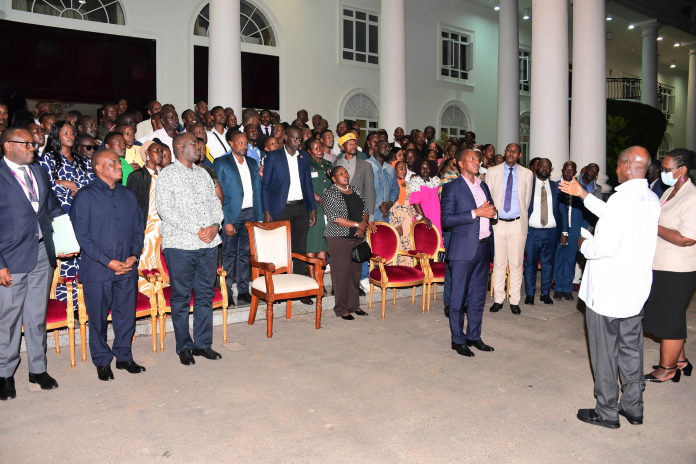
Museveni hails Dr. Magoola for securing over 100 U.S patents for Dei Biopharma

President Yoweri Kaguta Museveni has applauded Dr. Matthias Magoola, the founder and Managing Director of Dei Biopharma Ltd, for his extraordinary achievements in medical innovation, following the filing of over 100 patents with the United States Patent and Trademark Office (USPTO) for treatments targeting a wide range of diseases.

Museveni revealed he had met with Dr. Magoola to receive updates on the company’s groundbreaking projects and expressed admiration for the scale and ambition of Dei Biopharma’s work, which includes research and development of treatments for cancer, HIV, Alzheimer’s, malaria, tuberculosis, and diabetes.

 “I am happy to learn that he has filed over 100 patents with the United States Patent Office for treating different diseases… some of which have been granted,” Museveni said.

Museveni affirmed the government’s commitment to facilitating the necessary regulatory processes to ensure Dei Biopharma’s drugs can be licensed and produced locally for both domestic and international markets.

“The government will support his company with the necessary accreditation requirements in order to obtain licenses for drugs to be produced locally for use in global markets,” he assured.

The President’s endorsement follows growing national and international attention on Dei Biopharma, particularly after Dr. Magoola secured a U.S. patent for an innovative cancer treatment drug.

 Minister for the Presidency, Hon. Milly Babalanda also praised Dr. Magoola for what she described as a “big achievement” for Uganda and the wider scientific community.

“I congratulate Dr. Matthias Magoola upon securing a US patent for his cancer treatment drug,” Babalanda stated.

She added, “This is a big achievement and a step in the right direction for scientific innovation contributing to a better world.”

The Minister also expressed gratitude to President Museveni for his unwavering support of Dr. Magoola’s vision, including the establishment of a state-of-the-art pharmaceuticals factory in Matugga.

“I thank the President for believing in Dr. Magoola’s vision and supporting the setting up of the modern pharmaceuticals factory at Matugga for drugs and vaccines against various ailments including HIV/AIDS and sickle cell,” she noted.

Hon. Babalanda further called on Ugandans to take pride in locally driven innovation, urging, “As Ugandans, we should be proud and support our own,”

Dei BioPharma Ltd is a Uganda-funded research-based drugs and vaccines manufacturing firm located in Matugga, Wakiso District. It is the largest pharmaceutical manufacturing and also the first biotechnology products company that will introduce most advanced technologies such as mRNA, gene therapy, novel vaccines, and recombinant drugs, besides other essential medicines in Uganda that are compliant with stringent regulatory country good manufacturing practices.

Stories Continues after ad
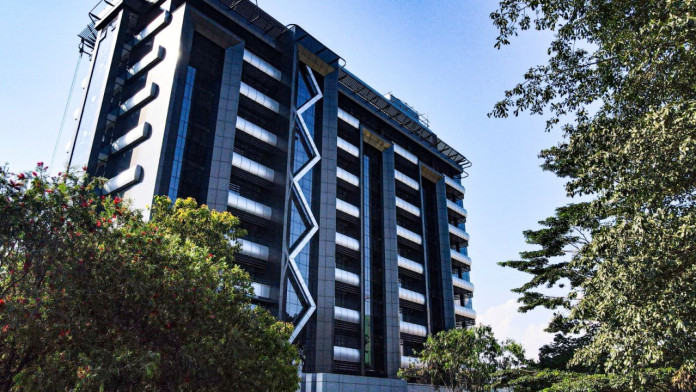
EAGC launches farmer-owned G-Hubs to enhance grain commerce in East Africa

The Eastern Africa Grain Council (EAGC) has launched farmer-owned and operated “Grain Trade Business Hubs,” aimed at addressing the challenges faced by smallholder farmers.

Speaking at an agribusiness exhibition, Gerald Makau Masila, the EAGC’s CEO, said that the G-Hubs’ core mission is to empower farmers through collective action. He explained the hubs will provide essential resources, including streamlined access to markets via the Gsoko platform.

The announcement occurred at an annual agribusiness expo hosted by the National Crops Resources Research Institute (NaCRRI). The event, a partnership between the National Agricultural Research Organisation (NARO), the EAGC, and DANIDA Green Business Partnerships (DGBP), focused on sustainable food systems, climate-smart agriculture trade, and economic development in Uganda.

Masila emphasized that a key function of the G-Hubs is to facilitate collective action. By uniting farmer cooperatives, the hubs will enable resource pooling, significantly increasing farmers’ bargaining power and operational efficiency.

Improved access to essential inputs is another crucial benefit, Masila noted. Through the hubs’ consolidated purchasing power, farmers can access higher-quality inputs at lower costs.

The CEO also highlighted the vital role of G-Hubs in post-harvest management, providing access to proper storage and quality control measures to minimize losses and preserve grain quality.

A central function is enhancing market access, significantly through the EAGC’s Gsoko platform. Masila said that the EAGC will actively work to connect farmers with premium markets regionally and internationally via these hubs and the Gsoko platform. By aggregating produce, G-Hubs can offer larger, consistent volumes attractive to buyers. The Gsoko platform will further streamline this process, providing a direct link between farmers and buyers. Grain stored in the G-Hubs will be listed on this platform, a weekly trade catalog for EAGC members. Potential buyers can view commodities and submit inquiries, with the EAGC trade desk connecting farmer-producers (via G-Hubs) with buyers.

To support sustainable practices, G-Hubs will offer technical support, providing advisory services on improved farming techniques. Masila stressed that this knowledge transfer is essential for long-term agricultural development.

In addition to these services, the G-Hubs will work to improve farmers’ access to financial services, including connections with credit institutions and output markets.

Masila underscored the EAGC’s pivotal role in supporting the G-Hubs’ development and operation, including capacity building and providing market intelligence via its Regional Agricultural Trade Intelligence Network (RATIN).

The EAGC will also engage in policy advocacy and foster strategic partnerships to further strengthen the hubs and enhance the grain value chain’s efficiency.

The G-Hub concept addresses challenges like high input costs and limited market access. By organizing farmers and leveraging the Gsoko platform, the EAGC aims to facilitate collective action and improve market linkages.

Regarding post-harvest handling, G-Hubs will provide central aggregation and storage facilities. Trained experts will ensure quality and food safety.

The Gsoko platform will be the crucial link to the market, facilitating contract negotiation and secure transactions, often managed through an EAGC settlement account. Masila noted this system has already facilitated significant regional grain trade.

Minister for Agriculture, Animal Industry and Fisheries Frank Tumwebaze emphasized the government’s commitment to supporting agricultural research institutions.

Dr. Sadik Kassim, deputy director of NARO, highlighted the organization’s mission to build resilience in the agricultural sector.

Stories Continues after ad

UMEME declares formal dispute with gov’t over buyout amount

UMEME Limited has officially declared a dispute with the Government of Uganda over the Buy Out Amount payable to the electricity distribution company, a move likely to trigger legal and financial implications for both parties and investors.

According to a Public Notice issued by the Board of Directors of UMEME on April 14, 2025, the company invoked dispute resolution clauses under the Support Agreement signed with the government, citing a disagreement regarding the financial terms of the Buy Out Amount. The dispute notice was served to the Ministry of Finance, Planning and Economic Development on April 11, 2025.

“In accordance with clauses 9.1 and 9.2 of the Support Agreement entered between Umeme Limited and the Government of Uganda, and pursuant to the resolution of its Board of Directors, Umeme has identified and formally declared a dispute in respect of, inter alia, the Buy Out Amount payable to the Company,” the notice stated.

UMEME indicated that the disagreement is rooted in interpretations of the Concession Agreement and will undergo the structured dispute resolution process outlined in the agreement.

“As stipulated in the dispute resolution clauses of the Concession Agreements, the Parties shall attempt in good faith to settle such Dispute within thirty (30) days commencing from the 11th day of April 2025,” the statement added.

If the dispute remains unresolved within the 30-day window, it will be escalated to arbitration in London, in line with international arbitration norms.

“In the event that no agreement is reached within the thirty (30) days, or such further period as may be agreed upon between the parties, the matter shall be referred to arbitration in London.”

Investors and the public have been advised to exercise caution when dealing in UMEME shares during this period of uncertainty.

The announcement, issued by UMEME’s legal representatives, Shonubi, Musoke & Co. Advocates, was made in compliance with Rule 36 and 38 of the Uganda Securities Exchange Listing Rules, 2025, and applicable Kenyan Capital Markets regulations.

Stories Continues after ad