Sudhir Ruparelia has once again solidified his place at the top of Uganda’s wealth pyramid, leading the Forbes Africa Billionaires List for 2025 with an estimated net worth of $1.6 billion.
The seasoned businessman and founder of the Ruparelia Group has built a vast empire spanning banking, real estate, insurance, education, floriculture, and hospitality. His dominance reflects not only personal resilience but also a continued influence on Uganda’s economic development.
Despite facing setbacks like the closure of Crane Bank in 2017, Ruparelia’s ventures have remained resilient, with iconic properties such as Speke Resort Munyonyo, Pearl Tower, Pearl Kampala Business Park, Kabira Country Club, Speke Apartments, Tagore Living, Bukoto Heights, just to mention, which cements his position as Uganda’s wealthiest individual.
Uganda’s business landscape continues to thrive with several other tycoons making their mark in diverse industries such as telecommunications, manufacturing, and logistics. The latest rankings released by Forbes reveal a dynamic mix of established magnates and emerging billionaires whose ventures are reshaping the country’s future while uplifting communities through philanthropy and social investments.
The new Forbes 2025 Billionaires List highlights Uganda’s top 10 richest individuals, all of whom have demonstrated remarkable growth, strategic acumen, and resilience amid global economic challenges.
The other wealthier Ugandans after Sudhir Ruparelia are listed below.
2. Drake Lubega
Following him is Drake Lubega, whose estimated wealth of $850 million is largely derived from his real estate portfolio across Kampala and other urban centers. Known for owning several commercial buildings, shopping arcades, and rental apartments in the bustling downtown areas of Kampala, Lubega has capitalized on prime locations to build his fortune. He has also ventured into hospitality and manufacturing, diversifying his sources of wealth.
3. Matovu Yanga
The third spot according to Forbes List of 2025, belongs to Mansoor Matovu Yanga, a real estate tycoon worth $785 million. Yanga’s portfolio includes high-value commercial buildings and residential properties within Kampala’s prime areas.
Additionally, Yanga has invested heavily in the logistics and transportation industry, maintaining a steady revenue stream from trucking and import-export operations.
4. John Bosco Muwonge
Real estate dominance continues with John Bosco Muwonge, whose net worth is estimated at $720 million. His investments are concentrated in the central business district of Kampala, where he owns multiple shopping malls, arcades, and luxury apartments.
Despite maintaining a low profile, Muwonge’s strategic acquisitions and developments have made him a formidable figure in Uganda’s property market.
5. Godfrey Kirumira
At number five is Godfrey Kirumira, valued at $700 million. Known for his involvement in petroleum, real estate, manufacturing, and hospitality, Kirumira chairs the Kwagalana Group, an association of Kampala’s wealthiest businessmen. His petroleum ventures under the GM Tumpeco banner have been particularly lucrative, bolstering his wealth considerably.
6. Guster Lule Ntake.
Ntake, with an estimated net worth of $697 million, is a seasoned entrepreneur whose wealth spans real estate, hospitality, and modern agriculture. His diversified portfolio includes high-end hotels, resorts, and commercial properties, making him one of Uganda’s most respected business figures.
7. Tom Kitandwe, whose wealth of $602.7 million is derived from various sectors including real estate, agriculture, and telecommunications. His vast landholdings and investments in modern farming techniques have established him as a key player in Uganda’s agribusiness sector.
8. Hamis Kiggundu, alias “Ham” as he is popularly known, follows closely in eighth with a fine fortune of $601.9 million. As one of the youngest billionaires on the list, Hamis Kiggundu has made a name for himself through real estate investments such as Ham Towers, Ham Shopping Mall, and the redevelopment of Nakivubo Stadium.
Additionally, Kiggundu is a published author and motivational speaker, actively promoting youth empowerment and entrepreneurship.
9. The ninth spot is shared by Christine Nabukeera and Charles Mbire, both with estimated net worths of $600 million each. Nabukeera is recognized for her investments in real estate and hospitality, particularly luxury apartments and high-value commercial properties. Meanwhile, Charles Mbire, one of Uganda’s most influential business figures, has diversified interests in telecommunications, finance, energy, and pharmaceuticals. As chairman of MTN Uganda, Mbire has been instrumental in driving the telecom giant’s growth within the region.
10. Rounding off the top 10 is Amos Nzeyi, with a net worth of $250 million. As the founder of Crown Beverages Limited, the franchise bottler of Pepsi in Uganda, Nzeyi’s entrepreneurial journey has spanned agriculture, hospitality, and real estate. His consistency in business has earned him a reputation as one of the country’s most reliable and successful entrepreneurs.
Beyond their staggering wealth, these business moguls continue to contribute significantly to Uganda’s economic development. From creating thousands of jobs to engaging in philanthropic efforts that improve education, health, and social welfare, their influence extends far beyond the business world.
For instance, Sudhir Ruparelia has funded various educational institutions through the Ruparelia Foundation, while Hamis Kiggundu actively supports youth empowerment initiatives.
Moreover, as Uganda continues to attract foreign investment and expand its economic base, the contributions of these billionaires remain crucial. They are not only shaping the present but also laying the groundwork for the country’s economic future.
Why Sudhir is still the richest Ugandan
Jubilee Allianz to merge with Sanlam General Insurance Uganda
Jubilee Allianz General Insurance Company Limited has announced plans to amalgamate with Sanlam General Insurance (Uganda) Limited
In a public notice issued on April 11, 2025, the board of directors of Jubilee Allianz General Insurance Company announced their intention to merge the company into Sanlam General Insurance (Uganda) Limited, subject to regulatory approval.
“Take notice that the board of directors of Jubilee Allianz General Insurance Company Limited has proposed that the company be amalgamated into Sanlam General Insurance (Uganda) Limited,” the statement read.
The move is made in accordance with Section 76 of the Insurance Act (Cap. 191) and is aimed at strengthening operational capabilities, streamlining services, and enhancing value for clients and stakeholders across both entities.
As per the notice, copies of the amalgamation proposal will be available for public inspection from April 14 to May 14, 2025, at the registered offices of the companies to be amalgamated. These are located at Plot 14, Jubilee Insurance Centre, Parliament Avenue, Kampala and Plot 18B, Clement Hill Road, Shimoni Office Village, Kampala. Members of the public can review these documents during official working hours — from 8:00 a.m. to 5:00 p.m., Monday to Friday, excluding public holidays.
The notice further advises that: “Any person that has reasonable ground to believe that he/she will be adversely affected by the proposed amalgamation should make a written representation to the Insurance Regulatory Authority stating his/her reasons, within thirty (30) days from the date of this publication.”
The notification was jointly signed by the Chief Executive Officer of Jubilee Allianz General Insurance Company Limited and the Chief Executive Officer of Sanlam General Insurance (Uganda) Limited.
Singers Fik Fameica, Vinka Light Up MUBS Cultural Gala
Singers Fik Fameica and Vinka brought electrifying energy to the Makerere University Business School (MUBS) Cultural Gala, turning the event into an unforgettable celebration of culture and connection.
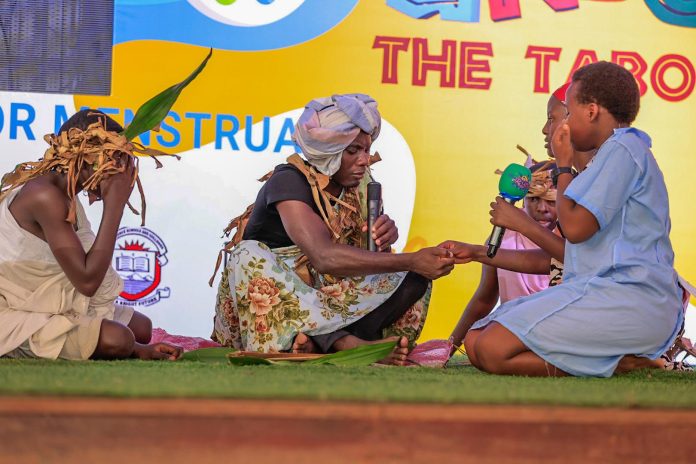
Held under the banner of the ‘Share a Coke’ campaign, the gala featured a colorful blend of traditional dance, art displays, fashion competitions, and storytelling sessions. The event was not only a celebration of heritage but also a demonstration of unity across borders.
In a unique twist, students from MUBS in Uganda and Jomo Kenyatta University of Agriculture and Technology (JKUAT) in Kenya participated in a virtual “Cross-Border Toast”, highlighting themes of friendship, unity, and shared Coca-Cola moments.
MUBS Guild President Moses Amanya expressed his enthusiasm about the event, calling it one of the most impactful in the university’s history.
“I am glad to report that what we have witnessed at the launch has never happened before at the university,” Amanya said.
“Each and every one of us here can bear witness that culture defines our identity. Culture, tribe, or family is not something we choose—it is God-given, and that is why we embrace it with all our hearts and minds.”
He further emphasized MUBS’ cultural diversity, noting its student body includes individuals from across Uganda and neighboring countries like South Sudan, Kenya, Tanzania, and Burundi.
Arthur Akankwasah, Coca-Cola Franchise Manager for Uganda, praised the campaign’s role in fostering meaningful regional engagement:
“The ‘Share a Coke’ campaign has always been about creating genuine human connections, and this East African activation takes that concept to a new level,” Akankwasah said.
“By connecting students across borders, we’re not just sharing a refreshing beverage – we’re sharing culture, friendship, and the spirit that unites East Africa. In today’s world, where digital interactions can feel fleeting, this campaign offers a tangible way for young people to connect authentically.”
Jim Muhwezi vows to arrest more PDM corrupt officials
Minister for Security, Maj. Gen. Jim Muhwezi, has vowed to crack down on corrupt officials sabotaging the Parish Development Model (PDM.
“We shall apprehend more of the corrupt officials, who are frustrating government programs like PDM,” Muhwezi warned via his X (formerly twitter) handle.
Muhwezi said that in PDM, beneficiaries must receive Shs 1,000,000 in full, nothing less.
“I encourage the public to be vigilant and report these corrupt officials to the Police,” he added, calling for active citizen involvement in protecting the integrity of the initiative.
While on PDM assessment tour in Ankole sub-region in February, President Museveni said that perpetrators will be required to work for at least ten months (Shs. 100,000 per month) until the Shs1 million is recovered.
“We shall arrest those who just eat PDM money and pay through labor while in prison. In the prisons, they have a lot of work to cultivate maize, cotton and other crops, so those who get PDM money and eat it will work there without pay,” Museveni said.
Early this week, The Ministry of Finance, Planning and Economic Development [MOFPED] released Shs 529 billion for the Parish Development Model [PDM], taking a big step in Uganda’s wealth creation efforts.
The PDM money is part of the Shs 19.7 trillion MOFED released for quarter 4 of the current financial year 2024/2025 which ends on June 30, 2025.
Each financial year government releases over Shs 1 trillion for the PDM, with each of the 10,594 parishes receiving Shs 100 million for the programmes beneficiaries that must get Shs 1 million soft loan from the parish revolving fund [PRF] to invest in selected enterprises like coffee farming, dairy farming, fish farming, piggery, poultry keeping, and banana growing among several other enterprises.
The PDM, a government initiative was launched in February 2022, to move 3.5 million households in Uganda from the subsistence to the money economy, with focus on the commercialisation of the agricultural value chain in the country.
Opposition caucus urges IGG to investigate Shs 100 million gift to MPs
The opposition in Parliament has called on the Inspector General of Government (IGG) to investigate the alleged Shs 100 million payments made to Members of Parliament (MPs) from the National Resistance Movement (NRM), independents, and selected opposition members.
On Tuesday, Leader of the Opposition Joel Ssenyonyi claimed that MPs received Shs 100 million as a “gift” from President Yoweri Museveni for passing the Coffee Amendment Bill. The bill led to the dissolution of the Uganda Coffee Development Authority (UCDA), with its functions transferred to the Ministry of Agriculture.
Following Ssenyonyi’s revelation, Chris Obore, Director of Communications at the Parliament of Uganda, dismissed the claims.
“Ignore rumors that MPs have been paid Shs 100 million for passing the Coffee Bill. Whoever is alleging this should respect the public by providing evidence, not propaganda. MPs receive statutory payments through the Clerk to Parliament and by way of a payslip. The rest is recycled propaganda,” Obore said.
He added, “Politics in Parliament is about persuading colleagues to see your point of view. It’s about balancing interests, bargaining, and building consensus. If you can’t do that, you’ll only shout and achieve nothing—not even blackmail will help. Populism alone isn’t enough.”
Earlier today, the opposition caucus, joined by other opposition MPs, issued a resolution strongly condemning the alleged secret cash payments of Shs 100 million to NRM MPs and selected Opposition and Independent MPs.
“We challenge the IGG to swing into action, recover all the payments, and prosecute the culprits,” the legislators resolved.
This is not the first time MPs have allegedly received payments in connection with legislation or alignment with the executive.
In 2005, MPs reportedly received Shs 5 million to support the removal of presidential term limits. Later, Shs 29 million was allegedly given to conduct “consultations” ahead of the removal of the presidential age limit. In 2020, during the COVID-19 pandemic, MPs were awarded Shs 20 million each as part of an emergency facilitation package.
Gov’t unpaid water bills hit Shs100b
The National Water and Sewerage Corporation (NWSC) has revealed that unpaid water bills by government institutions have reached Shs100 billion, deepening the Corporation’s financial challenges and hindering its efforts to expand water services across the country.
The NWSC Managing Director, Dr. Silver Mugisha, “It’s true that agencies owe NWSC a lot of money, amounting to Shs100 billion. This accumulation is mainly due to under-budgeting. The funds allocated and approved in government agencies’ budgets do not match the actual volume of water consumed. It’s not that they don’t want to pay— they pay, but what they receive is less than what they owe,” Mugisha said.
When asked why NWSC has not accelerated the use of prepaid water meters to improve debt collection, Mugisha pointed to the high investment costs associated with the prepaid system, as well as technical vulnerabilities.
“We once had a system hack that crippled the prepaid water service. Restoring it was very expensive. That’s why we’re moving cautiously. We prefer to develop our own prepaid meter technology that we can troubleshoot independently. We already have a prototype and are working on scaling it up,” he explained.
He also noted that prepaid water meters require consistent credit, which many government agencies fail to maintain. In some ministries where the meters were installed, the Finance Ministry has repeatedly instructed NWSC to reconnect services when credit runs out, rendering the system ineffective and wasteful despite the heavy investment.
Dr. Mugisha also defended the Corporation’s decision to convert some staff roles to part-time, arguing that it was necessary to reduce employee costs, which currently account for 42% of NWSC’s budget—well above the industry norm of 35%.
“NWSC is facing significant challenges due to unpaid government water bills and rising operational costs. Employee benefits are a major expense, accounting for 42% of our budget. That’s above the industry benchmark of 35%. This is not financially sustainable,” he said.
He emphasized that the move is in line with the NWSC Act, which mandates the Corporation to operate in a financially and commercially viable manner.
“This trend is at odds with the Act. We are mandated to operate commercially. Our existence depends on being financially viable,” Mugisha said.
Addressing concerns that staffs were being forced into part-time work, he clarified that the decision was voluntary and part of a broader strategy to maintain the Corporation’s viability.
“The NWSC Board of Directors approved this policy to ensure we remain afloat and can contribute more to internal investments. If we reduce staff costs from 42% to 35%, we’ll have more money to improve water service delivery,” he said.
“We’re not forcing anyone. We’ve issued an expression of interest for staff to opt into part-time work. Otherwise, contract terms are discussed upon renewal. At that point, if we offer you a three-day workweek and you agree, how is that coercion? Isn’t that better than what MPs did when they rationalised agencies and rendered many people jobless or underpaid?”
Kampala Parents School prefect elections heat up as campaigns intensify
The race for leadership at Kampala Parents School is officially on, and the excitement is palpable! Aspiring prefects have been working overtime, not only meeting with the Electoral Committee for an important briefing but also taking their campaigns to new heights with high-energy speeches, creative posters, and peer-to-peer engagements.
This week, a group of passionate young candidates vying for various prefectural positions gathered for an engaging session with the school’s Electoral Committee.
The meeting was not only about understanding the election guidelines and procedures but also a dynamic opportunity for the candidates to get advice on running a fair and transparent campaign.

With the elections fast approaching, these budding leaders are stepping up their efforts, hitting the campaign trail in full gear. Classrooms, hallways, and notice boards are adorned with colorful posters and catchy slogans as candidates showcase their manifestos.
Whether it’s a promise of improved student welfare, a cleaner school environment or stronger peer support systems, the candidates are using every creative tool at their disposal to win the hearts and minds of their peers.
The minds believe that they can bring real change with plans to work closely with fellow students to make sure everyone’s voice is heard creating a school community that is not only academically strong but also united and inclusive.
The atmosphere in school is charged with the excitement of friendly debates and open discussions. Students are eagerly gathering in groups to discuss the strengths of their chosen candidates, with each new day seeing a surge of creativity and competition. Some candidates are even hosting rallies during break times, where they present their goals, aspirations and visions for a better school.
The campaigns are very intense, and the students love every moment of it. The candidates are speaking to students in every corner of the school to understand their needs.

Meanwhile, the Electoral Committee has been working tirelessly behind the scenes, ensuring a smooth election process. They’ve provided the candidates with guidelines for fair campaigning, reminding them to keep things respectful and focused on service rather than rivalry.
The committee has also made it clear that the elections will be governed by a strict code of conduct, ensuring the process remains both fair and fun.
The committee is committed to providing a platform for all students to showcase their leadership qualities in order to create a vibrant school community where everyone has a say and is empowered to lead.
As the campaigns continue to gain momentum, the anticipation is building for what promises to be a competitive and spirited election. With students rallying behind their chosen leaders and the school buzzing with campaign activities, one thing is clear, Kampala Parents School is not just preparing its leaders of tomorrow, but also igniting a passion for leadership and service that will last a lifetime.
A Lottery That’s Changing Lives In Uganda
By Eric Mabuza Jnr, General Manager, ITHUBA Uganda
When we launched the Uganda National Lottery just a few months ago, we didn’t simply introduce a game. We introduced a promise—a promise of fairness, opportunity, and national progress. And today, I can confidently say: that promise is already coming to life.
Every day across Uganda, I meet people whose lives are being changed not just by the thrill of winning, but by what the Lottery stands for. Take Nantamu Emmanuel, for example. A humble peasant farmer from Busowobi in Bugiri District, he bought a ticket and won a massive UGX 186 million LOTTO jackpot. He’s one of over 600,000 winners to date. And what makes this even more remarkable is that stories like his are not rare. Winners have come from Kisoro, Koboko, Lira, Mbale, Luwero, Hima—proving that the Lottery’s impact stretches into every corner of Uganda.
But here’s the thing: at ITHUBA, the company operating the Uganda National Lottery, our mission has never been just about creating winners. It’s about creating impact.
What excites me the most is that this transformation is funded not by debt or foreign aid—but by Ugandans themselves. Every UGX 600 DAILY LOTTO ticket or UGX 1,000 POWERBALL play becomes a small act of nation-building.
Having worked closely with ITHUBA in South Africa, I’ve witnessed firsthand how a National Lottery can drive real, measurable development. Over the past decade, ITHUBA has channelled more than $650 million from ticket sales into good causes —funding education, housing, healthcare, and more. Now, in Uganda, we’re applying that same proven model. The National Lotteries and Gaming Regulatory Board (NLGRB) has already identified the upcoming AFCON 2027 tournament as a flagship beneficiary of Uganda National Lottery proceeds —supporting the construction of world-class stadiums and training facilities that will uplift sport and infrastructure alike.
Of course, no National Lottery can succeed without trust. And that’s why we’ve invested heavily in systems that ensure integrity at every turn. Every game is fully digital, reducing any chance of tampering. Our operations are 100% regulated by the National Lotteries and Gaming Regulatory Board (NLGRB). We’ve opened regional offices in Mbarara, Mbale, and Gulu, and we’ve partnered with hundreds of agents across the country to make the Uganda National Lottery more accessible than ever before.
But transparency isn’t just about technology. It’s also about people. That’s why ITHUBA encourages responsible gaming. We believe people should play for fun and to take a chance on big wins. ITHUBA has partnered with counselling organisations to provide support when it’s needed. In Uganda, as in South Africa, we’re building a National Lottery culture that’s grounded in responsibility.
Beyond winners, beyond games, we’re seeing something even more inspiring: growth. Jobs have been created—from marketing professionals to retail agents. Small businesses are benefiting. Communities are gaining access to new resources. This is what it looks like when a National Lottery becomes more than entertainment. It becomes an economic engine.
For me personally, being part of this journey is deeply meaningful. I see our work not just as managing a National Lottery, but as helping shape the future of a nation. And I am proud that ITHUBA is doing this work with integrity, transparency, and heart.
So, the next time you buy a ticket, know that you’re not just playing for a chance to win. You’re joining a movement—one that’s transforming communities, supporting dreams, and building a better Uganda.
Now that’s something worth playing for.
Unlocking Uganda’s Agricultural Potential: A Targeted Approach to Women and Youth
By John Meshach, Commercial Manager, Yara East Africa
Agriculture remains the backbone of Uganda’s economy, employing over 70% of the population. However, despite their significant role in the sector, women and youth continue to face systemic barriers that limit their full participation. While the conversation on inclusivity in agriculture is not new, targeted solutions backed by tangible impact and evidence are essential to move beyond rhetoric.
Uganda’s youth, making up more than 75% of the population, possess immense potential to drive agricultural transformation. Through the adoption of technology, mechanization, and agribusiness models, young people can reshape the sector. Yara East Africa has recognized this and actively engages youth through initiatives such as Shujaa Knowledge Exchange, which equip young farmers with modern agronomic skills, enabling them to optimize yields and embrace climate-smart farming practices.
However, when it comes to women in agriculture, the challenge is more complex. While women contribute over 75% of agricultural labor in Uganda, they often lack access to land, financial services, and decision-making power in agricultural investments. Rather than making broad claims, we must focus on real, evidence-backed interventions that drive change for women in agribusiness.
For progress to be meaningful, interventions must address specific gaps. Several organizations in Uganda have pioneered successful women-focused agricultural initiatives. The Women of Uganda Network (WOUGNET) supports women in digital agriculture by enhancing access to technology and market information, while the Uganda Women Entrepreneurs Association (UWEAL) strengthens agribusiness through financial literacy and enterprise development programs. Additionally, GAIN’s Nourishing Food Pathways engages women in food systems by integrating them into supply chains and nutrition programs. These initiatives play a crucial role in empowering women and ensuring their active participation in Uganda’s agricultural sector.
Yara East Africa is also making strategic contributions to women and youth in agriculture. By adapting fertilizer packaging to suit smallholder farmers, many of whom are women, we ensure accessibility and affordability. Additionally, our engagement in farmer training programs helps women gain agronomic knowledge to increase productivity.
Beyond training and accessibility, structural barriers must be addressed. Women and youth require policies that guarantee land ownership rights, tailored financial services, and stronger market linkages. The fertilizer industry, including Yara East Africa, plays a role by offering customized solutions that cater to small-scale farmers who may not purchase inputs in bulk.
Technology also holds the key to bridging many of these gaps. Digital platforms that provide real-time information on weather patterns, soil health, and best practices can help farmers make informed decisions. Mobile-based credit and savings solutions tailored for women and youth can enhance financial inclusion, while digital marketplaces can ensure fair pricing and better market access.
The conversation on women and youth in agriculture must shift from broad calls to action to measurable results. Yara East Africa remains committed to working with key stakeholders to ensure that agriculture becomes a thriving, profitable sector for the next generation.
By focusing on targeted solutions, fostering innovation, and driving real change, we can secure Uganda’s agricultural future and create economic opportunities that uplift communities. It’s time to turn policies and discussions into impact-driven initiatives that truly empower women and youth in agriculture.
Gov’t releases Shs 19.79tn for last quarter of FY 2024/25
The government has released Shs 19.79 trillion for the fourth quarter (April-June 2025) of the 2024/25 financial year, which represents 25.64% of the revised budget.
The expenditure release includes Shs 8.903 trillion allocated for wage, non-wage recurrent, and development projects. In addition, Shs 2.677 trillion will be sourced from external financing, while Shs 8.126 trillion is dedicated to debt and treasury operations. A further Shs 83.85 billion is earmarked for local revenue.
According to the Permanent Secretary/Secretary to the Treasury, Ramathan Ggoobi, the government has earmarked Shs 1.993 trillion to cater to wages and salaries across government ministries and agencies. “This amount will ensure the smooth payment of salaries to public servants and facilitate the ongoing operations of various state institutions,” Ggoobi explained during a budget release update.
The budget also includes Shs 288.75 billion allocated for pensions and gratuities, with key institutions such as Parliament receiving Shs 172.64 billion, the Electoral Commission Shs 94.22 billion, and the Judiciary Shs 58.23 billion to support their activities.
Additionally, significant allocations have been made towards Uganda’s development priorities, including Shs 524.68 billion for agro-industrialization. “Of this, Shs 130.77 billion is dedicated to operations and research, while Shs 393.91 billion will support development projects,” Ggoobi noted. He further pointed out that agro-industrialization is essential to Uganda’s vision of enhancing agricultural productivity and industrial capacity.
Tourism development also received attention with Shs 41.12 billion earmarked for the Ministry of Tourism, Wildlife, and Antiquities. “This funding will support the development of key tourism infrastructure, such as the Source of the Nile project,” said Ggoobi, emphasizing the importance of sustainable tourism in driving Uganda’s economic growth.
The government has also invested in mineral-based industrial development with Shs 224 billion allocated to the Uganda National Oil Company (UNOC), and the Petroleum Authority of Uganda. This investment is geared towards strengthening the country’s oil and gas sector.
In line with the ongoing digital transformation, the Ministry of ICT and National Guidance will receive Shs 169.31 billion, with a focus on last-mile connectivity through the Uganda Digital Acceleration Project (UDAP) and the promotion of the science economy.
“Security remains a top priority, with Shs 1.05 trillion allocated to the Ministry of Defense and Veteran Affairs to fund both operations and development projects, including the construction of new military infrastructure,” Ggoobi confirmed. Other security agencies, such as the Uganda Police Force and Uganda Prisons Service, have also received significant funding to strengthen law enforcement and prison services.
Infrastructure development continues to be a cornerstone of Uganda’s growth strategy, with Shs 2.11 trillion allocated to the Ministry of Works and Transport. “This funding will support major projects such as the National Roads construction and the Standard Gauge Railway implementation,” Ggoobi explained.
The health sector has also benefited, with Shs 303.46 billion allocated to the Ministry of Health, supporting global vaccination efforts, healthcare infrastructure, and procurement of essential medical supplies. A further Shs 110.65 billion will go towards the National Medical Stores to secure necessary drugs and medicines for the population.
Education has been a significant focus, with Shs 290.28 billion released to the Ministry of Education and Sports, including funds for the Uganda Secondary School Expansion Project (USEEP) and rehabilitation of health training institutions.
Reflecting on the priorities for this financial year, Ggoobi said, “The budget is designed to support the implementation of the Ten-fold Growth Strategy. The main emphasis is on the Accelerated Transformation and Modernization Strategy (ATMS) and the corresponding enabler actions, including infrastructure, security, and human capital development.”
The Permanent Secretary further emphasized that all accounting officers in government are under instruction to adhere to strict timelines for the payment of salaries and pensions. “We are committed to ensuring that all payments are made by the 28th day of every month, as stipulated in the approved salary scales,” Ggoobi said.
The government has also taken steps to address domestic arrears by directing accounting officers to prioritize the payment of service providers. “We are keen on eliminating the accumulation of domestic arrears and penalties, and we urge all departments to comply with this directive to maintain efficiency,” he added.
In addition to these allocations, the government has made provisions for wealth creation initiatives, with Shs 529 billion allocated for the Parish Development Model (PDM), and other funds earmarked for the Uganda Development Corporation and Uganda Development Bank.
“We are focused on growth drivers and their enablers, ensuring that government services are delivered efficiently and at the lowest cost,” Ggoobi concluded.