Stanbic Bank
Stanbic Bank
23.3 C
Kampala
Stanbic Bank
Stanbic Bank
Home Blog Page 145

Kyambogo University calls for applications for O’ and A’ Level direct entry scheme 2025/2026

Kyambogo University has officially opened its doors for applications under the Direct Entry Scheme for the 2025/2026 academic year.

In a notice released by the Office of the Academic Registrar, the university invites eligible Ugandan and international students to apply for private admission through the online platform.

“The Academic Registrar, Kyambogo University, invites Online Applications for private admission on the Direct Entry Scheme/A-Level only for the 2025/2026 Academic Year. The application forms can be accessed on the link https://apply.kyu.ac.ug.”

The application process is entirely online, and applicants are required to print a pay-in slip after submitting the form. A non-refundable application fee of Shs. 50,000 is required for Ugandans and East African Nationals, while international applicants must pay Shs. 110,000. Additional bank charges may apply depending on the financial institution used.

“Applicants with qualifications from countries other than Uganda must submit photocopies of equated academic documents from UNEB to Kyambogo University, Admissions Office, Block 2 – Room 3, not later than the closing date for receiving applications.”

The university has urged applicants who may face difficulties filling out the online application to seek assistance from the Admissions Division. The deadline for submitting applications is Sunday, 25th May 2025 at midnight, and no extensions will be granted beyond this date.

To qualify for admission into any Bachelor’s Degree Programme, a candidate must hold a Uganda Certificate of Education (O’ level) with at least five passes in one sitting and a Uganda Advanced Certificate of Education (A’ level) with a minimum of two principal passes in approved subjects, also obtained in a single sitting.

For those interested in Diploma Programmes, applicants must have five O’ level passes and at least one principal pass with two subsidiary passes in approved A’ level subjects, all obtained at the same sitting.

“All applicants are advised to consult the official KyU website for detailed admission requirements. Application forms should be submitted online using the correct programme codes. Use of full programme names instead of codes may lead to errors.”

The Academic Registrar warned against engaging with unauthorized individuals or buying documents from unofficial sources. “Whoever buys documents not originating from the Office of the Academic Registrar does so at their own risk. BE AWARE OF CONMEN AND CONWOMEN!”

She also clarified that the university has not appointed any agents to solicit funds beyond the stated application fees. Any suspicious activity should be reported directly to the Academic Registrar’s office.

“PLEASE NOTE THAT THE UNIVERSITY RESERVES THE RIGHT TO ADMISSION. Candidates are warned against submitting forged academic documents as this will lead to automatic cancellation of admission, revocation of award where applicable, and prosecution in the Courts of Law.”

Ineligible applicants—specifically those with O’ and A’ level grades marked “Y”, “Z”, “7” or “9”—are discouraged from applying as their applications will not be considered.

Prospective students are encouraged to begin their application process early and ensure that all requirements are met before the deadline.

Stories Continues after ad

Uganda eyes Small Businesses to hit $500bn economy target

Uganda is placing its economic future in the hands of its small business sector as it sets an ambitious target to expand its economy tenfold reaching $500 billion by 2035.

According to Secretary to the Treasury Ramathan Ggoobi, the government’s strategy hinges on transforming the vast landscape of micro, small, and medium-sized enterprises (MSMEs) into scalable and competitive businesses capable of significantly boosting earnings and job creation.

“MSMEs dominate Uganda’s private sector, but most struggle to transition into larger, more productive enterprises,” Ggoobi said.

He added, “This is the bottleneck we must address to unlock Uganda’s full economic potential.”

This transformation is central to the government’s 2025/26 Budget Framework Paper, which outlines key reforms and investments to strengthen private sector growth. Among the government’s top priorities is reducing business informality by rolling out Business Development Services (BDS) and enforcing local content provisions in public procurement and development programs.

Ggoobi identified six critical areas the government will support to stimulate enterprise growth and drive the broader economic agenda. These include strengthening financial inclusion, capitalizing public financial institutions, operationalizing regional standards laboratories, and finalizing the establishment of free trade zones.

Additionally, improving infrastructure and reducing the overall cost of doing business are integral components of the strategy.

Small businesses already play a significant role in Uganda’s economy. They make up around 90% of the private sector, contribute over 80% of manufacturing output, and account for approximately 75% of GDP. These enterprises employ more than 2.5 million people across 1.1 million businesses. However, the sector remains heavily skewed toward micro-enterprises, which make up 93.5% of the total, with only 4.1% classified as small and just 2.4% as medium-sized.

Despite their contribution, MSMEs face significant barriers, particularly high operational costs. The Budget Framework Paper identifies costly financing, unreliable electricity, poor transport logistics, and high ICT service charges as major constraints. Uganda’s average lending rate of 18.6% is currently the highest in East Africa.

To address infrastructure challenges, the Ministry of Works and Transport plans to prioritize the development of a safe, sustainable, and integrated multi-modal transport system under the National Development Plan IV.

 According to Works Permanent Secretary Bageya Waiswa, the focus will be on reducing transport costs, improving governance in infrastructure development, and promoting alternatives to road transport, including rail and water transport systems.

An integrated transport infrastructure program will also be implemented to improve maintenance, support inter-modal connectivity, and leverage urbanization as a catalyst for productivity across sectors.

Ggoobi emphasized that empowering small enterprises to scale up is not just a policy goal but a strategic necessity.
“Facilitating the growth of small businesses into larger, competitive firms is essential if we are to achieve our $500 billion economy vision by 2035,” he said.

Stories Continues after ad

SPEKE RESORT MUNYONYO: Museveni urges African leaders to resolve issues hindering transformation

President Yoweri Kaguta Museveni has urged African leaders to confront and dismantle the persistent strategic bottlenecks that continue to impede the continent’s journey toward genuine socio-economic transformation.

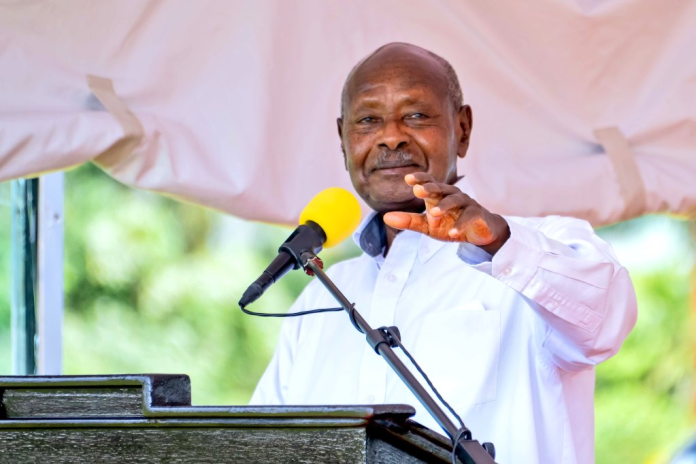
While officially opening the 8th African Leadership Forum at Speke Resort, Munyonyo yesterday,Museveni emphasized that Africa must go beyond mere survival and aim for meaningful growth through deliberate transformation.

“This theme of sustainable development has been around for long. But our question has always been, how do you sustainably remain an infant? A baby must grow. At some stage, you must undergo transformation, just like in biology where a caterpillar turns into a butterfly,” Museveni said.

This year’s forum is focused on assessing Africa’s progress in achieving the Sustainable Development Goals (SDGs), identifying key challenges, and proposing innovative, home-grown solutions to issues like climate change, education, health, and youth unemployment. It is being held under the theme: “Realizing Sustainable Development Goals in Africa: Progress and Way Forward.”

The gathering has attracted distinguished leaders from across the continent, including former Presidents H.E. Dr. Ernest Bai Koroma (Sierra Leone), H.E. Dr. Moncef Marzouki (Tunisia), and H.E. Hailemariam Desalegn Boshe (Ethiopia).

The African Leadership Forum (ALF), established in 2014 by the late President Benjamin Mkapa of Tanzania in collaboration with the UONGOZI Institute, seeks to create a platform where current and former leaders engage in meaningful dialogue on Africa’s challenges and opportunities.

Delivering a keynote address, President Museveni reminded delegates that Africa’s first post-independence challenge was political power, but that alone was not enough.

“You can’t have an army without a historic mission. The British army was the imperial army. The American army exists to defend capitalism. The Red Army stood for the peasants and workers. So, what do our African armies stand for? You cannot be a soldier without a mission.”

He criticized the dominance of identity-based politics, which he said has weakened African states and hindered development.

“If your politics is based on tribes, religion or gender, how will you build a strong state? Wrong politics have created weak states. You need a liberation movement with clarity to build capable structures,” he added.

Reflecting on economic policy missteps, Museveni pointed to Uganda’s own history under Idi Amin, when Indian entrepreneurs were expelled, leading to a collapse in economic productivity. He warned against repeating such errors.

“Entrepreneurs are critical. When we expelled the Indians, we lost a lot. They were helping us. That was another strategic bottleneck.”

On the issue of raw material exports, Museveni decried the practice as a loss of wealth and jobs to the rest of the world.

“When you export raw coffee, you get $2.5 per kilogram. But when someone adds value—roasts, grinds, and packages it—they earn up to $40. So, in every kilogram, Africa donates over $20 to the world.”

He also condemned the export of raw minerals like iron ore, calling it a squandered opportunity for industrial growth.

“Why export raw iron ore? Let it stay in the ground until we’re ready to add value here. Raw materials are a curse if you don’t use them properly.”

Museveni highlighted the need for regional market expansion, noting that Uganda produces 5.3 billion litres of milk annually, yet domestic consumption accounts for only 200 million litres.

“We need bigger markets,” he said, adding that infrastructure must go beyond roads to include rail and water transport for efficient movement of goods and services.

He also underscored the importance of human capital in national transformation, pointing out that education, health, and skills development remain key.

On poverty, Museveni said a large portion of the African population remains trapped in subsistence farming. He credited Uganda’s shift toward commercial production to government-led interventions like Entandikwa, NAADS, and Operation Wealth Creation.

“By 2013, only 32% were in the money economy. We involved the army under Operation Wealth Creation, and the figure jumped to 65%.”

He concluded by tracing Uganda’s economic journey through six phases—from minimum recovery to expansion, diversification, value addition, the knowledge economy, and now science and innovation.

“Whenever we talk of sustainable development, this is what we mean—building a new economy, driven by transformation.”

In his remarks, former Tanzanian President Jakaya Kikwete urged African leaders to take bold and practical steps to accelerate SDG progress.

“We hope that this African Leadership Forum will serve as a call for bold and proactive solutions, and for a renewed commitment across the continent. The outcomes must go beyond recommendations; they must lead to practical solutions that can be implemented.”

Kikwete praised Uganda’s hospitality and Museveni’s commitment to the forum, adding that the event has evolved into a unique space for honest and strategic discussions about Africa’s future.

“Over the years, the forum has become a unique platform that enables candid conversations on Africa’s development trajectory, global trends, and the continent’s response to emerging challenges.”

Stories Continues after ad

Uganda, Ethiopia raise Africa’s coffee exports to 20%

The report, seen by Eagle Online, shows that this marks the15th consecutive month of positive growth for Africa, with the export volume for February 2025 being the largest since 1.46 million bags were shipped in 1997.

Furthermore, the report states that Africa’s exports to date, which stand at 5.98 million bags, represent the best start to a coffee year since the period between October 1996 and February 1997, when 5.99 million bags were shipped.

The continent’s largest coffee producers and exporters, Ethiopia and Uganda, were identified as the two primary drivers behind the region’s growth in February 2025, with their exports rising by 41.9 percent and 27.9 percent, respectively, to 0.44 million bags and 0.56 million bags.

The report notes that Uganda’s Agriculture Ministry attributed the double-digit increase to the prevailing high international prices, which have prompted exporters to release their stocks. “As for Ethiopia, the good harvest, linked to its ‘on-year’, appears to be the reason for its strong export growth,” says the report.

Meanwhile, the report indicates that global exports of all forms of coffee increased by 7.8 per cent to 12.23 million bags in February 2025, compared to 11.35 million bags in February 2024.

However, year-to-date exports for the coffee year 2024/25 remain down by 2.7 per cent, at 54.86 million bags, compared to 56.36 million bags during the same period a year ago.

“Three out of four regions saw their exports expand, with only South America experiencing a downturn, shipping 4.58 million bags in February 2025, compared with 4.93 million bags in February 2024, a decrease of 6.9 per cent,” says the report.

“Asia & Oceania was the main driver of the upturn, with a net gain of 0.86 million bags in February 2025, increasing by 21.7 per cent to 4.81 million bags. The opposing movements of the two largest exporting regions – South America and Asia & Oceania – resulted in Asia & Oceania holding the biggest share of the total exports at 39.3 per cent in February 2025, with South America second at 37.5 per cent. The positions of the two regions do swap, but the last time South America held the second position was in June 2023,” the report says.

Exports of all forms of coffee from Africa increased by 20.6 percent in February 2025 to 1.33 million bags from 1.1million bags in February 2024, according to the Coffee Market Report released by the International Coffee Organisation [ICO].

The report, seen by Eagle Online, shows that this marks the15th consecutive month of positive growth for Africa, with the export volume for February 2025 being the largest since 1.46 million bags were shipped in 1997.

Furthermore, the report states that Africa’s exports to date, which stand at 5.98 million bags, represent the best start to a coffee year since the period between October 1996 and February 1997, when 5.99 million bags were shipped.

The continent’s largest coffee producers and exporters, Ethiopia and Uganda, were identified as the two primary drivers behind the region’s growth in February 2025, with their exports rising by 41.9 percent and 27.9 percent, respectively, to 0.44 million bags and 0.56 million bags.

The report notes that Uganda’s Agriculture Ministry attributed the double-digit increase to the prevailing high international prices, which have prompted exporters to release their stocks. “As for Ethiopia, the good harvest, linked to its ‘on-year’, appears to be the reason for its strong export growth,” says the report.

Meanwhile, the report indicates that global exports of all forms of coffee increased by 7.8 per cent to 12.23 million bags in February 2025, compared to 11.35 million bags in February 2024.

However, year-to-date exports for the coffee year 2024/25 remain down by 2.7 per cent, at 54.86 million bags, compared to 56.36 million bags during the same period a year ago.

“Three out of four regions saw their exports expand, with only South America experiencing a downturn, shipping 4.58 million bags in February 2025, compared with 4.93 million bags in February 2024, a decrease of 6.9 per cent,” says the report.

“Asia & Oceania was the main driver of the upturn, with a net gain of 0.86 million bags in February 2025, increasing by 21.7 per cent to 4.81 million bags. The opposing movements of the two largest exporting regions – South America and Asia & Oceania – resulted in Asia & Oceania holding the biggest share of the total exports at 39.3 per cent in February 2025, with South America second at 37.5 per cent. The positions of the two regions do swap, but the last time South America held the second position was in June 2023,” the report says.

Stories Continues after ad

KCCA councilors pass resolution backing investors amidst resistance from Lugwago

Kampala Capital City Authority (KCCA) has resolved that the council should allow able local investors to develop, cover, and upgrade the city’s drainage systems to combat Kampala’s persistent flooding crisis.

This decision was reached during a heated council meeting on April 3, 2025, where councilors delivered a damning blow to Lord Mayor Erias Lukwago, dismissing his allegations against city tycoon Hamis Kiggundu and former Acting Executive Director Frank Nyakana Rusa as baseless, malicious, and politically motivated.

Council rejected allegations against the two and instead of endorsing Lukwago’s claims, the council awarded Rusa for his outstanding service and declared support for private-sector partnerships as the way forward in fixing the city’s infrastructure mess

The council, however, councilors’ tabled official records showing that Ham Enterprises (U) Ltd, the company owned by Kiggundu, had submitted all construction plans to KCCA in accordance with the law. The plans were reviewed and approved on December 9, 2024.

In an intense turn of events, the council shifted the spotlight to Rusa, commending his exemplary service and presenting him with a certificate of appreciation. “We appreciate your noble service for the Capital City (Kampala) as Acting E.D .

The session marked a turning point in KCCA’s approach to flood management and members resolved that the authority should partner with credible local investors to develop and upgrade the city’s drainage systems, especially as funding from the central government remains insufficient and foreign aid continues to decline.

Lukwago has had battles with several businessmen and other stakeholders on infrastructural development in Kampala.

Stories Continues after ad

Kevin De Bruyne to leave Man City at the of season

After a decade of brilliance at Manchester City, Kevin De Bruyne has officially announced that he will leave the club at the end of the season.

The Belgian playmaker, who has been instrumental in City’s dominance under Pep Guardiola, penned an emotional farewell letter to fans, expressing his gratitude and love for the club and the city of Manchester.

In a goodbye message, De Bruyne acknowledged the inevitable reality of football careers coming to an end but emphasized how difficult the decision was.

“Nothing about this is easy to write, but as football players, we all know this day eventually comes,” he wrote. “That day is here and you deserve to hear it from me first.”

De Bruyne, who joined Manchester City in 2015 from Wolfsburg, quickly became one of the club’s greatest-ever players, helping the team secure multiple Premier League titles, FA Cups, and the coveted UEFA Champions League.

Reflecting on his journey, De Bruyne credited the club, his teammates, and the fans for shaping his career.

“Football led me to all of you and to this city. Chasing my dream, not knowing this period would change my life,” he shared. “This city. This club. These people… gave me EVERYTHING.”

Since his arrival, De Bruyne has been the creative heartbeat of City’s midfield, renowned for his vision, passing, and leadership. He has played over 350 games, scoring crucial goals and providing countless assists that fueled City’s rise to domestic and European glory.

As he prepares for his final months at the Etihad Stadium, De Bruyne made it clear that Manchester will forever be a part of him.

“Wherever we see it or not, it’s time to say goodbye. ‘Manchester’ will forever be on our kids’ passports, and more importantly, it will be a word in all of our hearts.”

With several months left in the season, De Bruyne urged fans to savor the remaining games together.

“Every story comes to an end, but this has definitely been the best chapter. Let’s enjoy these last moments together!”

While De Bruyne has not yet confirmed his next destination, reports suggest interest from clubs in Saudi Arabia, Major League Soccer, and even a possible return to Europe’s elite. At 32, he remains one of the most sought-after midfielders in world football.

Stories Continues after ad

51 rescued from AIM Global Alliance recruitment scam

The Uganda Police Force has successfully rescued 51 individuals from a suspected human trafficking ring operated under the guise of job recruitment by a networking company known as AIM Global Alliance.

The operation, carried out by the territorial police at Nagalama, followed a tip-off received on April 2, 2025, at around 10:00 a.m.

According to police, the victims were lured with false promises of employment and asked to pay a fee of UGX 150,000 purportedly for “training.”

“It’s alleged that the victims are always conned in prejudice of giving them jobs, and each victim is told to come with 150,000 on reporting on the job,” police stated via their official communication channels.

Once the initial payment was made, the victims’ phones were confiscated, and they were coerced into recruiting their friends and relatives into the scheme. These new recruits were in turn asked to pay a much higher amount UGX 1,500,000 to purchase products for resale.

“They always promise victims that in the future they will reach a time when they will be earning at least 1,000,000, depending on the people you have recruited and the sales made,” police explained.

The coordinated police operation covered multiple locations across Kalagi, Mukono District, and uncovered alarming conditions in which the victims were being held. In Kakola village, Kyabakadde Parish, Kyampisi Sub-county, 14 victims—3 males and 11 females—were found crammed into a single room. In Kalagi village, Naggalama A ward, Nakifuma Naggalama Town Council, 20 victims—10 males and 10 females—were also sleeping in a small, overcrowded space. Meanwhile, in Bbosa village, Kyabakadde Parish, 14 victims—6 males and 8 females—were found living together in one room.

The suspected traffickers, identified as Kasule Zephaniah and Nantima Evelyn, were arrested at the scene and are currently detained at Nagalama Police Station pending further investigation.

The police are urging the public to remain vigilant and report suspicious job offers that require upfront payments, especially those that demand the recruitment of others as part of the employment process.

“We commend the community for reporting this suspicious activity. Human trafficking in any form is a grave crime and will be dealt with accordingly,” Police said.

Investigations are ongoing, and the rescued individuals are receiving care and assistance as authorities continue to trace other potential victims and collaborators in the network.

Stories Continues after ad

Gov’t proposes tax increase on cigarettes, beer

The government has proposed an increase in taxes on cigarettes and beer manufactured from local raw materials in a move aimed at raising Shs19.4 billion.

The Ministry of Finance says the measure will help the country respond to inflationary trends and reduce health risks associated with tobacco use.

The proposal was announced by Henry Musasizi, Minister of State for Finance, while appearing before Parliament’s Finance Committee to present seven new Tax Bills for the 2025/26 financial year.

He said the excise duty on beer made from local ingredients will increase from Shs650 to Shs900, while taxes on cigarettes will also be adjusted upwards for the first time since FY 2017/18.

“Modest increase in excise duty on cigarettes and beer to generate Shs19.40Bn. The primary objective of this amendment is to generate additional revenue while accounting for inflation, especially on cigarettes,” said Minister Musasizi.

“The excise duty on cigarettes in Uganda has not been adjusted since Financial Year 2017-18, yet inflation has risen by 28.8% over the period. We have also been under pressure from the health sector to increase the excise rates on tobacco products much higher to reduce the health-related risks.”

Defending the government’s position, the Minister emphasized both economic and public health motives behind the decision.

“Increasing the duty will not only align with inflationary trends but also serve as a public health objective by discouraging tobacco consumption, which imposes significant health costs on the economy,” he said.

“To increase the excise duty on beer manufactured from local raw materials from Shs650 to Shs900 reflects the current economic conditions and inflation. This will ensure that the taxation of beer remains fair and that government revenue keeps pace with the economic realities.”

In a separate measure, the government is proposing the introduction of an import declaration fee on goods imported for home use, projected to raise Shs79 billion. These funds will be earmarked for the construction of the Standard Gauge Railway (SGR), a key infrastructure project aimed at improving Uganda’s trade competitiveness.

“This measure seeks to raise revenue for infrastructure investment, particularly for the standard gauge railway,” said Musasizi.

He noted, “In addition, it will render imports more expensive, hence promoting import substitution and supporting local industries. Furthermore, this proposal aligns with Uganda’s policy and other East African Community partner states where similar fees are already imposed. For instance, Kenya applies a 2% CIF charge, while Tanzania applies a 0.6% customs processing fee.”

Musasizi further disclosed that the 2025/26 tax measures, combining the tax policy proposals in the bills and administrative measures by the Uganda Revenue Authority (URA), are expected to yield Shs2.420 trillion in revenue.

“To finance the budget, we have proposed a modest tax policy measure. In this regard, we project to generate Shs538.6Bn in 2025-2026 from the tax policy proposals contained in the bills. In addition, we will generate Shs1.885Trn from URA administrative measures,” he explained.

The government also intends to intensify revenue mobilization by enhancing the predictability and fairness of the tax system. Musasizi revealed that third-party data—such as water and electricity bills—will be used to identify and bring more potential taxpayers into the tax net.

The proposed tax adjustments are now before Parliament for scrutiny and approval as the government seeks to balance revenue generation with economic recovery and social welfare priorities.

Stories Continues after ad

Mulago Hospital seeks shs4Bn to hire specialists in idle theatres

Mulago Specialized Women and Neonatal Hospital is seeking for additional Shs4Billion to hire 86 new staff in order to operationalise the 7 theatres that are idle due to lack of specialists, and the new staff would reduce on the workload, where one nurse is being forced to attend to 10 babies in the neonatal unit, yet the recommended ratio requires one nurse to attend to 1-2 babies.

The appeal was made by Dr. Evelyn Nabunya, Executive Director of Mulago Specialized Women and Neonatal Hospital, while appearing before Parliament’s Health Committee to present the Hospital’s 2025/26 national budget.

She said the money is required to recruit super specialists such as in anaesthesia, intensive care.

“We have 11 theatres, but up to date four or five are operational. And this is because of lack of the critical staff that are needed to operationalise the others. We also have deficit in neonatology. We also need nurses in the critical care areas that is theatre, NICU, ICU and others. These are required to improve the nurse patient ratio. As we stand, the recommendation in the NICU in the high level care is one nurse looking after one to two babies, while currently we have one nurse looking after 10 to 15 babies,” explained Dr. Nabunya.

Dr. Nabeunya added, “And this affects service delivery and also client satisfaction. This is an intensive care unit, just like others. So, the hospital needs Shs4,080,043,704 to be able to recruit the 86 staff and this will help to improve the field staff structure to 50%. It will also help to retain our staff through promotion. We expect to promote more staff.”

Mulago Women’s Hospital also informed the Committee of the need for more resources to the tune of Shs2.9Bn for maintenance of machinery and equipment other than transport equipment in order to boost access to fertility services like IVF, where the hospital is currently spending over Shs13M, and yet there are plans to offer IVF services to 100 women in 2025/26.

“We do have new services on board, such as the IVF that had not previously been budgeted for. So, when we take an example, one cycle of IVF from stimulation up to embryo transfer requires 13.35 million, So the target for the hospital is to be able to offer up to 100 clients, that is around 25 or 24 in a quarter. So, in order to do that, already that would be Shs1.35Bn yet our budget is not able to cater for that, we will require Shs2.914Bn,” added Dr. Nabunya.

Dr. Nabunya also provided an update on the tiniest baby treated at the Hospital noting, “I’m glad to let you know that our smallest surviving baby that I’ve reported on before was born at 24 weeks and weighed 500 grammes. That baby by the end of the quarter two had made two and a half years. That baby is now in school, and has started nursery school. We now have a baby of 80 grams that we are following up on. And we believe this year that baby will turn one year old and we’ll be able to report on her as well.”

Mulago Specialized Women and Neonatal Hospital informed Parliament that the facility started offering IVF services and so far, the Hospital is monitoring five pregnancies whose results will determine if the services will be opened further to the public.

“I’m glad to let you know that we began the IVF services, the long-awaited. As we stand, we have five pregnancies up to date, one of them being a twin pregnancy. We are getting into the third trimester for the first baby. We have tried to be slow and we wait for the actual babies to come out. We want the babies, and then we’ll be able to open up. So, we are proud of our team for the work they’ve done,” explained Dr. Nabunya.

Stories Continues after ad

Uganda reaffirms commitment to ESAAMLG agenda

President Yoweri Kaguta Museveni has reiterated Uganda’s unwavering commitment to supporting regional and global efforts aimed at fostering a safer and more transparent financial system.

In a message delivered by Prime Minister Robinah Nabbanja at the official opening of the 49th Eastern and Southern Africa Anti-Money Laundering Group (ESAAMLG) Taskforce of Senior Officials Meeting at Speke Resort, the President emphasized the need to prioritize information sharing, capacity building, and policy harmonization to enhance the region’s ability to detect, prevent, and prosecute money laundering and terrorism financing.

He also commended ESAAMLG for its role in Uganda’s successful removal from the Financial Action Task Force (FATF) grey list in 2024.

“Money laundering, terrorism financing, and the proliferation of weapons of mass destruction are not just financial crimes; they pose direct threats to our national security, economic stability, and development,” the President noted.

Minister of State for General Duties Henry Musasizi, representing Finance Minister Matia Kasaija, highlighted Uganda’s deliberate steps to strengthen its anti-money laundering and counter-terrorism financing legal, regulatory, and operational frameworks. He noted that Uganda has embraced a risk-based approach to supervision.

Meanwhile, Permanent Secretary and Secretary to the Treasury (PSST) Ramathan Ggoobi, who led Uganda’s delegation, underscored the evolving challenges in the fight against financial crimes.

He pointed out the misuse of emerging technologies, cross-border illicit financial flows, and lingering vulnerabilities within existing anti-money laundering frameworks, calling for a more unified, strategic, and adaptive response.

Stories Continues after ad