Stanbic Bank
Stanbic Bank
24.3 C
Kampala
Stanbic Bank
Stanbic Bank
Home Blog Page 26

Parliament approves Shs8t supplementary budget for FY2025/26

Members of Parliament.

Parliament has approved over Shs8 trillion in supplementary funding for the financial year 2025/2026 to support key development projects, including road infrastructure, health and agriculture services, among others.

According to the State Minister for Finance, Planning and Economic Development (General Duties), Henry Musasizi, said that the funding for the activities under Supplementary Schedules 1, 2, and 3 is over and above the budget of the financial year, but falls within three percent of the total approved budget of about Shs2.376 trillion.

“We have incurred expenditures that had been unforeseen and unavoidable at the time of budgeting. These fall within the three percent requirement and we are requesting parliament to consider these expenditures and approve them in order to regularize the process,” said Musasizi, while seeking the Parliamentary approval during a plenary sitting chaired by Speaker Anita Among, on Tuesday.

According to the report presented by the Chairperson of the Budget Committee, Patrick Opolot Isiagi, the supplementary schedules will be funded through non-tax revenue (Shs42.96 billion), local revenue (Shs13.03 billion), domestic borrowing (Shs3.7 trillion), and external financing (Shs4.27 trillion)

Under Supplementary Schedule I, Shs1.65 trillion is expected to facilitate, among other things, the funding of shortfalls created by the withdrawal of US funding for essential health services in Uganda, thereby avoiding drug stockouts and other health-related crises.

Further, the Ministry of Foreign Affairs will receive Shs3 billion to host the 18th Ministerial mid-term review meeting of the Non-Aligned Movement (NAM), whereas Shs6.92 billion will support recruitment expenses for the newly created grant-aided Uganda Intergovernmental Fiscal Transfers Program Project for Uganda (UgIFT) seed secondary schools.

A total of Shs1.69 trillion is to be availed to the Ministry of Works and Transport under Supplementary Schedule II, to facilitate 395km of seven suspended projects, including the Kampala-Jinja Highway (72 kilometres); 533km of 11 projects under reduced progress; and nine bridge projects affected by financing constraints.

Under Supplementary Schedule III, Shs4.75 trillion will be provided to, among others, enable the Commission of Inquiry into the Apaa land dispute to carry out its duties with funding of Shs7.95 billion, following a Presidential directive on the matter.

The supplementary schedule will also provide up to Shs422.26 billion to purchase additional aircraft under Uganda Airlines, including two Dreamliner Boeing passenger aircraft, one Boeing freighter, and two mid-range Airbus aircraft, as well as associated bridge leasing costs.

Construction of community access roads in 81 district local governments will be supported with Shs37.5 billion under the national oil seeds project, whereas the national ambulance system will be facilitated with Shs10 billion, noting that most ambulances are not operational due to inadequate fuel and mechanical breakdowns.

However, in a minority report to the House, Kira Municipality legislator Ibrahim Ssemujju, challenged the proposed supplementary schedules over their size and character, noting repeated supplementary financing for long-standing obligations in the sectors of agriculture, works, energy, health and defence.

“Parliament is being asked to approve more than Shs6 trillion in supplementary funding. If this continues, we will soon reach a point where the annual budget is treated as a ceremonial event while the real spending happens through supplementary schedules,” Ssemujju said.

He further noted, “Road contracts that have been running for years cannot be classified as emergencies. These are predictable matters that should have been foreseen in the main budget.”

Ssemujju called for a detailed report on Uganda Airlines aircraft purchases before approval, as well as mandated quarterly implementation reports to Parliament for all approved supplementary expenditures.

“The Ministry is requesting more than Shs400 billion to purchase new aircraft for Uganda Airlines, yet the country has not recovered from the Bombardier deal, where we purchased aircraft that were already being phased out. Before the government buys any new aircraft, a thorough due diligence process must be presented,” Ssemujju added.

The Leader of the Opposition in Parliament, Joel Ssenyonyi, also challenged the proposed supplementary schedules while alluding to Regulation 18(5) of the Public Finance Management Regulations 2016.

It states; “Parliament may approve a supplementary appropriation or the Minister may approve a supplementary budget, as the case may be, where the supplementary expenditure is unabsorbable, unavoidable and unforeseeable.”

“When we were here planning for the budget process, why did you not bring these issues then, why now? This is a bad planning issue,” Ssenyonyi said.

Stories Continues after ad

Do not play with guns or bombs – Gen Sejusa cautions NUP

Former Intelligence Spy Master Chief, Gen David Sejusa, has warned the National Unity Platform (NUP) against promoting dangerous behaviour through images and acts that mimic the use of guns or bombs.

In a message posted on X (formerly Twitter), Sejusa described such conduct as “absolutely IRRESPONSIBLE” and directed his criticism at the party leadership and supporters. 

He warned that pretending to handle weapons, even when they are made from banana fibres or toys can easily cause trouble in a tense political environment.

Gen Sejusa said, “Mimicking armed soldiers aiming guns from whatever point is very dangerous. Whether using toys or banana fibres, do not. Politics is serious business in many places of life and death. Why is it a game, a comedy to you?”

His remarks came shortly after NUP Secretary General David Lewis Rubongoya posted on X about tight security in Luweero, which triggered many people’s reactions. Sejusa appeared to respond directly to the post, suggesting that some of the party’s communication may encourage unnecessary confrontation.

Stories Continues after ad

Hongera Saana Uganda Ltd ED remanded over Shs800m procurement scam

Aahiraf Muyomba, the Executive Director of Hongera Saana Uganda Ltd.

A Kampala-based businessman has been remanded to Luzira Prison after being charged in connection with a fraudulent procurement scheme that defrauded suppliers of goods worth nearly Shs800 million.

Ashiraf Muyomba, the Executive Director of Hongera Saana Uganda Ltd, was on Tuesday arraigned before the KCCA Chief Magistrate’s Court following a joint operation by the State House Anti-Corruption Unit, the Office of the Director of Public Prosecutions and the Criminal Investigations Directorate. 

He faces charges of obtaining goods by false pretence, forgery, and uttering false documents. He will return to court on December 10, 2025.

According to investigators, the alleged scam took place between December 2024 and April 2025 at Minister’s Village, Ntinda, in Nakawa Division. Hongera Saana Uganda Ltd is accused of falsely presenting itself as a Presidential Mobilization Body for Peace and Development under the Office of the President and placing a misleading bid notice in newspapers inviting suppliers to deliver various goods.

The suspect reportedly identified and contracted suppliers, including Ms. Nasali Shillo of Kisco International Limited and Mr. Kezimbira Isaac of K.K.N Enterprises Limited, to deliver items valued at close to Shs800 million.

The supplied goods included thousands of kilograms of maize, soya, groundnut and rice seeds, as well as posho, cooking oil, sugar, mattresses, metallic double-decker beds, farmate spray pumps, knapsacks, tear drops, branded T-shirts, umbrellas, caps, and backdrops, among other assorted items.

However, after delivering the items to Hongera Saana Uganda’s offices in Ntinda, the affected suppliers were never paid. All their attempts to obtain payment reportedly failed, raising suspicion and prompting a formal complaint.

Further investigations revealed that Hongera Saana Uganda Ltd had no affiliation or working relationship with the Office of the President, contradicting the claims used to lure suppliers into the bogus procurement process.

The State House Anti-Corruption Unit said the prosecution of the case reflects ongoing efforts to dismantle fraudulent networks targeting businesses and government-linked processes.

Stories Continues after ad

PDM, Emyooga show strong performance in the private sector development programme for FY2024/25

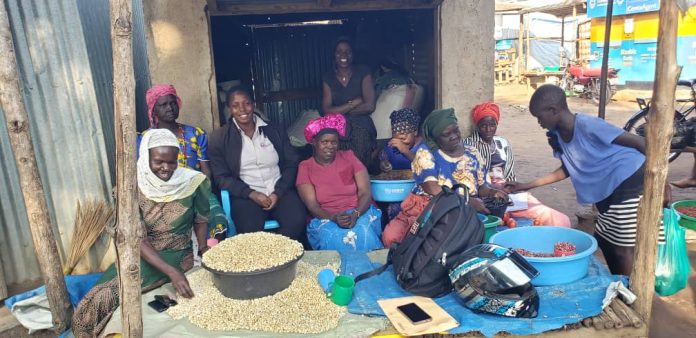
Agricultural produce market.

The Ministry of Finance, Planning and Economic Development has reported significant progress in key government programmes aimed at boosting enterprise growth and advancing financial inclusion, with the latest Budget Monitoring and Accountability Unit (BMAU) report showing strong results for the 2024/25 financial year under the Private Sector Development Programme.

According to the report, the programme registered an overall output performance of 74.9 percent. This positive outcome was driven largely by improved delivery under the Enabling Environment component as well as the Strengthening Private Sector Institutional and Organisational Capacity component.

A major highlight of the report is the strong performance of the Parish Development Model (PDM) under its financial inclusion pillar. The pillar accounted for more than half of the programme’s total budget, and by June 30, 2025, cumulative disbursements had reached Shs2,699 billion. Cash transfers have since risen to Shs3,261 billion and been delivered directly to 10,589 parishes across the country. Government is targeting a total investment of Shs4.4 trillion under PDM by the end of the 2025/26 financial year.

The Emyooga programme also recorded major progress. Seed capital utilisation reached Shs76.32 billion, supporting 3,816 Emyooga SACCOs, parish-based associations, and various small enterprises. Membership across all SACCOs, groups, and cooperatives under the programme stood at 6.4 million people. Women made up 41 percent of this membership, youth accounted for 13 percent, while persons with disabilities accounted for one percent.

To strengthen governance and sustainability, a total of 7,740 Emyooga institutions received training during the year. The training benefited 40,784 leaders of SACCOs and associations, along with 171,326 members. The report notes that these capacity-building efforts have helped improve accountability and overall management within the associations.

The Private Sector Development Programme also recorded progress in investment facilitation and enterprise registration. Through the One Stop Centre, 25,895 transactions were handled in the reporting period. This resulted in the issuance of 481 investment licences for projects with a combined planned investment value of $3.2 billion and the potential to create over 53,000 jobs.

The Finance Ministry notes that the strong performance in PDM, Emyooga, and other components of the Private Sector Development Programme shows government efforts to strengthen household incomes, formalise small enterprises, and support long-term private sector growth.

Stories Continues after ad

Musoke wins 2025 Equity NARO golf open

Mr Dominic Musoke

Dominic Musoke produced an outstanding all round performance to win the 2025 Equity NARO Golf Open at the Namulonge course. 

Musoke finished with a total score of two under par 208 after three rounds, securing his second title in this tournament.

He opened the championship with a solid 68 and maintained steady form with level par 70 in both the second and third rounds. Over the three days, Musoke registered 14 birdies, six bogies and two double bogies. His consistency helped him finish five strokes ahead of Joseph Cwinyaai, who came in second.

Cwinyaai has enjoyed a strong season, winning several major events including the Kakira Open, Kinyara Open, Uganda Open, the Presidents Cup and the Entebbe Open.

Charles Jjunju finished third, while Juma Abiti took fourth place. Defending champion Abdullah Kakooza ended the tournament in fifth position, 13 strokes behind the winner.

In the ladies’ category, Meron Kyomugisha continued her good form to take the women’s crown with a total score of 221. She beat Joyce Kisembo, who finished with 238. Resty Nalutaaya came in third with 241, followed by Peace Kabasweka with 242.

The tournament, now in its fifth edition, is an amateur World Golf Ranking event and continues to attract some of the country’s top golfers.

Stories Continues after ad

EU announces Shs5.9t investment to transform Uganda’s private sector

Uganda’s private sector is set for an uplift following the European Union’s announcement of a €1.4 billion (about Shs5.9 trillion) investment package aimed at boosting trade, productivity and enterprise competitiveness under the Sustainable Business for Uganda initiative.

The funding, unveiled during the National Catalytic Stakeholder Consultation on the review of the MSME Policy (2015) and the National Standards and Quality Policy held at Four Points by Sheraton Hotel, reflects the EU’s long-standing role as one of Uganda’s most influential development and trade partners.

Michelle Walsh, who leads the Green Transition and Private Sector Delegation at the EU Mission in Uganda, reaffirmed the bloc’s commitment to strengthening Uganda’s export capacity, supporting enterprise growth, and creating sustainable jobs. She said the Ministry of Trade, Industry, and Cooperatives remains a central partner in efforts to expand entrepreneurship and deepen economic cooperation between Uganda and the EU.

Under the Team Europe framework, the EU has prioritised expanding access to affordable financing, upgrading productive and energy infrastructure, strengthening human capital, supporting green employment, enhancing trade standards and improving governance within Uganda’s business landscape.

Walsh noted that persistent challenges highlighted by Ugandan businesses—such as limited financing, unreliable electricity supply, high data costs, certification hurdles, slow digital adoption, and global market shocks—are being addressed through EU-supported programmes.

In the financing sector, she pointed to key facilities such as the Uganda Green Enterprise Finance Accelerator, which backs environmentally friendly ventures in manufacturing, tourism, waste management, mobility and energy. She also referenced the STAR facility’s support for agribusinesses, the Yield Fund’s blend of equity and loan financing for growing enterprises, and the EU’s continued contribution to the Agricultural Business Initiative, which enhances production, processing and trade.

She further highlighted significant EU investments in productive and energy infrastructure, including the rehabilitation of power plants, expansion of rural electrification, improvement of transmission networks, and ongoing support for renewable energy innovations and energy-efficient technologies for SMEs.

On human capital, Walsh underscored the need for decent employment and competitive skills. She said the EU, working with Belgium and other partners, is scaling up vocational training, entrepreneurship incubation, skilling initiatives and financial literacy, with a deliberate focus on youth and green jobs.

The EU is also supporting Uganda’s efforts to meet international export requirements by strengthening compliance with sanitary and phytosanitary standards, opening pathways for local products to access European and other global markets. Walsh emphasised the importance of responsible business conduct, particularly in agricultural value chains, through support for human rights due diligence frameworks.

Reaffirming the bloc’s long-term partnership with Uganda, Walsh said the EU will continue working closely with government ministries, the private sector, development agencies and MSMEs to drive sustainable industrialisation and elevate Uganda’s competitiveness.

“The European Union is very pleased to partner with Uganda to promote competitiveness in international markets and expand opportunities for entrepreneurs,” she noted.

She described the ongoing stakeholder consultations as key to shaping policies that support the growth of small and medium enterprises.

Stories Continues after ad

Palmitoyl Tetrapeptide‐7: Molecular Features and Mechanisms

Palmitoyl Tetrapeptide-7 (often abbreviated as PT7 or Pal-GQPR) is a lipid-conjugated tetrapeptide that has attracted attention in cosmetic science and more broadly in molecular biology for its putative roles in modulating inflammatory signaling and extracellular matrix (ECM) homeostasis. In this speculative review, we examine chemical and biophysical properties and hypotheses surrounding PT7 and summarize the findings derived from research.

Introduction and Chemical / Biophysical Profile

Palmitoyl Tetrapeptide-7 is a synthetic molecule composed of four amino acids—glycine, glutamine, proline, and arginine (Gly-Gln-Pro-Arg, or GQPR)—covalently linked at the N-terminus to a palmitic acid moiety. The palmitoylation imparts lipophilicity and membrane-affinity, which may support interactions with lipid bilayers, increase retention in hydrophobic microenvironments, or aid in exposure across lipid layers in experimental systems. The molecular formula is C₃₄H₆₂N₈O₇, with a molecular weight of approximately 694.9 g/mol.

Because of its small size and lipid conjugation, PT7 is relatively tractable for in silico modeling of peptide–lipid interactions, docking to membrane protein targets, or molecular dynamics simulations. The lipid tail may allow partial insertion into membrane leaflets or association with hydrophobic pockets on membrane proteins, enabling closer proximity to surface receptors or signaling proteins. The peptide backbone is relatively short, which may limit secondary structure but might favor high specificity in binding to partner proteins without undue conformational complexity.

The palmitoyl tag may also slow diffusion or reduce washout in certain experimental matrices, offering a degree of “anchoring” to the local microenvironment. However, the balance of hydrophilic (peptide) and hydrophobic (lipid) segments also raises challenges in solubility, formulation, and aggregation in aqueous buffers. Some reported formulations adjust pH or solvent systems to enhance solubility.

Given these features, PT7 is believed to serve not just as a compound for exploration in cosmetic laboratory studies, but as a useful probe in investigations of peptide–lipid interactions, membrane proximal signaling, cytokine modulation, and extracellular matrix regulation.

Hypothesized Mechanisms of Action in Research Contexts

Although data remains preliminary, multiple lines of research suggest that PT7 might influence a few principal molecular pathways or cellular modules. Below is a refined, speculative summary:

  1. Cytokine Signaling, Particularly IL-6

One of the most recurrent suggestions is that PT7 may suppress production or secretion of interleukin-6 (IL-6), a pro-inflammatory cytokine that is central in many signaling cascades governing inflammatory responses. Investigations suggest that, in keratinocyte and fibroblast cultures, PT7 might reduce IL-6 levels under stress stimuli (e.g., UVB exposure). Studies suggest that by attenuating this cytokine signal, PT7 might indirectly moderate downstream NF-κB or JAK/STAT activation, thereby reducing chronic inflammatory signaling in experimental models.

  1. ECM Synthesis and Remodeling

Beyond suppressing inflammatory mediators, PT7 is thought to interact with ECM dynamics more directly. Research suggests the peptide may promote expression or deposition of collagen (particularly type I), fibronectin, laminin IV and V, and collagen type VII. In some cultured fibroblast systems, PT7 co-exposure is associated with higher ECM protein mRNA or immunochemical readouts.

  1. Oxidative Stress and Homeostatic Balance

Although less directly documented, PT7 has been hypothesized to influence reactive oxygen species (ROS) pathways or redox-sensitive signaling. Because inflammatory signaling and oxidative stress often go hand in hand, suppression of IL-6 and NF-κB axes might secondarily reduce ROS generation. Conversely, in oxidative stress models, the peptide is believed to serve as a modulator of stress response proteins (e.g., via Nrf2 or antioxidant enzymes). However, strong empirical backing is yet to accumulate.

Potential Research Domains and Applications

  1. Skin / Dermal Tissue Engineering Models

In engineered skin equivalents, organotypic cultures, or 3D dermal constructs, PT7 has been theorized to serve to modulate ECM organization, fibroblast–keratinocyte crosstalk, and inflammatory microenvironment. Researchers might integrate PT7 into scaffolds or hydrogels to observe its possible influence on matrix deposition, remodeling, or mechanical properties (e.g., stiffness, tensile strength). Wound models are speculated to be aided by adding PT7 to the medium or scaffold to test whether ECM recovery, gap closure, or matrix density is altered under inflammatory challenge.

  1. Inflammatory Signaling and Cytokine Network Research

Research indicates that PT7 may be used as a modulator in cell culture systems to probe how downregulation of IL-6 might influence cascades in various cell types (beyond skin cells). For example, in fibroblasts, endothelial cells, or epithelial cells under pro-inflammatory stimulation (e.g., with LPS, TNF, or UV irradiation), PT7 could serve as an intervening variable to examine how cytokine networks shift, how secondary mediators (e.g., IL-1, TGF-β, chemokines) respond, or how transcriptomic programs adapt.

  1. ECM and Matrix Biology / Remodeling Studies

Beyond dermatologic contexts, PT7 could be examined within the context of  connective tissue research, e.g., in fibroblast cultures from tendons, ligaments, or even cartilage. Researchers could test whether PT7 might modulate the expression of collagen isoforms, decorin, fibronectin, collagen crosslinking enzymes (e.g., lysyl oxidase), or MMPs/TIMPs (tissue inhibitors of metalloproteinases). Kinetic assays (e.g., zymography for MMPs) could test whether PT7 influences the enzymatic activity of MMPs.

  1. Oxidative Stress, Redox Biology, and Cellular Stress Models

In cell culture models of oxidative stress (e.g., H₂O₂ challenge, UVA/UVB exposure, chemical oxidants), PT7 has been reported to act as a modulator of stress response pathways. Researchers may assess whether co-exposure to PT7 leads to altered expression of antioxidant genes (e.g., SOD, catalase, glutathione peroxidase), Nrf2 pathway activation, or reduced ROS levels measured by fluorescent probes (e.g., DCFDA). Transcriptomic or proteomic panels may compare stress vs stress+PT7.

  1. Peptide–Membrane and Peptide–Receptor Interaction Studies

Investigations purport that PT7 may serve as a model for studying how lipidated peptides interact with membranes, incorporate into lipid bilayers, or partition between aqueous and lipid phases. Molecular dynamics simulations, surface plasmon resonance (SPR), isothermal titration calorimetry (ITC), or liposome binding assays might help dissect its partition kinetics, binding affinities, or insertion depth.

Future Outlook and Concluding Remarks

Palmitoyl Tetrapeptide-7 presents a compelling intersection of peptide pharmacology, lipid–peptide biophysics, and ECM/inflammatory regulation. While much of the current scientific exploration lies within the realm of  cosmetic studies, its mechanistic potential remains underexplored. In carefully controlled experimental systems, PT7 may evolve into a versatile probe for interrogating cytokine networks, ECM stability, peptide–membrane interactions, or biomaterial functionalization. Visit Core Peptides for more useful peptide data.

References

[i] Johnson, W., Jr., Bergfeld, W. F., Belsito, D. V., Hill, R. A., Klaassen, C. D., Liebler, D. C., Marks, J. G., Jr., Shank, R. C., Slaga, T. J., Snyder, P. W., Gill, L. J., & Heldreth, B. (2018). Safety Assessment of Tripeptide-1, Hexapeptide-12, Their Metal Salts and Fatty Acyl Derivatives, and Palmitoyl Tetrapeptide-7 as Used in Cosmetics. International Journal of Toxicology, 37(Suppl 3), 90S-102S. https://doi.org/10.1177/1091581818807863

[ii] Yang, F., Zhang, X., Wang, H., et al. (2024). Clinical evidence of the efficacy and safety of a new multi-peptide anti-aging eye cream. Journal of Cosmetic Dermatology, 23(e), 1–12. https://doi.org/10.1111/jocd.15849

[iii] Usage of Synthetic Peptides in Cosmetics for Sensitive Skin. (2021). Frontiers in Dermatology / Cosmetics & Dermatology.

[iv] Jariwala, N., Gade, P., & Chatterjee, S. (2022). Matrikines as mediators of tissue remodelling. Biochimica et Biophysica Acta (BBA) – Molecular Cell Research, 1869(2), 119232. https://doi.org/10.1016/j.bbamcr.2022.119232

[v] Akhlaghi, S.-P., Zarrabi, M., & Saadat, Y. (2023). Peptides: Emerging Candidates for the Prevention and Treatment of Aging Skin. Biomolecules, 15(1), 88. https://doi.org/10.3390/biom15010088

Stories Continues after ad

Reports linking businessman Mbire to being Gen. Saleh’s Aide amuse soldiers

Mr Charles Mbire

Reports attributing businessman Charles Mbire to being an Aide to Senior Presidential Advisor on Defence and Security, Gen. Salim Saleh, have caused excitement within sections of the security personnel, laughing it off as ridiculous.

They claimed Mbire has never been an Aide to Gen. Saleh.

At one of the drinking joints in Bugolobi, a suburb associated with soldiers and other security personnel, it was stated that the renowned businessman Charles has no connection to a military background or any suggestion that he once served as an aide to Senior Presidential Advisor on Defence and Security, Gen. Salim Saleh.

Businessman Mbire became a centre of focus after a naysayer publicly said that he was Gen. Saleh’s aide. 

They said that such a reference is misleading and diminishes his professional identity, but also distorts the records of the army.

Instead, they claimed Mbire has never been a soldier, let alone served in any capacity that would qualify him to be an aide-de-camp (ADC). They emphasized that Mbire’s career has always been rooted in finance, investment, and economic analysis.

“He is an Economist and has an MBA in Finance and business appraisal. He was one of the independent business appraisers for the viability of the banking sector in Uganda,” one of them.

Mbire trained at the University of Essex with an MBA from the University of Leicester, such qualifications speak for themselves and do not align with claims portraying him as a military aide.

Mbire is regarded as one of Uganda’s most influential entrepreneurs; such mischaracterizations undermine both his professional reputation and the integrity of the roles he has diligently served over the years.

Stories Continues after ad

TotalEnergies Uganda moves three offices to Sudhir’s RR Pearl One building

RR Pearl Tower One, a 25-storey Grade A office building developed by business magnate Sudhir Ruparelia.

TotalEnergies Uganda has relocated three of its entities: TotalEnergies Marketing Uganda Limited, TotalEnergies EP Uganda, and the East African Crude Oil Pipeline (EACOP) to a single, state-of-the-art facility at tycoon Sudhir Ruparelia’s RR Pearl One Building on Yusuf Lule Road, directly opposite the National Land Information Center.

The new workspace, named T-Hive, is designed to foster collaboration, innovation, and employee well-being, marking a new chapter in TotalEnergies’ “One TotalEnergies, One Country” vision.

“Hello and welcome to T-Hive, our vibrant new home at Pearl Business Park Tower One. This building brings three of our entities together, all under one roof. The name T-Hive was born out of staff creativity, a reminder that this space belongs to all of us,” said TotalEnergies Uganda

The building has been thoughtfully designed to combine operational efficiency with employee comfort. Parking is available across various areas managed by General Services, with over 400 slots in basement levels one, two, and three. Charging stations for electric vehicles are also available.

“Once you step into T-Hive, the reception and lobby set the tone: warm, professional, and secure. TotalEnergies EP Uganda has a dedicated security desk that manages access with chipped badges, while guides direct visitors to the main reception on the second floor,” the company added.

The ground floor features a Bonjour convenience shop, a joint medical clinic serving all three entities and a modern mothers’ room to support employees balancing work and parenthood. The first floor houses TotalEnergies Marketing Uganda offices, while the second floor hosts the EP Uganda reception and offices for HR, contracts and procurement, logistics and field operations.

The third floor combines the finance, information systems, and project management teams, along with a cafeteria and kitchen offering a panoramic view of Kampala. 

“The cafeteria is fitted with a state-of-the-art coffee bar and a mini lounge, perfect for entertaining visitors or enjoying a meal with colleagues,” the statement noted.

Upper floors are allocated to specialized teams: drilling, health, safety and environment, social performance and biodiversity, IMT, ICP, business development, corporate affairs, legal, geoscience, and EACOP offices. The entire building is equipped with flexible workstations, bubble rooms for privacy, and coffee lounges to foster relaxation and interaction. 

Accessibility and sustainability are key priorities, with wheelchair-friendly washrooms and waste segregation systems integrated throughout.

“Security remains a priority, but cameras are only placed in shared areas to respect privacy. Sustainability and employee well-being have guided every detail of T-Hive’s design,” TotalEnergies Uganda emphasized.

Stories Continues after ad

Celebrate Xmas in style: Speke Resort Munyonyo unveils festive buffets, live music, and family fun

Christmas Lunch Buffet at Speke Resort Munyonyo.

Speke Resort Munyonyo is set to delight families and holiday lovers this Christmas Day with a series of festive dining experiences, live entertainment and family-friendly activities.

The celebration kicks off at the Pool Pavilion with the Around the World Christmas Lunch Buffet from 12:00 pm to 5:00 pm. Guests can enjoy a wide variety of international dishes, complemented by live music and DJ performances. Tickets are priced at Shs250,000 for adults and Shs135,000 for children under 12, inclusive of a drink.

At the Lake Terrace / Nyanja, diners can savor a Christmas buffet lunch with live band entertainment from 12:00 pm to 4:00 pm. Adult tickets cost Shs200,000, while children under 12 can attend for Shs90,000.

For an enchanting evening, the Sunset Restaurant will host a Christmas dinner starting from 6:00 pm, featuring live music and DJ performances to set the holiday mood. Prices are UGX 200,000 for adults and UGX 90,000 for children below 12.

Beyond the delicious cuisine, the resort has lined up a variety of activities for families and children, including a DJ, visits to the petting zoo, a kids’ carnival, pampering the pony experiences and a special kids’ movie night.

“Step into a world of festive elegance this Christmas Day as we bring you an unforgettable celebration designed for families, friends, and holiday lovers,”the resort management said.

The management added, “Enjoy thoughtfully curated buffets across our signature venues, accompanied by live bands and a lineup of exciting activities for the kids. From heart-warming dining experiences to magical entertainment, every moment is crafted to make your Christmas truly exceptional.”

Stories Continues after ad