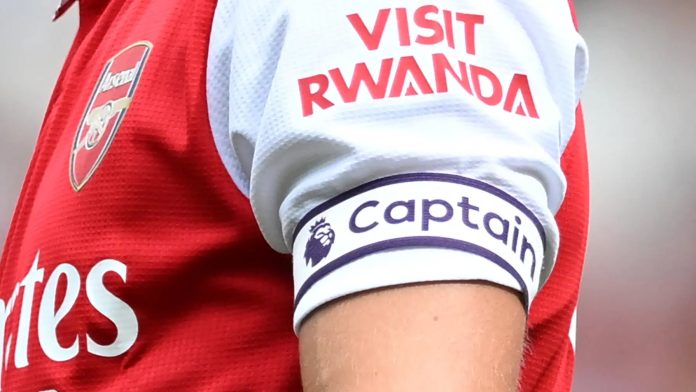
Arsenal Football Club and the Rwanda Development Board will conclude their landmark partnership at the end of the 2025/2026 season, closing an eight-year collaboration that made Visit Rwanda the club’s first-ever Official Sleeve Partner.
According to officials, the decision reflects Visit Rwanda’s strategy to diversify its global sports partnerships and tap into new markets that match the country’s next phase of tourism and investment growth.
Since its launch in 2018, the partnership has surpassed expectations. Rwanda recorded 1.3 million tourist arrivals in 2024 and earned US$650 million in tourism revenue a 47% increase since the collaboration began. The agreement played a pivotal role in promoting the country’s conservation efforts, positioning Rwanda as a premium travel destination, and strengthening ties with millions of Arsenal supporters across Africa.
Rwanda Development Board CEO Jean-Guy Afrika described the partnership as a global trailblazer, saying it “broke new ground for tourism boards around the world, driving awareness and visitation for Rwandan tourism at a pace traditional campaigns could never match.”
Afrika added that the achievements of the past eight seasons have given Rwanda the momentum it needs to expand into new markets.
He noted,“whilst we are now focused on expanding that momentum into new sports and new markets, we remain grateful to Arsenal for its support, partnership, and shared belief in Rwanda’s story over the past eight years.”
He also reaffirmed Rwanda’s commitment to the club for the remainder of the season, saying they look forward to continued collaboration with the wider Kroenke Sports & Entertainment Group through the country’s recent partnerships with the LA Rams and So-Fi Stadium.
The partnership has produced unforgettable moments for both sides. Rwanda Heritage Day at Emirates Stadium became a cultural highlight, while visits by Arsenal legends and players including Alex Scott, Mathieu Flamini, Bacary Sagna, Jurrien Timber, Caitlin Foord, Katie McCabe, and Laia Codina showcased Rwanda’s natural beauty. Their experiences ranged from gorilla trekking and Big Five safaris to the iconic Kwita Izina gorilla naming ceremony.
Arsenal Chief Executive Officer Richard Garlick praised the partnership for strengthening the club’s long-term ambitions. He said their first sleeve partnership with Visit Rwanda had been a significant journey that helped the club raise global awareness of Rwanda’s tourism and conservation efforts.
Garlick noted that Visit Rwanda’s support had been instrumental in Arsenal’s strategic growth, saying it “played an important role in driving forward our ambitions – helping us invest in our long-term vision to win major trophies, in a financially sustainable way.”
He added that the club is deeply grateful for what both sides have achieved together.
The partnership also supported Rwanda’s ambition to become a leading sporting hub in Africa, delivering grassroots football programs that helped hundreds of young players and coaches develop their skills.
Both Arsenal and Visit Rwanda will remain fully engaged through the remainder of the season, before the partnership officially ends in June 2026.
Police in the Wamala Region have arrested a couple in connection with the theft of fresh coffee, following a successful operation led by the Mityana K9 unit.
The suspects, identified as Kigundu and his wife, Alice Ishimwe, both residents of Kireku Village in Busimbi Division, Mityana District, were apprehended after police traced stolen coffee to their property.
According to police, the theft occurred on the night of November 17, 2025, when the duo allegedly sneaked into the garden of 59-year-old Steven Ssemujju and harvested his coffee.
Ssemujju noticed signs of intrusion the following morning and immediately reported the matter.
“He told our officers that his garden had been tampered with and suspected that thieves had taken his coffee,” the regional police said.
A team of investigators, jointly working with the K9 unit, responded to the scene without delay.
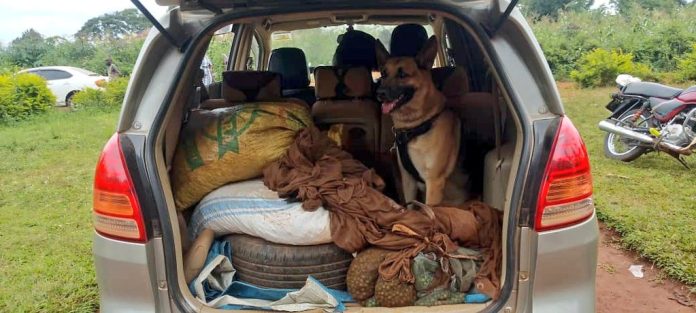
“Upon arrival, our sniffer dog, Whisky, picked up a human scent that led officers for about 500 meters,” police stated.
The scent trail led directly to a store on the property of the suspects. Inside, officers recovered freshly stolen coffee.
“The dog later guided the team to another spot behind the main building near the suspects’ latrine, where more stolen coffee was found alongside a mosquito net believed to have been used to conceal the stolen produce,” police added.
Both suspects are currently detained as inquiries continue. Police say the operation is part of an intensified crackdown on the theft of fresh farm produce, which has become a growing concern for farmers in the region.
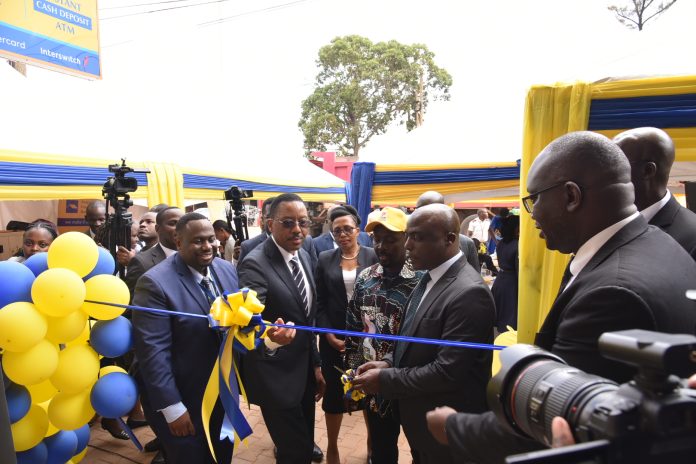
Michael Mugabi, MD HFB and Bosco Bainamazima from BOU (Center) and other Housing Finance Bank executives cut the ribbon during the opening of the new branch in Nansana.
Uganda – Housing Finance Bank officially launched its newest branch in Nansana, marking a major milestone in its strategic expansion and reaffirming its commitment to delivering accessible, customer-centric financial services closer to the communities it serves. This development reinforces the Bank’s heritage as “The Home of Possibilities” where every branch represents not just a banking space, but a hub for individuals, families, and businesses to build, grow, and thrive.
Housing Finance Bank’s Nansana branch becomes part of its 21-branch nationwide network and will offer a comprehensive suite of financial solutions, including mortgages, personal and business banking, savings, and digital services all designed to support customers achieve their financial goals. This expansion reflects Housing Finance Bank’s dedication to fostering inclusive economic development by extending affordable and reliable financial services to more Ugandans.
Speaking at the launch, Mr. Michael Mugabi, Managing Director of Housing Finance Bank, stated:
At Housing Finance Bank, we are intentional about creating lasting value for our customers and for Uganda. The opening of this new branch in Nansana brings us closer to the communities we serve, providing convenient access to financial solutions that empower individuals, families, and businesses. This milestone reflects our commitment to inclusive growth and our vision of building a future where financial empowerment is a reality for all.
Mr. Mugabi further highlighted three strategic priorities for the Bank that align with the expansion. First, the Bank is committed to increasing financial inclusion for all Ugandans, including women, youth, and entrepreneurs. Second, it aims to support sustainable enterprises that drive long-term growth and resilience. Third, the Bank upholds strong governance and ethical leadership to build trust and transparency in all its operations.
He noted that the Bank has financed over 1,400 women and youth-led businesses worth UGX 121.8 billion, supported 65 green projects worth Shs22 billion, and invested in 61 renewable energy initiatives nationwide over the last year. These achievements demonstrate Housing Finance Bank’s unwavering commitment to empowering communities and promoting sustainability.
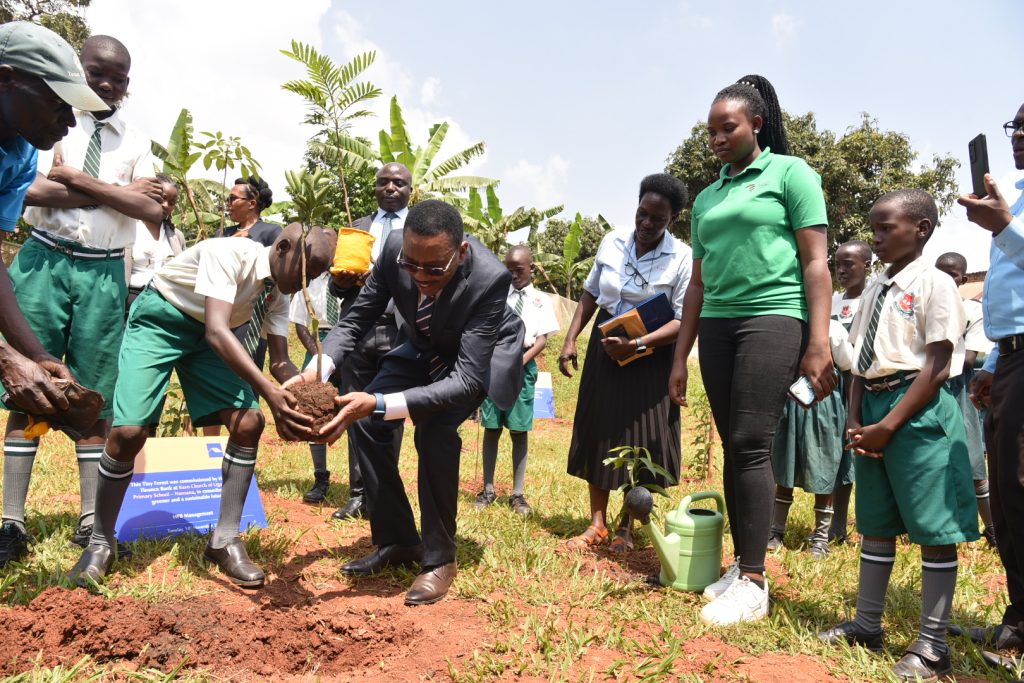
Michael Mugabi – MD Housing Finance Bank and pupils, plus the teaching staff at Church of Uganda Kazo Primary School set to plant trees at the school premises.
Nansana Town Clerk, Mr. FestoTandeka, applauded the Bank’s customer-focused approach, saying:
“Housing Finance Bank has shown genuine dedication to prioritizing the everyday person by offering accessible, meaningful, and relevant financial solutions that speak to the realities of the Nansana community.”
Mr. Kizito Havior Ssempiira, CEO of the Center for Special Abilities (CeSA) and a Housing Finance Bank customer, added: “This new branch represents a significant investment in Nansana’s growth and financial empowerment. It will greatly benefit families, entrepreneurs, youth, and community initiatives by providing reliable financial solutions and business support that help people thrive.”
The Guest of Honour, Mr. Bosco Bayinamazima, representing the Bank of Uganda, congratulated Housing Finance Bank on this milestone:
“Nansana Municipality is among the fastest-growing areas, and this branch will serve not only commercial enterprises but also the wider community. The Bank’s strong financial position enables it to meet the diverse and evolving needs of customers in this dynamic suburb.”
As part of the launch, Housing Finance Bank planted 300 trees at the Church of Uganda Kazo Primary School – Nansana under its Tiny Forest Initiative, reinforcing its dedication to climate resilience and environmental stewardship. This initiative reflects the Bank’s belief that a true home must be supported by a thriving environment. Beyond tree planting, the Bank continues to embed sustainability in its operations by financing green housing projects, renewable energy solutions, and water access programs.
Further highlighting to the bank’s efforts to environmental sustainability efforts, the Managing Director stated that, “At Housing Finance Bank, we are intentional about creating lasting value for our customers and for Uganda. This tree planting initiative demonstrates our commitment to preserving the environment we all call home. Sustainable growth is the foundation of true progress, and these initiatives reflect our dedication to shaping a better future for generations to come.”
With the opening of a new branch and the tree planting activity in Nansana, Housing Finance Bank continues to strengthen its role as a trusted financial partner and responsible corporate entity. These milestones reflect the Bank’s holistic vision of supporting both people and the planet; fostering homes, communities, and environments where everyone can thrive.
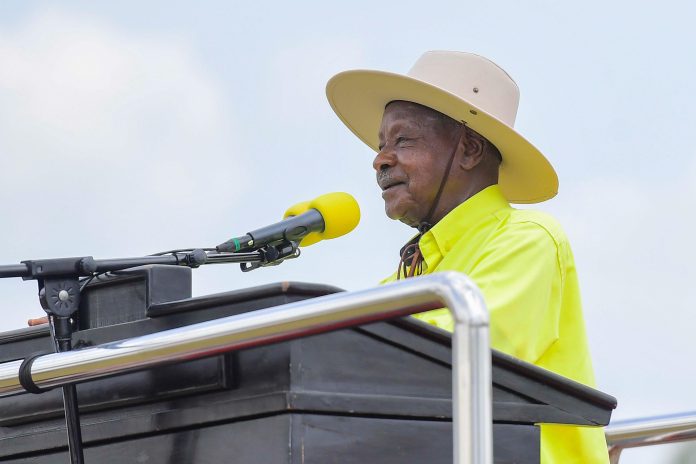
President Yoweri Museveni has instructed newly elected NRM district chairpersons to fully penetrate every village and workplace in their jurisdictions as the party launches an intensified grassroots mobilization strategy ahead of the 2026 elections.
Speaking while flagging off the nationwide mobilisation drive on Tuesday evening at Mayuge State Lodge, Museveni congratulated the district party leaders, most of whom are young, but reminded them that leadership requires ideological grounding, not merely youthfulness.
“You cannot simply say, ‘We are young.’ Youth is biology; politics needs ideology. It is important that you understand the ideology of the NRM,” he said.
The President unveiled a detailed message that district chairpersons and their teams will take to parishes, villages and workplaces, noting that the strategy was designed after extensive consultations.
He emphasised that the most effective campaign method was to reach people where they live and work.
Museveni directed the leaders to ensure that factories, hotels, markets, schools, and other workplaces have resident party mobilisers.
He also highlighted the existing patriotic clubs in schools as structures the NRM should use to reach young people, even those who do not vote yet.
Beyond workplaces, Museveni urged chairpersons to engage grassroots influencers such as taxi drivers who interact with hundreds of travellers daily.
Under the new strategy, mobilisation teams will operate parish by parish, meeting the 63 persons per village and equipping them with both verbal and written messages. Given that parishes generally consist of about five villages, Museveni said this method would allow the party to interface with close to 400 local leaders at once, ensuring message accuracy and consistency.
The President said the campaign message highlights the NRM’s achievements including increased factories, schools, health centres, and road infrastructure while also addressing challenges such as delayed road reconstruction.
He attributed some delays to poor prioritisation by civilian leaders who scatter resources in pursuit of cheap popularity instead of strictly following the NRM’s principle of prioritisation.
“We, the bush people, believe in doing the most important things first with the little money available,” he said, emphasising that roads must take precedence over salaries and new administrative units.
Museveni dismissed claims by opposition presidential candidates, whom he accused of peddling falsehoods and serving foreign interests that fear Uganda becoming strong.
By empowering the 63 village-level leaders and ensuring each mobilises even three additional supporters, Museveni projected that the NRM could directly reach at least 14 million Ugandans across the country’s 72,000 villages.
He added that while voluntary mobilisation groups are free to continue supporting the party, the new approach will ensure that elected party structures finally take full responsibility for mobilisation work.
“For the first time, those elected to do the work will be deployed to actually do that work. If someone is elected to do something, let him do it,” Museveni said.
The recent drama surrounding Maj. Gen. Kon John Akot, Director General of South Sudan’s Traffic Police, is not simply a routine personnel reshuffle. It has exposed deep institutional weaknesses, a disregard for the chain of command, and a serious threat to public confidence in law enforcement.
On November 11, 2025, the former Inspector General of Police, Gen. Abraham Manyuat Peter, announced a reshuffle affecting 13 senior officers, including Akot, who was moved from his long-standing position as Director of Traffic Police in Juba to become Police Commissioner in Northern Bahr el Ghazal State. According to the order, officers were required to hand over their duties within 72 hours. However, instead of complying, Akot publicly denied receiving any formal transfer letter, claiming he first learned of the move through social media reports. He alleged that the traffic police headquarters in Juba had been blocked, that guards were disarmed, and that there was a coordinated attempt to force him out. Speaking to journalists, he framed his resistance not as insubordination but as a principled stand, insisting, “I am ready to implement any transfer order, but I am unhappy with the way it was done without following proper procedure.”
Only days later, Major General Akot was reinstated to his post in Juba. According to media reports, his return was met with celebrations in parts of the city, signaling more than a procedural reversal but a political and public relations victory. The Inspector General reportedly prepared a formal reappointment letter, seemingly acknowledging the influence of public opinion and the support Akot enjoys among certain groups.
This is not the first time Akot’s tenure has stirred controversy. In January 2025, he issued a directive that drastically reduced the validity of driving licenses for South Sudanese nationals from five years to one year, and for foreigners from one year to six months. The decision triggered widespread criticism from civil society, legal experts, and ordinary citizens alike. The public backlash was strong enough that the Inspector General eventually rescinded the order, illustrating that unilateral decisions by senior officials can create confusion and regulatory instability.
Akot’s repeated defiance, evident both in the licensing episode and the protracted transfer saga, signals a problem that transcends individual behavior, pointing instead to systemic weaknesses within the police service. When senior officers disregard official directives, it undermines the chain of command, cultivates a culture of impunity, and erodes public confidence in the institution. His reinstatement reinforces the considerable influence he commands, but it also raises serious concerns: Does public opinion or factional pressure now take precedence over established procedural rules?
For ordinary citizens, particularly motorists like myself (JB), the consequences of this leadership culture are tangible and deeply troubling. We routinely witness acts of harassment and extortion carried out in broad daylight, behaviors that appear either protected by Akot’s authority or deliberately exploited to serve his personal interests. This pattern of conduct points up a fundamental governance gap: why does General Kon consistently hesitate to vacate his post? Whether this hesitation stems from political calculation, personal loyalty, or structural inertia within the service, it allows misconduct to persist unchecked.
Ultimately, Akot’s case is not merely about one individual’s defiance; it is emblematic of a system where accountability is uneven, rules are negotiable, and public trust is at risk. Addressing these structural weaknesses is essential to restoring institutional credibility and ensuring that the police service functions in accordance with law and public expectations.
The implications for governance and reform are serious. Traffic management in South Sudan faces long-standing challenges, including inadequate infrastructure, poorly trained personnel, and limited operational capacity. Leadership that prioritizes personal power over institutional responsibility jeopardizes efforts to build a professional, accountable, and effective Traffic Police. Citizens need an institution that can issue clear and predictable policies, enforce traffic laws fairly, and operate free from the whims of individual leaders.
Rebuilding public trust requires decisive action; transfers and directives must be implemented consistently, without exception. Leadership positions should be based on merit, experience, and integrity rather than political loyalty or personal networks. Policy decisions, particularly those affecting motorists and transport regulations, should follow proper legal processes and institutional oversight, rather than being imposed unilaterally. The public should be engaged through feedback mechanisms, and consultation with civil society is essential to restoring confidence in the Traffic Department. At the same time, investment in training and operational systems is necessary to strengthen the department’s capacity and ensure that it can fulfill its mandate professionally.
The saga of Maj. Gen. Kon John Akot is more than a personnel matter; it is a warning about the fragility of institutional norms in South Sudan’s security services. Defiance at the top and the ability to reverse official decisions under public or political pressure undermine both the rule of law and the credibility of state institutions. For the Traffic Police to serve the citizens effectively, leadership must be accountable, predictable, and guided by the principles of service rather than personal ambition. Without such reforms, road safety, institutional integrity, and public trust will remain in jeopardy.
The author, James Bidal, is passionate about defending Human Rights and is a researcher. He can be reached via email at goodbidal@gmail.com
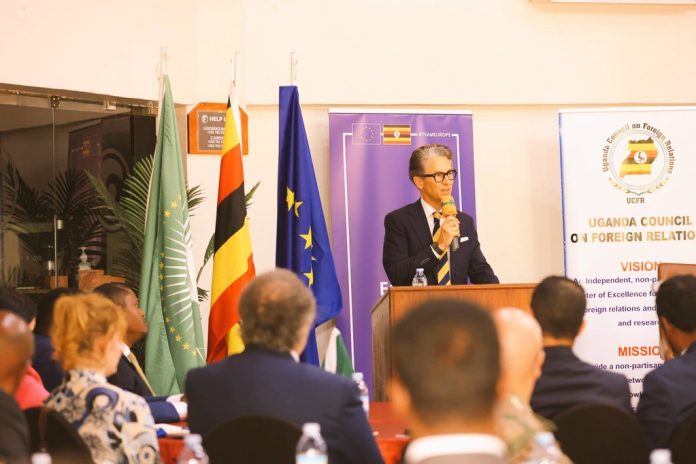
Uganda and the European Union strengthened their long-standing relationship yesterday during a diplomatic panel discussion held at Fairway Hotel Kampala, bringing together diplomats, scholars, policymakers, civil society, and the private sector to reflect on the future of the AU–EU partnership.
The discussion comes just days before the 7th AU–EU Summit scheduled for November 24 and 25 in Luanda, Angola.
EU Ambassador to Uganda, H.E. Jan Sadek, opened the engagement by describing the conversation as both timely and historic, noting that such a dialogue was taking place in Uganda for the first time.
“It is a great pleasure to welcome you this afternoon for what is, in many ways, a timely and symbolic conversation. It is also a unique conversation, which I believe is taking place for the first time in Uganda,” he said, expressing appreciation to the Uganda Council for Foreign Relations for co-hosting the event.
Ambassador Sadek reflected on the depth of Africa–Europe relations, highlighting that the two continents are tied together by geography, history and interdependence.
“Europe remains Africa’s first trading partner, first investor, first provider of development and humanitarian assistance, and first partner on peace and security,” he said, adding that African countries collectively rank as the EU’s fourth-largest trading partner.
He noted that over half of all Global Gateway flagship investments worldwide are being implemented in Africa, with Uganda benefiting from initiatives in renewable energy, transport corridors, agribusiness, and digital transformation.
“Security in Africa and security in Europe are inseparable,” he emphasized, reaffirming Europe’s commitment to African-led peace and stability efforts.
Ambassador Sadek also recognized Uganda’s leadership on the continent.
He noted, “Uganda exemplifies this partnership. Whether in regional peace and security, mediation, the fight against violent extremism, or in promoting innovation and regional economic integration, Uganda has consistently demonstrated its will to be a unifying factor.”
Representing the Ministry of Foreign Affairs, Amb. John L. Mugerwa delivered remarks on behalf of the Permanent Secretary, Vincent Bagiire, and emphasized the need for a more strategic, forward-looking partnership that responds directly to Africa’s priorities.
“This theme speaks not only to the shared future of Africa and Europe but also to the aspirations of the entire African continent, and that is shared prosperity and peace for all our people,” he stated.
He commended the growth in EU–Africa trade and stressed the importance of investments that strengthen African capacity.
“We need investment that supports African capacity, not dependency, and trade arrangements that allow African products to move competitively across borders,” he remarked.
Turning to security, Mugerwa pointed out that prosperity cannot be achieved without peace and thanked the EU for its contributions to Africa’s peacekeeping efforts including AMISOM. He also highlighted Uganda’s role as a major refugee-hosting country.
“Uganda currently hosts over 1.9 million refugees who are simply seeking safety from conflict. While we do this because it is the right thing to do, it also places enormous pressure on our social services and local economies,” he noted, calling for deeper humanitarian and development cooperation.
Mugerwa stressed the need to invest in Africa’s young population, which he described as the continent’s greatest resource.
“Their potential, creativity and ambition will shape our future, but their success will require skilling, innovation platforms, decent jobs and technology,” he said, calling for expanded collaboration in digital skills, research and mobility programmes.
The Kampala dialogue provided a critical opportunity for experts and policymakers to examine how Africa and Europe can co-create solutions in peace and security, prosperity and development, and people-focused cooperation. The inputs from Uganda are expected to shape discussions in Luanda as leaders mark 25 years since the first AU–EU Summit in Cairo.
Ambassador Sadek closed the event with a reaffirmation of Europe’s long-term commitment to Africa.
He said, “Europe is, and will remain, Africa’s reliable, predictable and value-based partner. And let me also wish our Heads of State and Government all the best when they meet in Luanda.”
The dialogue was hailed as a powerful step toward redefining Africa–Europe cooperation through mutual respect, shared responsibility and joint ambition as both continents prepare for the upcoming summit.
FDC candidate, Nathan Nandala Mafabi, and former Obongi County MP, Hassan Kaps Fungaroo.
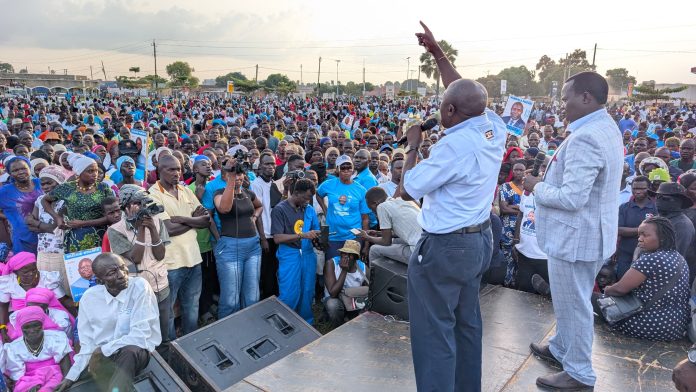
Forum for Democratic Change (FDC) presidential candidate Nathan Nandala Mafabi has expressed deep concern over the neglect of West Nile sub-region, citing dusty roads and lack of economic opportunities despite significant tax contributions.
Addressing rallies in Yumbe and Koboko districts, Nandala Mafabi promised to revitalize the region’s economy by reviving cotton growing, improving infrastructure, and promoting cassava production for food and starch extraction.
He says a kilo of starch costs a hefty Shs1.4m, whereby if cassava production is prioritized can fetch farmers a good income, thereby improving the welfare of the communities.
A Call for Change
Nandala Mafabi criticized the National Resistance Movement (NRM) government for abandoning sorghum production in the region, only to see it being grown by the prison service and high-ranking government officials.
He also lamented the decline of tobacco farming, which has benefited Kenyans instead.
The FDC candidate pledged to compensate all ex-combatants and urged voters to reject the NRM’s promises, including the infamous ” five cows” offer. Nandala outlined the FDC’s manifesto, which includes:
Economic Development: Reviving cotton and cassava production, promoting agriculture, and improving infrastructure
Social Welfare: Providing a monthly stipend of 60,000 shillings to seniors (65+), job opportunities for youth, and quality education and healthcare
Anti-Corruption: Tackling corruption and ensuring transparency in government spending
The FDC presidential candidate emphasized his commitment to uniting the country through reconciliation and spearheading development across Uganda.
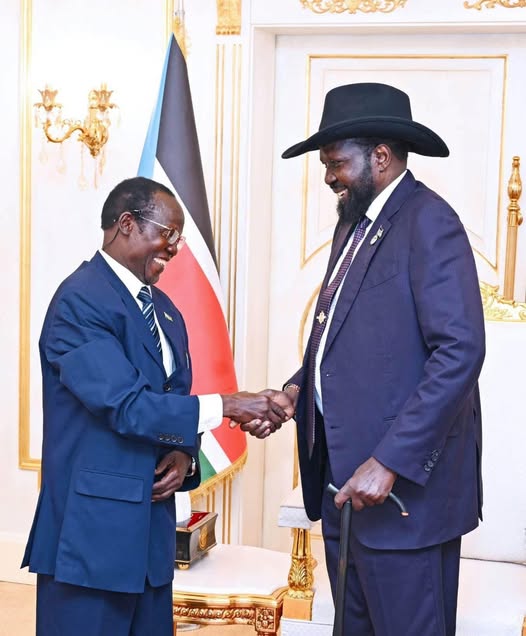
Mr Wani greeting President Kiir at the past event.
South Sudanese President Salva Kiir last night reinstated Dr. James Wani Igga as vice president in charge of the Economic Cluster, ending days of speculation over the position, according to state-run media.
The move is part of a sweeping political reshuffle that replaced four national ministers and senior government officials.
South Sudan has five vice presidents under a 2018 peace deal that ended the country’s civil war.
Igga, a veteran politician and general, was dismissed in February after serving as vice president since 2013. A longtime liberation-era ally of Kiir, he was also reinstated as first deputy chair of the ruling SPLM after being removed from that role in May.
Igga’s return follows the removal last week of Dr. Benjamin Bol Mel, who had briefly occupied the vice presidency and the deputy SPLM chairmanship.
Bol Mel, a prominent businessman who rose rapidly in political influence, lost both positions and was stripped of the four-star general rank he received in September 2025.
Kiir also dismissed Bol Mel from the National Security Service. No reason was given, though the move followed reports of internal power struggles and alleged misuse of government revenues.
Cabinet changes
Kiir also dismissed several ministers, including Information Minister Michael Makuei Lueth, Roads and Bridges Minister Simon Mijok Mijak, Environment Minister Josephine Napwon Cosmos, and Justice Minister Joseph Geng Akech.
Makuei, who oversaw the information docket for more than a decade and is known for imposing tight controls on the media, was reassigned as justice minister.
A judge by training, Makuei previously served as minister of legal affairs during the semi-autonomous southern region before independence in 2011.
Geng Akech, appointed in September and known for advancing the ongoing trial of suspended First Vice President Dr. Riek Machar, received no new appointment. He is widely viewed as a close ally of Bol Mel.
Kiir named former presidential press secretary Ateny Wek Ateny as the new information minister. Ateny served nine years in the presidential office before being removed in August 2022.
For the roads and bridges ministry, Kiir appointed Peter Lam Both, former SPLM secretary-general, to replace Mijok.
Mabior Garang, the eldest son of the late SPLM founding leader Dr. John Garang, was named national minister of environment.
Mabior’s mother, Rebecca Nyandeng de Mabior, has served as vice president for the Gender and Youth Cluster since 2020, representing the Former Detainees (FDs). It remains unclear whether her son’s appointment might affect her position.
Security and state-level changes
Kiir dismissed Inspector General of Police Gen. Abraham Manyuat Peter, who had served since December 2024, and reappointed Gen. Saeed Chawul Lom to the post. Chawul previously served as police chief from March 2017 to February 2018.
In Central Equatoria State, the president removed Governor Rabi Mujung Emmanuel, appointed in June 2025, and reinstated Emmanuel Adil Anthony. Adil served as governor from June 2020 until Kiir dismissed him in May 2024.
Diplomatic appointments
Kiir appointed Regina Akur Nyok as South Sudan’s deputy ambassador to China. Last week, Akur was appointed Deputy Office Manager in the Office of the President.
The president reinstated Monica Achol Aguek as a Grade One Ambassador, naming her presidential envoy for the Middle East.
The presidential decrees did not provide reasons for any of the changes.
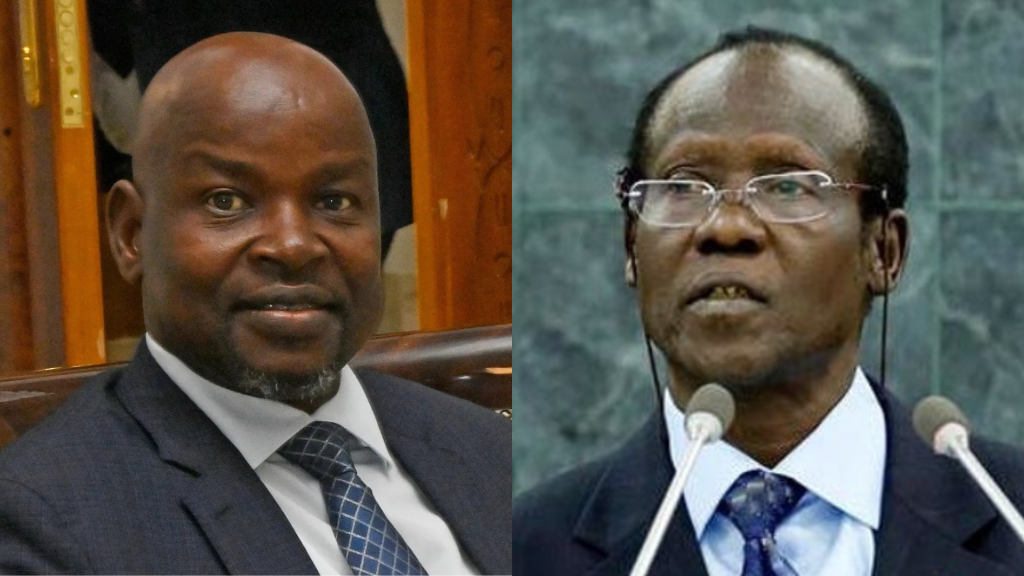
Bol and Wani.
Analysts react
Political analysts said the reshuffle suggests Kiir is consolidating his authority after a falling-out with Bol Mel, who was once viewed as a potential successor.
Dr. Remember Miamingi, a South Sudanese governance expert, said frequent reshuffles in South Sudan have turned government posts into “tokens in a game of power and patronage” rather than positions of responsibility.
Edmund Yakani, a civil society advocate, called the presidential decrees “a recycling of old guards” and urged the government to “sincerely and genuinely implement the 2018 peace agreement without selectivity or favoritism.” He said the country urgently needs an inclusive political dialogue.
The 2018 peace agreement gives the president wide powers to appoint and dismiss officials at both national and state levels.
South Sudan has not held an election since independence in 2011.
The vote has been postponed several times, and the transitional government says general elections are now planned for December 2026.
Former Administrator General Kasiribayo (standing) stressing a point.
Bruno Senkatuka Serunkuuma, the clan head of the Luggya and Lunyiriri of Andereya Mayanja Nakiyenje, whose estate of 320 Acres of land was illegally sold by the officials at the Administrator General’s office since 1993, dies inexplicably.
Senkatuka, the head of the Ssiga of Nakiyenje died abruptly two weeks ago after waiting for the Administrator General to account for the estate as ordered by the court in vain. As the head of the Ssiga of Nakiyenje, he was made the heir after the death of Mayanja’s only son, Henry Kyobe (his first cousin) but the Administrator General made it very difficult for him to take over the estate. Following the delay and impunity by AG to implement the court order signed and sealed on November 10, 2020, by Justice David Matovu, Senkatuka summoned a clan meeting that sat at Bukasa – Bijiri Kawuku – Katabi – Entebbe, Wakiso District on December 06, 2020, to, among other things, install the heir of Kyobe’s estate. The minutes of the meeting vide CLCSDC/A002/22/01/2021 that was attended by 25 clan members declared Kaweesa Balikuddembe as the heir and the installation ceremony presided over by Senkatuka, another senior elder, Kalyesubula John Baptist Lukenge, and later closed with a Catholic Church mass led by Rev. Fr. Kalaudiyo Ssegonja of Ggaba Parish.
HOW KYOBE’S ESTATE WAS ILLEGALLY SOLD
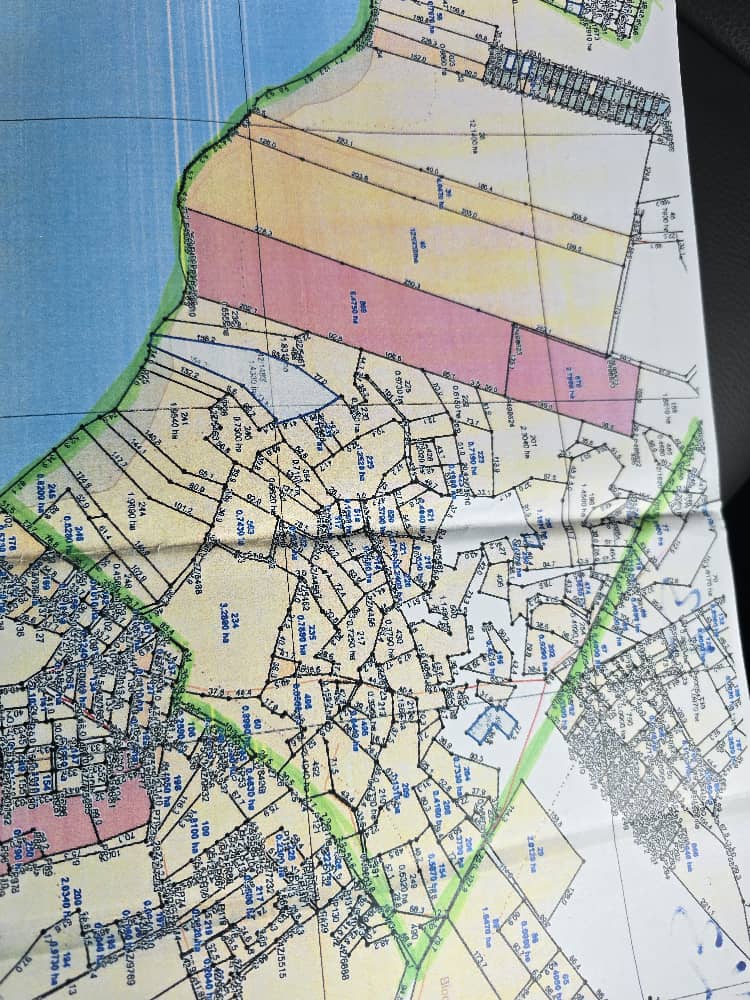
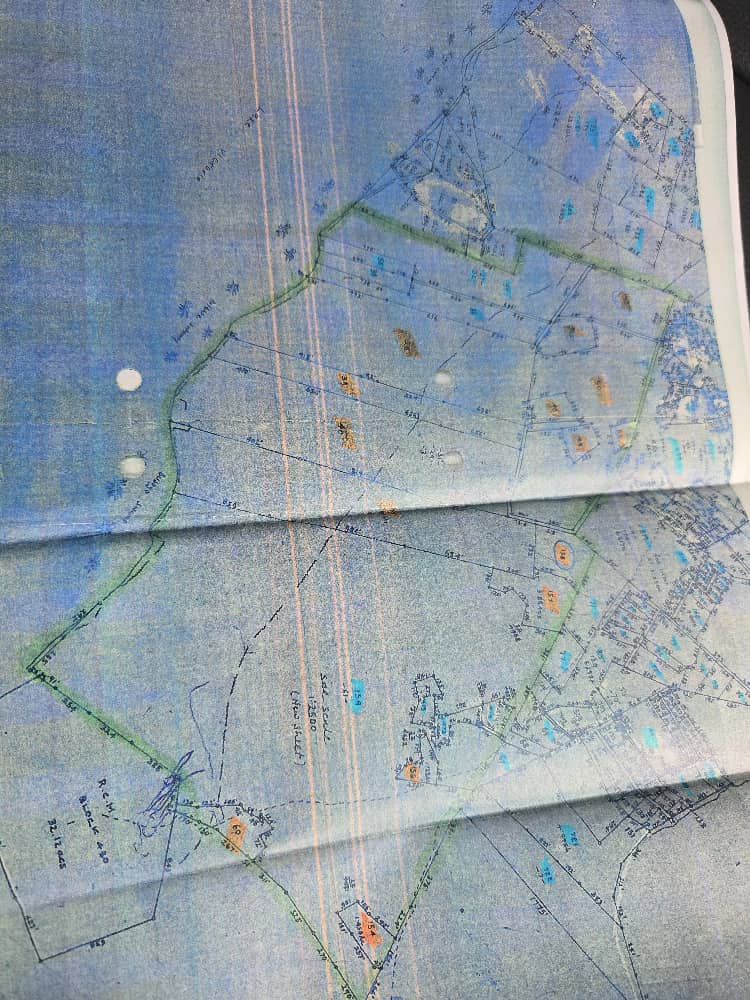
More details on how 320 acres of land (comprised in Busiro Block 429 plot 3 at Kawuku – Bugiri) previously belonging to Mzee Andereya Mayanja Nakiyenje, who died in 1981 at Bwerenga – Busiro in Wakiso District, was mismanaged and split into 163 plots and illegally sold with no standard formula have emerged.
Following Justice Herbert Ntabgoba’s judgment in HCS no. 170 of 1990, all property left by Late Mayanja was passed on to his only son, Henry Kyobe, who, unfortunately, was mentally disabled due to a serious accident hence remained in a state of unsound mind throughout his life.
Land after an illegal sale.
This came after the office of the Administrator General on May 19, 1989, applying for the letters of administration for the estate of late Mayanja vide Kampala High Court Administration cause No. 265 of 1989, and a grant was issued in favour on June 27, 1989. However, this privilege was abused by the officials at the office of Administrator General, who reportedly connived with suspicious family members and, without any Court Order(s), divided and illegally sold the entire deceased’s estate. It is hitherto not known where the proceeds went because the trustee has no evidence that Kyobe or his people benefited and has failed to account.
ADMINISTRATOR GENERAL ‘RAPES’ LAW
The Administrator General’s Act requires that whenever the estate is sold by the accused office, it must be in the interest of the beneficiaries. The overwhelming evidence indicates that huge chunks of land were sold after Kyobe died in 2019, and this raises unanswered questions: in whose interest was the sale done? If the land was sold and the beneficiaries did not benefit, where did the money go?
Besides, the law requires the Administrator General to advertise in the newspapers, and if there is no claimant (a legally appointed beneficially by the court), the money is put in the consolidated fund. Contrary to the law, there is no trace of the money obtained from the proceeds of Kyobe’s estate in the consolidated fund.
The Trustee Act states that in the interest of beneficially at all material times, the trustee is accountable forever without any limitation, so the Administrator General is accountable for the estate in question since 1993 until an unspecified time. If one goes by the current law on the management of the estates for the people with unsound mind, there should have been a court order secured by the Administrator General to do any transaction regarding the estate. In the case of Kyobe’s estate, the lease of Land to Aurum Roses and Scripture Union must have been done under court guidance, and the proceeds of the lease must have been accounted for in court and there is no evidence adduced to this effect. Even then, any sale, transfer or mortgage for whatever purpose must be after a Court Order is obtained, and all these have never been furnished. This leaves no doubt in the minds of the sound Ugandans that the properties were sold to benefit the officials at the office of the Administrator General.
Attorney General, Kiryowa Kiwanuka.
None of the records unearthed from the Lands office in connection with this matter carries any signature of Kyobe’s beneficiaries from either the paternal or maternal side. All the records seen by this publication indicate that the Administrator General was selling as a vendor, and people who bought were endorsed as buyers. The Administrator General did not build any house, kitchen, or even a toilet for Kyobe or any of his close relatives. To make matters worse, the officials at the Administrator General’s office did not even meet Kyobe’s burial expenses as required by law, which confirms that they were in collusion with Nanteza Agati, who hid his body at Mulago Medical School as they sold his land. The question remains where and when did the officials send the proceeds of the estate?
Besides all that, there were contradictions and inconsistencies in selling the land, something that turned the whole process into a BONANZA. The people who bought different sizes almost at the same time had differing payments – the available documents show that there was no valuation or standard procedure followed, and this implies that the officials were the final determinants on how much each buyer would pay, depending on their moods. A case in point is: whereas Dimitria Nabbantu Kaddugala paid Shs18.500,000 for 0.532 hectares, Paul Seminyigo Wavamuno paid Shs20,000,000 for 0.281 hectares, and whereas Thereza Najjuna paid Shs4,000,000 for 0.6 hectares, Sentamu Francis Xavier paid Shs30,000,000 for 0.587 hectares. To further prove that the Administrator General officials had a lot of suspicious interests, when some buyers raised questions and made appropriate searches at the land’s offices, the land would be withdrawn. A case study of this is clear in the land that was first sold to Dhusaniya Binyera of Ziba – Ssaabaga – Kyagwe, then transferred to Nasani Wakisu of Mova Gomba Ngogwe – Kyaggwe, and then transferred to Aggrey Mulira, then to Bruno Senkatuka and Madalene Nakku. This land was later withdrawn from the first owners back to the Administrator General in 1995.
Another case of hidden interests of the Trustee was clearly manifested in 1993 when the widow of Mzee Mayanja, Madalene Nakku, and Kyobe’s cousin, Bruno Senkatuka Serunkuuma applied for the letters of administration and the registrar’s court granted them. The Administrator General, without any haste, ran faster than lightning to court to challenge the circumstances under which the letters of administration were granted to the widow and Kyobe’s first cousin, to which the reversal was made, and the decision of High Court cause No. 265 of 1989 was upheld.
DEFIANT ADMINISTRATOR GENERAL
The miscellaneous application No. 443/2020 arising from the civil suit 376/2018 before His Lordship Justice David Matovu on November 10, 2020 ordered and declared that;
i) the judgment vide HCCS number 170 of 1990 of Justice Herbert Ntabgoba exhaustively dealt with the estate of the late Andereya Mayanja Nakiyenje and resolved that Henry Kyobe was the sole beneficially of the said estate.
ii) the Administrator General is appointed the administrator of the estate of the late Kyobe.
iii) the Administrator General is ordered to collect all the land and property that belonged to the late Andereya Mayanja Nakiyenje and pass on the same to the estate of Henry Kyobe.
iv) the Administrator is ordered to furnish with court an account of all properties that now constitute the estate of Henry Kyobe within (3) three months from the date of this ruling.
Land before demarcation.
v) The Administrator General is ordered to liaise with Bruno Senkatuka Serunkuuma (first cousin to Kyobe) for the purposes of appointing the customary heir to the late Henry Kyobe to benefit from the estate pursuant to section 27 (1) (d) of the Succession Act.
However, it’s only the family that followed the order and appointed Balikuddembe Kaweesa as the heir of the estate, but the Administrator General has since vehemently refused and failed to account for his actions on the same estate. The Administrator General has stubbornly ignored the order, and insiders say more transactions were done on the estate even after this order. The delay in responding to the order has culminated in the strategic transfers in which some of the top officials who messed up Kyobe’s estate can use their new offices to “PROTECT THEIR GAINS”. Signs show that some of the transferred officials from the Administrator General’s office have remained the big forces behind this mess and defiance.
The Government of Uganda has today released Shs529 billion as the first tranche for capitalisation of Parish Development Model (PDM) SACCOs in the 2025/26 financial year.
Finance Minister Matia Kasaija announced that, beginning tomorrow, all 10,589 verified PDM SACCOs will each receive Shs50 million directly into their accounts, in line with the PDM policy, which prescribes two equal disbursements every six months.
“The Parish Development Model is no longer a theory. It is a reality. It is in your parishes. It is in your households. PDM is growing bigger, stronger, and more impactful,” Kasaija said while releasing the funds at the Ministry of Finance.
The government has so far transferred Shs3.216 trillion to all the 10,589 parishes. Each parish has now received at least Shs300 million in earlier disbursements, and officials say 99 percent of these funds have already reached more than 3.27 million Ugandans.
The PDM is designed to help transform subsistence households into active participants in the money economy. Over the previous cycles, a major portion of the funds has supported enterprises in food and cash crops, livestock, poultry and other income-generating activities at parish level.
Despite the scale of investment, the model has faced several implementation challenges. Audits have highlighted delays in previous disbursements, gaps in documentation, and in some cases, failure by SACCOs to verify projects of certain beneficiaries. Some funds have also been disbursed outside appropriate planting seasons, affecting expected returns for farmers.
Other risks include inadequate staffing at the grassroots, with many local governments operating below the required number of extension workers and lacking basic field equipment. Many PDM SACCOs are yet to be licensed under the relevant financial laws, raising concerns about their governance. There is also no fully operational results tracking system or monitoring framework for the funds.
Government however, maintains that the model is gaining momentum and will deliver widespread impact once structural weaknesses are addressed. Modern digital systems are being used for payments and monitoring, and new reporting requirements will soon compel parish chiefs to submit annual status reports on the parish economy.
The latest injection of Shs529 billion is expected to boost enterprise financing for households that rely on these SACCOs for low-interest loans. Analysts believe that strengthening governance, monitoring, and SACCO regulation could enable the Parish Development Model to lift millions of Ugandans out of subsistence production and accelerate rural economic growth.