Thursday, March 12, 2026- KAMPALA — A 16-year-old student and young media entrepreneur, Martin Luther Nyanzi, has formally petitioned the Parliament of Uganda seeking legislation that would allow the government to provide financial support to community-based organisations (CBOs) and local non-governmental organisations (NGOs).
Nyanzi, a student at Kisozi High School in Buddo, believes grassroots organisations play a vital role in delivering services that complement government programmes, particularly in areas such as education, healthcare, youth empowerment, and community development.
Through his petition, the teenager is calling for the establishment of a legal framework that would enable Parliament to allocate funds directly to registered community organisations in order to strengthen their operations and ensure sustainability.
Concerns Over Shrinking Funding
In his proposal, Nyanzi highlights the growing challenges faced by NGOs and CBOs following the withdrawal or suspension of funding from major international partners.
He specifically points to the suspension of support from the Democratic Governance Facility (DGF) and reduced assistance from the United States Agency for International Development (USAID), which he says significantly affected the operations of many grassroots organisations.
According to Nyanzi, numerous organisations that had been providing vital community services were forced to scale down activities or close operations entirely due to financial constraints.
“The absence of consistent funding has left many community organisations struggling, yet they provide services that directly impact vulnerable populations,” Nyanzi said during an interview.
He argues that structured government support could help bridge the funding gap and ensure that these organisations continue to deliver services at the grassroots level.
Political Engagement
To advance his proposal, Nyanzi has already engaged several leaders in Parliament.
He recently held discussions with Deputy Speaker Thomas Tayebwa and has also secured support from Kawempe North Member of Parliament Elias Luyimbazi Nalukoola, who has expressed willingness to present the proposal to Parliament as a Private Member’s Bill.
“We are hopeful that the 12th Parliament will consider this proposal and debate a bill that ensures community organisations receive the support they need to continue serving Ugandans,” Nyanzi said.
However, MP Nalukoola noted that the proposal would require careful consideration to ensure it aligns with the current regulatory structure governing NGOs in Uganda.
He emphasised that community organisations should remain complementary partners to government programmes rather than becoming fully dependent on public funding.
Registration of Community Organisations
Under Uganda’s current legal framework, CBOs are registered at the district level through District NGO Monitoring Committees, which operate based on recommendations from Sub-County NGO Monitoring Committees.
The registration process requires organisations to submit a formal application letter, a constitution, a detailed work plan and budget, and proof of payment of the required registration fees.
Authorities also require organisations to renew their operating permits regularly, with penalties imposed on groups that operate without valid permits. Organisations found operating illegally may be fined 10 currency points (Shs200,000) for every month of unauthorised activity.
Rising Young Media Entrepreneur
Born on December 5, 2009, in Kampala, Martin Luther Nyanzi is the son of Simon Ssekaayi and author Joan Vumilia.
Despite his young age, Nyanzi has already built a reputation as an emerging entrepreneur in Uganda’s digital media space.
After completing his primary education at MK International School in 2023, he joined Kisozi High School where he is currently pursuing his O-Level studies.
His interest in media began at the age of 13, when he launched Block FM, an online radio station designed to provide a platform for young people to express their ideas and creativity.
Inspired by prominent Ugandan media personalities such as Don Wanyama and Kin Kariisa, Nyanzi has continued to expand his ventures in the digital media industry.
He currently serves as Chief Executive Officer of APEX Media Services, an organisation focused on digital media production and youth skills development.
Through Apex Digital Skills, he runs training programmes aimed at equipping young people with digital literacy, content creation and media production skills.
His ventures reportedly employ more than 55 staff members, supported by an executive board that includes his mother and investor Isaac Ssegawa.
In addition, he leads The Block Foundation, a non-profit organisation that offers free digital literacy training and employment opportunities to young professionals.
Youth Voice in National Policy
Nyanzi says his long-term vision is to build a major media company in Uganda while empowering young innovators across the country.
His petition to Parliament has drawn attention as a rare example of youth participation in legislative advocacy, highlighting the growing role young people are playing in shaping policy discussions around development and community empowerment.
Teen entrepreneur petition parliament to support community organisations
UNEB to release 2025 UACE results on Friday at State House Nakasero
Wednesday, March 11, 2026, Kampala- The Uganda National Examinations Board (UNEB) has confirmed that the 2025 Uganda Advanced Certificate of Education (UACE) results will be officially released on Friday, March 13, 2026.
According to the board, the results will be announced at 11:00 am during an official ceremony at State House, Nakasero, presided over by the Minister of Education and Sports.
In a brief statement issued on Wednesday, UNEB confirmed the date and venue for the long-awaited release of the national examination results.
“The Uganda Advanced Certificate of Education (UACE) results for 2025 will be released on Friday, March 13, 2026, at 11:00 AM at State House Nakasero,” the board stated.
The release will mark the conclusion of the 2025 national examinations cycle, which started with the Primary Leaving Examination (PLE) and Uganda Certificate of Education (UCE) before culminating in the Advanced Level examinations.
More than 166,000 candidates sat for the 2025 UACE examinations, which were conducted between November 10 and December 5, 2025, across 2,844 examination centres nationwide.
According to UNEB data, 166,402 candidates registered for the exams, representing a 14.6 percent increase from the 141,996 candidates who sat for the examination the previous year.
During the start of the examinations last year, UNEB explained that candidates began with several key subjects across both arts and sciences.
“The writing of papers for the 2025 UACE Examination starts today with candidates writing Theory of Government and Constitutional Development, History of Africa for Arts candidates, and Physics Paper One for Science candidates,” UNEB said at the time.
The board also reported that examination materials were successfully distributed to storage centres across the country ahead of the exams, with security agencies deployed to ensure the integrity of the exercise.
About 1,650 scouts and security personnel were deployed to supervise and monitor the conduct of the examinations across the country.
Of the candidates who sat the examinations, 42,328 were government-sponsored under the Universal Post O-Level Education and Training (UPOLET) programme, while 124,074 were privately sponsored.
The gender distribution showed 77,772 female candidates and 93,630 male candidates sitting the examinations.
UNEB also confirmed that 521 candidates with special needs participated in the exams, with the board providing necessary facilitation, including an extra 45 minutes for their papers.
The board has repeatedly emphasized its commitment to maintaining the credibility and security of national examinations and has warned against any form of malpractice.
“Once again, we would like to caution the public against involvement in any form of examination malpractice,”UNEB Principal Public Relations Officer Jennifer Kalule Musamba previously said.
“Anyone apprehended will be dealt with under the UNEB Act, which provides for a fine of up to Shs40 million or imprisonment of up to ten years, or both,”she added.
The UACE results determine the candidates’ eligibility for university admission, tertiary education, and other post-secondary opportunities.
MPs warn it could take 48 years to clear Uganda’s Shs8.4t domestic arrears

Parliament has been told that at the current rate of funding allocated to settle government domestic arrears, it could take more than four decades to clear the outstanding debt currently estimated at Shs8.4 trillion.
The revelation emerged during a meeting between Parliament’s Public Accounts Committee (PAC) and officials from the Ministry of Finance while reviewing the December 2025 Auditor General’s report, which highlighted the growing burden of domestic arrears owed to suppliers and contractors.
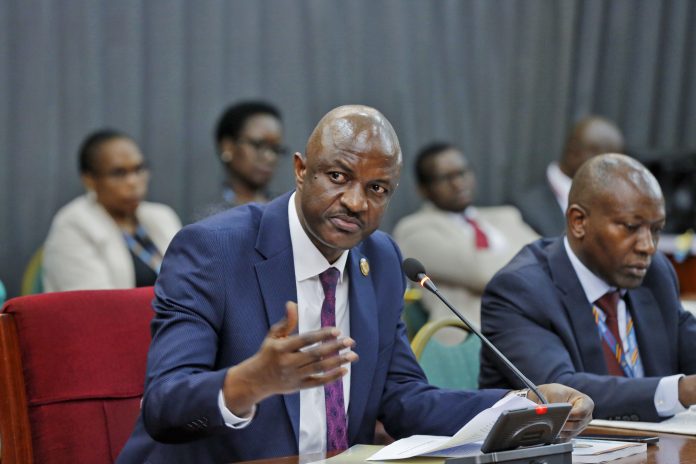
During the session, Kashari North MP Basil Bataringaya calculated that if the government continues allocating Shs200 billion annually to clear arrears, it would take about 48 years to eliminate the current stock.
“I have computed, it is 48 years. For the Shs9.6 trillion, Shs200 billion per year is 48 years. The mid-term has a maximum of five years. But also remember there is a rate of growth of domestic arrears,” Bataringaya told the committee.
He warned that the debt is unlikely to remain static because new arrears continue to accumulate as government obligations increase.
“So the domestic arrears will be growing, it will not be static. But the current one, at the rate at which we have programmed to pay, we shall cover it in 48 years,”he added.
The discussion followed concerns raised by PAC Vice Chairperson Gorreth Namugga, who questioned government’s commitment to settling debts owed to individuals and companies that supplied goods and services to government institutions but have remained unpaid for years.
Namugga argued that the UGX 200 billion allocation in the upcoming 2026/27 national budget is insufficient given the magnitude of the outstanding arrears.
“If you look at the trend of budgeting for domestic arrears over the previous five years, Shs200 billion has been your allocation most of the time. Yet the validated arrears stand at about Shs8 to Shs9 trillion,” Namugga said.
She added, “So if you really have a budget of Shs200 billion, which miracle are you going to perform to clear this debt? At the end of the day, you are seriously killing the private sector.”
However, Secretary to the Treasury Ramathan Ggoobi defended the government’s approach, explaining that the Shs200 billion reflects the base funding currently available and that additional resources could be allocated if they become available.
“The Shs200 billion is the money we had in the base, and that is why I communicated it. If we manage to get new resources, it is an area of priority. When we fail, we shall definitely pay Shs200 billion. We can’t pay money we don’t have,” Ggoobi explained.
He also revealed that a verification exercise conducted by the Auditor General had uncovered irregularities in some of the claims.
“I requested the Auditor General to verify these arrears. The verifiers are finding that some claims had no concrete evidence that goods or services were supplied to government,”Ggoobi said.
He added that once verification is completed, government will begin releasing funds to settle the legitimate claims.
“We are going to do very well in wiping out the portfolio that remains. Starting next quarter, we shall release money to pay those who have been certified as legitimate arrears,”he said.
Ggoobi further clarified that the figure of Shs9.6 trillion cited during the committee meeting was inaccurate, noting that a revised figure will soon be announced by the Auditor General.
“That number you have is not correct. There is a new number coming and the Auditor General will announce it soon,”he said.
Despite concerns about arrears, the Treasury Secretary told MPs that Uganda’s economy remains stable and continues to register strong performance across several indicators.
He revealed that the country earned $14.4 billion (about Shs53.6 trillion) in exports in 2025, the highest export earnings in Uganda’s history.
“Uganda has never in its history exported goods and services worth that magnitude. Our export performance reached $14.4 billion,” Ggoobi said.
According to him, the strong export performance has helped stabilize the Ugandan shilling, which has recently appreciated against major currencies including the US dollar.
“The shilling is stable and strong mainly because of the good performance of exports,” he explained.
Ggoobi also told the committee that inflation has remained under control despite Uganda entering an election period, which has historically triggered price instability.
“Usually, around election periods we see inflation rising, but this time prices of goods and services have remained stable,” he said.
He noted that Uganda’s economy is projected to grow between 6.5 and 7 percent this financial year, driven by expansion in agriculture, manufacturing, and the services sector.
“The GDP is continuing to grow, driven by all sectors of the economy. Agriculture, manufacturing and services are all growing,”Ggoobi said.
He further revealed that Uganda recorded strong inflows in its financial account, amounting to US$5.6 billion, including $3.56 billion in Foreign Direct Investment and $1.7 billion from portfolio investors.
“As a result, our balance of payments registered a surplus of $2.37 billion, meaning Uganda received more money from international transactions than what went out, ”he said.
However, Ggoobi acknowledged that revenue collection remains a weak area, despite registering growth of about 16 percent, and said the government is working on measures to strengthen domestic revenue mobilisation.
“Revenue collection is still one of the areas of weakness, and we are working to address it in the coming budgets, ”he said.
He assured MPs that despite global and domestic economic pressures, Uganda’s economy remains resilient.
“The state of the economy is quite good, and we hope it will remain stable despite geopolitical challenges around the world,” Ggoobi said.
Woman sentenced over failure to honour marriage agreement
A woman attached to Rubanda Town Council has been sentenced to civil prison after failing to honour a court order requiring her to pay more than Shs14 million to her former partner following a failed marriage agreement.
Fortunate Kyarikunda, a resident of Kiringa Parish in Kanungu District, was on Tuesday committed to Rukungiri Government Prison by the Rukungiri Chief Magistrate’s Court after she failed to comply with a court decree ordering her to compensate Richard Tumwiine, a primary school teacher from Kagoongo–Nyakagyezi Village in Nyarutojo Parish.
Court records indicate that the dispute dates back to a 2023 ruling by the Kanungu Magistrate’s Court, which directed Kyarikunda to refund Shs9,439,100 that Tumwiine had spent on her education while the two were in a relationship and planning to marry.
The court also awarded Tumwiine Shs1 million in general damages for the inconvenience and emotional distress he suffered after the relationship collapsed.
Despite the ruling, Kyarikunda did not settle the money and instead filed an application seeking to have the judgment set aside, arguing that she had never received the court summons to defend herself.
She claimed that during the period when the summons were allegedly issued, her mobile phone was being used by her sister, Rhona Atukwasa, and therefore, she was unaware of the court proceedings.
However, the court dismissed the application, maintaining that the earlier judgment remained valid.
Unsatisfied with the decision, Kyarikunda later filed another application before the Rukungiri Grade One Magistrate’s Court seeking to overturn the ruling on similar grounds, but the petition was again rejected.
With the court order still not honoured, authorities on Tuesday arrested Kyarikunda from Rubanda Town while she was reportedly on duty and transported her to Rukungiri to face charges of failing to comply with the court decree.
Rukungiri Grade One Magistrate Dinah Nekesa ordered that Kyarikunda be committed to civil prison for a period not exceeding six months unless the outstanding amount is fully paid.
“Whereas the judgment debtor has been brought before this court and ordered to pay the sum of Shs14,099,100, and whereas the said debtor has neither obeyed the judgment nor satisfied the court that she is entitled to be discharged from custody, you are commanded to take and receive Kyarikunda Fortunate into civil prison for a period not exceeding six months or until the judgment decree is fully satisfied,” a warrant issued by the court stated in part.
By the time of her arrest, the total amount owed had accumulated to Shs14,099,100.
Kyarikunda declined to comment on the matter after the court proceedings.
Tumwiine’s lawyer, Erasmus Nabimanya of Nabimanya and Company Advocates, welcomed the court decision, saying the judgment debtor had repeatedly ignored lawful orders.
“The court gave her enough time to comply with the decree but she failed to honour the judgment,” Nabimanya said.
According to information presented in court, Tumwiine and Kyarikunda began their relationship in 2015 when they were both teachers at Kiringa Primary School in Kambuga Sub-county.
In 2018, the couple reportedly entered into a marriage agreement and began making plans for their future together.
During the relationship, Tumwiine financed Kyarikunda’s studies at the Law Development Centre (LDC) in Kampala where she pursued a diploma in legal practice, spending more than Shs9.4 million on tuition and related expenses.
The two had reportedly planned to hold a traditional introduction ceremony in February 2022.
However, the plans later collapsed after Kyarikunda withdrew from the relationship, reportedly citing the age gap between the two.
She told the court that Tumwiine was much older than her and that continuing with the relationship would cause her stress.
Following the cancellation of the marriage plans, Tumwiine took the matter to court seeking compensation for breach of a marriage promise and recovery of the money he had invested in her education.
In earlier remarks about the case, Tumwiine said he decided to pursue legal action after consulting local leaders and police officers who advised him to remain calm and seek justice through the courts.
He explained that the money he used to support Kyarikunda’s studies had been mobilised from his salary, agricultural produce, and income from rental properties in Kanyantorogo Sub-county.
Although the court ruling could not restore the relationship he had hoped for, Tumwiine said the case should remind the public about the importance of keeping promises and respecting commitments.
Police arrest suspect in Wakiso bodaboda theft as hunt for other robbers continue
Wednesday March 11,2026-Wakiso- Police have arrested one suspect in connection with an aggravated robbery that targeted a bodaboda rider in Sumbwe Village, Wakiso District, as security agencies intensify operations to track down other members of the suspected criminal gang.
The suspect was apprehended on March 9, 2026, during an intelligence-led operation conducted in Kikunyu Village, Kamengo in Mpigi District.
According to Rachael Kawala, Kampala Metropolitan Police spokesperson, the suspect is a bodaboda rider and a resident of the area where the arrest was made.
“Police in Wakiso have arrested one suspect in connection with aggravated robbery that happened in Sumbwe Village, Sumbwe Parish, Wakiso District on a resident of the area,” Kawala said.
Preliminary investigations indicate that the robbery occurred on February 13, 2026 at around 10:00pm when the victim was riding home on his motorcycle. Along the way, he reportedly picked up two men around Busega who had disguised themselves as passengers heading to Sumbwe Village.
“Upon reaching Sumbwe, the two men reportedly pulled out a panga and attacked the victim, cutting his riding helmet before robbing him of his red Bajaj Boxer motorcycle, registration number UMA 191DV, and a mobile phone,” Kawala explained.
Police said several exhibits were recovered during the operation that led to the arrest. These included a mobile phone believed to belong to the victim, a motorcycle without registration, and two other motorcycles bearing registration numbers UEB 559Q and UEC 678N.
Investigators believe the recovered motorcycles could be linked to a bigger network involved in motorcycle theft and violent robberies targeting bodaboda riders in areas surrounding Kampala.
“Efforts are ongoing to apprehend the remaining suspects. More details will be shared in due course,”Kawala added.
Police have repeatedly warned bodaboda riders to remain vigilant when picking up passengers, especially at night, as criminals increasingly disguise themselves as customers before attacking riders and stealing their motorcycles.
Gov’t urges vehicle owners with pending duplicate number plates to contact Transport Ministry
The Ministry of Works and Transport has urged several motor vehicle owners who applied for duplicate number plates after losing their original plates to urgently contact the ministry to facilitate installation of the replacements.
In a notice dated March 11, 2026, the ministry said it has been unable to reach the affected vehicle owners because the contact details registered under their Tax Identification Numbers are either incorrect or unreachable.
The notice, signed by Permanent Secretary Bageya Waiswa, lists several registration numbers whose owners are yet to complete the process of installing duplicate plates.
These include UAU 356Q, UAX 227N, UDY 170W, UBE 313S, UAU 525W, UAX 229N, UAP 303V and UFS 554Z.
“The Ministry of Works and Transport wishes to inform owners of the following motor vehicles that applied for duplicate registration plates following the loss of their original plates to urgently reach out to the Ministry to enable scheduling for the fitment of the plates,” Bageya said in the notice.
He added that the inability to contact the owners has delayed completion of the replacement process.
“The contact details registered against the respective TIN accounts are either incorrect or unreachable, which has made it difficult for the Ministry to contact the owners to proceed with the fitment of the duplicate registration plates,” he explained.
Affected owners have been asked to contact the ministry through email or visit the Motor Vehicle Registration offices in Nakawa, near the headquarters of the Uganda Revenue Authority, to finalize the process.
“The affected owners of the above listed registration numbers are requested to reach us via email or visit our offices to facilitate completion of the registration plate replacement process,”Bageya noted.
Loss of vehicle number plates has been a recurring issue in Uganda, often caused by theft, road accidents, or damage from floods and poor road conditions. In such cases, vehicle owners are required to apply for duplicate plates through the Ministry of Works and Transport before new ones can be installed.
The call by the ministry also comes at a time when Uganda continues to implement reforms in vehicle registration systems, including the gradual introduction of digital and security-enhanced number plates designed to curb crime, improve vehicle identification, and enhance road safety.
Under the digital number plate program introduced in recent years, the new plates are embedded with electronic features that enable easier tracking of vehicles and verification by security agencies. The system is meant to reduce vehicle-related crimes such as theft, cloning of number plates, and misuse of registration identities.
The government has repeatedly urged motorists to ensure their vehicle registration records, including contact details linked to their Tax Identification Numbers, remain up to date to avoid delays in services such as registration, ownership transfers, and replacement of lost plates.
Bageya emphasized that cooperation from vehicle owners is critical in completing the replacement process.
“Your prompt response will facilitate completion of the registration plate replacement process,” he said.
Empowering women at workplace key to transforming lives- Equity Bank HR Head
As organizations around the world commemorate International Women’s Day every March, the spotlight increasingly turns to the need for workplaces that empower women to thrive professionally while contributing to broader economic and social transformation.
Juliet Muheirwe, Head of Human Resource at Equity Bank Uganda, says building an inclusive workplace is no longer optional but essential for sustainable growth, innovation, and social progress.
“In today’s evolving workplace, building an inclusive environment is no longer optional. It is essential for sustainable growth, innovation and social progress,” Muheirwe said.
She noted that at Equity Bank Uganda inclusion is not simply a policy statement but a deliberate strategy embedded across recruitment, leadership development, employee wellness and career advancement.
Muheirwe revealed that empowering women in the workplace has far-reaching effects that extend beyond the organization itself, influencing families, communities and national development.
She explained that creating an inclusive workplace begins with equitable recruitment systems that eliminate bias and ensure equal opportunities for both men and women.
“At Equity Bank, the recruitment process is designed to ensure there is no discrimination based on gender. Talent is recognized as talent, regardless of who it comes from,”she said.
This approach, she noted has helped the bank maintain a workforce that is nearly balanced in gender representation. However, she emphasized that achieving gender balance in numbers is only the first step.
“The real work lies in creating opportunities for growth, leadership and influence. Women are encouraged to take up space, share ideas and participate actively in shaping the future of the organization,”Muheirwe said.
Over the past five years, the bank has implemented targeted initiatives aimed at strengthening women’s leadership within the organization. One of the key programs is the Girls for Girls mentorship initiative, which has seen more than 100 staff members participate.
Through this initiative, women receive mentorship, professional guidance, and leadership exposure designed to prepare them for more senior roles within the institution.
The program has already yielded significant results, with more than 30 women from middle management advancing into senior leadership roles, while others have assumed new leadership responsibilities across different departments.
Progress is also evident at the executive level. Muheirwe revealed that in 2019 only three women served on the bank’s Executive Committee, but gender representation at that level has since reached parity.
“This transformation demonstrates how deliberate leadership development programs can change organizational structures and create pathways for women to lead,”she said.
Beyond professional development, the bank has also introduced policies aimed at supporting employees’ personal well-being, particularly working mothers.
Muheirwe explained that mothers at the bank are entitled to 60 days of maternity leave, which can be combined with 21 days of annual leave to give them additional time to bond with their newborns.
Upon returning to work, mothers are granted two hours off within the eight-hour workday to attend to their babies, while dedicated nursing rooms are available at the workplace to allow mothers to breastfeed or express milk in privacy and comfort.
“These provisions allow women to meet professional deadlines while continuing to nurture their children during those critical early months,”she said.
The bank has also strengthened its medical scheme to ensure mothers and their newborns have access to quality healthcare during and after childbirth.
Muheirwe said such policies demonstrate that supporting women at work goes beyond representation and requires the creation of systems that enable them to thrive.
She noted that inclusive workplace practices have contributed to high retention rates among female employees, increased recruitment of women and steady progression of women into senior management positions.
The bank is also revitalizing employee engagement platforms such as women’s and men’s clubs to equip staff with the skills, tools and networks needed to grow professionally and personally.
“When employees feel supported and valued, they are more productive, more innovative and more committed to organizational goals,”Muheirwe said.
She further urged organizations seeking to build inclusive workplaces to be intentional in designing recruitment processes that eliminate bias while also investing in mentorship, leadership training and professional development opportunities.
Muheirwe also advised employers to pay attention to emerging social issues such as mental health, workplace stress and burnout, noting that organizations that respond proactively are better positioned to build resilient and productive workforces.
For young women entering the professional world, she emphasized the importance of clarity, resilience and continuous learning.
“Understanding your strengths, abilities and purpose is a crucial first step. Aligning personal goals with professional ambitions helps create a meaningful career path,”she said.
She also encouraged young professionals to seek mentorship from individuals whose careers they admire.
“Finding a mentor can provide valuable guidance, insight and encouragement during moments of uncertainty,”Muheirwe noted.
Muheirwe noted that empowering women in the workplace creates a ripple effect that strengthens organizations and societies alike.
“When women are supported to grow, lead and thrive, organizations become stronger and societies become more equitable,” she said.
She added that at Equity Bank Uganda, the philosophy is simple but powerful, when one invests in people, they transform lives. And when women are given the opportunity to lead, the impact reaches far beyond the workplace.
Rotary District 9213 calls upon public to support Rotaract Festival to raise funds for community projects
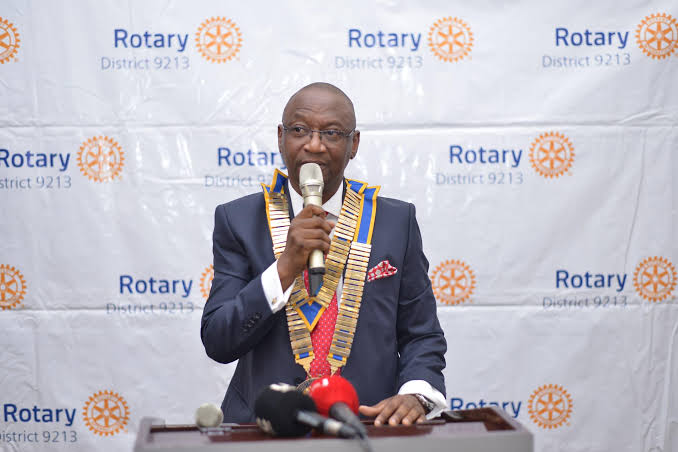
The District Governor of Rotary District 9213, Geoffrey Martin Kitakule has called upon the public to turn up in large numbers for the upcoming Rotaract Festival where the youths raise funds for community service projects across Uganda.
The festival, scheduled for March 14, will mark the climax of the annual Rotaract Week celebrations organized by Rotaract District 9213.
The event is expected to bring together hundreds of young leaders, Rotarians, Rotaractors and partners for a day of networking, entertainment and fundraising to support humanitarian initiatives.
In his invitation to the public, Kitakule emphasized that the festival plays a critical role in supporting projects that transform communities.
“I would like to invite every one of you to attend the Rotaract Festival. This is a major festival where the Rotaractors raise funds for their projects,” Kitakule said.
He added,“I am calling upon everybody to turn up on the fourteenth and participate in the Rotaract Festival.”
Rotaract Week, running from March 9 to March 14, will feature a series of activities hosted by different clubs in Kampala and surrounding areas before culminating in the festival.
According to the district schedule, the week will begin on March 9 with a fellowship organized by the Rotaract Club of Acacia Sunset at Sophie’s Restaurant following a reproductive health engagement.
On March 10, Rotaractors will gather at Motiv in Bugolobi for an event hosted by the Rotaract Club of Kampala City. The Rotaract Club of Makerere University will then host a fellowship at Guild Canteen on March 11.
Activities will continue on March 12 with an engagement organized by the Rotaract Club of Kampala South at Motiv Bugolobi, before moving to Mamerito Hotel in Bweyogerere on March 13 for a gathering hosted by the Rotaract Club of Bweyogerere Namboole.
The celebrations will climax with the Rotaract Festival at Legends Rugby Grounds on March 14, where participants will spend the day celebrating fellowship while mobilizing resources for community development projects.
Rotaract is a global youth leadership program under Rotary International that brings together young adults to develop leadership and professional skills while undertaking community service initiatives. In Uganda, Rotaract clubs have supported projects in health, education, environmental conservation, and youth empowerment.
Through activities such as medical outreaches, community clean-ups, school support programs, and charity drives, Rotaractors continue to play a significant role in addressing social challenges in their communities.
Kitakule noted that the support of the public and corporate partners remains crucial in sustaining the impact of these initiatives.
“Rotaractors are young leaders committed to service. The festival provides an opportunity for everyone to support projects that make a difference in our communities,”he said.
The event is expected to attract hundreds of participants from across the country, reinforcing Rotary’s long-standing commitment to community service under the motto Service Above Self.
KCB Bank calls on women creatives to embrace strategic investment for sustainable growth
KCB Bank Uganda has encouraged women entrepreneurs operating in the creative sector to adopt strategic financial planning and investment if they are to grow sustainable businesses in an increasingly competitive economy.
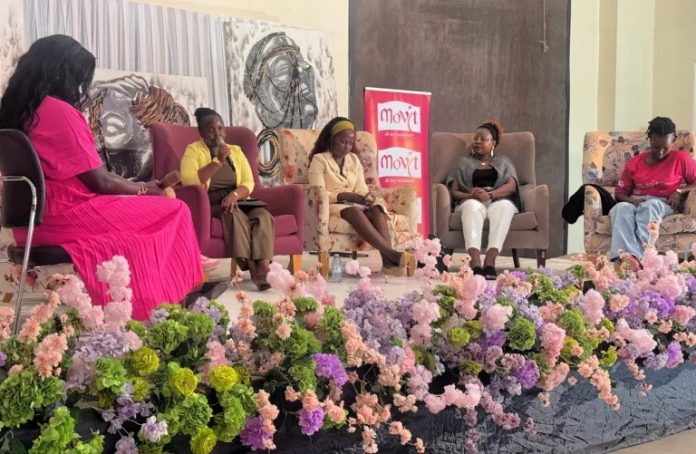
The call was made during Flowerland Fest 2026, a creative and networking event held at the Design Hub. The bank participated in the festival as a Gold Sponsor, using the platform to engage with women-led enterprises and promote financial empowerment.
The festival marked the climax of the 2026 Annual Women’s History Exhibit, themed “A Garden of Her Own.” Held on March 8, the event brought together hundreds of young professionals, artists, entrepreneurs, and innovators who showcased their work and explored opportunities within Uganda’s expanding creative economy.
Women-led micro and small enterprises displayed a wide range of products and services while interacting with financial experts and industry leaders on how to strengthen and scale their ventures.
Speaking during a panel discussion on Women and the Creative Economy, Gladys Nalukenge Lubowa urged creatives to move beyond relying solely on their artistic talent and instead integrate sound financial strategies into their businesses.
“Many creatives focus on their craft but rarely consider financial tools beyond everyday transactions. Yet building something sustainable requires financial stability. Strategic investment and proper financial planning are essential for long-term business growth,” Nalukenge said.
She explained that the bank is encouraging women entrepreneurs to take advantage of available financial products such as SME financing, investment planning and digital banking solutions designed to support business expansion.
“Whether you are a fashion designer, an artist or a digital content creator, KCB Bank Uganda is ready to support you in building a sustainable enterprise,” she added.
During the event, the bank also set up an interactive engagement booth where participants received guidance on financial management, access to credit and digital banking tools that can help entrepreneurs manage and grow their businesses more efficiently.
Nalukenge said the bank remains committed to empowering women in business through tailored financial services and dedicated programs.
“We are not just talking about change, we are making it happen. From tailored financial services to dedicated programs for women in business and the arts, we are walking the journey alongside every visionary,” she said.
She added,“As KCB Bank, we are taking bold action to provide the customised support women need to lead, create and succeed in their fields.”
As the International Women’s Day celebrations concluded, KCB Bank Uganda reaffirmed its pledge to continue supporting women-led enterprises through capacity-building initiatives and specialised financial solutions throughout the year.
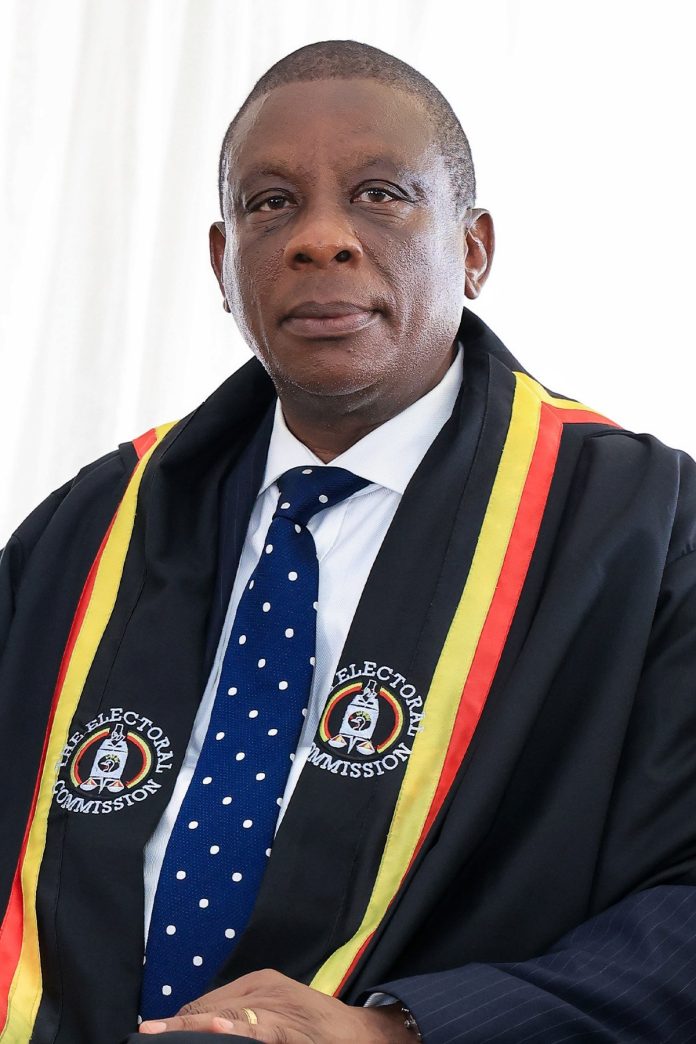
EC appoints Richard Baabo Kamugisha as new Secretary
The Electoral Commission has appointed Mr Richard Baabo Kamugisha as its new Secretary, effective March 4, 2026.
In a statement, the Commission said Kamugisha had been serving in the same position in an acting capacity since late 2024 after the former Secretary left the institution.
“The Electoral Commission has appointed Mr Richard Baabo Kamugisha as its new Secretary, effective 4th March 2026,”the Commission said in the statement.
As Secretary to the Commission, Kamugisha will serve as the Accounting Officer and head of the Commission’s technical and management wing, overseeing the day to day operations of the electoral body.
“As Secretary to the Commission, Mr Kamugisha is also the Accounting Officer and the Head of the Technical wing (Management) of the Commission,”the statement added.
Kamugisha is a long serving election management expert who has spent more than two decades working within the Commission. He joined the Electoral Commission in 1999 and steadily rose through its ranks.
“A very experienced and distinguished election management expert, Mr Kamugisha has served the Electoral Commission since 1999, rising through the ranks from District Registrar and District Returning Officer to Head of Field Operations Department and Director of Operations,”the Commission noted.
Before his confirmation, Kamugisha had been holding the office in an acting capacity following the exit of Mr Leonard Mulekwah, who had served as Secretary since 2020 but left the institution after being suspended to pave way for investigations into alleged financial irregularities within the Commission.
According to the Electoral Commission Act, the Secretary serves a fixed term.
“The Secretary shall hold office for a term of five years, renewable once,” the Commission stated.
The Secretary heads the Secretariat of the Electoral Commission and plays a critical role in coordinating election operations, policy implementation and administrative management of the institution. Kamugisha’s appointment therefore places him at the center of the Commission’s preparations for upcoming electoral activities in the country.