Stanbic Bank
Stanbic Bank
24.3 C
Kampala
Stanbic Bank
Stanbic Bank
Home Blog Page 42

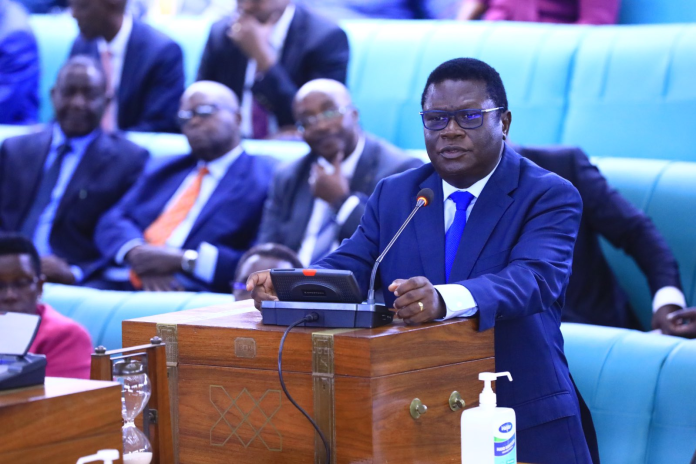
Education Ministry awards gov’t loans to over 2,000 students for 2025/2026 academic year

Dr. John C. Muyingo, State Minister for Higher Education.

The Ministry of Education and Sports has announced that a total of 2,047 students have successfully received government loans to pursue higher education in Uganda for the 2025/2026 academic year. The figure represents 28.8% of the 7,125 applications received, marking a 10% increase in applications compared to last year.

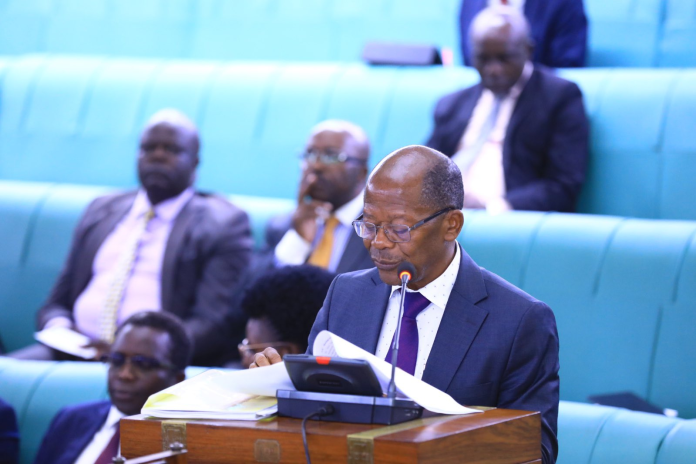
Speaking to Parliament on Wednesday, 29, Dr. John C. Muyingo, State Minister for Higher Education, said that this year, out of 7,125 applicants, only 2,047 (28%) were successful. The demand for student loans has exponentially increased, outpacing the available resources.

The Ministry received 5,920 applications for undergraduate degree courses and 1,205 for diploma programs. Of the successful applicants, 1,186 (58%) are male and 861 (42%) are female, reflecting the positive impact of affirmative action for female students, which awards extra points to female applicants.

“The total number of female successful applicants this year was 861, up from 517 supported last academic year,” Dr. Muyingo added.

Education and engineering were the most popular fields among beneficiaries, with 513 students taking education courses and 440 in engineering programs. The loans also supported 45 students with disabilities, up from 29 last year.

“Loans were awarded to Persons With Disabilities on affirmative action to pursue either science or humanities programs,” Dr. Muyingo said.

The Ministry implemented a three-tier loan award selection model, considering district quotas and socioeconomic vulnerability.

“60% of the students were considered according to the district quota, while 40% were awarded based on their levels of social economic vulnerability using the proxy means test formula,” he explained.

Districts with traditionally low participation, such as Amudat, Buvuma, and Kalangala, also had successful applicants.

Loans cover tuition, functional and research fees, as well as aids and appliances for students with disabilities.

“The Ministry disburses loan funds directly to the tertiary institutions and not to the beneficiaries,” Dr. Muyingo noted.

The Minister called for increased funding for the program, saying, “There is therefore a need for this house to consider allocation of more funds, and this will curb the many complaints registered from the unsuccessful applicants.”

A total of 28 universities and other diploma-awarding institutions are participating in the scheme this academic year. The Ministry reported that the allocated budget of Shs7.83 billion, originally meant for 1,500 students, was able to fund 2,047 students due to cost efficiencies.

“This reform aligns student financing with Uganda’s broader education and skills development agenda and ensures that all regions of the country are represented,” Dr. Muyingo said. 

Stories Continues after ad

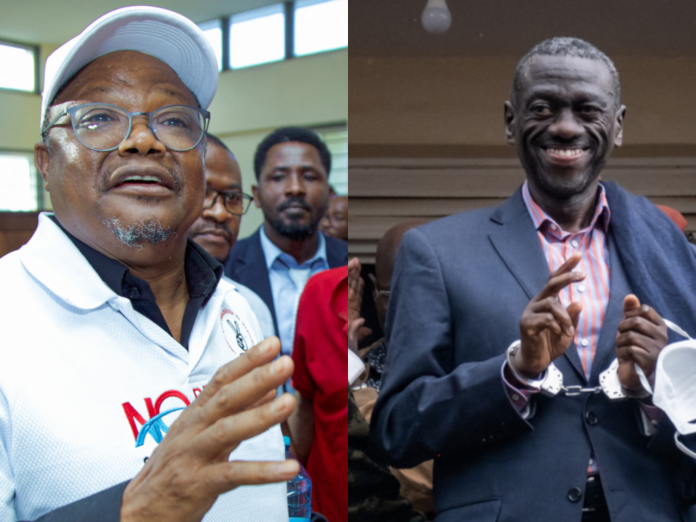
Imprisoned Besigye and Lissu honoured as champions of democracy in Africa amid calls to protect political freedoms

Opposition figures, Tundu Lissu of Tanzania and Kizza Besigye of Uganda.

incarcerated Ugandan and Tanzanian opposition leaders Kizza Besigye and Tundu Lissu have been recognized as Champions of Democracy in Africa by the Democracy Union of Africa Conference 2025.

Beisigye’s award was received by FDC President, Patrick Amuriat, and praised Besigye for his unwavering fight for democracy in Africa. He urged leaders to act for the release of Besigye & other political prisoners like Tindu Lissu.

Tundu Lissu’s award comes as Tanzania is voting for the president today amid growing criticism over the suppression of dissenting voices against President Samia Suluhu Hassan’s government.

KANU Chairperson Gideon Moi, Democratic Party Leader Justin Muturi and former Ghanaian President Nana Akufo-Addo urged African States to uphold democratic values and respect the will of the people.

Lissu’s award was received on his behalf by CHADEMA Secretary General Deogratius Munishi, who read the imprisoned leader’s acceptance speech.

“In the past six months that I have been in this maximum-security prison, charged with treason for calling for reforms to our rotten electoral system, CHADEMA has been slapped with a ban on political activity,” Lissu stated in the speech, as read by Munishi.

Former Ghanaian President Nana Akufo-Addo, after whom the awards are named, called on African nations to uphold democracy and reject authoritarian tendencies

“There are those who would rather have authoritarian rule, arguing that democracy is cumbersome and slows development. We still have much work to do to convince such people that democracy is the only sustainable path forward,” he noted.

Moi and Muturi echoed calls for the protection of democratic institutions emphasizing respect for sovereignty and the rule of law.

“It is time we rise against radical populist politics and ensure we respect the sovereignty of our nations,” said the KANU Chairman.

“All leaders in Africa must ensure that leadership is decided by the people,” Muturi chimed in.

Former President Akufo-Addo also condemned the recent wave of unconstitutional power takeovers witnessed across Africa. He paid tribute to the late Former Prime Minister Raila Odinga for his lifelong dedication to advancing democracy on the continent.

“He embodied the shared belief of all of us gathered here that democracy, however painful its process, remains our greatest hope,” said Akufo-Addo.

The late Former President Daniel Arap Moi was also honoured posthumously for his contributions to Africa’s development. The award was received by his son and KANU Chairman, Gideon Moi.

Stories Continues after ad

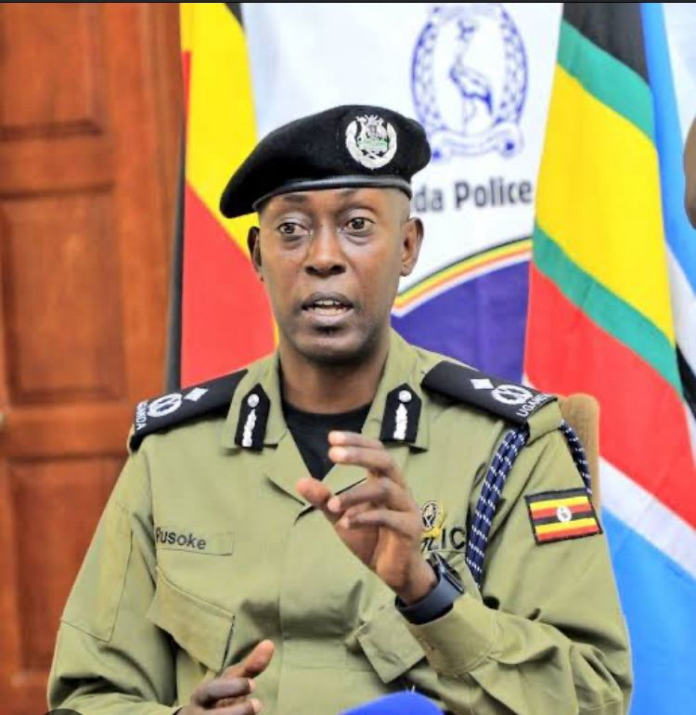
Police arrest 10 NUP supporters over attacks on officers in Lira

Kituma Rusoke, Police publicist.

The Uganda Police Force has arrested ten supporters of the National Unity Platform (NUP) over violence and provocation against police officers during the ongoing presidential campaigns.

In a statement issued on October 29, 2025, police said that while most campaign activities have been peaceful, a section of NUP supporters has resorted to acts of aggression, vandalism and intimidation of security personnel.

“Certain individuals have developed a troubling habit of provoking the police with increasing levels of aggression that have now become intolerable. These negative elements have escalated their actions to damaging vehicles, assaulting officers, and causing chaotic scenes,” the statement read.

The arrests followed a violent incident in Lira City on October 28, 2025, when a group of NUP supporters allegedly attacked police officers trailing the convoy of presidential candidate Robert Kyagulanyi Ssentamu, also known as Bobi Wine, from Lira to Alebtong District.

Police reported that the attackers punctured the tires of a police vehicle, confiscated its car key sensor, and stole two 20-litre jerry cans of diesel, a bag of clothes and a laptop.

“The group fabricated claims that the police vehicle was carrying a signal jammer disrupting their live broadcasts, a lie intended to cause chaos,” police said.

Ten suspects identified as Ssembusi Precious Paul, Bukenya Ismail, Lokoro Liberty, Nakabuye Mastura, Waiswa Raston, Nasozí Hope, Saliman Kagwa, Kamulegya Regan, Katamba Stephen, and Lubega Alison were arrested and detained at Lira City Central Police Station. A green Toyota Hiace drone, registration UA 933AU, was also impounded as part of ongoing investigations.

Police said the case has been registered as malicious damage and robbery.

The statement also cited other violent incidents involving NUP supporters in various parts of the country. In Mayuge District on October 3, 2025, an officer covering a campaign rally was attacked and robbed of his phone. In Kyankwanzi District on October 8, a detective constable was assaulted during a campaign at Bikoma Primary School after being punched by a man identified among Kyagulanyi’s foot soldiers.

On October 21, police accused the NUP presidential candidate of defying an agreed campaign route in Kakumiro Town Council, leading to a standoff that left a police pickup truck damaged. Officers said they had to deploy a helicopter to contain the crowd. Another assault case was recorded in Busia District under CRB 1038/2025.

“We remain committed to providing security to all candidates but will not tolerate criminality and hooliganism. Candidates are cautioned against taking rallies to roadsides or trading centers, which is unacceptable,” the police statement warned.

The Uganda Police Force urged all political actors to conduct themselves peacefully, follow the law, and respect security arrangements throughout the campaign period.

“We urge all political actors to maintain civility and peace throughout the campaign period,” the statement further read.

Stories Continues after ad

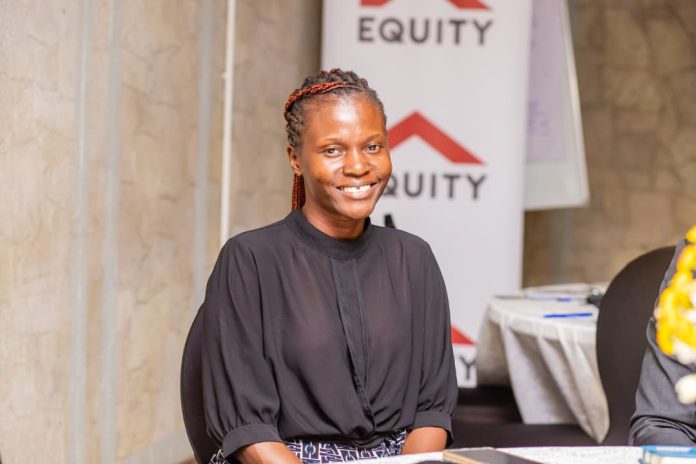
Adong inspiring Soroti through Manufacturing

Ms Winfred Phiona Adong during Equity Bank’s Customer Service Week Stakeholder breakfast held at Hotel Africana on October 7, 2025.

Wearing a Clifton black top, a black skirt with matching black heels, Winfred Phiona Adong walked into Hotel Africana’s Sezibwa Hall with quiet confidence.

When she spoke, she was calm and articulate. She had the ease of someone accustomed to boardrooms and negotiation tables

Adong was one of the few invited customers during Equity Bank’s Customer Service Week Stakeholder breakfast held at Hotel Africana on October 7, 2025.

The engagement was titled Listening to the Sound of the River, a focused group discussion designed to strengthen trust and relationships but also to ensure that the bank gathers customer feedback.

Adong the proprietor of Ayoma Manufacturing Company based in Soroti District was there to get avenues on how she can further broaden her dream of, “Empowering struggling women especially the single mothers and the entire community,” she says.

That dream started three years ago when she quit her sales job in one of the corporate companies in Kampala.

“I am a very ambitious person, and I thought it was time to relocate and invest my intellectual capacity elsewhere. So, I decided to venture into having a manufacturing solution enterprise,” a smiling Adong narrates.

As one who describes herself as “One who lives and breathes adventure.” She took on a bold move to venture into construction. “Many women are afraid of going into male-dominated businesses, but I wasn’t,” she says.

Despite vain attempts with other banks and financial institutions, when Adong approached Equity Bank, she was immediately given a green light and, as such, was able to access a loan of Shs300 million. 

“Equity made my start journey very smooth. Not only did they just give me money. I have a good payback period, coupled with the provision of capacity building and financial literacy, I was able to check many boxes which have helped shape my company to where it is today,” Adong explains.

With that, Ayoma Manufacturing and Construction Company was born in January this year. This has seen her construct the state-of-the-art, Waterborne Toilets at Queen Elizabeth National Park, completed this year in September, as well as the new Staff Accommodation quarters at Mount Elgon National Park. 

But that wasn’t all, with the Construction department kicking off on a high, Adong diversified her business to open up, Ayoma Toilet Papers Industry Ltd.

“Everyone needs toilet paper, so when we sat with my business partners, we thought it best to venture into that field and further expand to more stationery.”

However, it was an uphill task, “We needed a capital investment of $330,000, which you just can’t access from anywhere and still, like at the start of the construction company, Equity is there to hold my hand.”

Through Contract Financing, the bank has been able to support her in her efforts to mobilize raw materials such as pulp wood which eased her way into the market.  

Claver Serumaga, Executive Director of Equity Bank, gives more clarity on the support that the bank is giving to various customers like Adong, “We are reorganizing how we engage with our customers, following up on their progress, providing additional capacity support, because as they grow, we also grow.”  

Currently Ayoma Manufactures is looking at a ten-fold growth, extending its product line to all forms of stationery plus having an automated line of production. 

As such, distribution of its toilet paper product has expanded to Lira, Gulu, Mbale, Jinja, and will soon be in Kampala. “I started small, but now, slowly, I am changing lives; most of the casual employees I have are single mothers because this helps them get money in their pockets,” Adong says.

Her last outcry is to the Government of Uganda to provide tax holidays to indigenous manufacturers like her so as to help them broaden their spheres. 

Stories Continues after ad

Mao tables new IPOD regulations to strengthen multiparty dialogue and political accountability

Nobert Mao, Justice and Constitutional Affairs Minister.

The Minister of Justice and Constitutional Affairs, Norbert Mao has tabled before Parliament the Political Parties and Organisations (Inter-Party Organisation for Dialogue) Regulations, 2025, a new statutory instrument aimed at enhancing cooperation, transparency, and accountability among political parties in Uganda.

The regulations, made under sections 20 and 28 of the Political Parties and Organisations Act, Cap. 178, seek to formalize the structure, operations, and code of conduct of the Inter-Party Organisation for Dialogue (IPOD).

Presenting the instrument to the House, Minister Mao said the framework is designed to strengthen multiparty democracy through structured dialogue and mutual respect among political players.

“These regulations provide a clear legal foundation for IPOD’s operations and ensure that every registered political party has a seat and a voice at the table,” Mao said.

He added, “We believe in an inclusive, transparent, and peaceful political process where dialogue replaces confrontation.”

Under the new regulations, political parties that are members of IPOD will be required to participate in at least two-thirds of the organization’s annual activities, including summits, council meetings, and business committee sessions. Non-compliance may affect a party’s eligibility for funding under section 14(2) of the Political Parties and Organisations Act.

“Participation in dialogue is not just a right it’s a responsibility,” Mao emphasized.

He added, “No political party should isolate itself from national conversations that shape governance, peace, and development.”

The regulations establish three key organs of IPOD; the Summit, the Council and the Secretariat. The Summit, composed of party leaders and secretaries general, will serve as the highest decision-making body, while the Council of Secretaries General will oversee implementation and coordination of IPOD programs. Leadership of both organs will rotate every two years among member parties in alphabetical order.

The regulations also include a comprehensive Code of Conduct, which outlines principles and objectives to guide member parties. These include promoting democracy, good governance, gender equity, and respect for human rights; encouraging peaceful political competition; and fostering cooperation beyond partisan boundaries.

“We are setting a standard for political conduct that values dialogue over division. These rules will help political parties engage constructively, strengthen institutions, and build trust across Uganda’s political spectrum,” Mao told Parliament.

The instrument further provides for the creation of specialized committees including Research and Policy, Conflict Resolution and Mediation, and Implementation to help IPOD achieve its objectives and ensure decisions are followed through. A bi-annual audit of IPOD’s activities will also be conducted to promote accountability and transparency.

“This is not just about meetings and statements. It is about measurable results, dialogue that leads to reforms, cooperation that leads to peace, and engagement that strengthens our democracy,” Mao added.  

Stories Continues after ad

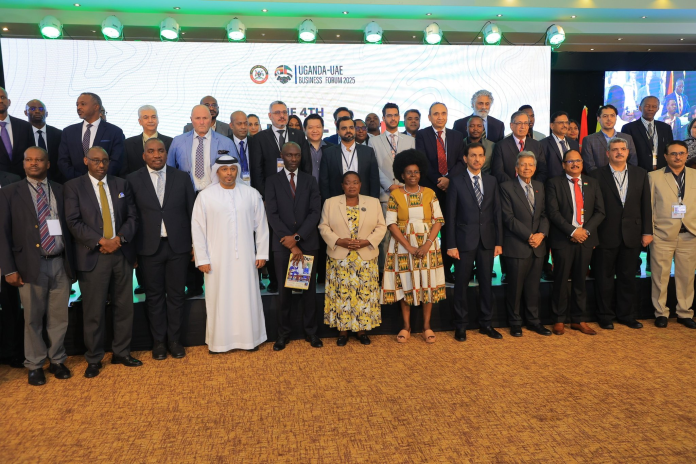
Uganda–UAE trade hits Shs23.94t as nations deepen investment partnerships

Prime Minister Robinah Nabanja and other participants at the Uganda-UAE trade conference.

Uganda and the United Arab Emirates (UAE) have reaffirmed their deepening economic partnership with trade and investment volumes between the two nations now estimated at Shs23.94 trillion ($6.3 billion), underscoring the UAE’s growing role as one of Uganda’s top economic allies.

The announcement was made during the Fourth Uganda–UAE Business Forum, a three-day summit held at Speke Resort Munyonyo, which attracted over 300 delegates from both countries. The discussions centered on expanding cooperation in energy, infrastructure, agribusiness, finance and manufacturing.

Prime Minister Robinah Nabbanja, who officiated the event, described the UAE as Uganda’s largest export destination, with bilateral trade reaching $2.85 billion by September 2025.

“The value of UAE investment in Uganda’s energy, infrastructure, agribusiness, oil and gas, manufacturing, real estate, and tourism sectors has reached $3.5 billion,” Nabbanja said.

She noted that Uganda remains one of the world’s fastest-growing economies and aims to grow tenfold by 2040 from $61.3 billion to $500 billion through strategic partnerships.

“We invite our partners from the United Arab Emirates to join us on this transformative journey as we move from lower-middle-income to upper-middle-income status,” she added.

State Minister for Investment Evelyn Anite encouraged Emirati investors to explore untapped opportunities in inland water transport, mineral value addition, and affordable credit financing to support Ugandan entrepreneurs.

“Our biggest constraint is access to credit,” Anite said, urging UAE financiers to provide cheaper capital to help small and medium enterprises scale up production.

She also proposed partnerships to modernize Uganda’s water transport system through vessel development, port upgrades, and refinery construction along Lakes Victoria, Kyoga, and Albert as part of the country’s push for industrial growth.

“After you’ve paid your dues, you’re free to move or reinvest your profits. Uganda’s liberalized economy guarantees freedom and stability for investors,” she emphasized.

Patrick Ayota, Managing Director of the National Social Security Fund (NSSF), cited Uganda’s currency stability as a mark of economic confidence.

“The Uganda shilling has appreciated against the U.S. dollar over the past five years — a rare trend among African currencies,” Ayota said, noting that NSSF is co-investing with UAE institutions in agriculture and food security ventures.

Uganda’s Ambassador to the UAE, Zaake Wanume Kibedi, said the two countries’ relationship has evolved into a multi-sector partnership grounded in trade, innovation, and infrastructure.

“This growth is not by coincidence; it reflects deliberate policy coordination, consistent investor confidence, and the trust our Emirati partners have in Uganda’s economic stability,” he remarked.

According to Kibedi, bilateral trade has risen from just $300 million in 2018 to $2.85 billion today, reflecting rapid and sustained expansion.

Peter Muramira, Director at the Uganda Investment Authority (UIA), revealed that Uganda is pursuing an energy-secure economy anchored by a $70 billion investment portfolio spanning electricity, oil and gas, and industrial infrastructure.

He cited flagship projects such as the $30 billion Buyende Nuclear Power Plant and a $5 billion petrochemical industrial park, saying they represent Uganda’s shift from an import-dependent economy to a production-driven one.

“We are seeking investors who bring capital, technology, and expertise. Uganda’s clear incentive framework and stable policy environment make it not just open for business but ready for transformation,” Muramira said.

The Uganda–UAE Business Forum, organized by Uganda’s missions in Abu Dhabi and Dubai in partnership with the Ministry of Foreign Affairs and the UAE Embassy in Kampala, will continue through Wednesday, October 29, 2025, featuring sectoral discussions, business-to-business meetings, and field visits.

Stories Continues after ad

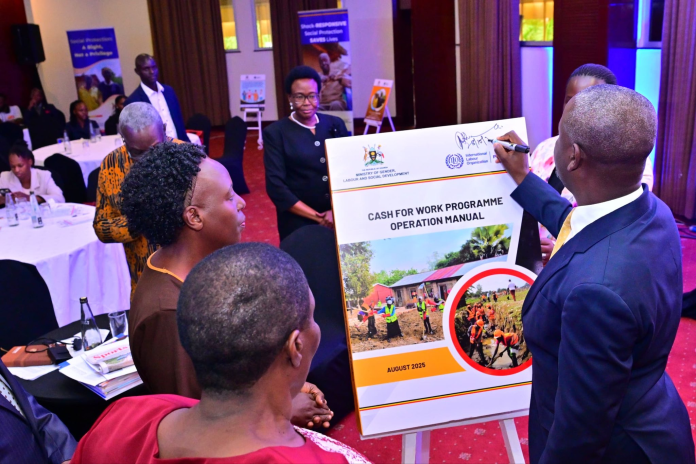
Tayebwa calls for action on social protection to safeguard Uganda’s vulnerable groups

Deputy Speaker, Thomas Tayebwa.

Deputy Speaker of Parliament Thomas Tayebwa has called for renewed commitment and practical action towards strengthening Uganda’s social protection systems, saying it is the surest way to build inclusive and resilient communities.

Speaking at the Social Protection National Dialogue 2025 held at Serena Hotel under the theme “Enhancing Access to Social Protection for Inclusive Socio–Economic Transformation,” Tayebwa urged stakeholders to translate discussions into tangible results that improve lives.

“As a social protection advocate, I always take every opportunity to add a strong voice to how important it is to our society. Today, I had that opportunity when I officiated at the Social Protection National Dialogue 2025,” Tayebwa said.

He applauded the government’s progress in expanding social protection coverage across the country, citing key interventions that have uplifted the lives of vulnerable citizens.

“We should be proud as a country because we have made significant strides; from the Senior Citizens Grant (SAGE) to new programmes like the proposed National Child Disability Benefit,” he noted.

Tayebwa highlighted the government’s efforts through livelihood programmes, such as the Parish Development Model (PDM), Youth Livelihood Programme (YLP), and Uganda Women Entrepreneurship Programme (UWEP), which he said continue to empower individuals and promote community resilience.

He also revealed that the Cabinet had approved a proposal to lower the eligibility age for the Senior Citizens Grant from 80 to 65 years, a move expected to extend social security to more elderly Ugandans.

While commending the progress made, Tayebwa challenged policymakers and development partners to ensure that dialogue translates into measurable impact.

“I urged the participants to be intentional because many times, they meet and have great conversations, but fail to translate them into action. Moving from words to action is vital because the role of social protection cannot be underestimated in our continuously changing social and economic environment,” he emphasized.

The Deputy Speaker also reflected on Uganda’s changing social fabric, noting that traditional community support systems are weakening, leaving vulnerable groups more exposed.

“The family structure and communities are no longer as we once knew them, especially where communities used to offer support to those who need it. I grew up with my grandmother, and she used to receive a lot of support from community members,” Tayebwa shared.

He added that strengthening formal social protection systems is now essential to ensure that no Ugandan is left behind.

“Since this no longer happens as before, we must strengthen social protection systems that secure the well-being of all Ugandans who need them,” Tayebwa concluded.

The National Dialogue brought together policymakers, development partners, civil society actors, and social protection practitioners to review progress and explore strategies for expanding inclusive social protection coverage across Uganda.

Stories Continues after ad

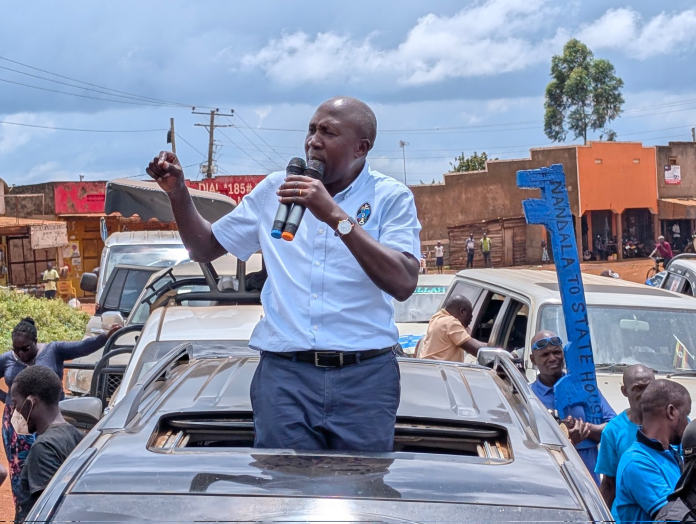
Nandala Mafabi vows to shift Uganda’s leadership from barracks to boardroom in 2026 bid

Forum for Democratic Change candidate Nandala Mafabi.

Forum for Democratic Change (FDC) presidential flag bearer, Nathan Nandala Mafabi has unveiled an ambitious plan to steer Uganda from military-dominated governance toward economic transformation and pledged to restore dignity to Ugandan families through fiscal discipline, education reform and health investment.

In a statement outlining his 2026–2031 presidential agenda, Mafabi described Uganda as “a proud nation rich in land, talent, and spirit,” but challenged the country to rethink its reliance on military might as a foundation for progress.

“For decades, we have relied on the strength of our soldiers to protect our borders and keep us safe. The courage of our men and women in uniform has served Uganda well,” Mafabi said.

However, the veteran legislator and fiscal policy analyst noted that national security cannot substitute for development.

“Let us be frank and honest with ourselves: the stockpiles of guns, tanks, and missiles no matter how powerful cannot feed a hungry child, cannot buy medicines for a sick mother, and cannot pay the debts that choke our economy. Security alone is not development,” he emphasized.

Mafabi argued that Uganda’s next phase of leadership must prioritize economic management over military control.

“When generals and military commanders run the affairs of state, we may have order; but order without opportunity leaves people in poverty. Today, Uganda needs a different kind of command, not commanders of war, but commanders of the economy,” he stated.

Declaring himself trained, experienced and committed, Mafabi said his economic expertise would be used to restore economic dignity to our people.

He promised to invest heavily in education, healthcare, and job creation through what he termed the Human Capital Development Commitment. Under this plan, the FDC candidate pledged to construct 87,000 new primary school classrooms to end overcrowding and ensure equal pay for all teachers, both arts and sciences. He also vowed to implement a national school feeding policy so that no child studies on an empty stomach.

Mafabi further promised to raise the Universal Primary Education (UPE) capitation grant to Shs200,000 per pupil and the Universal Secondary Education (USE) capitation grant to Shs500,000 per student. He said 200 new public secondary schools and 10 modern 20,000-capacity stadiums would be built across the country, alongside the distribution of free and tax-free sanitary pads for all teenage girls in schools.

On youth and sports development, Mafabi said every parish would get upgraded football pitches, and 10 national sports academies would be established to support all sporting disciplines. He added that all district hospitals would be upgraded to regional referral status, and regional hospitals to national referral level.

To improve healthcare access, Mafabi announced plans to launch a National Ambulance Service with vehicles stationed at every Health Centre IV and air ambulances for each of the four regions. He pledged to dedicate 10 percent of the national budget to the health sector and establish a National Health Insurance Fund where families would contribute only Shs20,000 per year.

He also promised housing for health workers near health facilities, rehabilitation centres for youth struggling with drug and alcohol abuse, and a loan scheme for all qualifying university students.

Mafabi clarified that his message was not anti-military, but rather a call for balance in national priorities.

“This is not a rebuke of those who protect us; it is a call to balance and dealing with primary problems because, at the end, even soldiers need hospitals, education, and salaries that are solved by finance,” he said.

Mafabi urged Ugandans to embrace competent and people-centered leadership.

“Fellow Ugandans, trust in competence. Trust in a plan that puts people first. Trust in leadership that will economically liberate Uganda and restore dignity to every family,” he declared.

He rallied, “Rise with me. Let us choose economic commanders who will build, nourish, and empower our nation. Together, we will fix the economy and put money back into the pockets of Ugandans.”

Stories Continues after ad

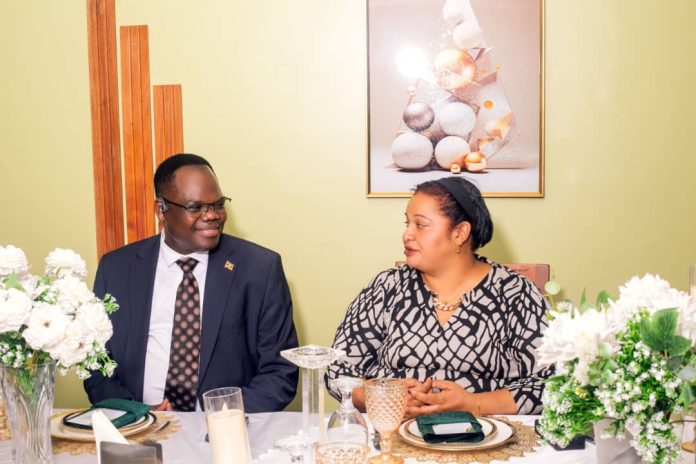
Uganda’s envoy to Sudan, parliament director, petition UCC over sustained smear campaign

Amb.Ogwang and wife Ranny

Uganda’s Deputy Ambassador to Khartoum, Sudan, Mr. Dickson Ogwang Okul, and his wife, also a director at the Ugandan Parliament, Ranny Ismail, have petitioned the Uganda Communications Commission (UCC) over what they call a sustained smear campaign by a media outlet.

On October 26, 2025, via their website, www.redpepper.co.ug, the Red Pepper published a story titled, ‘On the rocks! Amb. Ogwang, parliament babe Ranny Ismail’s marriage hit stormy waters,’ complete with a photo of the couple’s happy wedding day. The same article would later circulate on social media and the news aggregator platform Opera News, as well as other online publications that republished it.

In a strongly-worded letter written by their lawyers of Anguria & Co. Advocates, on October 28, 2025, the couple contends that the article’s contents are not only false, malicious, inflammatory, and derogatory but also, “an assault on our clients’ right to privacy and the right to enjoy their marriage and family time peacefully.”

The lawyers further argued that, “The agony and anguish that the Red Pepper continues to visit on our clients, is immeasurable and whereas they have the legal right and the option of pursuing defamation and other lawful remedies in the courts of law, which they are pursuing, it is our considered view that it is prudent to engage UCC as a time-tested and ready, willing and able regulator of the online communication eco-system in Uganda, to call the culprits to order and follow the legal procedures as provided for in the Uganda Communications Act, to ensure that the ends of justice are met and that Red Pepper is reprimanded for this criminal-minded conduct and outright impunity.”

Red Pepper, one of Uganda’s enduring legacy media platforms, has a track record of a no-holds-barred approach to news reporting, sometimes peppered with a tinge of exaggeration, sexual innuendo, and sensationalist invasive reporting, attributes that made it stand out in Uganda’s newsstands for over two decades, stirring both hatred and admiration in many readers.  

The couple was together at the recent nomination of NRM’s Eddie Morris Ogweng of Lira City West on October 23, 2025.

The publication has, over the years, been slapped with several defamation cases by high-profile figures, including Capt. Mike Mukula, former Speaker of Parliament, Rebecca Kadaga, former NRM Secretary General, Justine Kasule Lumumba, Internal Affairs Minister Kahinda Otafiire, among several other who-is-who in Uganda’s business and political spectrum.

In the latest battle with Ogwang, a former deputy Ambassador of Uganda to the United States, a posting he exited after claims of domestic violence were made against him by his former wife, Miriam Otengo, the UCC has been petitioned to crack the whip on the publication whose fortunes have since declined considerably in the last five years, following run-ins with the government which at one point shut down the newspaper’s operations in Namanve, Mukono district after a controversial story on Uganda-Rwanda relations.

In a separate legal notice seen by this publication, Ranny Ismail and Dickon Ogwang have demanded, through their lawyers, that Red Pepper cease-and-desist publication of false, malicious and defamatory content about them or face legal proceedings. They also demanded that Red Pepper issues a public apology and pulls down its stories against them from their online platforms.

The letter to the Managing Director of Red Pepper states, “Our clients, being senior Government of Uganda officials and leaders in their own right, are too busy serving the state and public to be distracted by petty, malicious and evil schemes of this publication and yet the consistency and persistence with which Red Pepper executes its atrocious smear campaign cannot give the couple a peace of mind and leaves their wider family anxious.”

It adds that, “As you will appreciate, our clients are blessed with children who are now fairly grown and are exposed to online content as are, indeed, their friends and peers. Our clients are also businesspeople with several stakeholders in their lives, including employees and business partners. As public servants, they work closely with professional colleagues in their respective professional lines of work. The impact of your newspaper’s online articles, which are circulated widely, to these family, work, business and office relationships, is simply immeasurable. Our clients implore you to cease-and-desist from this smear campaign, firstly, out of humanity considerations.”

Red Pepper is yet to respond to the letter and it remains to be seen what UCC will do following the high-power couple’s petition.

In a press statement issued by the Office of Public Affairs and Communications of Rado Conciliation and Consultancy LLP, on October 27, 2025, titled, ‘a Unified Front,’ the celebrity high-profile couple said, ‘this orchestrated smear campaign, thinly veiled as “news”, represents a calculated attempt to malign two upright Ugandan citizens whose lives are defined by service, integrity, and patriotism. The couple remains steadfast in their commitment to family, faith, and the Republic of Uganda under the leadership of H.E President Yoweri Kaguta Museveni and the NRM Administration.”

Stories Continues after ad

NIRA dispatches over five million National Ids to districts across Uganda

The National Identification and Registration Authority (NIRA) has dispatched over five million National Identity Cards to various districts following the recent mass enrollment exercise.

The mass registration and renewal exercise kicked off in May 2025, targeting 15.8 million National IDs set to expire by June 2025, and aimed to register 17.2 million new applicants, including children under 17 years old and citizens who missed the 2014 registration.

The new National IDs feature enhanced security measures, including laser engraving of multiple images for anti-counterfeit protection, a Machine Readable Zone (MRZ) similar to those in passports, and a 2D barcode readable by smartphones or scanners. The barcode stores encrypted personal data and enables fast and reliable identity verification.

Speaking Monday,27th, NIRA Registrar Claire Ollama said, “Many Ugandans who applied for the National ID. I am glad to report that production is in high gear and up to five million or more cards have been produced and therefore dispatched to different districts across the country.”

Many people have already started to receive their National IDs. “We have dispatched cards by district,” she said.

Abim 8,141, Adjumani 27,000, Agago 11,800, Alebtong 25,000, Amolatar 14,000, Amudat 9,000, Amuria 13,000, Amuru 15,000, Apac 17,700, Arua 16,000, Arua City 43,500 cards.

Ugandans in Australia received 200 cards and Belgium 50. Budaka 28,000, Bududa 13,000, Bugweri 17,000, Buhweju 2,000, Buikwe 60,600 cards, Bukomansimbi 3,135, Bukwo 9,400, Bulambuli 9,400, Buliisa 2,300, and Bundibugyo 24,800 cards.

Bunyangabu 3,596, Bushenyi 14,500, Busia 29,400, Butaleja 16,733, Butambala 2,600 cards, Butebo 2,700, Buvuma 7,302, Buyende 11,373 cards, and Dokolo 4,700.

Fort Portal City 4,800, Gomba 20,236, Gulu 2,345, Gulu City 11,800, Hoima 4,108, Hoima City 3,124, Ibanda 11,463, Iganga 31,700, Isingiro 34,000, Jinja 12,000, Jinja City 30,852, Kaabong 4,565, Kabale 23,700, Kabarole 4,087, and Kabiramaido 8,997.

Kagadi 12,000, Kalaki 10,200, Kalangala 1,362, Kaliro 25,700, Kalungu 3,500, Kampala 261,000, Kamuli 45,853, Kamwenge 15,937, Kanungu 17,000, Kapchorwa 13,000, Kapelabyong 1,411, Karenga 2,007, Kasese 69,000, Kasanda 13,197, Katakwi 3,788, Kayunga 43,000, and Kazo 2,500.

Kenya 546, Kibale 3,482, Kiboga 11,155, Kibuku 16,100, Kikuube 30,058, Kiruhura 2,802, Kiryandongo 3,565, Kisoro 3,196, Kitagwenda 2,674, Kitgum 17,000, Koboko 20,000, Kole 9,647, Kotido 9,000, Kumi 27,000, Kwania 3,380, Kween 9,812, Kyankwanzi 17,011, and Kyegegwa 28,000.

Kyenjojo 30,000, Kyotera 17,000, Lamwo 8,827, Lira 9,144, Lira City 15,212, Luuka 18,165, Luwero 42,000, Lwengo 24,668, Lyantonde 2,454, Madi-Okollo 2,831, Manafwa 18,000, Maracha 3,419, Masaka 10,000, Masaka City 30,000.

India 10, Mayuge 29,000, Soroti 18,000, Soroti City 12,000, and Tororo 51,000.

“These cards are in your districts, but the pickup is still very low. When you enrolled, the place where you registered falls under the jurisdiction of a NIRA office. The guidance was clear, we would mass enroll and we would mass issue,” Ollama said.

She added, “Please go to your nearest office and pick up your cards. I also want to emphasize that registration happened over time, and therefore, we shall receive cards over time, because we did not register on the same day. That’s why it is called a project.”

Stories Continues after ad