Stanbic Bank
Stanbic Bank
20.1 C
Kampala
Stanbic Bank
Stanbic Bank
Home Blog Page 43

Kamuli District CAO, CFO charged over Shs600m road fund embezzlement

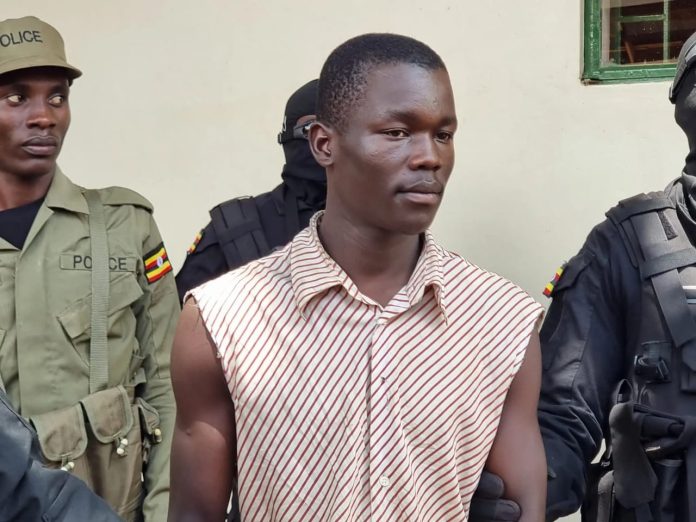
The Chief Administrative Officer (CAO) and Chief Finance Officer (CFO) of Kamuli District in the dock.

The Chief Administrative Officer (CAO) and Chief Finance Officer (CFO) of Kamuli District have been charged before the Anti-Corruption Court over the alleged embezzlement of more than Shs600 million meant for road rehabilitation and maintenance.

The two officials were arraigned on Monday by the State following joint investigations conducted by the Anti-Corruption agencies, working alongside the Criminal Investigations Directorate and the Office of the Director of Public Prosecutions.

Those charged are Nasser Mukiibi , the Chief Administrative Officer, and Alex Kifuuse, the Chief Finance Officer. They face multiple counts of abuse of office and causing financial loss.

According to the prosecution, the alleged offences were committed between May and June 2025, when the accused, while serving as accounting and finance officers of Kamuli District Local Government, abused the authority of their offices by authorising and processing irregular payments. The prosecution contends that the duo acted in concert with another suspect who is still at large.

Court was told that the accused allegedly embezzled over Shs600 million from the Road Rehabilitation and Maintenance Fund by approving payments to several suppliers, including Raven Knights Ltd, Total Uganda Limited, and Mufumba Daniel, the district engineer.

The payments were purportedly made for fuel, construction materials, diversion and traffic control signage, allowances, and other inputs intended for rehabilitation works on the Nawanyago–Kisozi Road. 

However, investigators say the works earmarked for the Financial Year 2024/2025 were never executed despite the full expenditure of the allocated funds.

The accused were remanded to prison and are expected to return to court on January 20, 2026, as investigations continue.

Stories Continues after ad

Samia Suluhu, Kagame congratulate Museveni

Presidents Samia Suluhu Hassan and Paul Kagame of Tanzania and Rwanda.

Regional leaders have extended warm congratulations to President-elect Yoweri Kaguta Museveni following his re-election, with the Presidents of Tanzania and Rwanda reaffirming their commitment to strengthening bilateral relations with Uganda.

In a message issued on behalf of the Government and the people of the United Republic of Tanzania, President Samia Suluhu Hassan congratulated Museveni and described his victory as a reflection of the trust Ugandans have placed in his leadership.

“On behalf of the Government and the People of the United Republic of Tanzania, I extend my heartfelt congratulations to Your Excellency, President-elect Yoweri Museveni on your re-election,” Samia said.

She added that the election outcome demonstrated public confidence in Museveni’s vision for Uganda.

“Your victory represents the confidence and trust the people of the Republic of Uganda have in your leadership and vision,” she said.

President Samia further emphasized the importance of deepening cooperation between the two neighboring countries with their long-standing historical and fraternal ties.

“I am looking forward to continuing working with you in deepening the fraternal and historical bond between our two countries, for the benefit of all our citizens,” she said.

Rwandan President Paul Kagame also congratulated Museveni, extending his best wishes to both the President-elect and the people of Uganda as the country embarks on another term under his leadership.

“Congratulations President Yoweri Kaguta Museveni on your re-election as President of the Republic of Uganda. I extend my best wishes to you and the people of Uganda as you continue to serve your nation for the prosperity of your people,” Kagame said.

Kagame reaffirmed Rwanda’s commitment to maintaining strong and productive relations with Uganda, underscoring the importance of continued cooperation.

“I look forward to the continued strong and productive cooperation between our two countries,” he said.

Stories Continues after ad

NUP secures 50 seats in 12th Parliament despite setbacks

Parliament of Uganda.

The National Unity Platform (NUP) has so far secured at least 50 parliamentary seats in the newly constituted Twelfth Parliament despite a decline from its previous strength in the House.

In the last Parliament, the NUP held 57 seats, meaning the latest outcome reflects a net loss of seven legislators. The results show the challenges faced by the party in retaining its earlier dominance in key constituencies.

Several high-profile NUP lawmakers failed to return to Parliament. However, the party’s leadership point to expanded participation as a key milestone in the just-concluded elections. NUP fielded more than 300 candidates nationwide, an increase that shows growing organisational reach and internal restructuring despite the reduced number of seats won.

The party’s elected legislators are drawn from a wide geographical spread, including Greater Kampala Metropolitan Area, Busoga, Buganda and parts of Eastern Uganda, with strong representation in urban constituencies and district woman representative slots.

Below is the list of NUP Members of Parliament elected to the Twelfth Parliament, arranged by region and constituency:

Wakiso and Greater Kampala

Betty Ethel Naluyima – Wakiso District Woman Representative

Zambaali Bulasio Mukasa – Nansana Municipality

George Musisi – Kira Municipality

David Sserukenya – Makindye Ssabagabo Municipality

Muwada Nkunyingi – Kyadondo East

Joel Ssenyonyi Besekezi – Nakawa West

Ali Kasirye Nganda Mulyanyama – Makindye East

Zahra Maala Luyirika – Makindye West

Eugenia Nassolo – Rubaga South

Kawalya Abubaker – Rubaga North

Elias Luyimbazi Nalukoola – Kawempe North

Shamim Malende – Kampala District Woman Representative

Luweero and Central Uganda

Robert Ssekitoleko – Bamunanika

Kirumira Hassan Lukalidde – Katikamu South

Sekabira Denis – Katikamu North

Brenda Nabukenya – Luweero District Woman Representative

Teddy Nambooze – Mpigi District Woman Representative

Saazi Godfrey – Gomba East

Nabawanuka Sumaya – Mubende Municipality

Patrick Nsamba Oshabe – Kassanda North

David Lukyamuzi Kalwanga – Busujju County

Zaake Francis – Mityana Municipality

Masaka Sub-region

Patrick Kuteesa – Kimanya Kabonera

Lubowa Ssebina Gyaviira – Nyendo Mukungwe

Rose Nalubowa – Masaka City Woman Representative

Joan Namutaawe – Masaka District Woman Representative

Ssewungu Joseph Gonzaga – Kalungu West

Nkeretanyi Kiruuluta Jr – Kalungu East

Hakim Kizza Sawula – Bukoto South

Rose Fortunate Nantongo – Kyotera District Woman Representative

Busoga and Eastern Uganda

Nakimuli Helen – Kalangala District Woman Representative

Ivan Kyeyune – Nakasongola County

John Odwori – Kagoma North

Abed Nasser Mudiobole – Iganga Municipality

Sarah Lwansasula – Jinja City

Dr Timothy Batuwa Lusala – Jinja North West

Paul Mwiru – Jinja East

Hussein Muyonjo Swengere – Jinja North

Andrew Kiiza Kaluya – Kigulu North

Jamal Ayagalaki Mukuve (Dya Dya) – Bukooli North

Mukono, Buikwe, and Kayunga

Sheila Amaniyo – Mukono District Woman Representative

Betty Nambooze Bakireke – Mukono Municipality

Robert Maseruka – Mukono South

Abdallah Kiwanuka – Mukono North

Kiwanuka Sulaiman – Nakifuma County

Moses Lukanga – Njeru Municipality

Jimmy Kanaabi – Buikwe South

Harriet Nakwedde – Kayunga District Woman Representative

Tebandeke Charles – Baale County

Despite losing ground numerically, NUP’s expanded national footprint and continued dominance in urban constituencies highlight the party’s evolving role.

In the 11th parliament, there was a total of 106 opposition members of parliament, however this number has reduced to 78 MPs. Meaning 28 MPs from the opposition parties were defeated. 

Stories Continues after ad

PDM, economic strategy, and skilling hubs top Museveni’s wealth creation agenda in next term

Gen. Museveni addressing his party faithful and guests at his country home, Rwakitura.

The Parish Development Model (PDM) and economic transformation have emerged as the central pillars of President-elect Yoweri Kaguta Museveni’s agenda for his next kisanja, as he pledged to intensify efforts aimed at lifting households out of poverty and securing long-term national growth.

Speaking on Sunday from his country home in Rwakitura, Kiruhura District, shortly after the declaration of presidential election results, Museveni said the coming term would focus on making every Ugandan household economically productive, with PDM serving as the main engine for grassroots transformation.

“The Parish Development Model and the skilling hubs have already demonstrated that when we directly target households, people gain hope and begin to participate meaningfully in the economy,” Museveni said. “These programmes will be strengthened so that no homestead remains trapped in subsistence.”

He noted that PDM has reduced vulnerability among poor households and helped communities transition into the money economy, adding that skilling hubs will be expanded to equip young people with practical, market-driven skills.

Museveni outlined a two-pronged economic strategy for the next term, combining sustained support for wealth creators with deliberate interventions for the poorest Ugandans. He said commercial farmers, industrialists, hotel owners and investors would continue to receive backing through institutions such as the Uganda Development Bank, while targeted programmes would ensure inclusive growth.

On the broader economy, the President-elect confirmed that Uganda is entering the oil production phase, emphasizing that revenues from the sector will be invested in long-term infrastructure rather than recurrent expenditure.

“Oil is an exhaustible resource. The money must be invested in railways, power generation and science education so that the country builds lasting capacity beyond oil,” he said.

Museveni credited his election victory to God, the National Resistance Movement (NRM) and Uganda’s security institutions, praising the armed forces for maintaining peace throughout the electoral period. He also thanked religious and cultural leaders for promoting unity and stability.

He expressed concern over low voter turnout, estimating that about 10 million registered voters did not participate in the elections. Museveni said the NRM would analyze the reasons behind the turnout, describing it as a critical test of the party’s strength. He also noted that many spoiled ballots were cast by NRM supporters, particularly elderly voters, calling for improved voter education.

On security, the President-elect warned against violence and disorder, citing incidents where armed groups attempted to disrupt polling in some areas. He cautioned that Uganda must remain peaceful, noting that citizens do not want instability similar to that experienced in countries such as Libya.

Museveni also outlined key social service priorities for the next term, including free education in government schools and improved healthcare delivery. He pledged stricter supervision to ensure medicines reach health facilities and acknowledged public anger over corruption and injustice within the courts, promising tougher action to promote accountability.

He further warned leaders and contractors that road maintenance, especially for tarmac roads, would be closely monitored, stressing that public resources must deliver tangible value to citizens.

Calling for unity and focus on development, Museveni said Uganda’s progress depends on peace, discipline and production, as the country embarks on the next phase of economic transformation anchored in household prosperity.

Stories Continues after ad

If still available, I will contest in 2031 –Museveni

President Museveni and First Lady Janet Museveni at their country home-Rwakitura.

The re-elected President Yoweri Museveni has said he remains open to contesting for another term in 2031 argued that Uganda should continue to benefit from his experience and institutional knowledge if he is still capable of serving.

In an interview with Sky News following his re-election, President Museveni said leadership should be guided by capacity and commitment rather than age alone, stressing that the country still faces complex challenges that require experienced hands.

“If I’m available, not dead, not senile, but I’m still around and I have some knowledge, if you are really serious about your country, why would you not want to take advantage of me if I’m still able?” Museveni said.

Responding to questions about young people demanding political change and fresh leadership, Museveni dismissed the idea that youthfulness alone guarantees effective governance, noting that even during his days as a rebel leader, he valued the contribution of older leaders.

“No, me I did not. I was actually dying to work with old people because we needed them. Unless you are not serious. These problems are big problems. And if you have got a big problem, the more hands the better,” he said.

The Sky News reporter raised concerns over high youth unemployment and restrictions such as internet shutdowns, which many young Ugandans say leave them feeling silenced and excluded. Museveni defended the government’s actions, saying the internet is a state-built infrastructure that must be protected from misuse.

“We are the ones who built the internet, the one you are talking about. We are the ones who built it. So the shutdown is because of dealing with criminals who want to use that infrastructure to destabilize our country. It is temporary. It is short term,” he said.

Asked whether Uganda has failed to produce a viable alternative leader over six consecutive election cycles, Museveni insisted that opposition candidates simply lacked sufficient public support.

“They would have been elected if they were there. They were not elected,” he said.

Addressing longstanding accusations that elections since 1996 have been marred by rigging, repression and the silencing of dissenting voices, Museveni rejected the claims and turned the allegations back on the opposition.

“The only people who rig are the opposition. It is not us. Then they would have won if they’d rigged it. They are not able to, because we are so popular, that even if they rig, they can’t manage to overturn or defeat us. We are so popular,” he said.

The interview also touched on the government’s strained relationship with opposition figure Bobi Wine. Asked why state authorities have aggressively targeted him since 2018, Museveni said the issue was not political rivalry but alleged law-breaking.

“Bobi Wine breaks the law. That’s why he’s… There are other people in opposition. You don’t find having problems with them. But if you take each case, you’ll find that he’s breaking the law,” Museveni said.

When pressed about reports of violence by security forces against Bobi Wine’s supporters, including beatings and a shooting, Museveni acknowledged wrongdoing in some instances but blamed the opposition for provoking confrontations.

“The beating was a mistake. But you see, these towns here are quite crowded. So we don’t encourage processions or rallies in the towns, in the streets,” he said.

The Sky News reporter also asked whether, after ruling Uganda for nearly four decades, Museveni intended to remain in power for life. 

The president said the decision ultimately lies with the electorate.

“That is for the people to decide,” Museveni said.

Stories Continues after ad

Kenya’s Ruto congratulates Museveni on re-election, pledges stronger regional cooperation

Museveni on an official visit and holding bilateral talks with William Ruto last year.

Kenyan President William Samoei Ruto has congratulated President Yoweri Kaguta Museveni on his re-election as President of the Republic of Uganda.

He praised the outcome of the January 15, 2026 general elections and reaffirmed Nairobi’s commitment to deepening bilateral ties with Kampala.

In a formal message dated January 18, President Ruto conveyed warm congratulations on behalf of the Government and people of Kenya, as well as in his personal capacity, following the official pronouncement of the election results on January 17.

“Following the formal pronouncement of your re-election as the President of the Republic of Uganda, I convey, on behalf of the Government and people of the Republic of Kenya and my own behalf, my warm congratulations and best wishes to Your Excellency and to the great people of Uganda,” the message reads.

President Ruto described Museveni’s victory as decisive, saying it reflected the confidence Ugandans have in his leadership and in the ruling National Resistance Movement (NRM) party.

“Your decisive victory at the just concluded competitive General Election reflects the trust that the people of the Republic of Uganda have in your personal leadership and the confidence enjoyed by the NRM party,” he said.

The Kenyan leader added that Museveni’s re-election would reinvigorate efforts to accelerate Uganda’s socio-economic transformation.

“I am certain your re-election reinvigorates Your Excellency’s resolve to accelerate the transformation of your country,” Ruto noted.

President Ruto also commended Uganda for conducting a peaceful election, describing the process as a sign of growing democratic maturity.

“For undertaking a peaceful election, I sincerely commend the people of Uganda and all stakeholders in the electoral process, which attests to the democratic maturity of Uganda,” he said.

Emphasising the longstanding ties between the two neighbours, Ruto reaffirmed Kenya’s readiness to work closely with Uganda to advance shared regional and continental priorities.

“Our two countries enjoy deep fraternal bonds which will no doubt benefit from your unwavering commitment. I reaffirm the readiness of the Government of the Republic of Kenya to work with Your Excellency to advance our shared priorities for the mutual socio-economic benefit of the citizens of Kenya and Uganda, as well as our region and the continent,” he stated.

President Ruto wished President Museveni success as he begins a new term in office, expressing confidence in continued cooperation between the two countries.

“I wish Your Excellency success and good fortune as you embark on this sacred and high obligation,” the message said.

Stories Continues after ad

70 years of Tycoon Sudhir and how his journey has turned around Uganda’s economy

City tycoon Sudhir Ruparelia hands over a gift to President Yoweri Museveni in appreciation of his services.

As Uganda marked January 17, its most influential private-sector figure, tycoon Sudhir Ruparelia, quietly turned 70. 

Born on January 17, 1956, in Kabatoro, Kasese District, Ruparelia’s rise is often cited as a classic example of resilience and long-term vision. After years abroad, he returned to Uganda in 1985 with modest savings and a determination to invest in a country rebuilding from years of economic turmoil. That decision would later redefine multiple sectors of the Ugandan economy.

Nepal Consul to Uganda Sudhir Ruparelia, serves guests at his office.

His entrepreneurial breakthrough came with the establishment of Crane Forex Bureau in 1989, followed by the founding of Crane Bank in 1995. These ventures laid the groundwork for what would become the Ruparelia Group, now one of the most diversified indigenous conglomerates in the region, with interests spanning real estate, hospitality, education, insurance, floriculture and leisure.

Today, Ruparelia is widely recognised as Uganda’s leading private real estate investor, with more than 50 premium commercial and residential properties in Kampala’s Central Business District alone. 

He is also the country’s number one rental tax contributor, a distinction that underscores the scale of his formal investments and their role in public revenue generation.

City tycoon Sudhir Ruparelia and other guest at last year’s Diwali celebrations.

His footprint in leisure and tourism is equally significant. Flagship facilities such as Speke Resort Munyonyo and Commonwealth Resort Munyonyo have positioned Uganda as a competitive destination for international conferences and high-end tourism. Other properties under his portfolio include Speke Apartments, Paradise Island, Kabira Country Club, Forest Cottages, Dolphin Suites, Tagore Apartments, Kitante Apartments, and several other hospitality and residential developments that have transformed Kampala’s urban landscape.

Beyond property and hospitality, Ruparelia has made notable contributions to education. Through institutions such as Victoria University, Kampala Parents’ School, Kampala International School Uganda and Delhi Public School International, he has played a central role in expanding access to quality education, from primary to university level, for both Ugandans and international students.

Mr. Sudhir presenting his credentials to Foreign Affairs Minister, Sam Kutesa.

In recent years, his influence has extended beyond commerce. Through the Ruparelia Foundation, he has supported initiatives in education, health, youth empowerment and environmental conservation. 

In 2025, these efforts were formally recognised when he received several national honours highlighting his contribution to tourism development, property investment, and conservation.

As tributes continue to flow from business leaders, policymakers and ordinary citizens, Ruparelia is increasingly described not just as a successful tycoon, but as a long-term investor who believed in Uganda when confidence was scarce.

At 70, his story remains closely intertwined with Uganda’s private-sector growth over the past four decades, a reminder of how patient capital, local investment, and institutional building can shape a nation’s economic future.

Stories Continues after ad

UHRC audit of 2026 polls reveals logistical gaps, technology failures and rights concerns

Mariam Wangadya, Chairperson, Uganda Human Rights Commission.

The Uganda Human Rights Commission (UHRC) has released a detailed preliminary assessment of the 2026 General Elections, identifying logistical delays, widespread failures of biometric voter verification technology and notable human rights concerns. 

However, UHRC acknowledged that Ugandans were largely able to exercise their right to vote in a peaceful and secure environment.

In a statement issued on January 18, 2026, UHRC Chairperson Mariam Wangadya said the delivery of polling materials was timely at most polling stations observed across the country. However, significant delays were recorded in Kampala, Wakiso, and Mukono districts, resulting in the late opening of polls at several locations.

“Polling materials were delivered on time at the majority of polling stations observed. However, delays were recorded in Kampala, Wakiso, and Mukono, with some materials arriving as late as 10:00 a.m.,” Wangadya noted, adding that voting at some stations only commenced between 9:00 a.m. and 11:30 a.m.

According to the Electoral Commission, Uganda had 21,649,068 registered voters, of whom 11,366,201 cast ballots in the presidential and parliamentary elections. This translated into a voter turnout of 52.50 percent, a decline of 6.85 percentage points from the 59.35 percent recorded during the 2021 “scientific” elections.

“Higher voter turnout was observed in rural areas compared to urban centres, with particularly low participation recorded in Kampala and Wakiso districts,” the UHRC observed, noting that voters generally arrived as early as 6:30 a.m. and remained calm despite delays in the opening of polls.

The Commission expressed concern over the performance of the Biometric Voter Verification Kits (BVVKs), which were introduced by the Electoral Commission to strengthen transparency and electoral integrity. While each polling station was allocated a primary and backup kit, the UHRC documented widespread technical failures on polling day.

“The BVVKs functioned effectively at only a limited number of polling stations visited,” Wangadya said, citing parts of Kyankwanzi, Buliisa, Karenga, Kaabong, Moroto, Napak and Mbarara as among the few areas where the systems operated as intended.

The UHRC further noted that some polling stations in Yumbe and Wakiso did not receive the biometric kits at all. At about 9:30 a.m., polling officials were directed to revert to the use of the manual National Voters’ Register where the digital systems failed, a move the Commission said ensured that eligible voters were not disenfranchised.

Polling officials were largely commended for professionalism, with the UHRC observing that they clearly explained voting procedures, complied with minimum requirements for opening polls, and effectively communicated guidance received from the Electoral Commission.

Security during polling was described as largely calm nationwide, with regular police patrols around polling stations that did not interfere with the voting process.

“The deployment of multi-agency security personnel was visible and consistent with Article 212 of the Constitution,” Wangadya stated, while cautioning that the presence of armed polling constables in some areas of Kampala, Sembabule and Mbarara highlighted the need for careful calibration of security deployments to safeguard free participation.

Vote counting and tallying were conducted in line with Electoral Commission guidelines, in the presence of candidates’ agents, voters and observers. Although most polling stations closed at 5:00 p.m., counting and declaration of results at some stations extended beyond 8:00 p.m. All candidates’ agents present were issued with copies of the Declaration of Results Forms.

The UHRC also raised red flags over human rights concerns linked to the electoral process, particularly the temporary limitation of public internet access ahead of polling day.

“This partial shutdown limited the right of access to information and freedom of expression and association,” the Commission noted, adding that disruptions to mobile money services disproportionately affected rural communities that rely on mobile money as an alternative to formal banking.

While voting was generally peaceful, the Commission documented incidents of violence at polling stations and tally centres in several districts, with media reports indicating deaths, injuries and arrests linked to election-related disturbances.

On the integrity of the vote, the Electoral Commission reported 11,090,848 valid votes and 275,353 invalid votes, many of which resulted from incorrect or absent marking of ballot papers.

“The number of invalid votes remains high,” the UHRC observed, recalling similarly elevated figures recorded during the 2021 general elections.

The Commission further noted imbalances in the deployment of candidates’ agents, with major political parties widely represented at polling stations, while smaller parties and some parliamentary candidates had minimal or no representation in many areas observed.

In its preliminary recommendations, the UHRC called for comprehensive training and large-scale testing of electoral technologies prior to polling, mandatory allocation of election financing to voter education, and the continued use of manual registers by candidates’ agents where digital verification is unavailable.

“Despite the challenges observed, Ugandans were able to exercise their right to vote in a generally peaceful and secure environment,” Wangadya concluded, adding that the Commission will continue to engage stakeholders and issue further statements as the electoral process unfolds.

Stories Continues after ad

Schools to reopen on February 10, gov’t announces

Dr. Kedrace R. Turyagyenda.

The Ministry of Education and Sports has announced a revised reopening date for all schools and education institutions across Uganda, shifting the start of the 2026 academic year to Tuesday, February 10, 2026.

In an official statement issued on January 16, the Ministry said the change follows the ongoing general elections and is intended to ensure the safety of learners and staff across the country. 

The earlier reopening date of February 2 had been communicated on January 6.

The announcement was signed by the Permanent Secretary, Dr. Kedrace R. Turyagyenda.

“The Ministry hereby informs you that due to the General Elections and to ensure the safety of all learners, all Schools and Education Institutions across the country are directed to reopen on Tuesday 10th February 2026,” the statement reads.

The directive applies to all categories of learning institutions, including government and private primary and secondary schools, international schools, tertiary institutions and universities.

For clarity, the Ministry emphasized that no institution is exempt from the new schedule. 

“For avoidance of doubt, this includes all International Schools, Tertiary Institutions and Universities,” the notice stated.

According to the revised academic calendar, Term One of the 2026 academic year will run from Tuesday, February 10, to Friday, May 1, 2026. School administrators have been instructed to comply with the updated dates strictly.

“All school administrators are directed to adhere firmly to these dates and the approved school calendar published on the Ministry website,” the statement added.

The Ministry has urged vice chancellors, principals, head teachers, parents, guardians and students to take note of the adjustment and plan accordingly. 

Stories Continues after ad

AU Commission chairperson commends Uganda’s Elections, congratulates Museveni on re-election

President Yoweri Museveni.

The Chairperson of the African Union Commission, H.E. Mahmoud Ali Youssouf, has commended the conduct of Uganda’s presidential elections and congratulated President Yoweri Kaguta Museveni on his re-election, following polls held on January 15.

In a statement issued on Saturday, Youssouf hailed the outcome of the vote in which Museveni secured 71.61 percent of the ballots cast, extending his leadership for another five-year term.

“The Chairperson of the African Union Commission commends the conduct of the elections in the Republic of Uganda and congratulates H.E. Yoweri Kaguta Museveni on his re-election as President,” Youssouf said.

He noted that the process reflected the commitment of Ugandans to democratic governance.

He also expressed appreciation to the leadership of the Joint African Union–Common Market for Eastern and Southern Africa (COMESA)–Intergovernmental Authority on Development (IGAD) Election Observation Mission, which monitored the polls across the country.

“The Chairperson expresses his sincere appreciation to H.E. Goodluck Jonathan, former President of the Federal Republic of Nigeria, for his sterling leadership of the Joint AU–COMESA–IGAD Election Observation Mission to Uganda,” the statement read.

Youssouf further reaffirmed the African Union Commission’s commitment to supporting democratic processes and effective governance across the continent, while applauding Ugandans for maintaining peace and stability during the electoral period.

“He reiterates the commitment of the African Union Commission to continue supporting the promotion of democracy and effective governance on the continent, and applauds the people of Uganda for their dedication to consolidating democratic gains, peace, security and development,” he said.

President Museveni was officially declared winner of the presidential race by the Electoral Commission on Saturday after garnering more than 7.9 million votes out of approximately 11.3 million valid ballots cast. 

His closest challenger, National Unity Platform leader Robert Kyagulanyi, popularly known as Bobi Wine, received over 2.7 million votes, with the remaining votes shared among six other candidates.

Announcing the results at the National Tally Centre in Kampala, Electoral Commission Chairperson Simon Byabakama described the polls as generally peaceful and urged any aggrieved parties to seek redress through the courts.

Preliminary findings from the AU observer mission noted that the elections were conducted in a calmer environment compared to the 2021 polls, although observers raised concerns about reported harassment of opposition figures, the suspension of some civil society organisations and an internet shutdown issues the government has previously dismissed.

Museveni’s victory secures him a seventh five-year term, extending his time in power to more than four decades since he first assumed office in 1986.

Stories Continues after ad