Stanbic Bank
Stanbic Bank
19.1 C
Kampala
Stanbic Bank
Stanbic Bank
Home Blog Page 47

Akamba, Namujju, and Mutembuli free at last as DPP withdraws corruption charges against NRM MPs

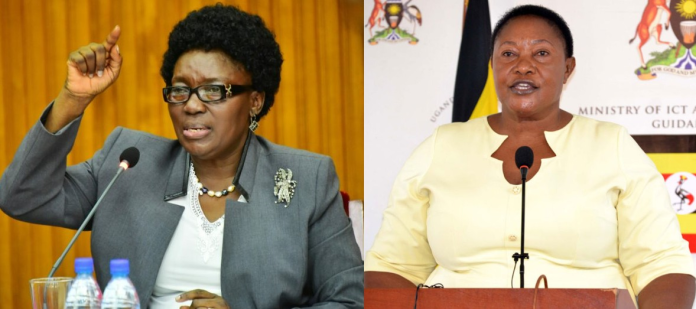
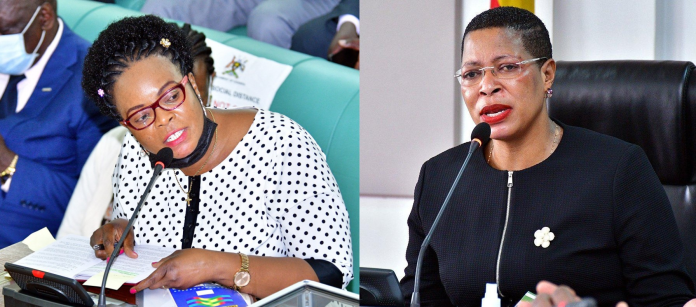
MPs, Mutembuli, Akamba, and Namujju.

The Director of Public Prosecutions has withdrawn corruption charges against three National Resistance Movement (NRM) Members of Parliament Akamba Paul, Cissy Namujuu Dionizia and Yusuf bringing to an end proceedings that had been pending before the Anti-Corruption Division of the High Court.

In a Nolle Prosequi dated Tuesday, January 6, 2026, the Director of Public Prosecutions Mr Lino Anguzu notified the court that the State would no longer pursue the case against the three legislators, all affiliated to the ruling party.

“TAKE NOTICE that the Government of Uganda intends that the proceedings against A1 Hon Yusuf Mutembuli A2 Hon Akamba Paul A3 Hon Cissy Namujuu Dionizia shall not continue” the notice reads.

The document further states that the trio had been charged with corruption under sections 2 e and 26 of the Anti-Corruption Act 2009 as amended but that the case would be discontinued under the DPP’s constitutional powers to halt criminal proceedings at any stage before judgment.

Under Ugandan law once a Nolle Prosequi is entered the accused persons are released from the charges without a court determination on guilt or innocence unless the State later elects to reinstate the charges.

The three MPs were arrested in June 2024 following investigations into allegations that they had solicited an undue advantage from Uganda Human Rights Commission chairperson Mariam Wangadya. Prosecutors alleged that during a meeting at a Kampala hotel the MPs demanded a percentage of the Commission’s budget in exchange for supporting its funding requests before Parliament’s Budget Committee.

Following their arrest the legislators were arraigned before the Anti Corruption Court and remanded to Luzira Prison. Their remand attracted public attention given their senior political status and the sensitivity of the alleged offence which touched the parliamentary budget process.

Akamba Paul was later granted bail but was controversially rearrested shortly after his release from the court premises by armed security personnel, an incident that sparked public debate about respect for court orders. Yusuf Mutembuli and Cissy Namujuu were initially denied bail after the court ruled that they had not presented substantial sureties. They were later released after spending several weeks on remand as the case proceeded to the High Court for trial.

While the withdrawal of the charges brings closure to this particular case questions have continued to trail the handling of corruption related prosecutions involving politically exposed persons with critics calling for greater transparency in decisions to discontinue high profile cases.

However the Nolle Prosequi does not clear all legal clouds surrounding all the accused legislators. Akamba Paul remains named in separate ongoing proceedings involving alleged conspiracy with former Ministry of Trade Industry and Cooperatives Permanent Secretary Geraldine Ssali over the alleged fraudulent diversion of Shs3.4 billion.

That case also lists PLU mobilization chief Michael Mawanda Elgon County MP Ignatius Mudimi Wamakuyu, lawyer Taitankoko, and Leonard Kavundira as co accused with prosecutors alleging that the funds were meant to compensate war victims under the Buyaka Growers Cooperative Society.

The Office of the Director of Public Prosecutions has not publicly explained the specific reasons for withdrawing the charges against the three MPs. 

Stories Continues after ad

Ugandans to pay up to Shs54m bond for U.S tourist, business visas

Ugandans applying for United States B-1/B-2 visitor visas (tourism and business) will now be required to post a visa bond of between Shs18 million and Shs54 million before their applications can proceed.

The new requirement, announced by the US Department of State, will take effect on January 21, 2026, and applies to Ugandan nationals seeking non-immigrant visitor visas.

The measure is part of a 12-month visa bond pilot programme introduced by the Department of State to reduce the number of foreign nationals who overstay their visas.

Under the programme, Ugandan applicants may be required to post a bond of $5,000,$10,000, or $15,000, approximately Shs18 million, Shs36 million, and Shs54 million respectively,  at the discretion of a US consular officer.

Applicants who are otherwise eligible for a B-1/B-2 visa will be informed during their visa interview whether they must post the bond. Those instructed to do so will receive a direct link to make payment online through the US Treasury’s Pay.gov system. The bond amount will be determined on a case-by-case basis.

The Department of State has cautioned that payment of the bond does not guarantee visa issuance. Applicants are advised to pay only after receiving official instructions; otherwise, “the fees will not be returned”, the advisory states.

As a condition of the bond, successful applicants must enter and exit the United States through designated ports of entry, including Boston Logan International Airport, John F. Kennedy International Airport and Washington Dulles International Airport. Failure to comply may complicate adherence to the bond terms and affect eligibility for a refund.

The bond will be automatically cancelled and refunded if the visa holder departs the United States on or before the end of their authorised stay, does not travel on the visa, or is denied admission at the port of entry.

However, US authorities say that if a traveller overstays their permitted period, applies to adjust to another immigration status, or fails to depart on time, the Department of Homeland Security may refer the case to US Citizenship and Immigration Services to determine whether the bond conditions have been breached.

Uganda and Tanzania are currently the only East African countries affected by the visa bond policy.

Other African countries, including Malawi and Zambia, were incorporated into the pilot programme from mid-2025. Nationals from these countries are also required to post bonds ranging from Shs18 million to Shs54 million when applying for similar US visitor visas.

The governments of the affected countries have yet to issue detailed public responses. However, travel agents warn that the policy will significantly increase the cost of visiting the United States and create “greater uncertainty for ordinary travellers”.

While attention in East Africa has focused on Uganda, Tanzania, Malawi and Zambia, the list of countries subject to the visa bond requirement has expanded to dozens across Africa, Asia and Latin America. These include Bangladesh, Nigeria, Senegal, Venezuela, Cuba and several small island states.

US authorities defend the measure as necessary to reduce visa overstay rates, though critics argue it risks pricing ordinary travellers out of lawful visits and could strain diplomatic relations.

Stories Continues after ad

MelBet exits Ugandan market after gaming board withdraws its license 

The National Lotteries and Gaming Regulatory Board (NLGRB) has announced the closure of operations of Fox Bet Limited, trading as Mel Bet, in Uganda after the company lost its operating licence.

In a public notice issued under Section 4(j) of the Lotteries and Gaming Act, Cap. 334, the Board confirmed that Mel Bet is no longer authorised to operate in the country effective January 1, 2026.

“The National Lotteries and Gaming Regulatory Board informs the public that Fox Bet Limited trading as Mel Bet has ceased operations in Uganda and is no longer licensed by the Board,” the management statement reads.

The regulator has urged all players who previously used the platform to take immediate action to safeguard their funds.

“Players are strongly advised to withdraw any remaining funds immediately and close their betting accounts with the operator,” the Board said.

NLGRB management further cautioned the public against engaging with betting companies that are not licensed, warning that such dealings come with serious financial and legal risks.

“Engaging with unlicensed gaming operators poses significant risks, including loss of funds and lack of recourse in the event of disputes,” the statement added.

The Board reiterated its mandate to regulate and supervise all gaming activities in Uganda, emphasizing that only licensed operators are permitted to offer betting and gaming services in the country.

The notice, dated January 5, 2025, underscores the government’s continued efforts to promote responsible gaming and protect the public from unscrupulous or non-compliant operators.

NLGRB advised the public to always verify the licensing status of gaming companies before participating in any betting activities, noting that enforcement actions will continue against operators found in violation of the law.

Stories Continues after ad

Uganda, NAM States condemn U.S attacks on Venezuela at UN Security Council

The Non-Aligned Movement (NAM), representing 121 member states and chaired by President Yoweri Kaguta Museveni of Uganda has condemned alleged acts of aggression by the United States against the Bolivarian Republic of Venezuela.

The statement was delivered on behalf of NAM by the Ugandan delegation at an emergency United Nations Security Council meeting in New York on January 5, 2026, addressing threats to international peace and security.

“The Coordinating Bureau of the Non-Aligned Movement (NAM) categorically condemns the act of aggression perpetrated by the United States of America against the Bolivarian Republic of Venezuela, since the early hours of 03 January 2026, which included armed attacks against civilian and military locations in the capital city of Caracas, as well as in various other cities of the Venezuelan territory,” the joint statement read.

According to NAM, the attacks violate the purposes and principles enshrined in the United Nations Charter and international law, amounting to an act of war that threatens both regional and global stability.

“The attacks in question… constitute an act of war against the Bolivarian Republic of Venezuela that undermines both regional and international peace, security and stability, while also threatening the very right to life of the Venezuelan people,” the statement added.

The 121-member bloc demanded an immediate cessation of hostilities and called for full respect of Venezuela’s sovereignty, territorial integrity, political independence, and inalienable right to self-determination.

“The Coordinating Bureau of the Non-Aligned Movement (NAM) demands the immediate cessation of all hostilities against the Bolivarian Republic of Venezuela, the full respect for the sovereignty, territorial integrity, political independence and inalienable right to self-determination of the Bolivarian Republic of Venezuela, and that those responsible for these ongoing acts of aggression be held accountable,” the statement read in part.

The joint statement also emphasized the importance of respecting the immunities and protections afforded to Heads of State and Government under international law.

“The Coordinating Bureau of the Non-Aligned Movement (NAM) reaffirms the inviolability of the immunities accorded to Heads of State and Government under international law, which constitute a fundamental pillar of sovereign equality, peaceful coexistence, and stable international relations,” the statement said.

NAM further expressed solidarity with the people and government of Venezuela, cautioning that military solutions cannot resolve international disputes.

“The Coordinating Bureau of the Non-Aligned Movement (NAM) reiterates its full solidarity with the People and Government of the Bolivarian Republic of Venezuela at this critical time and insists that military solutions are not viable avenues for addressing any issue that may be of concern between members of the international community,” the statement concluded.

The Security Council session was convened amid conflicting reports regarding the status of Venezuela’s President Nicolás Maduro, following the alleged attacks. Some media outlets and opposition sources claimed he had been detained or placed under arrest, though these reports have been denied by the Venezuelan government, which maintains that Maduro remains in power.

President Maduro, who has led Venezuela since 2013 has repeatedly accused the United States of seeking regime change through sanctions, political interference and covert operations. His administration insists that any action against him violates international law and the country’s sovereignty.

NAM, under Museveni’s chairmanship, has urged dialogue, restraint, and adherence to international law and warned that escalation could have far-reaching consequences beyond Venezuela and the wider Latin American region.

Stories Continues after ad

Chelsea appoint Liam Rosenior as new head coach

Liam Rosenior.

Chelsea Football Club have announced the appointment of Liam Rosenior as their new head coach, handing the 41-year-old a long-term contract running until 2032.

Rosenior has joined the Premier League side after an 18-month spell in charge of French Ligue 1 club Strasbourg, who, like Chelsea, are owned by BlueCo. His appointment follows the departure of Enzo Maresca, who was relieved of his duties on New Year’s Day.

The former Premier League defender becomes Chelsea’s fifth permanent head coach since 2021, following Thomas Tuchel, Graham Potter, Mauricio Pochettino and Maresca, as the club continues its search for long-term stability and success.

“I am extremely humbled and honoured to be appointed Head Coach of Chelsea Football Club,” Rosenior said in his first statement after the announcement. “This is a club with a unique spirit and a proud history of winning trophies.”

The new Chelsea boss said his priority will be to protect the club’s identity and restore a winning culture at Stamford Bridge.

“My job is to protect that identity and create a team that reflects these values in every game we play as we continue winning trophies. To be entrusted with this role means the world to me and I want to thank all involved for the opportunity and faith in undertaking this job. I will give everything to bring the success this club deserves,” he said.

Rosenior also expressed excitement about working with Chelsea’s players, staff and supporters as he begins a new chapter in his coaching career.

“I am excited to work with this extremely talented group of players and staff, to build strong connections on and off the pitch, and to create an environment where everyone feels united and driven by the same goal,” he noted.

He reserved special praise for the club’s supporters, describing them as central to Chelsea’s identity.

“I want our fans to be proud of who we are and what we represent in every single game that we play. They are the soul of this enormous, historic and huge football club. I cannot wait to meet you all. I cannot wait to get started,” Rosenior said.

Rosenior enjoyed a 17-year playing career, featuring for Brighton & Hove Albion, Hull City, Reading and Fulham in the Premier League, before retiring at the end of the 2017/18 season. He moved into coaching shortly afterwards, taking up a role as assistant manager of Brighton’s Under-23 side in August 2018.

He later held several positions at Derby County, including a spell as caretaker manager at the start of the 2022/23 season. Rosenior was eventually appointed permanent manager at Derby, overseeing 78 matches across one and a half seasons and narrowly missing out on the Championship playoffs in 2023/24, finishing seventh.

In the 2024/25 season, he moved to Strasbourg, guiding the French side to a seventh-place finish in Ligue 1 and securing qualification for the UEFA Conference League. Strasbourg also reached the knockout stages of the competition after winning five and drawing one match in the league phase.

Rosenior departed Strasbourg with the club sitting seventh in Ligue 1, six points behind sixth-placed Rennes.

His first match in charge of Chelsea could come away to Fulham in the Premier League on Wednesday evening. That fixture will be followed by a busy run of five consecutive London matches across four competitions, including an FA Cup tie against Charlton Athletic and home games against Arsenal, Brentford and Cypriot side Pafos.

Stories Continues after ad

NDA approves twice-yearly HIV prevention injection Lenacapavir in Uganda

The National Drug Authority [NDA] has approved the use of lenacapavir, a twice-yearly HIV prevention (PrEP) injection manufactured by Gilead Sciences, a U.S.-based company.

The approval is a game-changer for HIV prevention in Uganda, especially for people at high risk of infection. It marks a significant step toward ending AIDS by 2030.

This development comes barely six months after the United States Food and Drug Administration [FDA] approved long-acting injectable lenacapavir for HIV prevention.

The new medicine is administered by injection once every six months and represents a major improvement in prevention options for people at risk of HIV infection worldwide.

In an interview, Gilead Sciences announced a U.S. list price of $28,218 [about Shs101,574,641] per person per year.

However, a research paper published this week in The Lancet HIV found that generic lenacapavir could cost between $35 [Shs12,598] and $46 [Shs165,583] per person per year. The cost could fall further to $25 [Shs89,991] per person per year if there is committed demand of five to ten million people within the first year, bringing the price in line with—or even lower than—current oral PrEP.

Responding to news of lenacapavir’s FDA approval, Winnie Byanyima, Executive Director of UNAIDS and United Nations Under-Secretary-General, said: “This is a breakthrough moment. The approval of lenacapavir is a testament to decades of public investment, scientific excellence, and the contributions of trial participants and communities.”

“I congratulate Gilead and U.S. partners for advancing this important innovation. Lenacapavir could be the tool we need to bring new infections under control but only if it is priced affordably and made available to everyone who could benefit,” she added.

“UNAIDS has seen research showing that lenacapavir can be produced for just $40 per person per year, falling to US$ 25 within a year of rollout. It is beyond comprehension how Gilead can justify a price of $28,218. If this game-changing medicine remains unaffordable, it will change nothing. I urge Gilead to do the right thing: drop the price, expand production, and ensure the world has a real chance at ending AIDS.”

Stories Continues after ad

IGG directed to investigate alleged diversion of government hoes in Bukedea District

Details have emerged in the alleged diversion and illegal sale of government-supplied hoes in Bukedea District after the Ministry of Agriculture, Animal Industry and Fisheries (MAAIF) confirmed that the farm tools were officially delivered to district local governments and meant for immediate distribution to households.

Bukedea County Member of Parliament, Ikojo John Bosco has petitioned the Inspectorate of Government (IGG) demanding investigations into claims that a consignment of hoes meant for farmers in Bukedea District was diverted, sold and never reached the intended beneficiaries.

“I hereby lodge a formal complaint and constitutionally request an investigation into allegations of diversion, misappropriation, and unauthorized sale of government property (hand hoes) in Bukedea District,” Ikojo said in a letter dated January 4, 2026.

According to the MP, the hoes were supplied under a government agricultural intervention led by MAAIF but were allegedly diverted before being received and recorded at the district stores, contrary to public finance and stores management regulations.

“It is alleged that the said hoes were not officially received, recorded, or accounted for at the district stores as required under the law,” the petition reads.

The complaint gains further weight following a circular issued by the Agriculture Ministry Permanent Secretary, Maj. Gen. David Kasura-Kyomukama, dated December 17, 2025, which confirms that hoes were procured, allocated and scheduled for delivery to district local governments, including those in the Eastern Region.

“The Ministry of Agriculture, Animal Industry and Fisheries is in the process of procuring 7,000,000 plain hand hoes for delivery to all the District Local Governments for distribution to farming households, as an intervention aimed at enhancing agricultural production at the household level,” Kasura-Kyomukama stated in the circular.

He explained that the Ministry of Finance had released UGX 20 billion out of the required UGX 56 billion, enabling MAAIF to issue call-off orders for 2.4 million hoes, which were subsequently allocated to districts, starting with the Eastern Region.

“This allocation has been guided by the National Population and Housing Census 2024 and delivery is scheduled to commence on 19th December 2025,” the Permanent Secretary noted.

Kasura-Kyomukama further emphasized that the service providers were instructed to deliver the hoes directly to district local government stores and that district authorities were responsible for proper receipt, storage and immediate distribution.

“The service providers will deliver the hand hoes to District Local Government stores, and you are requested to undertake the necessary administrative and technical processes to receive and distribute the hand hoes,” the circular reads.

He stressed that the hoes were not meant to be stored or sold but distributed directly to households, with strict accountability measures put in place.

“These hoes should be immediately distributed to households at a rate of one hoe per household, and a clear record should be made of the distribution, including individual NIN, telephone number, village, parish, sub-county and district,” Kasura-Kyomukama directed.

The records, he added, were to be submitted to MAAIF by January 30, 2025, and district officials were required to issue receipt documents to service providers to enable payment processing.

Against this backdrop, MP Ikojo alleges that in Bukedea District, the process was deliberately undermined. He claims the diverted hoes were later sold to a political leader at approximately UGX 2,000 per hoe and kept at a private residence instead of reaching farmers.

“The hoes were unofficially and illegally possessed at an individual private residence, and the intended beneficiaries have not been able to receive the said goods, thereby defeating the purpose of the programme and occasioning loss to the Government of Uganda,” he said.

The legislator has asked the IGG to investigate the entire chain, from procurement and transportation to receipt, storage and distribution, and to establish responsibility among accounting and oversight officers, including the Chief Administrative Officer, Chief Finance Officer and members of the district technical teams.

He also wants investigations into allegations that proceed from the alleged sale were unlawfully shared among some district and political officials.

“The alleged acts, if established, may constitute abuse of office, neglect of duty, corruption, and violation of public finance and procurement laws,” Ikojo noted, urging the IGG to act decisively to safeguard public resources and restore public confidence in government programmes.

Stories Continues after ad

Mad rush as Kampala Parents School advertises deputy principal position

Kampala Parents School.

Kampala Parents School has announced new job openings, including the position of Deputy Principal in charge of Curriculum in a bid to strengthen its academic leadership and teaching staff.

In a job advert released this week, the school said it is inviting suitably qualified and dynamic candidates to take up the following job opportunities, signalling its intention to enhance curriculum delivery and overall school administration.

According to the advert, the Deputy Principal in charge of the Curriculum must hold a Bachelor’s degree in Primary Education and should have previously served as a Deputy Headteacher or Head of Section. 

The school further requires candidates to have a minimum of five years’ experience in an administrative position, while noting that a Master’s degree in a related field is an added advantage. Applicants for the role should also not be above 48 years of age.

Kampala Parents School is also recruiting a School Secretary, a role that requires a Bachelor’s degree in secretarial management and administration and strong computer skills, including proficiency in MS Word, Excel, PowerPoint and Access. The school emphasised that applicants should have at least four years’ working experience in a related field and be below 30 years of age, with additional skills in computer hardware, robotics and graphics considered an added advantage.

In addition, the school announced vacancies for teachers across different levels, including infant classes (P.1 and P.2), middle classes (P.3 and P.4), upper classes (P.5 to P.7) and pre-primary. The advert specifies that applicants should have a Diploma in Primary Education (DEP) for primary teachers or a Diploma in Early Childhood Development (ECD) for pre-primary teachers, adding that a bachelor’s degree in Primary Education or ECD will be an added advantage.

The school further noted that teaching applicants must have at least four years’ working experience in a primary or nursery school, be very innovative and computer literate and not be above 35 years of age. It also stressed that no Grade III teachers will be considered.

Interested candidates have been asked to submit their applications electronically, together with CVs and recent passport-size photographs, to the school’s official email address. “Only shortlisted candidates will be contacted for interviews,” the advert states, adding that handwritten applications will not be accepted.

The deadline for applications is Tuesday, January 13, 2026.

Stories Continues after ad
Gen. Tumukunde unveils industrialisation agenda for Rukungiri, says voters demand substance over handouts

Gen. Henry Tumukunde.

NRM flagbearer and former Security Minister Lt. Gen. Retired Henry Tumukunde has unveiled an ambitious industrialisation agenda aimed at transforming the economy and politics of Rukungiri Municipality and declared that residents have moved beyond transactional politics to issue based decision making.

Speaking to the media at his home in Rukungiri, Tumukunde said the municipality had graduated from the politics of selling votes to making serious political decisions and noted that voters are now more discerning and focused on leadership capacity, credibility and long term development outcomes.

“I stand here not just as a flagbearer but as a servant of the people whose capacity and aspirations I deeply understand and respect,” Tumukunde told reporters.

Tumukunde added,“The people now distill your capacity and assess your promises.”

He added that leadership must be rooted in delivery rather than rhetoric.

At the centre of his vision is the establishment of value addition industries focused on banana processing and cocoa farming, sectors he said hold immense potential for job creation and household income growth. Tumukunde explained that by processing agricultural produce locally, farmers would earn more while the municipality benefits from increased economic activity and employment opportunities.

He further revealed plans to invest in modern warehousing facilities to support farmers and traders by reducing post harvest losses and improving market access. According to Tumukunde, proper storage infrastructure is critical in linking local production to both national and regional markets.

The industrialisation drive forms part of Tumukunde’s development philosophy, which prioritises sustainable growth, enterprise development and self reliance. Throughout his public service career, Tumukunde has been known for a results oriented approach, having previously held senior roles in national security and governance where discipline, strategic planning and accountability were central to his leadership style.

Tumukunde’s transition from national leadership to local development advocacy reflects a desire to apply his experience to grassroots transformation. His consistent emphasis on institution building, stability and long term planning brings qualities needed to unlock Rukungiri’s economic potential.

Tumukunde’s industrial agenda has been welcomed by sections of the business community and youth groups who view it as a shift from campaign season promises to practical solutions. Many say the focus on value addition and industrial growth speaks directly to unemployment challenges and the need for sustainable livelihoods.

By calling for an end to handout politics and promoting industry driven growth, he is seeking to redefine leadership around measurable impact and lasting prosperity.

Stories Continues after ad

Gov’t dismisses internet shutdown claims ahead of general elections

The Government of Uganda has dismissed claims circulating on social media that it plans to shut down the internet during the forthcoming elections and described the reports as false, misleading and intended to cause unnecessary fear among the public.

In a statement issued on Monday, January 5, 2026, the Permanent Secretary of the Ministry of ICT and National Guidance, Dr. Aminah Zawedde said government has neither announced nor taken any decision to disrupt internet services during the election period.

“The Government has not announced, directed, or implemented any decision to shut down the internet during the election period. Claims suggesting otherwise are false and misleading,” Dr. Zawedde said.

She noted that while public engagement naturally intensifies as the country approaches elections, there has also been a rise in misinformation, particularly on digital platforms, which risks undermining public confidence and heightening national tension.

“Such misinformation unnecessarily creates fear, undermines public confidence, and risks heightening tension at a critical national moment,” she added.

Dr. Zawedde reaffirmed government’s commitment to access to information, digital inclusion and the responsible use of information and communication technologies, stressing that ICTs and media platforms play a central role in democratic participation, especially during elections.

“ICTs and media platforms play a central role in democratic participation by enabling citizens to access accurate and timely information. That role becomes even more critical during elections,” she said.

The Permanent Secretary revealed that the Ministry of ICT and National Guidance is working closely with the Uganda Communications Commission (UCC) to prepare the media sector for the election period through nationwide sensitisation programmes.

“Together, we have engaged broadcasters and media stakeholders across the country to reinforce professionalism, ethical conduct and accountability in election coverage,” Dr. Zawedde noted.

She warned that irresponsible media coverage could threaten peace and national stability, emphasizing that media platforms must not be used to incite violence, spread falsehoods or undermine the credibility of the electoral process.

“Responsible media coverage during elections is not optional. It is essential for peace, public order and national stability,” the statement reads.

Dr. Zawedde further cautioned broadcasters and online media practitioners against live broadcasting or streaming of riots, unlawful processes or violent incidents, noting that such actions are prohibited and punishable by law. She also reminded the public that the declaration of election results remains the sole mandate of the Electoral Commission.

“The broadcasting or sharing of unverified or premature results is illegal,” she stressed.

The statement also highlighted that digital platforms are subject to existing laws, including the Computer Misuse Act, and that freedom of expression must be exercised responsibly and within the law.

Meanwhile, the Uganda Communications Commission has been tasked with actively monitoring both broadcast and online media, with regulatory sanctions to be applied where violations occur.

Dr. Zawedde urged journalists, media owners, digital publishers and the public to rely on verified information and official sources, and to reject misinformation aimed at causing fear or division.

“Our collective responsibility is to ensure that ICTs and the media contribute to peaceful, credible elections and national unity,” she said.

She also called on all citizens to use digital platforms in the service of truth, stability and the public good.

Stories Continues after ad