Stanbic Bank
Stanbic Bank
17.7 C
Kampala
Stanbic Bank
Stanbic Bank
Home Blog Page 99

42 Ugandans safely evacuated from Iran amid rising tensions with Israel

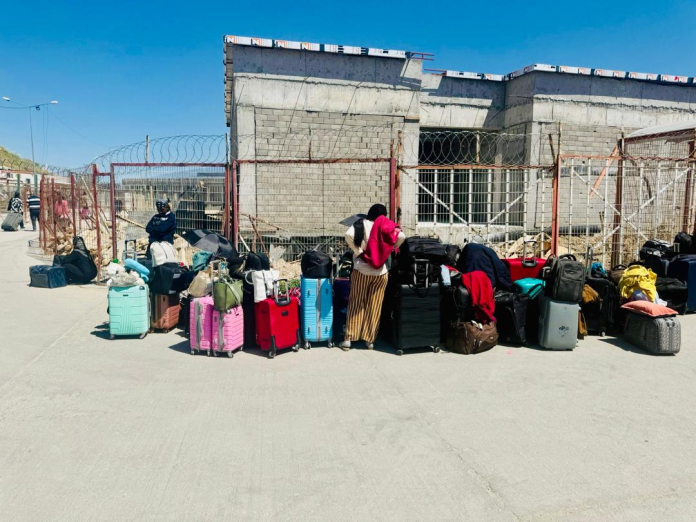
Some of the students who government rescued from Iran.

The Government of Uganda has successfully evacuated 42 students and two diplomatic staff from the Islamic Republic of Iran, following the outbreak of hostilities between Iran and Israel that began on June 13, 2025.

The evacuation effort was coordinated by the Uganda Embassy in Tehran, which, in collaboration with the Embassy in Ankara and under the guidance of the Ministry of Foreign Affairs Headquarters, set up an Emergency Evacuation Coordination Centre in neighboring Türkiye.

In response to the escalating security situation, Ugandans in Iran were registered for evacuation, and land transport was arranged to Türkiye. The Republic of Türkiye accepted Uganda’s request to grant visas on arrival, facilitating the urgent movement of evacuees to safety.

The evacuation centre is being overseen by Amb. Twaha Matata, Charge d’Affaires a.i., with support from Mr. Oscar J. Edule, Minister Counsellor, and Mr. Mark Agaba , Financial Attaché at the Uganda Embassy in Tehran. The centre will remain operational until all Ugandan nationals are safely repatriated from Iran.

The evacuees were received on Wednesday, June 18, 2025, at the Bargarzan border by Mr. Julius Malinga, Second Secretary; Ms. Zainah Nabirye of the Uganda Embassy in Tehran; and Mr. Mubarak Daka from the Uganda Embassy in Ankara. The group is currently en route to Istanbul and is expected to fly back to Uganda aboard a commercial chartered aircraft.

Efforts are ongoing to register and coordinate the evacuation of any remaining Ugandans still inside Iran. The Ministry urges relatives and members of the public who have information about Ugandans who may still be trapped in Iran to contact the following officers: Amb. Twaha Matata, CDA a.i – +256 772 594096, Mr. Oscar Edule, Minister Counsellor – +256 702 020277 and Mr. Julius Malinga, Second Secretary – +256 782 572879

The Ministry of Foreign Affairs continues to monitor the situation closely and reaffirms its commitment to the safety and well-being of all Ugandans abroad.

Stories Continues after ad

UPDF launches operation harmony to evict illegal pastoralists in Acholi and Lango sub-regions

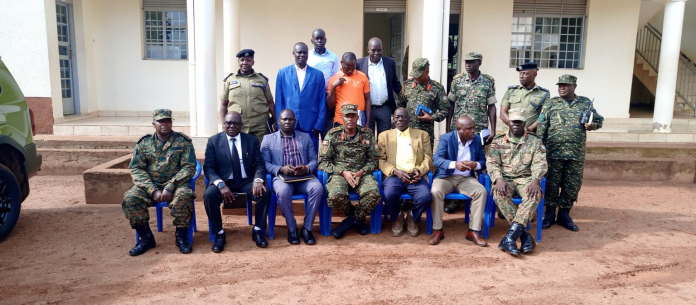
Operation Harmony coordination committee.

The Uganda Peoples’ Defence Forces (UPDF) has officially launched the first phase of Operation Harmony, aimed at evicting unauthorised pastoralist groups from the Acholi and Lango sub-regions.

The announcement was made during a Security Coordination Meeting held at the 5th Infantry Division Headquarters in Acholi Pii, Pader District. The meeting was chaired by the 5th Infantry Division Commander, Major General Keith Katungi, and attended by members of the district security committees from Apac and Pader.

The joint operation, which began immediately, will focus primarily on the Aswa, Maruzi ranches, and Apac Forest areas. This first phase is expected to last 30 days, after which the second phase will expand to cover the entire Acholi and Lango sub-regions.

The operation follows a directive from the President, seeking to address ongoing land conflicts reportedly caused by the influx of pastoralists, especially those settling without proper fencing, water sources, or authorisation. The division commander emphasised that the crackdown is targeting those without legitimate claims or proper infrastructure.

Maj Gen Katungi urged security committee members to lend their full support to the UPDF in parallel operations aimed at curbing the illegal charcoal trade in Northern Uganda. He warned against collaboration with external charcoal dealers, stating, “Let us stop risking our country.”

In addition, the government, through Nobert Mao, is putting in place peace customary certificates of ownership to residents in the Acholi and Lango sub-regions aimed at promoting formal land tenure and reducing future disputes.

The operation is being conducted jointly with other ongoing efforts under the UPDF’s 4th Division, covering additional districts in the region.

Stories Continues after ad

Equity Bank champions lifesaving blood donation drive in downtown Kampala

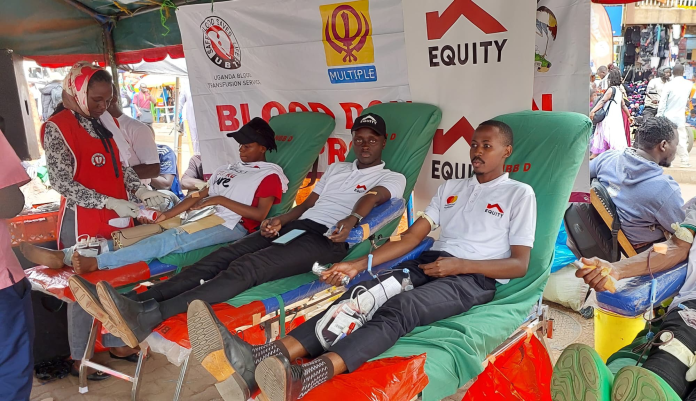
Equity Bank Uganda on Thursday organized a public blood donation drive at Mini Price, one of Kampala’s busiest downtown hubs, in a concerted effort to support national health services during World Blood Donor Week.

The bustling streets turned into a community health zone as music played, banners fluttered, and trained medical professionals welcomed volunteers. Dozens of participants — from first-time donors to regular contributors — rolled up their sleeves to give blood. By midday, the turnout had already surpassed expectations.

Barbra Among, Communications Manager at Equity Bank, stressed the urgency of routine blood donations and the bank’s commitment to community health.

“We organized this drive to respond to a very real crisis — hospitals across the country are facing critical blood shortages,” Among said. “By coming here to Mini Price, in the heart of the city, we’re making it easier for the public to participate in something that truly saves lives.”

She noted that blood donation is not only a health imperative but also a moral responsibility.

“You don’t have to be a doctor to save lives. Just showing up and donating a pint of blood can make all the difference,” she added. “We’re proud to support the Ministry of Health and the Uganda Blood Transfusion Service in this vital work.”

According to the Uganda Blood Transfusion Service, the country needs at least 450,000 units of blood annually, but collection efforts often fall short — especially during school holidays when student donations typically drop.

Stories Continues after ad

USE lifts suspension on Umeme Limited after concession expiry

Umeme Limited logo

The Uganda Securities Exchange (USE) has lifted the suspension of Umeme Limited, which was instituted in March 2025 following the expiry of its electricity distribution concession agreement and the subsequent handover of operations to the Uganda Electricity Distribution Company Limited (UEDCL).

The suspension, initiated on March 31, 2025, was made in the interest of investor protection and market transparency. It was prompted by public speculation surrounding the end of the concession and the determination of the final buyout amount due to Umeme.

On the same day the suspension was imposed, the Government of Uganda paid Umeme $118 million (approximately Shs432.677 billion) as part of the concession exit settlement.

During the suspension period, Umeme was prohibited from trading and from submitting progress reports or propositions to the Exchange regarding its operational status. The USE explained that this measure was necessary to maintain an orderly market while awaiting key disclosures.

“The involuntary suspension instituted on Umeme Limited on 31st March 2025 and further extended to 12th June 2025 has been lifted.” USE said,

Trading on the Umeme counter resumed following the expiration of the suspension and the subsequent publication of the company’s audited financial statements for the year ended December 31, 2024.

While trading has officially resumed, the USE advised investors to exercise caution and ensure they make informed decisions when dealing in Umeme shares.

The USE further stated that meme Limited will continue to provide timely updates on the decision to pursue full recovery of all outstanding sums due through arbitration in London, as stipulated in the concession agreements with the Government of Uganda. The company will also ensure compliance with continuing listing obligations by keeping the public informed of any material developments.

Stories Continues after ad

SC Villa terminates contract with head coach Morley Byekwaso

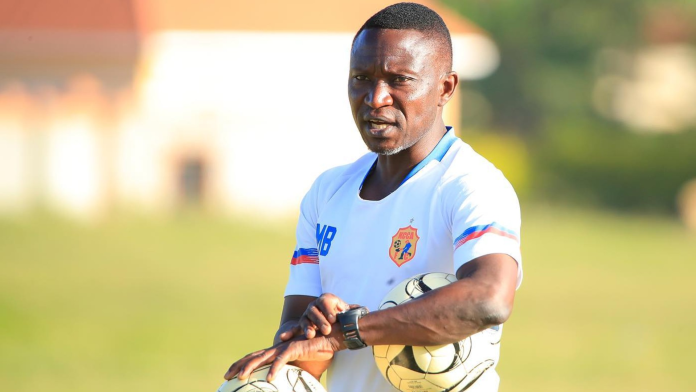
Morley Byekwaso.

Record Uganda Premier League champions, Sports Club Villa have announced the mutual termination of their contract with head coach Morley Byekwaso. The decision, effective immediately follows a series of internal discussions between the coach and the club’s management.

In an official statement, the club noted: “Sports Club Villa informs the public that it has mutually agreed to part ways with its Head Coach Mr. Morley Byekwaso effective 18th June 2025. This decision was reached following constructive discussions between the Club management and Coach Morley with both parties agreeing that a mutual separation is in the best interest of the club moving forward.”

Byekwaso, who joined SC Villa over two years ago, had served in various technical capacities. Despite falling short of delivering the league title, he is credited with improving the team’s playing style and nurturing several young talents. His departure marks the end of a tenure that brought flashes of brilliance, but also inconsistency on the pitch.

Club President Omar Ahmed Mandela expressed gratitude for Byekwaso’s service:

“We would like to thank Morley for his commitment and contribution to the Club. This was a mutual decision, reached respectfully, and we wish him nothing but the very best in his future coaching endeavours. He has done us proud.”

Before joining SC Villa, Byekwaso had stints with several Ugandan football outfits. He served as assistant and later interim head coach at KCCA FC, where he briefly led the team in continental competitions. He also coached the Uganda U-20 national team (Hippos), guiding them to the final of the 2021 U-20 Africa Cup of Nations in Mauritania — one of his most notable achievements. Despite his promise, he was later relieved of his duties at KCCA FC in 2023 after a string of underwhelming performances.

SC Villa has promised to immediately begin the search for a new head coach to guide the team into the upcoming season.

“The Club remains focused on its objectives and will now turn its attention to identifying a new Head Coach who can build on its foundations and guide the team towards achieving its targets,” the statement read.

Villa noted, “Further announcements regarding the Technical Team will be made in due course. The Club urges its fans to remain steadfast in their support as it prepares for the upcoming season.”

Byekwaso now joins the growing list of seasoned Ugandan coaches currently out of club management, as speculation begins on where his next opportunity might lie.

Stories Continues after ad

Stanbic PMI: Uganda’s business confidence hits 23-month high

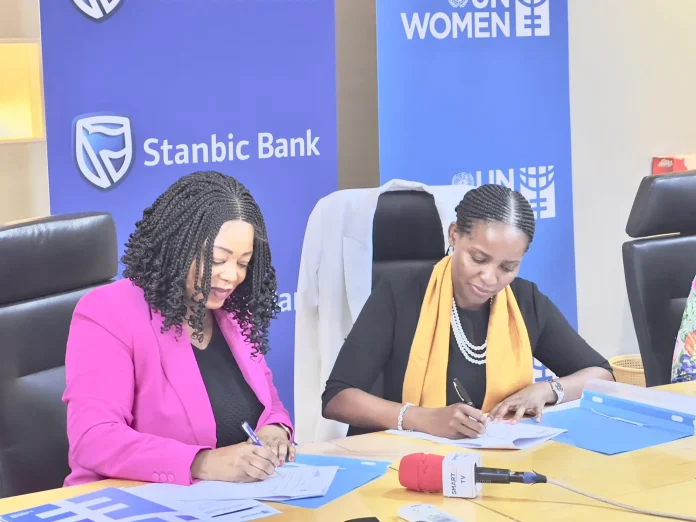
The UN Women Uganda signed a three year partnership with Stanbic Bank to increase access to finance for women led businesses. The $15 million has been earmarked by the bank for the “For Her” initiative.

Uganda’s private sector confidence in business conditions reached its highest level in nearly two years, with the headline Stanbic Bank Purchasing Managers’ Index (PMI) rising to 56.4 in May, up from 55.3 in April. This figure is well above the 50.0 threshold that signals improved operating conditions.

Christopher Legilisho, Economist at Stanbic Bank, noted, “The PMI expanded to the highest level in 23 months, reflecting sustained momentum in the private sector. Robust new orders and output were driven by increased sales and strong customer demand across all monitored sectors. Firms also boosted staffing levels both part-time and full-time amid rising output, with some offering bonuses to motivate workers.”

Compiled by S&P Global, the Stanbic PMI is based on responses from purchasing managers at approximately 400 private sector firms across sectors including agriculture, mining, manufacturing, construction, wholesale, retail, and services. The index is a weighted average of five key components: New Orders (30%), Output (25%), Employment (20%), Suppliers’ Delivery Times (15%), and Stocks of Purchases (10%).

May’s expansion was underpinned by stronger client demand, prompting firms to raise staffing levels and increase input purchases. Anticipation of future growth also led companies to build up inventories.

However, overall input price inflation persisted, driven by higher purchase and staff costs. Firms responded by raising selling prices once again in May, in line with accommodative demand conditions.

“With greater operational capacity, firms were able to reduce backlogs, leading to a further drop in outstanding work,” said Legilisho. “Purchasing activity expanded, and inventories rose as firms increased input buying.”

He added, “Selling prices were raised in response to strong demand, while input and purchase costs continued to rise primarily due to higher operating expenses and increased costs of key goods like cement, soap, and food. This points to a moderate build-up in inflationary pressures. Despite this, firms remained optimistic, anticipating continued growth in demand and output over the next year.”

May marked the fourth consecutive month of improvement in Uganda’s private sector operating conditions. A key driver was the sustained rise in new business placed with firms, supported by strong demand and new customer acquisitions.

Output also continued to grow, extending the expansion trend that began in February. The increase in activity was largely attributed to higher order volumes.

At the sector level, both output and new sales growth were broad-based. Rising demand and increased business needs spurred another round of job creation—the fourth in as many months. All five monitored sectors reported growth in employment, with firms adding both temporary and permanent staff.

This employment growth allowed businesses to reduce their backlogs, which declined for the fifth consecutive month.

Firms expressed strong optimism about future activity, driven by expectations of rising customer demand and increased investment in advertising and promotions.

Meanwhile, input prices continued to climb due to higher costs for materials especially food and fuel as well as increased staffing costs. In response, firms again passed on the cost increases to customers, although the uptick in selling prices was mainly confined to the agriculture and service sectors.

Despite a slight decline in supplier performance, businesses continued to expand input purchases and inventory levels in anticipation of further growth in customer demand and new business.

Stories Continues after ad

Canada based Lanie Banks attends Andrew Nyote memorial service

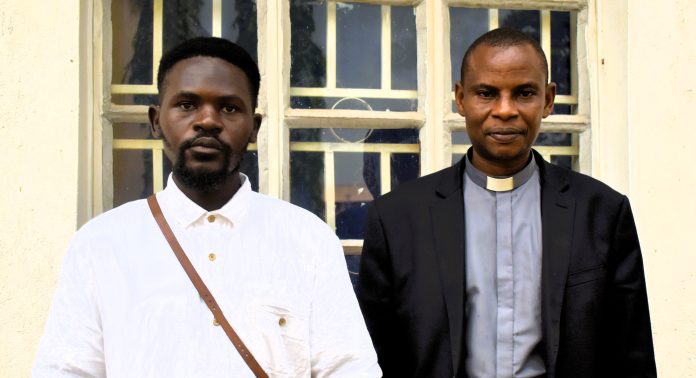
Lanie Banks with Rev. Robert Wantsala.

Mbale-Uganda| Canadian based Ugandan rapper and community activist Lanie Banks is in Uganda after attending his late uncle Canon Andrew Nyote (July 2, 1940-June 28, 2021) s memorial service that was held at the Mbale City cathedral on Sunday June 15, 2025.

Banks, after the service, thanked Mbale Secondary School, PTA and the Ministry of Education for honouring his uncle’s legacy by constructing the Canon Andrew Nyote memorial block building at the school.

The late served as the Parents Teachers Association Chairman at Mbale Senior Secondary School and Uganda People’s Congress chairperson. Nyote, attended Nabongo Primary School, Nabumali senior secondary school and proceeded to Israel for further studies where he attained his Bachelors in Education at the Telvis University

Banks called upon parents to unite and educate children at all costs especially the girl child and encouraged school going children at all levels to stay in school, he apologised to the crowd for failure to attend his uncle s burial ceremony on the August 4, 2019.

Lanie Banks informed all his followers who are mainly the youth that his first mainstream professional album will feature the likes of Aubrey Drake Graham and will be out by October 2026.

The service was held just after the Mbale Senior Secondary School 75-year jubilee celebration that was presided over by Mbale City Woman Member of Parliament Connie Galiwango.

Stories Continues after ad

New yearly injectable HIV drug to costs Shs100m

HIV/AIDS injectable drug.

The HIV protection drug that only requires a single injection every six months has been approved by the United States Food and Drug Administration (FDA), but its high-cost sparks worry across the globe, including Uganda.

The injectable drug, lenacapavir, developed by Gilead Sciences is priced at $28,218 per year, approximately $107 million. This makes it one of the most expensive HIV prevention options ever introduced despite promising to be the most convenient, with just two doses required annually.

A recent Lancet HIV study revealed that generic versions of lenacapavir could be manufactured much more cheaply between $35 (Shs133,000) and $46 (Shs175,000) per person per year. With a larger rollout, the price could drop to $25 (Shs95,000) annually, making it comparable to or cheaper than current oral PrEP drugs.

Winnie Byanyima, Executive Director of UNAIDS and UN Undersecretary-General, welcomed the FDA approval but sharply criticized Gilead’s pricing.

“This is a breakthrough moment. The approval of lenacapavir is a testament to decades of public investment, scientific excellence, and the contributions of trial participants and communities,” she said.

She added, “I congratulate Gilead and US partners for advancing this important innovation. Lenacapavir could be the tool we need to bring new infections under control but only if it is priced affordably and made available to everyone who could benefit.”

Byanyima emphasized the need for equitable access: “UNAIDS has seen research that lenacapavir can be produced for just $40 (Shs 152,000) per year, falling to $25 (Shs95,000) within a year of rollout. It is beyond comprehension how Gilead can justify a price of Shs107 million. If this game-changing medicine remains unaffordable, it will change nothing. I urge Gilead to do the right thing and drop the price, expand production and ensure the world has a shot at ending AIDS.”

With over 1.4 million people living with HIV in Uganda, without a major pricing shift, access to lenacapavir will remain limited to the wealthy elites thus undermining efforts to end AIDS by 2030.

Stories Continues after ad

Uganda’s 2025/26 National Budget could have been more climate responsive

Mr. Deus Mukalazi

By Mukalazi Deus, Board Chair UBUNTALISM GLOBAL and National Coordinator MUNGAANO INITIATIVE FOR CLIMATE JUSTICE. mubirudeus22@gmail.com

As Uganda unveiled its Shs72.1 trillion National Budget for the 2025/26 financial year, hopes were high that climate change would finally command the urgency it deserves. Unfortunately, despite several commendable measures, the budget once again underperforms in one of the most critical areas of our national future: climate responsiveness.

According to the Notre Dame Global Adaptation Initiative 2021, Uganda ranks 13th in climate change vulnerability globally and 160th in preparedness. The Nationally Determined Contribution (NDC) document (which is a 5-year commitment to the United Nations on climate adaptation and mitigation measures), notes that climate change is impacting and is projected to impact physical infrastructure, food security, water resources, agriculture, energy, health, and ecosystems. An assessment of the economic impacts of climate change in Uganda indicated that adaptation inaction could result in annual costs rising in the range of $3.2–5.9 billion within a decade.

The 2025/26 budget allocates just over Shs520 billion to environment, climate, and natural resource management—less than 1% of the total budget. Meanwhile, sectors like security and infrastructure receive over Shs10 trillion and Shs6 trillion, respectively. While these are important, such an imbalance raises a serious policy question: how can we build roads, only to watch them wash away in floods we failed to prepare for?

Uganda’s NDC estimate a need for over $28 billion (Shs105 trillion) by 2030 to implement climate mitigation and adaptation. The same document recognizes that there is limited utilization of the climate change financing windows and more efforts are needed to secure funding facilities like the Green Climate Fund (GCF), the Global Environment Facility (GEF). With Government of Uganda committing to mobilize only 15% of the funds required resources to implement the $28 billion adaptation and mitigation plan, a lot of effort is needed to attract the 85% deficit needed. A national budget would be the best way to demonstrate how this shall be done. A demonstration of how the budget responds to climate change commitments and how it is aligned to the NDC would establish a good case for attracting these available resources.   However, the budget reveals no clear strategy to unlock international climate finance or attract private green investment.

Worse still, there is no climate budget tagging mechanism. This means the government cannot even accurately track how much of the budget addresses climate priorities. Whereas the National Development Plan IV is littered with a lot of reference to climate change goals and targets, and in spite of the existence of an elaborate National Determined Contribution, the budget makes no effort to integrate this and clearly show how the allocations shall be used to achieve these climate change adaptation and mitigation goals. The budget instead seems to reduce climate change to climate emergency and disaster preparedness with the Minister only making an allocation under what is referred to as “climate change” yet climate change is a cross-cutting issue that affects and is affected by almost all sectors. Without clear budget tagging to climate change goals, planning is guesswork, and accountability becomes impossible.

The 2025/26 Budget seems another missed opportunity for Uganda to come out with Climate Change Responsive Budget but it is not an irreversible one. Here’s what must change:

  • Scale Up Climate Investment: Uganda should aim to allocate at least 3–5% of its national budget to climate-related sectors, especially adaptation in agriculture, water management, urban planning, and disaster preparedness.
  • Institutionalize Climate Budgeting: Although ministries are required to integrate climate in planning and budgets, mechanisms for tagging climate-relevant expenditures remain underdeveloped and inconsistent. The Ministry of Finance must adopt climate budget tagging, ensuring every project is assessed for climate impact. Climate risks must become a core part of cost-benefit analyses.
  • Amend the Climate Change Act and the Public Finance Management Act to provide for a thorough assessment of the budget by the Parliamentary Standing Committee on Climate Change: The current requirement of certificate of compliance by the NPA needs to be checked by the legislature. There is need for all sectors to make a deliberate effort to highlight how their budget proposals shall enable Uganda to achieve its commitments under the NDC and NDP IV. Climate Change issues seem to get lost through the vetting process and this stage shall help eliminate this.
  • Leverage International Finance: The government should prioritize accessing funds from the Green Climate Fund, the Adaptation Fund, and bilateral sources. But these require readiness and transparency—qualities currently lacking.
  • Strengthen Capacity of technocrats to undertake Climate Responsive Budgeting: It’s evident that there is a capacity gap on the side of technocrats both at the national and local government level.There is need to invest in building the capacity of these technocrats through on job trainings.

Uganda’s 2025/26 Budget reveals nascent but insufficient capacity for climate-responsive budgeting. Despite strong policy intentions, institutional, technical, and financial constraints significantly hinder Uganda’s ability to align its fiscal policy with its climate commitments. Strategic reforms in Public Finance Management laws, institutional coordination, and domestic resource mobilization are urgently needed to close the Climate Responsive Budgeting gap.

Stories Continues after ad

Uganda moves to evacuate stranded nationals from war-torn Iran and Israel

Vincent Bagiire Waiswa, Permanent Secretary, Ministry of Foreign Affairs.

The Government of Uganda has initiated a coordinated effort to evacuate its citizens stranded in the Islamic Republic of Iran and the State of Israel, following the outbreak of armed conflict between the two nations on June 13, 2025.

In an official statement issued by the Ministry of Foreign Affairs, Permanent Secretary Bagiire Vincent Waiswa confirmed that evacuation measures were underway, in partnership with Uganda’s diplomatic missions and other government agencies.

“Using our established evacuation plan under such circumstances, we have registered Ugandan students in Iran and received information on Ugandans stranded in Israel from parents, relatives, and other concerned citizens,” said Waiswa.

The Ministry has actively engaged with Iranian authorities to secure safe passage for Ugandan nationals trapped in conflict-affected areas.

“On this note, we are glad to report that 48 Ugandan students are being safely evacuated from Tehran,” Waiswa announced.

Additionally, Uganda has reached out to countries bordering the conflict zones including Türkiye, Azerbaijan, and Jordan to request gratis visas on arrival for Ugandan evacuees.

“We have communicated to our embassies in the region, namely; Türkiye, Saudi Arabia, United Arab Emirates, and Qatar, where the evacuees may eventually end up, to offer the necessary consular support,” Waiswa noted.

Diplomatic missions in these countries have been instructed to deploy officers to receive the evacuees and assist in processing their return to Uganda.

However, the evacuation process remains complex due to severe logistical challenges.

“It is worth noting that Iran and Israel have both closed their airspace until further notice, and given the security situation and the dynamics on the ground, there are challenges and delays in securing the appropriate transport for all distressed Ugandans,” Waiswa explained. 

He added, “The Ministry is doing everything within its means to ensure that all the stranded Ugandan nationals are accorded safe and secure transportation out of the affected areas.”

The Ministry has opened a communication channel for families and concerned individuals seeking updates or assistance regarding the evacuation.

“For any inquiries and information pertaining to the evacuation of the Ugandan nationals in the region, the public is encouraged to contact the Ministry via email: consular@mofa.go.ug,” Waiswa concluded.

Stories Continues after ad