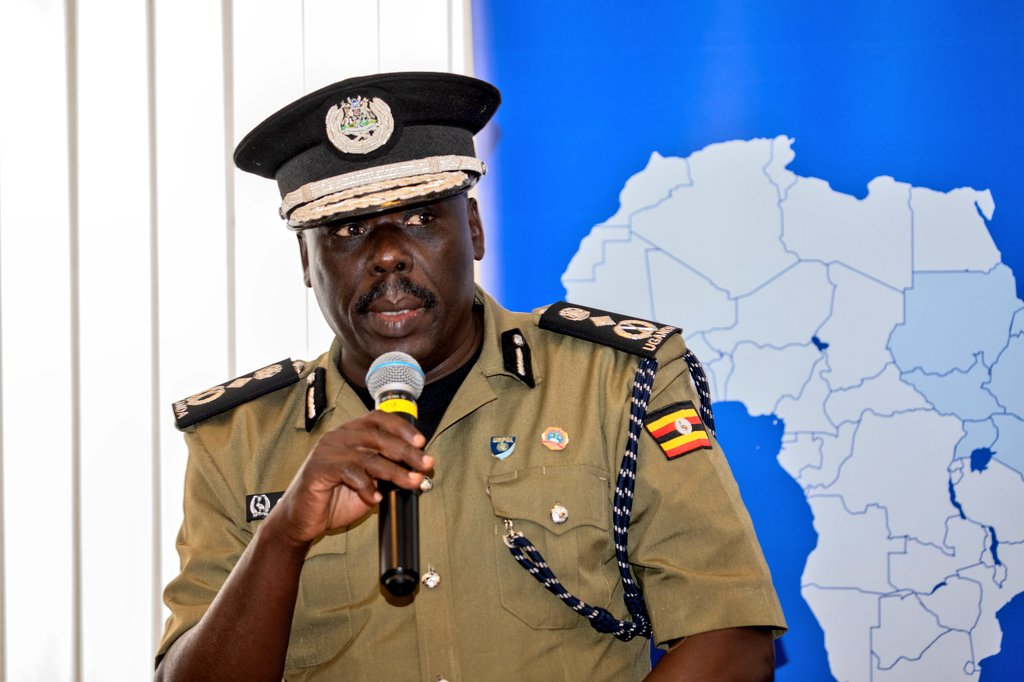
The Uganda Police Force has unveiled Standard Operating Procedures (SOPs) for crime scene examination in cases of trafficking in persons, with an aim of strengthening investigations and securing justice for victims.
The launch, held at Mestil Hotel in Kampala, was presided over by Deputy Inspector General of Police (DIGP) James Ocaya and brought together key stakeholders in the criminal justice system, including all Regional Forensic Services Scenes of Crime officers.

Assistant Commissioner of Police Andrew Mubirua, the Acting Director of Forensic Services, underscored the centrality of crime scenes in uncovering trafficking networks.
“In every case of trafficking, the crime scene is where the truth begins to emerge. It may be a hidden house, a border crossing, a vehicle, or even a digital environment. Mishandling scenes or losing evidence helps traffickers, harms victims, and undermines justice,” Mubirua said.
He explained that the SOPs were developed by the Uganda Police Force, the Office of the Director of Public Prosecutions (ODPP), and partners to give officers and first responders a clear, practical, and standardised guide to handling trafficking cases.

“Human trafficking survivors often carry deep trauma. By handling crime scenes with professionalism and sensitivity, we shall reduce the need for repeated testimony and minimise re-traumatisation. Evidence, when properly secured, can speak powerfully on their behalf and allow survivors to heal while justice takes its course,” Mubirua added.
Katja Yvonne Kerschbaumer, Head of Austrian Embassy Development Cooperation, noted that securing credible evidence was vital in dismantling trafficking rings.
“To achieve justice, we must also secure high-quality evidence. Human trafficking cases are complex: perpetrators are often organized, crimes are hidden, and victims may be too traumatized or afraid to testify,” she said.
In his address, DIGP Ocaya stressed that the fight against trafficking in persons required professionalism at every stage of the justice chain.
“Combating trafficking in persons requires more than just arrests of the perpetrators — it demands that every step, from the report, prosecution, and adjudication, is handled professionally and with integrity, while observing the rights of the victims. The crime scene is the theatre where this precision begins, and where the truth is secured. If the scene is mishandled—through contamination, procedural error, or oversight—we risk losing irreplaceable evidence, weakening prosecutions, and denying victims justice. This is why today’s launch matters,” Ocaya said.
He emphasised that the SOPs should not remain theoretical documents but must be applied consistently across the country.
“These SOPs are not for the shelves. They are operational tools, and their value will only be realised when they are used consistently and competently across the country. The implementation of these SOPs will significantly improve the quality of investigations, reduce dependence on vulnerable victim testimony, and increase successful prosecutions of traffickers,” he said.
The guidelines call for enhanced capacity building for investigators and prosecutors, as well as community sensitisation to expose the methods traffickers use. They also encourage the use of digital records, financial trails, travel documents, forensic data, and credible witness statements to build strong cases.
Ocaya noted that evidence handling is the foundation of justice in trafficking cases.
“The crime scene is the foundation of truth and precision in any investigation. Mishandling it—whether through contamination, errors, or negligence—means losing vital evidence, weakening prosecutions, and ultimately denying justice to victims,” he said.