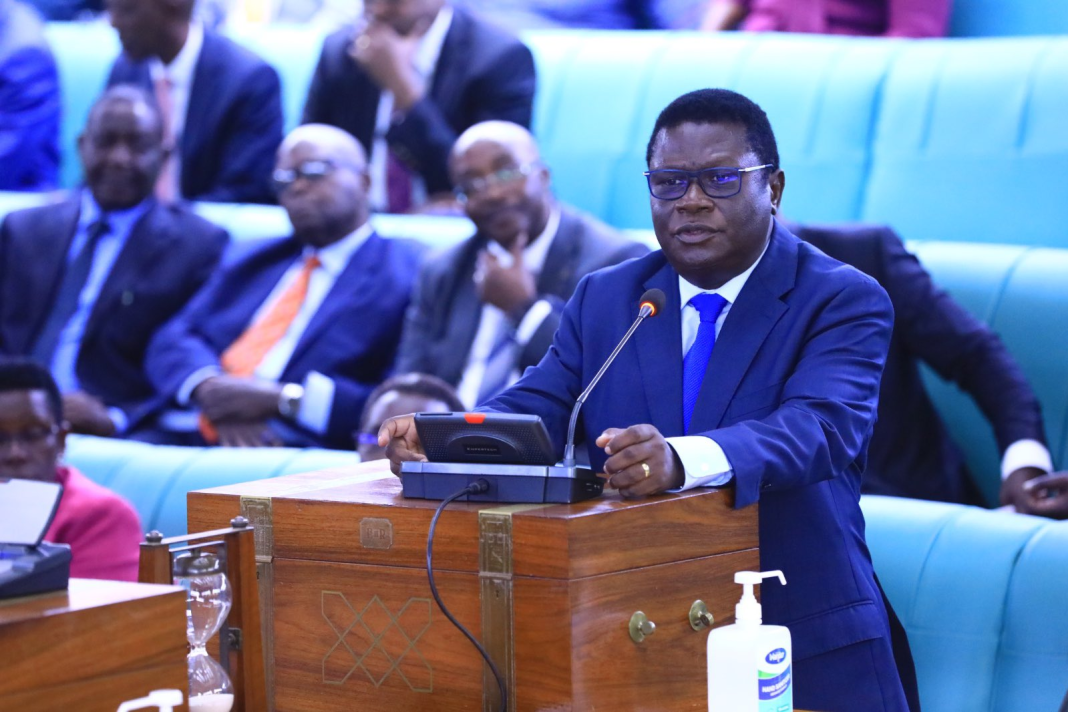
The Minister of Justice and Constitutional Affairs, Norbert Mao has tabled before Parliament the Political Parties and Organisations (Inter-Party Organisation for Dialogue) Regulations, 2025, a new statutory instrument aimed at enhancing cooperation, transparency, and accountability among political parties in Uganda.
The regulations, made under sections 20 and 28 of the Political Parties and Organisations Act, Cap. 178, seek to formalize the structure, operations, and code of conduct of the Inter-Party Organisation for Dialogue (IPOD).

Presenting the instrument to the House, Minister Mao said the framework is designed to strengthen multiparty democracy through structured dialogue and mutual respect among political players.
“These regulations provide a clear legal foundation for IPOD’s operations and ensure that every registered political party has a seat and a voice at the table,” Mao said.
He added, “We believe in an inclusive, transparent, and peaceful political process where dialogue replaces confrontation.”

Under the new regulations, political parties that are members of IPOD will be required to participate in at least two-thirds of the organization’s annual activities, including summits, council meetings, and business committee sessions. Non-compliance may affect a party’s eligibility for funding under section 14(2) of the Political Parties and Organisations Act.
“Participation in dialogue is not just a right it’s a responsibility,” Mao emphasized.
He added, “No political party should isolate itself from national conversations that shape governance, peace, and development.”
The regulations establish three key organs of IPOD; the Summit, the Council and the Secretariat. The Summit, composed of party leaders and secretaries general, will serve as the highest decision-making body, while the Council of Secretaries General will oversee implementation and coordination of IPOD programs. Leadership of both organs will rotate every two years among member parties in alphabetical order.
The regulations also include a comprehensive Code of Conduct, which outlines principles and objectives to guide member parties. These include promoting democracy, good governance, gender equity, and respect for human rights; encouraging peaceful political competition; and fostering cooperation beyond partisan boundaries.
“We are setting a standard for political conduct that values dialogue over division. These rules will help political parties engage constructively, strengthen institutions, and build trust across Uganda’s political spectrum,” Mao told Parliament.
The instrument further provides for the creation of specialized committees including Research and Policy, Conflict Resolution and Mediation, and Implementation to help IPOD achieve its objectives and ensure decisions are followed through. A bi-annual audit of IPOD’s activities will also be conducted to promote accountability and transparency.
“This is not just about meetings and statements. It is about measurable results, dialogue that leads to reforms, cooperation that leads to peace, and engagement that strengthens our democracy,” Mao added.