The Opposition has rejected the proposed Protection of Sovereignty Bill, 2026, saying it is unnecessary, legally redundant and potentially harmful to Uganda’s democratic and economic environment.
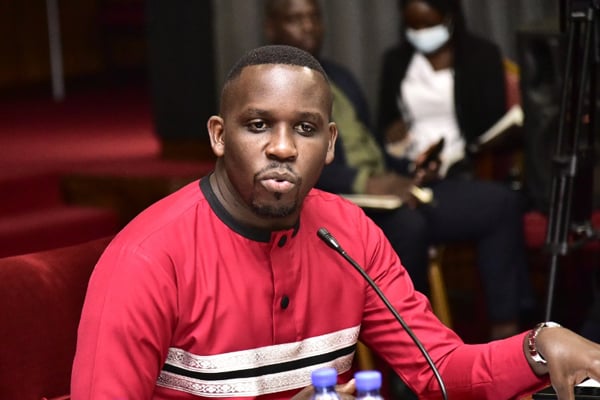
Appearing before a joint parliamentary committee on April 24, 2026, Leader of the Opposition Joel Ssenyonyi argued that the Bill duplicates provisions already covered under existing laws, including the Penal Code Act, Anti-Money Laundering Act, Public Finance Management Act and the NGO Act.

“We have a plethora of laws that touch critical concerns that anyone would have; the Penal Code Act captures a number of those provisions, so it is redundant,” Ssenyonyi said.
He explained that offences such as treason, illicit financial flows and unlawful foreign funding are already addressed within the current legal framework.
“If a foreign embassy tries to fund a violent coup, the Penal Code Act already criminalises treason. If someone launders illicit foreign money, the Anti-Money Laundering Act already mandates declarations of source of funds,” he added.

Ssenyonyi warned that the Bill introduces stringent provisions that could negatively affect Uganda’s economy and civic space, citing a clause that caps foreign funding at Shs400 million. Receiving funds beyond this limit without ministerial approval would attract penalties of up to 20 years in prison.
He also raised concerns over Clause 2(2), which criminalises influencing the public against government policy, arguing that it undermines the constitutional role of the Opposition.
Separately, the Uganda People’s Congress, through its General Secretary Francis Ebil, called for the withdrawal of the Bill, describing it as unconstitutional.
“By reclassifying Ugandans as purely foreigners based on residence, the Bill is bypassing the 1995 Constitution, which guarantees that every person who was a citizen at the commencement of the Constitution remains a citizen,” Ebil said.
Ebil criticised the proposed penalties, including jail terms of up to 20 years and fines reaching Shs4 billion, arguing that they violate protections against cruel, inhuman or degrading punishment.
He further warned that vague definitions such as ‘economic sabotage’, ‘foreigner’ and ‘foreign agent’ could be abused to suppress press freedom and freedom of expression.
“A New Vision journalist could be prosecuted for publishing an accurate report if the report leads to a drop in company shares or investor confidence,” he cautioned.
Despite the Opposition’s concerns, some legislators on the committee called for further scrutiny rather than outright rejection of the Bill.
Bugabula County North MP John Teira said the proposed law is intended to address subversive activities against Uganda’s interests rather than broadly target citizens.
Meanwhile, Kibale County MP Richard Oriebo argued that consolidating sovereignty-related provisions into a single law could be more effective than amending multiple existing statutes.