Finance Minister Henry Musasizi and the World Bank have agreed that all new development projects in Uganda must go through the Public Investment Management System (PIMS) before they can be considered for approval and financing by the Government and the World Bank Board.
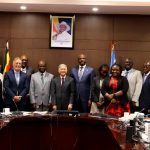
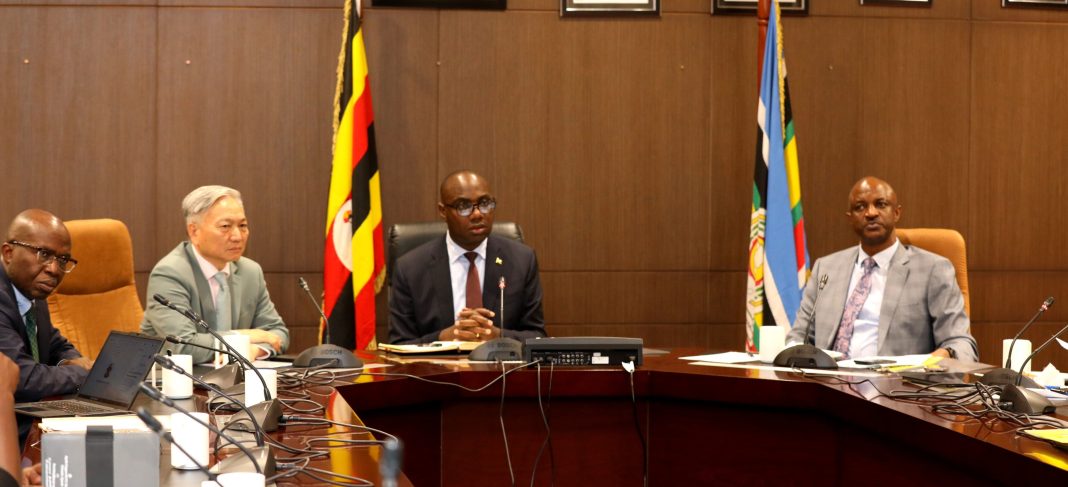
The agreement was reached during a meeting between Musasizi and Qimiao Fan, the World Bank Division Director for Uganda, Kenya, Somalia and Rwanda, at the Ministry of Finance, Planning and Economic Development ahead of the 2026 Annual Meetings of the International Monetary Fund and World Bank Group scheduled for October.

The move is intended to ensure that projects are properly prepared, aligned with Uganda’s development priorities, implemented within approved budgets and timelines, and deliver measurable results on the ground.
Musasizi said Uganda must strengthen project preparation and appraisal before committing public and development partner resources, arguing that better adherence to PIMS would also address delays in the use of available financing.
“We are looking at one agenda of efficiency and effectiveness and this will greatly improve with PIMS. This will also cure the challenge of poor absorption of funds. We have to do the right job at every stage so that we see impact on the ground,” Musasizi said.

Uganda’s PIMS provides a structured process for public investments, covering project identification and planning, pre investment appraisal and selection, implementation and monitoring, and completion and handover. The system is designed to ensure that projects are assessed before being included in the country’s public investment programme.
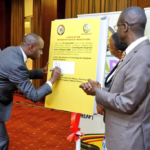
The Ministry of Finance has also developed the Integrated Bank of Projects, an online platform that serves as a central repository for information on public investment projects and tracks them through their lifecycle.
Musasizi said projects submitted for financing must also be linked to Uganda’s national development agenda, particularly areas Government has identified as critical to economic transformation.
“I emphasized that all projects must be aligned with the national development agenda. The current priorities of Government are the standard gauge railway, electricity generation and transmission, irrigation and value addition,” he said.
Musasizi’s position comes as Uganda and the World Bank seek to improve implementation of a large development financing portfolio. Figures presented during a recent Country Portfolio Performance Review put Uganda’s active World Bank portfolio at about US$4.62 billion across 18 operations, with approximately US$1.48 billion already disbursed.
The portfolio review also identified delays linked to procurement, project designs, land acquisition, counterpart funding, approvals and contract management as some of the issues affecting implementation.
Permanent Secretary and Secretary to the Treasury Ramathan Ggoobi said Government was working to establish whether delays were primarily caused by financing constraints or management challenges, with the intention of developing specific improvement plans for individual projects.
Fan, meanwhile, explained how the World Bank allocates resources and challenged Uganda to streamline its internal procedures to reduce the time taken between project preparation, Government approval, negotiations, procurement and implementation.
The World Bank official also stressed the importance of accelerating inclusive economic growth and job creation as Uganda seeks to absorb thousands of young people entering the labour market every year.
The World Bank has been expanding its support to Uganda, with Fan saying recently that the Bank had added almost US$2 billion in new financial commitments to the country over the past two years. The Bank’s current Country Partnership Framework is aligned with Uganda’s Tenfold Growth Strategy and the National Development Plan.
The meeting also reviewed progress on a proposed US$500 million Development Policy Operation intended to support Uganda’s Tenfold Growth Strategy.
Other projects discussed under the International Development Association’s IDA 21 pipeline included UgIFT 2.0, the revised INVITE programme and infrastructure development in Greater Kampala.
The push to make PIMS compliance a requirement comes as the World Bank and Government seek to move financing more quickly from approval to actual implementation. At the recent portfolio review, the World Bank reported that six operations approved in the 2025/26 financial year had added nearly US$2 billion to Uganda’s portfolio but had barely started disbursing.
The World Bank said approximately US$3.1 billion remains available for disbursement under Uganda’s current portfolio, creating pressure for Government agencies to address implementation bottlenecks and ensure approved projects move from preparation to procurement and execution within the required timelines.
The World Bank supported PIM PLUS programme is also being implemented in Uganda to strengthen public investment and asset management. The US$200 million operation focuses on improving efficiency, accountability and sustainability in public investment in line with the National Development Plan IV and the Tenfold Growth Strategy.
The agreement therefore puts greater emphasis on project readiness before financing is committed, with both Uganda and the World Bank seeking to reduce delays, improve absorption of development funds and ensure that approved investments translate into completed infrastructure and other services.