Stanbic Bank
Stanbic Bank
20 C
Kampala
Stanbic Bank
Stanbic Bank
Home Blog Page 10

Equity Group records historic KShs75.5b profit amid regional expansion 

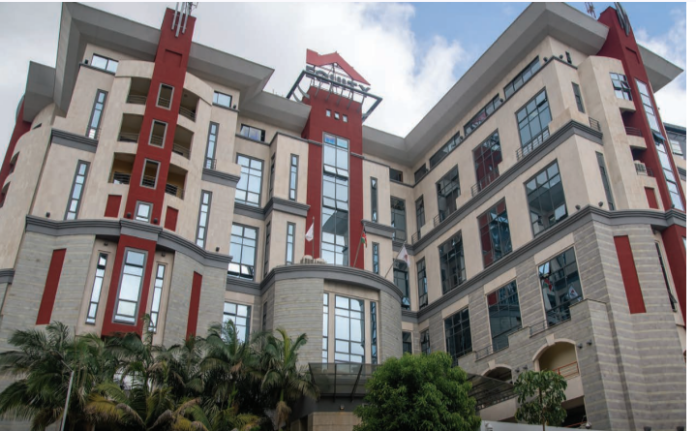
Equity Bank headquarters - Nairobi.

Equity Group Holdings Plc has reported its strongest financial performance on record, posting a 55 percent increase in profit after tax to KSh75.5 billion for the year ended 2025, up from KSh48.8 billion the previous year.

The Group attributed the growth to a successful strategic transformation, stronger regional contributions, and improved operational efficiency. Its balance sheet expanded to KSh1.97 trillion, while customer deposits rose to KSh1.46 trillion and net loans grew to KSh882.5 billion. The lender closed the year with 22.4 million customer accounts, supported by an expanded regional and digital network.

Revenue performance remained robust, with net interest income rising 17 percent to KSh126.9 billion, while non funded income grew to KSh90.8 billion. Total income increased to KSh217.7 billion. Efficiency gains saw the cost to income ratio improve to 51 percent from 58.2 percent, driven by increased use of digital channels and tighter cost management. Over 98 percent of transactions were conducted outside branches, with 88.4 percent processed digitally.

Loan loss provisions declined by 28 percent as asset quality improved, with non performing loan coverage strengthening to 67.7 percent.

Commenting on the results, Group Managing Director and Chief Executive Officer James Mwangi said the performance reflects the strength of the Group’s transformation strategy.

“The 2025 performance reflects the success of our deliberate transformation into a diversified, regional financial services group. We delivered strong profit growth by expanding and deepening our income streams, improving efficiency across the franchise, and strengthening the quality of our balance sheet,” he said.

“Our regional subsidiaries now contribute about half of our banking profitability, demonstrating the value of our pan African footprint and the resilience that comes from diversification,” he added.

The Board has recommended a dividend of KSh5.75 per share, amounting to KSh21.7 billion, up from KSh16 billion paid the previous year.

Equity Bank Kenya Limited recorded a 63 percent rise in profit after tax to KSh39.2 billion, supported by strong growth in interest income and reduced funding costs. Shareholders’ funds rose to KSh136.2 billion, while returns on assets and equity improved significantly.

Regional subsidiaries delivered strong growth and now account for about half of the Group’s profitability. Operations in the Democratic Republic of Congo recorded a 58 percent increase in profit after tax, while Uganda posted a sharp 500 percent rise. Rwanda and Tanzania also reported solid gains, supported by loan growth and expanding balance sheets.

The Group’s insurance business, Equity Insurance Group, sustained strong momentum, with gross written premiums increasing by 75 percent to KSh9.17 billion and profit before tax rising by 36 percent to KSh2.0 billion.

Beyond financial performance, the Group reported significant investment in social impact and sustainability initiatives, committing approximately KSh99.5 billion during the year. Through the Equity Group Foundation, over one million entrepreneurs were trained and more than 500,000 small businesses accessed credit worth KSh401 billion.

The Foundation also supported education, agriculture, healthcare, and climate initiatives, including scholarships, farmer training, and the planting of millions of trees across the region.

Looking ahead, Mwangi said the Group will continue executing its Africa Recovery and Resilience Plan, with a focus on digital innovation, financial inclusion, and regional expansion.

“Our focus is to build a future ready institution that is scalable, secure and impact led. We are investing in next generation digital and AI enabled capabilities to enhance customer experience, strengthen risk management, and extend access to affordable financial services,” he said.

The Group aims to expand its footprint to 15 countries and serve up to 100 million customers by 2030, positioning itself as a transformation finance institution driving inclusive growth across Africa.

Stories Continues after ad

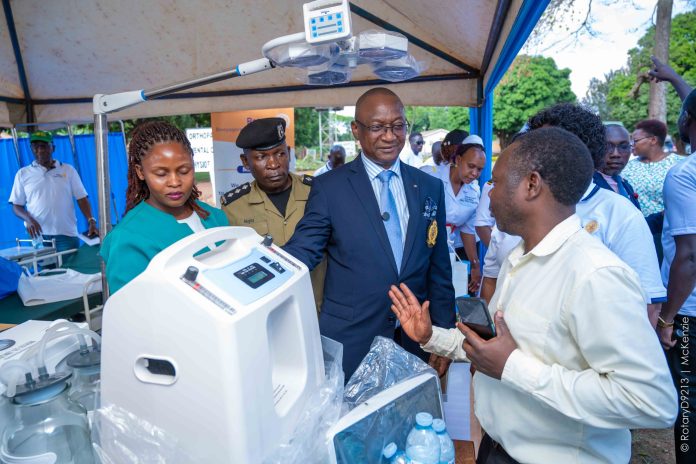
Rotary invests $35,000 in maternal and child health project at Masindi District Hospital

Rotary District 9213 Governor Geoffrey Martin Kitakule at the handover ceremony.

Masindi District Hospital has received a significant boost following a $35,000 investment by the Rotary Club of Bweyogerere Namboole and its partners to strengthen maternal and child health services and reduce preventable deaths among mothers and young children.

The project is funded through the Rotary Club of Bweyogerere Namboole in partnership with its International Rotary partners of the Rotary Club of Allschwil-Regio Basel D1980 and local partners Rotary Club of Seeta, Rotary Club of Masindi, D9213, D9214, and Rotary International.

The project focuses on improving the quality of healthcare services for mothers, newborns and children under five, while also empowering communities through disease prevention and better access to care.

Masindi District Hospital serves a wide population drawn from Buliisa District, Kiryandongo District, Hoima District, Luwero District and Nakaseke District, as well as refugees from Democratic Republic of the Congo and South Sudan. The facility handles referrals from across the region but has long faced challenges of inadequate equipment and overstretched services.

Under the new intervention, Rotary and its partners have delivered essential medical equipment to the hospital and supported training and capacity building for health workers and village health teams. The initiative is designed to improve service delivery, particularly in maternity and child health units where demand has remained high.

Hospital data indicates that limited access to appropriate equipment has forced many expectant mothers to travel long distances in search of care, a factor linked to maternal and child deaths that could otherwise be prevented.

The project is expected to benefit at least 6,000 women of reproductive age, 5,000 pregnant and breastfeeding mothers, 1,000 newborns and 3,000 children under five. It will also strengthen the capacity of 350 health workers and 30 village health teams, while supporting the efforts of Masindi District Local Government and the Ministry of Health Uganda.

The intervention will enhance access to quality healthcare, improve health awareness and contribute to a reduction in disease burden across the district and neighboring areas.

The official handover ceremony is being presided over by Rotary District 9213 Governor Geoffrey Martin Kitakule, with international partners participating virtually and local government leaders attending in person.

In addition to the maternal and child health project, Rotary has launched a separate $64,000 water initiative at the hospital aimed at improving sanitation, hygiene and reliable water access within the facility.

Speaking on the huge impact of such interventions, Kitakule said access to safe water and proper sanitation remains central to community health and development.

“Rotarians are transforming lives by ensuring that people, especially children and women, have safe water to drink and clean sanitation facilities,”he said.

“These improvements lead to better health, fewer waterborne illnesses and reduce the burden on women and girls who previously walked long distances in search of water,”he added.

He emphasized that strengthening water, sanitation and hygiene systems in health facilities is critical in preventing infections, particularly in maternity and surgical units, and in improving trust and efficiency in healthcare delivery.

The combined investment in maternal health services and water infrastructure is aimed at improving conditions at Masindi District Hospital and expanding access to lifesaving care for thousands of mothers and children across the region.

Stories Continues after ad

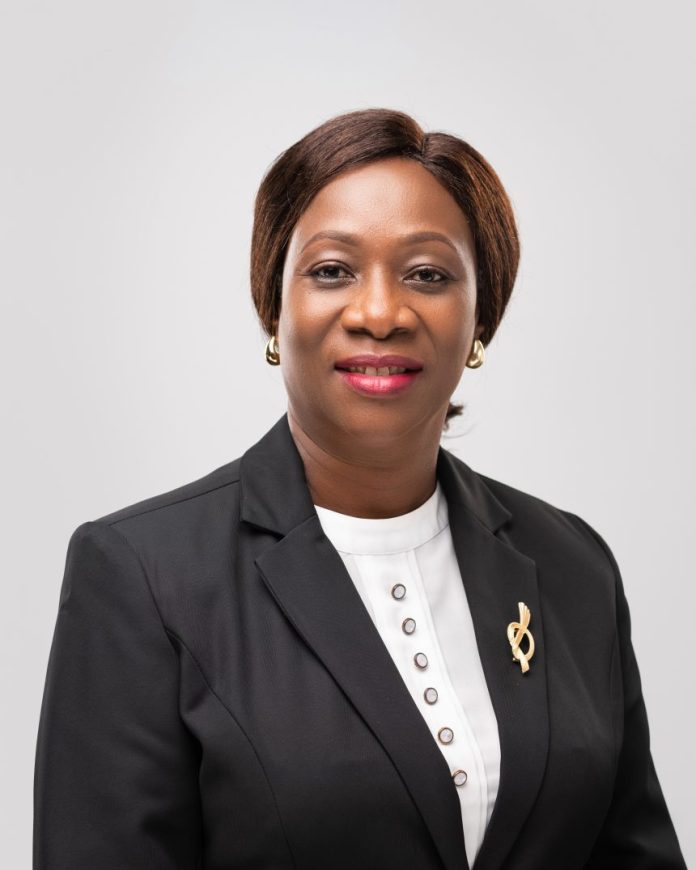
Equity Bank’s Wawulira calls for inclusive banking to address women’s financial needs 

Ms. Jael Christine Wawulira, Head of Customer Experience at Equity Bank Uganda.

The Head of Customer Experience at Equity Bank Uganda, Jael Christine Wawulira has urged financial institutions to design banking services that respond to the real-life needs of women and emphasized that customer experience is key to increasing women’s participation in the economy.

In her commentary, Wawulira noted that banking for women goes beyond access to accounts and loans, highlighting the need for services that reflect their daily realities and responsibilities.

“For many women, banking is not just about opening an account or taking a loan. It is about finding financial services that understand their realities, support their ambitions, and respond to the responsibilities they carry every day,” she said.

She explained that women engage with financial services differently depending on their life stage, profession and personal responsibilities, making it necessary for banks to tailor their products accordingly.

“A young professional woman may focus on accessing loans to support further education or career growth, while a single mother may prioritize flexible loans, savings plans or healthcare support for her children,” Wawulira said.

She added that simple adjustments in service delivery, such as providing private spaces for lactating mothers or prioritizing expectant mothers in queues, can significantly improve customer experience.

Wawulira also pointed out that women in small businesses, including market vendors and micro-entrepreneurs, require personalized support and clear communication to fully benefit from financial services.

“Many of these women depend on their businesses to support their families, and they value having a trusted person they can contact when they face challenges with their businesses or loan repayments,” she explained.

At the same time, she noted that women in formal employment often prefer fast and efficient digital banking platforms due to their busy schedules.

Despite these varying needs, Wawulira acknowledged that many women still face barriers in accessing financial services, particularly limited financial literacy and lack of collateral.

“Without clear information about financial products, it becomes difficult for many women, especially those in the informal sector, to fully benefit from the services available,” she said.

She further highlighted that cultural practices limiting women’s ownership of property continue to hinder their ability to secure loans, while mobility challenges also affect access to banking services.

To address these gaps, Wawulira called on financial institutions to invest in financial education, community engagement and inclusive product design.

“Providing financial education in simple language and, where possible, in local languages can help women better understand and use financial services,” she noted.

She cited initiatives by Equity Bank Uganda such as the Equi-Mama programme and the Abakyala Ku Ntiiko platform, which support women entrepreneurs through tailored financial solutions and shared learning experiences.

Wawulira stressed that empathy must be central to customer service, urging institutions to train staff to treat all customers with dignity and respect, while also involving women in product development.

“When customers feel respected and understood, they develop greater trust in financial institutions,” she said.

She added that creating inclusive banking environments encourages women to save, invest and grow their businesses, ultimately contributing to broader economic development.

“When women feel supported, they are more likely to participate confidently in the financial system, strengthening not only their financial independence but also the growth of families, communities and national economies,” Wawulira emphasized.

As March marks the celebration of Women’s Month, Wawulira called on women to continue investing in themselves and supporting one another.

“Every financial decision, whether small or big, contributes to building stronger communities and more inclusive economies,” she said.

Stories Continues after ad

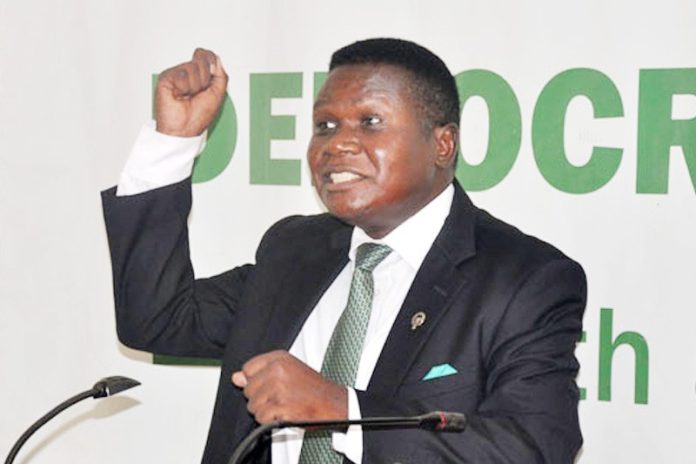
I repeat Anita Among is an accidental Speaker-Mao

Justice and Constitutional Affairs Minister, Nobert Mao.

Justice and Constitutional Affairs Minister Norbert Mao has repeated his controversial description of Parliament’s leadership, insisting that Anita Annet Among is an accidental Speaker and challenged critics to reflect on the circumstances that led to her rise.

Speaking at the Democratic Party (DP) headquarters on Balintuma Road, Mao defended his remarks, saying they have been widely misunderstood and taken out of context.

“When I said we have an accidental speaker, I saw a lot of rage. But the answer is in the dictionary. If you open a dictionary, ‘accidental’ means ‘unplanned, unintended’ unless they are saying there was an intention and there was a plan,” Mao said.

He added, “So, was there a plan that the late speaker should die? Was that an intention?”

Mao linked his argument to the death of former Speaker Jacob Oulanyah, whose passing in 2022 created a vacancy that eventually ushered Among into the top parliamentary seat.

“Unfortunately, we lost Jacob Oulanyah, so we got an accidental Speaker. It was not supposed to be that way,” he said.

The Laroo-Pece MP-elect emphasized that his decision to join the speakership race stems from dissatisfaction with the current leadership, saying he does not feel adequately represented.

He maintained that his comments are not personal attacks but rather a reflection of how the current leadership emerged.

“Some people have chosen to misunderstand it,” Mao said.

He added that the next Speaker should come in through a deliberate and competitive process rather than circumstance.

Mao, who is also president general of the Democratic Party, expressed confidence in his bid for the position in the 12th Parliament.

“We are going to take over that House in the name of the people,” he said.

He also pushed back against critics questioning DP’s political positioning, especially in light of its cooperation agreement with the ruling establishment.

“Now is opposition. And remember, they are the ones who have been saying that they married DP. So you married DP, but now that the position of Speaker is at stake, you say DP is opposition,” Mao said.

“They are saying we do not know anything about it, but that is a public document… because the position of Speaker is at stake, there is now denial,” he added.

Mao further hinted at a broader strategy in the unfolding race.

“Not all my cards are facing up. Many of my cards are facing down, and nobody knows them,” he said.

His remarks come amid an intensifying contest for the Speakership of Parliament, where he is positioning himself as a challenger to Among.

However, Among, the Bukedea District Woman MP rejected the accidental Speaker label and maintained that her election by over 400 Members of Parliament affirms her legitimacy.

Stories Continues after ad

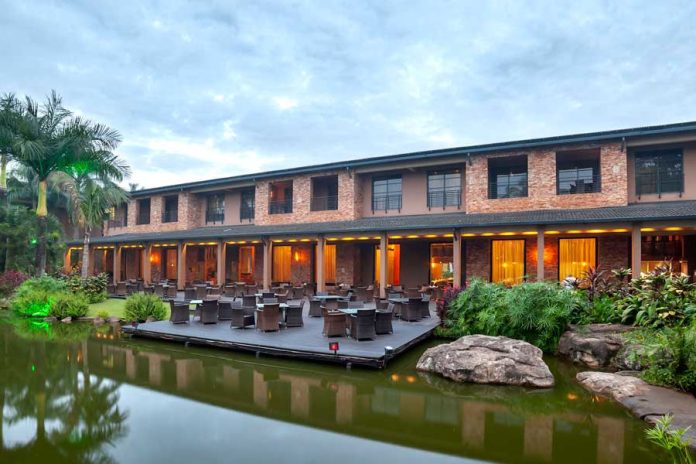
Speke Resort Munyonyo announces ultimate Easter Sunday celebration with brunch, live entertainment and family activities

Speke Resort Munyonyo.

Speke Resort Munyonyo has announced an exciting Easter Sunday celebration due on Sunday, 5th April, inviting families and friends to enjoy a day of fun, live entertainment and memorable moments at its scenic waterfront grounds.

The resort’s Easter Sunday Special offers a variety of activities and experiences designed for all ages, centered around its popular Bubbly Brunch at the Pool Pavilion from 12:00 pm to 4:00 pm. Guests will enjoy a sumptuous brunch accompanied by live band performances and a DJ, delivering vibrant music throughout the afternoon.

Children are in for a treat with a range of activities that include meeting the Easter Bunny, an Easter egg hunt, cookie counter, and a petting zoo. Tickets for adults are priced at Shs200,000, while children under 13 are admitted at Shs100,000.

At the Nyanja/Lake Terrace, from 1:00pm to 4:00pm, families can relax with lunch while enjoying additional attractions such as pony pampering, a kid’s movie night, a bonfire with marshmallows and impressive acrobatic performances.

Meanwhile, the Lake Grill area will offer a lively atmosphere with a DJ, acrobats, a kids’ carnival, and continued access to the petting zoo; entry here is Shs5,000 per person.

For adults seeking a more relaxed setting, the Viking Bar will host a cocktail happy hour to complement the day’s festivities.

Speke Resort Munyonyo encourages guests to secure reservations early as spaces are expected to fill up quickly. 

The resort is also offering attractive room rates starting from $139 for a Full Board Single Deluxe package, inclusive of the Easter Sunday Brunch.

This Easter, Speke Resort Munyonyo promises a blend of leisure, entertainment, and seasonal cheer perfect for families looking to make the most of the holiday weekend.

Stories Continues after ad

UDB, Islamic University loans push gov’t guarantees to Shs488b

The Uganda Shilling 50,000 domination note.

The Ministry of Finance has revealed that loans borrowed by Uganda Development Bank (UDB) and Islamic University in Uganda have pushed government-guaranteed exposure to $130.1 million (Shs 488.1 billion), highlighting growing fiscal obligations tied to the two institutions.

According to the Ministry, the 11 guaranteed loans had a disbursed and outstanding balance of US$76.3 million by the end of December 2025.

“This means that only about 58.7 percent of the guaranteed amount had been drawn down and outstanding by end of December 2025,” the Ministry explained.

The report further shows that the outstanding guaranteed amount increased over the last quarter of 2025.

“Between September and December 2025, the outstanding guarantee increased by $3.41 million, representing a 4.7 percent increase,” the Ministry noted.

Officials attributed the rise mainly to a new disbursement from an international lender.

“The increase was mainly due to a new disbursement of about $5.15 million from the European Investment Bank, which had no outstanding balance in September 2025,” the Ministry stated.

It added that the new inflow offset repayments made on other loans during the same period.

“This addition outweighed scheduled repayments by other creditors. Without this new disbursement, the outstanding balance would have fallen because several loans made scheduled repayments,” the statement reads.

Government guarantees are treated as contingent liabilities and can become direct obligations if borrowers fail to repay, posing potential risks to the national budget.

Stories Continues after ad

Court nullifies Computer Misuse Act over constitutional violations

The Constitutional Court of Uganda has nullified key provisions of the Computer Misuse Act, including the 2022 Amendment, ruling that they violate the Constitution by unjustifiably restricting fundamental rights. 

The judgement was delivered on March 17, 2026, by a bench sitting in Kampala.

The petition was filed by a coalition of civil society and media organisations, including Unwanted Witness Uganda, the African Centre for Media Excellence, the Editors’ Guild of Uganda, and individual journalists and activists such as Agather Atuhaire and former opposition leader Winnie Kiiza. They challenged the Attorney General over the law’s impact on freedom of expression, access to information, and civic space.

Eagle Online couldn’t get a comment from Ms. Atuhaire as her phone number was off

The Computer Misuse Act was originally enacted in 2011 to criminalise cyber offences, including unauthorised access to computer systems, electronic fraud, and cyber harassment. 

In 2022, Parliament passed an amendment broadening the law to criminalise the sending or sharing of malicious, false, or unsolicited information online, misuse of social media under a false identity, and unauthorised sharing of information about children.

The petitioners argued that several provisions, particularly those introduced in 2022, were vague, overly broad, and could criminalise ordinary online expression, investigative journalism, and legitimate civic engagement. They maintained that the law infringed on Article 29 of the Constitution, which guarantees freedom of speech and expression.

The government, represented by the Attorney General, defended the law, saying the measures were necessary to protect public order, national security, and citizens from cybercrime. They argued that the law provided legal tools to tackle online offences in an increasingly digital society.

In its ruling, the Constitutional Court sided with the petitioners, noting that the law’s provisions failed to meet constitutional standards for clarity, proportionality, and protection of fundamental freedoms.

The judgement effectively invalidates the legal basis for prosecutions under the challenged sections.

Civil society actors hailed the ruling as a victory for digital rights, saying it protects journalists, activists and ordinary citizens from arbitrary criminalisation online.

The decision may prompt Parliament to revise the law to balance the regulation of online conduct with constitutional protections.

Stories Continues after ad

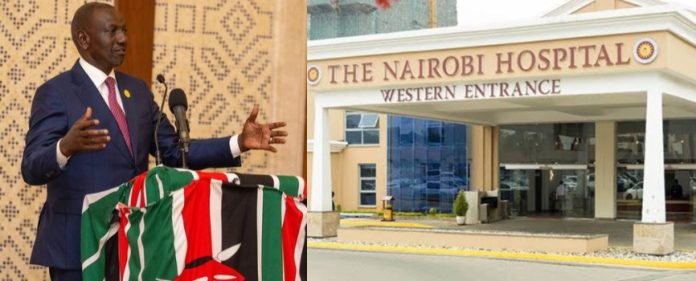
Ruto intervenes in governance crisis at Nairobi Hospital

William Ruto has intervened in the ongoing governance and financial challenges affecting Kenya Hospital Association, the body that owns and manages Nairobi Hospital following appeals from doctors, members of the association and patients.

In a press release issued on Monday, Hussein Mohamed said the President had received several written memoranda from stakeholders raising concerns about disputes and internal wrangles that could affect the hospital’s operations and patient care.

“These appeals raised serious concerns about the potential impact of longstanding governance and financial challenges on patient care, clinical governance and the hospital’s operational stability,” Mohamed said.

According to Mohamed, the concerns mainly relate to disputes over membership of the Kenya Hospital Association, contested board elections and annual general meetings, allegations of conflicts of interest and mismanagement, as well as ineffective dispute resolution mechanisms that have resulted in mounting litigation.

“These concerns paint a troubling picture for a hospital that has long been regarded as one of the premier healthcare institutions in Kenya and the region,” he added.

Established in the 1950s, Nairobi Hospital serves more than 290,000 patients annually, operates six satellite centres and works with more than 700 specialist doctors while also training health professionals who serve across Kenya and the region.

Mohamed noted that President Ruto accepted the role of Patron of the Kenya Hospital Association in 2023 after being nominated by the association.

“It is therefore in both his capacity as Patron of the Association and as President of the Republic of Kenya that President Ruto was briefed and appealed to by concerned stakeholders regarding the situation facing Nairobi Hospital,” Mohamed explained.

Efforts to resolve the crisis have included a series of consultative meetings convened by Felix Koskei with board members, doctors and other stakeholders.

“In total, no fewer than fourteen meetings were held to facilitate dialogue and encourage resolution of the disputes affecting the institution,” Mohamed said.

He added that the engagements resulted in the reconstitution of the hospital’s Board of Management and agreement on a five point reform agenda aimed at restoring stability and strengthening governance.

“The Government will continue to support all necessary steps within the law to restore stability, strengthen governance and ensure that Nairobi Hospital continues to provide high quality healthcare services to Kenyans and patients from across the region,” Mohamed said.

Stories Continues after ad

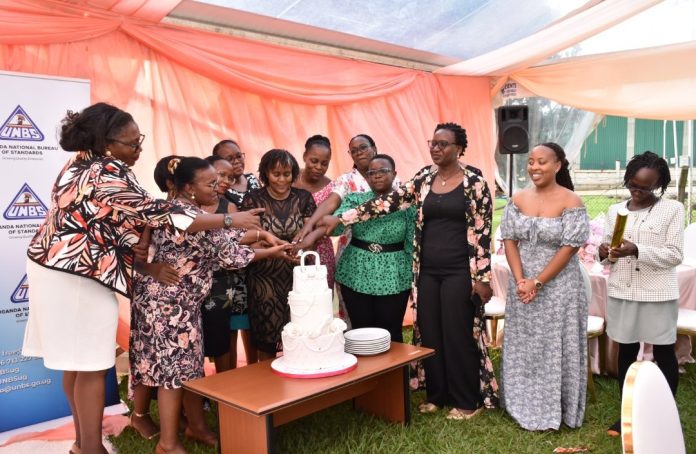
UNBS celebrates Women, calls for greater gender inclusiveness through standards

UNBS women staff at the event.

The Uganda National Bureau of Standards (UNBS) has celebrated the contribution of women within the institution while emphasizing the importance of standards in promoting gender inclusiveness and workplace equality.

The celebration, held at the UNBS head office in Bweyogerere, formed part of activities to mark International Women’s Day and recognized the role women play in advancing standards, quality assurance and innovation in Uganda.

Speaking during the event, UNBS Executive Director James Kasigwa applauded the dedication and professionalism of women working at the Bureau, noting that their talent and commitment continue to contribute significantly to the institution’s achievements.

“We celebrate the talent, passion and commitment of women at UNBS whose work continues to play a key role in advancing standards, quality assurance and innovation in Uganda,”Kasigwa said.

He also highlighted the 2026 International Women’s Day theme, Balance the Scales, explaining that the concept goes beyond the scientific measurement work commonly associated with standards.

“Balancing the scales goes beyond metrology. It calls for collective action to ensure that women and girls are safe, respected and empowered to shape their own lives,”he said.

Kasigwa further encouraged women at UNBS to champion the adoption and use of international standards that promote diversity, gender equity and workplace wellbeing across both government institutions and private organizations.

The UNBS boss also reaffirmed the Bureau’s commitment to strengthening gender equality and staff welfare initiatives, including the establishment of the UNBS Nurture Nest facility and the development of the UNBS Gender Action Plan 2026–2030 aimed at deepening inclusiveness within the institution.

Guest speaker Maggie Kigozi urged women to prioritize financial independence, encouraging them to invest and build sustainable sources of income.

Kigozi emphasized that financial empowerment remains a critical pillar in enabling women to make independent decisions and contribute meaningfully to national development.

Stories Continues after ad

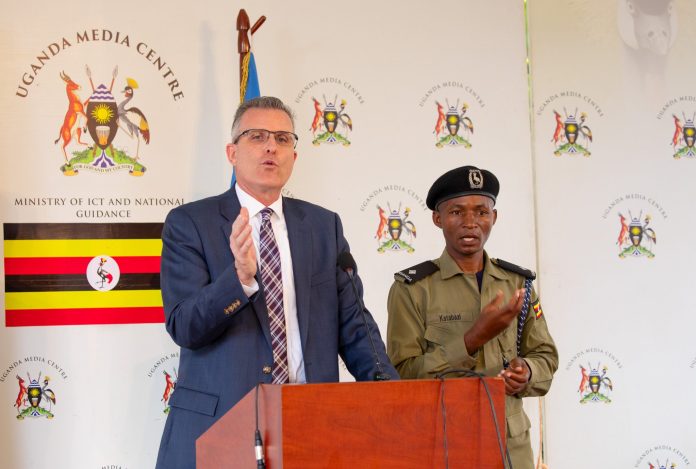
Police, US Embassy warn Ugandans over visa fraud as 43 arrested for using forged documents

The Uganda Police Force and the United States Embassy in Uganda have warned Ugandans against falling victim to visa fraud schemes, revealing that at least 43 people have already been arrested for attempting to obtain United States visas using forged documents.

The warning was issued during a joint press briefing in Kampala addressed by police spokesperson Kituuma Rusoke and the Senior Regional Security Officer at the United States Embassy in Uganda, James Bloomer.

Rusoke said security agencies are increasingly handling cases of fraud and impersonation involving individuals posing as intermediaries who promise to help people process visas, secure jobs or access government services in exchange for money.

“The general state of security across the country remains calm and stable, but we continue to intensify the fight against crime in all its forms. Visa fraud is part of a broader pattern of general fraud and impersonation offences that are increasingly being reported in Uganda,”Rusoke said.

Rusoke warned that many conmen present themselves as officials from government institutions, ministries, non governmental organisations, banks and telecommunications companies in order to gain the trust of unsuspecting victims.

“Many Ugandans are currently grappling with a wave of conmen and impersonators who present themselves as intermediaries or fixers. These criminals often target people who are unfamiliar with official processes, those in urgent situations, and individuals who are desperate for opportunities,” he said.

According to the police spokesperson, the fraudsters often use forged identification cards, fake introduction letters and unofficial phone numbers or social media accounts to appear legitimate.

“In some cases they even use the names and photographs of real officers or prominent individuals to deceive their victims. Once they receive money, they either disappear completely or continue demanding additional payments, leaving victims embarrassed and afraid to report the matter,” Rusoke added.

He emphasized that genuine public officials do not demand money to perform their lawful duties.

“If someone approaches you privately, asks you to keep the matter secret and demands cash facilitation to fix a file, secure a job, process a visa or obtain a grant, treat this as a serious warning sign of fraud,” he said.

Rusoke urged the public to always verify the identity of anyone claiming to represent government institutions or security agencies before making payments or sharing personal information.

“We understand that many victims feel embarrassed and fear being blamed. However, we encourage anyone who has been defrauded to come forward and report the matter. You are not a criminal. The person who abused your trust is,” he said.

During the same briefing, Bloomer revealed that dozens of Ugandans had been intercepted while attempting to apply for visas using forged documents.

“Since July 2025, we have had forty three people who tried to use some sort of fake document to obtain a visa to go to the United States. Those forty three people were stopped at the embassy and handed over to Ugandan police forces for prosecution,” Bloomer said.

He stressed that the United States welcomes legitimate travelers from Uganda for tourism, business and education, but warned that submitting false documents automatically disqualifies applicants and could lead to arrest.

“We encourage the people of Uganda who want to visit the United States to obtain a visa, but you must understand the process and follow the regulations. When you apply for a visa, please do not submit false documents because that will prevent you from getting a visa,”Bloomer said.

Bloomer also cautioned Ugandans against hiring agents or middlemen to help them obtain visas.

“This is a process between you and the embassy. You do not need to hire somebody to help you acquire a visa. Many people you might hire will not give you the right answers,” he said.

He further warned applicants against paying visa bonds before they are officially informed by embassy officials.

“The person who interviews you will tell you how much you have to pay for the visa bond. Please do not pay before that. There are people out there trying to separate you from your money,” Bloomer said.

Police said investigations into fraud and impersonation cases are ongoing as authorities intensify efforts to dismantle criminal networks targeting Ugandans seeking travel opportunities abroad.

Stories Continues after ad