Stanbic Bank
Stanbic Bank
27.3 C
Kampala
Stanbic Bank
Stanbic Bank
Home Blog Page 11

Gov’t targets 10.4% growth towards middle-income status

The government of Uganda has set its sights on accelerated economic growth in the 2026/27 financial year, with the finance ministry projecting a 10.4 percent expansion as it positions the country for a decisive leap toward upper middle-income status.

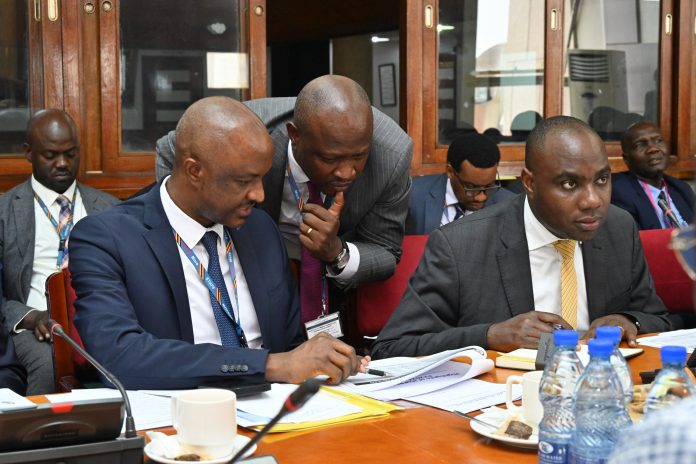
Briefing Parliament’s Budget Committee on the National Budget Framework Paper for FY 2026/27, State Minister for Finance in charge of General Duties Henry Musasizi said the coming financial year presents a critical moment for the economy.

“Financial year 2026/27 is Uganda’s opportunity to fast-track the qualitative leap to upper middle-income status,” Musasizi told legislators.

Accompanied by the Permanent Secretary and Secretary to the Treasury, Ramathan Ggoobi, the Minister said Uganda recorded GDP growth of 6.3 percent in FY 2024/25, with growth for the current FY 2025/26 projected at between 6.5 and 7.0 percent.

He said economic expansion is expected to accelerate significantly in the next financial year.

“The economy is projected to grow by 10.4 percent in FY 2026/27, increasing its size to Shs290.2 trillion, equivalent to $76.7 billion,” Musasizi said.

According to the Minister, the FY 2026/27 budget will be anchored on the Fourth National Development Plan, with a long-term objective of expanding the economy tenfold by 2040 through doubling GDP every five years.

“The budget will be guided by the aspiration to expand the size of the economy tenfold before 2040, starting by doubling GDP every five years as programmed under NDP IV,” he said, adding that the strategy will be driven by sustained investments in ATMS sectors and key economic enablers.

Musasizi acknowledged that key reforms remain necessary to unlock the projected growth, including eliminating budget leakages, curbing corruption, improving cash management, strengthening sovereign credit ratings and diversifying sources of development finance.

He further revealed that the preliminary resource envelope for FY 2026/27 stands at Shs69.399 trillion, down from Shs72.376 trillion in the current financial year.

Earlier, Musasizi and the Minister of State for Planning, Amos Lugoloobi, presented Budget Framework Papers for Vote 008, the Ministry of Finance, Planning and Economic Development, and Vote 130, Treasury Operations, to the Finance Committee of Parliament.

The Finance Ministry’s budget for FY 2026/27 is estimated at Shs2,693.40 billion, down from Shs2,796.77 billion in the current year, largely due to the reduced national resource envelope.

Musasizi said Vote 130 has been allocated Shs28,264.652 billion to cater for debt servicing, redemptions, and other statutory obligations, as the government seeks to maintain fiscal stability while pursuing ambitious growth targets.

Stories Continues after ad

Museveni orders cancellation of all land titles in Kitubulu forest reserve

President Yoweri Kaguta Museveni has ordered the cancellation of all land titles issued in the Kitubulu Central Forest Reserve, citing environmental protection concerns and corruption that has led to massive forest loss in the country.

In a directive dated December 23, 2025, and addressed to the Minister of Water and Environment, Hon. Sam Cheptoris, the President described Kitubulu Central Forest Reserve as a critical ecological zone that must be protected at all costs.

“Kitubulu Central Forest Reserve is a vital remnant of the lowland forests surrounding Lake Victoria, filtering pollutants and silt that endanger the Lake Victoria basin. Preserving that Forest Reserve is important for biodiversity and ecosystem conservation and for protecting the Lake Victoria basin; therefore, it must be protected at all costs,” Museveni said.

The President expressed deep concern over the continued destruction of Uganda’s natural forests, laying the blame squarely on corruption within institutions mandated to protect them.

“The National Forestry Authority was established in 2004 to protect forests, yet between 2004 and 2025, the country lost 1.1 million hectares of natural forest cover under its watch. Why? Because of corruption and collusion in illegal activities,” Museveni noted.

Museveni cited past scandals within the National Forestry Authority as evidence of entrenched corruption undermining conservation efforts.

“Do you remember Damian Akankwasa, the former Executive Director of the NFA who kept Shs900 million under his bed? What was the source of that money? Collusion with traders to illegally cut high-value trees from the natural forest reserve, which he was mandated to protect,” he stated.

Addressing claims that he had previously approved developments within the forest reserve, Museveni said any such approvals were based on misleading information.

“I have been informed that I approved the development of a shopping mall, hotel and a mini city at Kitubulu. This was based on wrong information,” the President said.

He directed the Minister of Water and Environment to work with other government agencies to relocate investors away from protected areas.

“Liaise with the Prime Minister, the Minister for Lands, the Uganda Investment Authority and the Uganda Land Commission to get our investors alternative land outside protected areas,” Museveni instructed.

The President then issued a firm directive to reverse all land allocations within the forest reserve and halt all destructive activities.

“This is, therefore, to direct you to cancel all titles issued in the Kitubulu Central Forest Reserve. Ensure that the cutting of trees stops immediately,” he ordered.

Museveni also commended Entebbe Mayor Fabrice Rulinda for opposing encroachment on the forest.

“I salute the Entebbe Mayor, Fabrice Rulinda, for standing against those selfish and senseless anti-environmental groups,” he said.

Stories Continues after ad

ISO seeks extra Shs218b to enhance intelligence, monitor PDM funds

Arthur Mugyenyi, Director General of Internal Security Organisation.

The Internal Security Organisation ISO has asked Parliament for an additional Shs218 billion in the 2026/27 financial year to strengthen intelligence collection and improve monitoring of the Parish Development Model PDM amid growing concerns over corruption and weak oversight.

The request was made by Martha Banura, the Deputy Director of Budget at ISO, while appearing before the Presidential Affairs Committee, chaired by Alex Byarugaba, to present the organisation’s National Budget Framework Paper.

“Our first key priority is enhanced intelligence collection. As an institution, we desire Shs195 billion, but the estimate for 2026/27 is only Shs118 billion, leaving us with a funding gap of Shs76.9 billion,” Banura told the committee.

She further revealed that ISO’s technical intelligence and cyber infrastructure remains severely underfunded.

“We require Shs51 billion to improve our technical intelligence collection and cyber infrastructure. However, out of this, only Shs2.5 billion has been provided, creating a shortfall of Shs49.06 billion,” she said.

Banura also highlighted a complete lack of funding for ISO’s role in monitoring the Parish Development Model.

“The other element is PDM operations, which require a recurrent budget of Shs23 billion. But there is no allocation at all, leaving the entire amount unfunded,” she added.

The disclosure triggered sharp reactions from lawmakers, who questioned ISO’s effectiveness in curbing corruption within the PDM, a flagship government programme aimed at lifting households out of poverty.

Benjamin Kamukama, the Member of Parliament for Ruhama County, criticised ISO for failing to act despite widespread reports of bribery in the distribution of PDM funds.

“We have been in campaigns and interacting with the masses on the ground. There is a lot of corruption. People are paying Shs 200,000 to access Shs1 million,” Kamukama said.

He cited Ntungamo district as an example, saying residents continue to suffer without clear channels for reporting abuse.

“In places like Ntungamo, we have not seen ISO intervention. People do not know where to report, yet these issues persist. Why is ISO not picking this information and forwarding it to the relevant authorities,” he asked.

Responding to the concerns, Ken Tumwebaze, the Director of Finance and Logistics at ISO defended the organisation’s reporting structure.

“The model of ISO reporting is different from that of other ministries and agencies. We report as directed, mainly to the President. Other institutions report to a wider group of stakeholders,” Tumwebaze explained.

However, Kamukama remained unconvinced, arguing that reporting without visible action defeats the purpose of intelligence work.

“Where are you reporting if we do not see action? We want results on the ground. People are still paying between Shs100,000 and Shs200,000. That is when we shall know that ISO and DISOs are doing their work,” he said.

Committee chairperson Alex Byarugaba backed the concerns, noting that while there is funding meant for monitoring the PDM, there is little evidence of corresponding action.

“If information is collected at district level and kept moving up the chain until it reaches the President, without immediate action on the ground, then it may not be helpful. These actors are on the ground and need timely intervention,” Byarugaba said.

Meanwhile, government records show that significant funds have already been released under the Parish Development Model in recent years. In the 2023/24 financial year, more than Shs1 trillion was allocated for PDM, largely for capitalising parish SACCOs across the country.

In the 2024/25 financial year, the Ministry of Finance released over Shs500 billion for PDM activities in the final quarter alone, while in the current 2025/26 financial year, an additional Shs259 billion was disbursed as part of the first tranche to verified PDM SACCOs nationwide.

Cumulatively, government releases under the Parish Development Model have surpassed Shs3 trillion since the programme’s launch, with most parishes having received multiple disbursements.

Despite these massive investments, lawmakers insist that weak monitoring and limited accountability continue to undermine the programme’s impact and raise questions over whether ISO’s request for additional funding will translate into tangible action against corruption at the parish level.

Stories Continues after ad

Education Ministry clears international schools to continue term two lessons and exams

Kampala International School of Uganda (KISU).
Stories Continues after ad

Basajjabalaba’s son declares bid to unseat Tayebwa as Deputy Speaker

Contenders for the slot of Deputy Speaker Thomas Tayebwa and Iddi Basajja. Hajji Basajja has declared to unseat Tayebwa.

In a new twist in parliamentary politics, Bushenyi Ishaka Municipality Member of Parliament Hajji Iddi Bassajja has officially declared his intention to contest for the position of Deputy Speaker of Parliament of Uganda for the 2026–2031 term, setting the stage for a potential contest with the incumbent, Thomas Tayebwa.

In an exclusive interview with Eagle Online, Hajji Iddi Bassajja confirmed that he is the official candidate for the position of deputy speaker.  “Please don’t quote anyone else. I am telling you verbatim, I am the official candidate for the position of deputy speaker. And should anyone else doubt, please confirm to them that I have said so and I am available and ready to confirm.”

Additionally, earlier on his X (formerly Twitter), Bassajja expressed gratitude to voters in Bushenyi Ishaka Municipality for entrusting him with a parliamentary mandate during the January 15, 2026, elections.

“Allow me to extend my sincere gratitude to the people of Bushenyi Ishaka Municipality for the trust and mandate you gave me on the 15th of January 2026, to elect me as your Member of Parliament,” he said.

The newly elected legislator said his decision to seek the powerful parliamentary position is driven by a desire to serve with humility, honesty, and national commitment.

“I hereby declare my candidature for the position of Deputy Speaker of the Parliament of Uganda 2026–2031,” Bassajja announced.

Bassajja, who is the son of prominent businessman Hajji Hassan Basajjabalaba, pledged a principled and inclusive leadership should he be entrusted with the office. He said his leadership would be firmly anchored in constitutionalism and the aspirations of Ugandans.

“I commit and pledge resolute, principled leadership anchored in inclusivity, constitutionalism, and the relentless pursuit of the aspirations of our people,” he said.

Stories Continues after ad

Rotary Club of Mapeera fellowship inspires vision, leadership and service in Rotary District 9213

Rotary District 9213 DG, Geoffrey Kitakule, speaking at the fellowship.

The Rotary Club of Mapeera recently hosted a vibrant fellowship that brought together Rotarians and friends for an engaging fireside chat focused on leadership service and the future of Rotary District 9213.

The gathering featured Rotary District Governor Geoffrey Martin Kitakule of District 9213, Managing Director and District Governor Nominee Kasi Fabian and Past District Governor Stephen Mwanje whose reflections inspired members to think deeply about responsibility opportunity and impact.

Addressing the fellowship, District Governor Kitakule spoke on the themes of privilege, possibility, and promise, describing charter membership and especially serving as a charter president as a rare honour.

He praised the Rotary Club of Mapeera as a uniquely positioned and widely admired new club noting that it is among the few to be chartered with the direct attention of a Rotary International President.

He reminded members that the club’s growing popularity and likability had opened doors of opportunity urging them to protect and build on that trust through meaningful service.

“It is rare for a sitting president or an international president to directly charter clubs Kitakule noted underscoring the responsibility that comes with such recognition,” Kitakule said.

Past District Governor Stephen Mwanje added a deeply personal and forward-looking perspective reflecting on vision and accountability in service. He recalled meeting Kasi Fabian years ago when both were young and new in their Rotary journey, yet united by a belief that they could help change lives in Uganda. That shared dream, he said, has since evolved into concrete plans for a welfare centre with the potential to save countless lives.

Mwanje emphasized that true impact is not measured by financial capacity but by the willingness to act. Rotary he said offers limitless opportunities to serve for those guided by imagination and compassion.

“We are not here just to live comfortably we are here to serve to make a difference and to be accountable for the gifts we have been given he told members,” Mwanje noted.

In his remarks Managing Director and District Governor Nominee Kasi Fabian highlighted Rotary District 9213’s long standing commitment to cancer awareness testing and treatment pointing to sustained leadership and active clubs as key drivers of impact.

He noted that Rotary’s strong public goodwill is rooted not in money or profit but in consistent visible service to communities.

“People respect Rotary because it improves lives openly, generously and in partnership with others he said, adding that the organisation’s credibility is built through compassion, collaboration and results,” Kasi said.

He added that the rotary’s credibility is built through compassion, collaboration and results.

The fellowship concluded on a note of renewed purpose with members encouraged to draw inspiration from Rotary’s values as they work together to shape the next chapter of service and leadership in District 9213. 

Stories Continues after ad

Nobert Mao, man to watch as he redirects one lead car back to Northern Uganda

MAN OF THE MOMENT: Justice Minister and Laroo Pece MP-elect, Nobert Mao.

The ‘president’ of the Democratic Party (DP) Nobert Mao, who recently won the Laroo Pece Member of Parliament seat, is the man of the moment as he is likely to be the political destabilizer in the distribution of top key government posts.

Mr Mao, who joined the government through political cooperation between the ruling National Resistance Movement (NRM) and Mao’s) DP faction is being viewed as a possible key replacement for the top slots as President Museveni realigns his cabinet. Uganda has four traditional regions: Eastern, Northern, Western, and Central (Buganda).

Traditionally, Western Uganda is well represented, with the head of the executive hailing from Ankole and the current Prime Minister hailing from Bunyoro.

In Eastern Uganda, two lead cars head in that direction, and all end up in Teso. Meanwhile, as per the 2026 voting pattern, Northern Uganda performed perfectly well, and with the exit of the Chief Justice as he retires, this leaves Northern Uganda without a lead car. Northern Uganda is also looking for a perfect replacement of late Speaker of Parliament, Jacob Oulanyah, and so will Nobert Mao be the man of the moment to redirect one of the lead cars from any of the three regions back to Gulu?

Will Mr. Mao take it from the Bunyoro woman or one of the two women from Teso? Sources say Mao has positioned himself well with Lubanga (God) in Gulu, that his role in the new government is smelt, and his role of unifying Acholi and the rest of Northern Uganda can’t be ignored.

Sources further say that, given his past legislation in the August House, Mao is vital in parliament as he is likely to oversee key constitutional amendments that require a sober mind.

Stories Continues after ad

Love by the Lake: Speke Resort Munyonyo unveils irresistible Valentine’s Day packages

Commonwealth Resort Munyonyo-lakeside.

Speke Resort Munyonyo has set the mood for love with carefully curated room packages designed to turn romance into a lasting memory on Valentine’s Day.

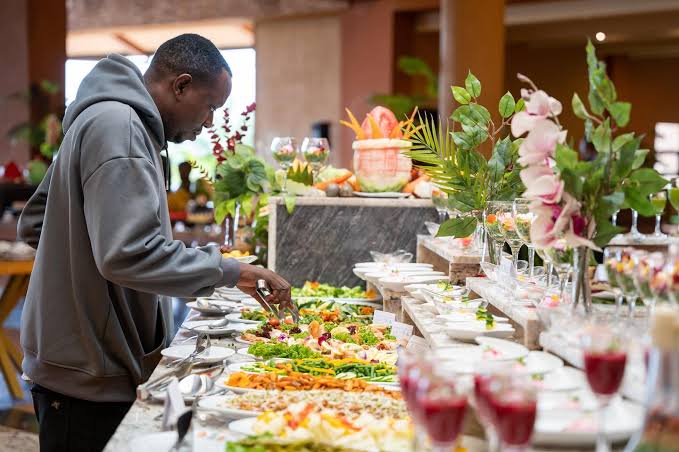
Positioned along the shores of Lake Victoria, the luxury resort is inviting couples to escape the bustle of the city and celebrate love in an atmosphere defined by elegance, comfort and unforgettable experiences.

In a Valentine’s message shared by the resort, Speke Munyonyo promises more than just a stay. 

“Escape with your special someone and enjoy our thoughtfully curated Valentine’s Room Packages, designed to turn every moment into a lasting memory,” the resort notes.

The management adds that from cozy stays and welcome treats to candlelit dinners and indulgent experiences, everything has been carefully planned to deliver the perfect romantic getaway.

For couples seeking a simple yet intimate experience, the Classic Room Package offers a one-night stay in a deluxe room, complete with welcome drinks on arrival and a buffet breakfast the following morning.

Priced at $149 (about Shs540,000), the package blends comfort and affordability, making it ideal for lovers who want a quiet night away surrounded by luxury.

Those looking to elevate the romance can opt for the Romantic Escape Package, which goes for $235 (about Shs850,000).

In addition to deluxe accommodation and welcome drinks, couples are treated to a romantic candlelit dinner, a hearty breakfast and late checkout, allowing them to linger longer in each other’s company without rushing back to routine.

At the top end is the Luxury Valentine’s Escape, priced at $300 (about Shs1.08 million), offering an indulgent experience tailored for couples who want to be fully pampered.

The package includes a deluxe room stay, welcome amenities, a special romantic couple’s massage, breakfast in bed, a candlelit dinner, and late checkout, wrapping love, relaxation, and luxury into one seamless experience.

Beyond the rooms, Speke Resort Munyonyo offers an unmatched Valentine’s atmosphere that extends across its expansive lakeside property.

Couples can stroll through lush gardens, enjoy breathtaking sunsets over Lake Victoria, unwind by the pool, or indulge in spa treatments designed to deepen relaxation and connection.

As evening falls, the resort’s elegant dining spaces and soft lighting transform the lakeside into a romantic sanctuary, perfect for celebrating love.

With its blend of scenic beauty, world-class hospitality and thoughtfully designed Valentine’s packages, Speke Resort Munyonyo continues to position itself as the ultimate destination for lovers.

For couples hoping to celebrate Valentine’s Day in style, by the calm waters of Lake Victoria, the resort promises an experience where every detail speaks the language of romance.

Stories Continues after ad

Education pioneer Namirembe Bitamazire granted official burial

RIP: Namirebe Bitamazire.

President Yoweri Kaguta Museveni has granted an official burial to the late former Minister of Education and Sports and Woman Member of Parliament for Mpigi District, Geraldine Namirembe Bitamazire in recognition of her exceptional service to Uganda.

The announcement was made by the Minister in Charge of the Presidency, Milly Babirye Babalanda, following Bitamazire’s death last week via X (formerly Twitter).

“I wish to inform you that His Excellency the President has granted an official burial to the fallen former Minister of Education and Sports and Woman MP Mpigi District, Hon. Geraldine Namirembe Bitamazire, who passed on last week,” Babalanda said in a statement.

She added that the National Organising Committee is working closely with the family to organize a befitting sendoff for the veteran leader, scheduled for Wednesday, January 21, 2026, in Butambala District.

According to the statement, the government’s decision reflects Bitamazire’s long and distinguished contribution to public service and national development.

“The National Organising Committee is liaising with the family of the deceased in organising a befitting sendoff for the former distinguished daughter of Uganda,” Babalanda said, extending condolences to the family, the people of Butambala, and the country at large.

Namirembe Bitamazire passed away at the age of 84. While her family confirmed her death, they did not publicly disclose the specific cause and noted only that she had been unwell.

Born on July 17, 1941, in Butambala, Central Uganda, Bitamazire built her career around transforming education in the country. She trained as a teacher and later rose through the ranks of the education sector, becoming the first African headteacher of Tororo Girls School. Her academic background included studies at Makerere University, where she earned qualifications that shaped her lifelong commitment to education policy and administration.

Her public service career spanned several decades and reflected a rare depth of experience across education and public administration. She served as Director at the East African Harbours Corporation between 1971 and 1973 before becoming a Senior Education Officer in the Ministry of Education from 1974 to 1979. She first served as Minister of Education from 1979 to 1980 and later returned to the same portfolio from 2005 to 2011. Between 1981 and 1996, she was Deputy Chairperson of the Teaching Service Commission, a role in which she oversaw the professional development and management of teachers nationwide. She also served as State Minister for Education from 1999 to 2005 and represented Mpigi District as Woman Member of Parliament from 2001 to 2011. After leaving elective politics, she continued to serve the country as Chancellor of the Uganda Management Institute.

Bitamazire is especially remembered for her role in championing Universal Primary Education, a policy that transformed access to schooling across Uganda. Her dedication to expanding education opportunities for all children earned her the affectionate title “Mama UPE,” a name that became synonymous with education reform and social progress.

She also represented Uganda on international platforms and remained an influential voice in education and public policy long after leaving elective office. 

Stories Continues after ad

Owiny-Dollo bows out as Chief Justice, hands over to deputy Zeija

Justice Alfonse Chigamoy Owiny-Dollo.

Chief Justice Alfonse Chigamoy Owiny-Dollo on Monday formally handed over office to the Deputy Chief Justice, Justice Dr. Flavian Zeija.

Owiny-Dollo retired after reaching the mandatory age of 70. Born on January 18, 1956, in the present Agago District (formerly part of the larger Kitgum), had committed over four decades to law and justice.

At a ceremony attended by judicial and non-judicial staff, Justice Owiny-Dollo handed over key instruments of office, including the Constitution, the Laws of Uganda, the Administration of the Judiciary Act and a comprehensive handover report to guide his successor.

In his farewell remarks, the outgoing Chief Justice struck an emotional tone, describing the Judiciary as a permanent part of his life.

“The Judiciary will always remain my second family. Even in retirement, I will forever consider myself a permanent member of this institution,” he said.

Justice Owiny-Dollo underscored the importance of accountability and continuity, noting that he was committed to concluding all matters pending before him as he exits active judicial service.

“I believe in finishing what I started. Every pending matter entrusted to me deserves closure,” he added.

Deputy Chief Justice Flavian Zeija paid tribute to his outgoing boss, praising his participatory and transformational leadership, especially at the start of his tenure when the Judiciary embarked on wide-ranging reforms.

“He led from the front and gave everyone space to perform. The transformation agenda he championed laid a strong foundation for the Judiciary we have today,” Justice Zeija said.

Justice Zeija credited Owiny-Dollo for successfully lobbying for increased funding for the Judiciary, strengthening Alternative Dispute Resolution (ADR) mechanisms, and promoting the Africanisation of justice through initiatives such as the African ADR Forum.

He also recalled the Chief Justice’s earlier national service beyond the Bench.

“His role in initiating peace talks between the Lord’s Resistance Army and the Government of Uganda speaks to a jurist deeply committed to justice, peace and reconciliation,” Zeija noted.

The Principal Judge, Lady Justice Jane Frances Abodo, described Justice Owiny-Dollo as a mentor and reformer whose leadership style was marked by patience, wisdom, and consultation.

“He re-engineered ADR and Alternative Justice Systems in ways that will outlive his tenure,” she said.

She highlighted Plea Bargaining as one of his most enduring legacies, noting that it transformed criminal justice by reducing delays and easing the burden on courts, prosecutors, witnesses, and victims.

“These reforms strengthened the mandate of the DPP and significantly accelerated case disposal across the justice sector,” Justice Abodo observed.

Permanent Secretary to the Judiciary, Dr. Pius Bigirimana, commended the outgoing Chief Justice for championing financial discipline and accountability under the institution’s 15-point programme.

“His unwavering support was instrumental in securing enhanced funding for the Judiciary,” Bigirimana said.

Acting Chief Registrar Pamella Lamunu Ocaya described the handover as a moment of reflection and gratitude, praising Justice Owiny-Dollo’s integrity and courage.

“He led with fidelity to justice and strengthened the Judiciary’s constitutional mandate to serve all Ugandans, especially the vulnerable,” she said.

A Journey Through the Law

After earning a Bachelor of Laws from Makerere University and a Diploma in Legal Practice from the Law Development Centre, he pursued advanced studies abroad, a Master of Arts in Conflict Resolution from the University of Bradford and a certificate in advanced conflict mediation from Cape Town. These equipped him for a career bridging divides.

In the late 1980s, Owiny-Dollo served as legal counsel during peace talks between the government and the rebel Uganda People’s Democratic Movement. He later contributed to drafting Uganda’s landmark 1995 Constitution as a Constituent Assembly delegate. Elected to Parliament representing Agago County (1996–2001), he also served as Minister of State for the Northern Uganda Reconstruction Programme. His mediation skills shone again in 2006–2008, advising South Sudanese Vice President Riek Machar during LRA-government negotiations, even meeting Joseph Kony face-to-face in the DRC.

Later he was appointed to the High Court in 2008, then to the Court of Appeal in 2015, and named Deputy Chief Justice in 2017, Owiny-Dollo became Acting Chief Justice in 2020 before President Museveni appointed him the 13th Chief Justice that August. His tenure focused on the Judiciary Transformation Agenda (2020–2025), tackling case backlogs, improving access to justice, digitizing operations, and upgrading infrastructure.

Stories Continues after ad