Stanbic Bank
Stanbic Bank
17.2 C
Kampala
Stanbic Bank
Stanbic Bank
Home Blog Page 147

No room for dual citizenship between Uganda and Rwanda –Museveni

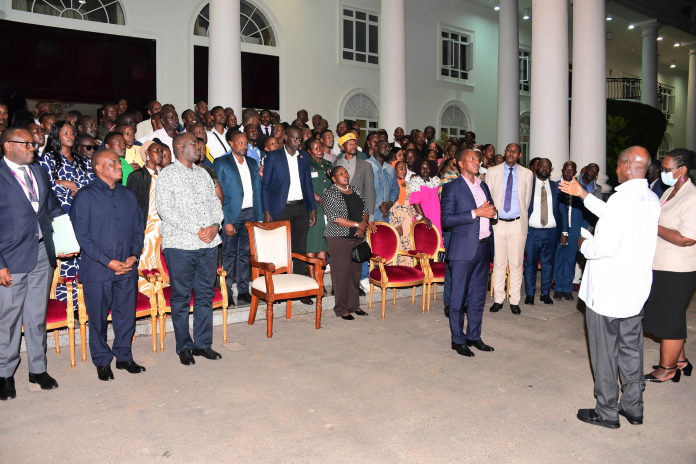
President Museveni with some of the leaders of Banyarwanda community.

President Yoweri Museveni has reaffirmed his government’s commitment to safeguarding the rights and identity of the Ugandan-Banyarwanda community, while drawing a firm line against the practice of holding dual citizenship for individuals seeking to identify as both Ugandan and Rwandan.

During a meeting held at State House Entebbe, Museveni engaged with a delegation from the Ugandan-Banyarwanda community to address longstanding concerns about identity, citizenship and perceived discrimination.

“I met with a group from the Ugandan Banyarwanda community at State House in Entebbe,” the President stated.

He added, “I assured them of my commitment to protecting their rights and identity as Ugandans. Those who have lived here for decades and are recognised by local leaders should not be harassed.”

Museveni emphasized the importance of recognizing Ugandan Banyarwanda as an integral part of the national fabric, provided their roots and residence in Uganda are verifiable and longstanding.

However, the President was unequivocal in his position against dual allegiance.

“What we cannot accept is dual citizenship,” he asserted. “One must make a choice; you cannot be both. Even I, as a Muhooro, recognise this. If I wish to be Rwandan, I would go to Rwanda, but I cannot claim both identities.”

He further explained that while cultural ties and heritage may span across borders, legal and civic identity must remain clear and singular to avoid confusion and undermine national cohesion.

To address issues of verification and resolve disputes around identity claims, President Museveni announced the formation of a committee.

“We will form a committee to ensure fairness and truth prevail,” he said. “The goal is to examine each case honestly and ensure those who qualify as Ugandans are fully protected under the law, while maintaining the integrity of our citizenship framework.”

The President’s remarks come amid ongoing concerns from some members of the Ugandan Banyarwanda community who allege discrimination in various regions, including challenges in accessing national identity cards, land rights, and full citizenship recognition.

Museveni’s assurance is expected to ease tensions and pave the way for structured dialogue and resolution through the forthcoming committee, which is anticipated to include representatives from the community, government, and local authorities.

Stories Continues after ad

Uganda’s diaspora fuels development as remittances hit Shs5.6tn – BoU

Najjera Heights apartments.

Uganda’s diaspora continues to play a transformative role in national development, with remittances reaching over $1.5 billion (approximately $5.6 trillion) in 2023 equivalent to 3% of the country’s GDP, according to the Bank of Uganda.

As the world marked the International Day of Family Remittances (IDFR) 2025, the central bank hailed remittances not only as vital support for families but as a powerful engine for sustainable economic growth.

“Uganda continues to benefit immensely from the dedication and resilience of its diaspora,” said Milly Nalukwago Isingoma, Director of the Statistics Department at the Bank of Uganda.

“These funds are not just remittances—they are lifelines. They pay for health care, educate children, fund housing, and support entrepreneurship.”

The Bank of Uganda joined this year’s IDFR global campaign with a strong endorsement of its five-point agenda which includes reducing the high cost of remitting funds and leveraging technology to promote inclusive financial access.

“This campaign rightly calls for recognizing remittances as a critical force in financing development,” Isingoma noted.

Isingoma added, “We fully support efforts to lower remittance costs from an average of 15% to 3%, expand digital financial inclusion, and create investment instruments that tap into diaspora capital.”

In partnership with IFAD, Uganda’s central bank has already taken bold steps to improve remittance oversight by modernizing its data framework. The upgraded system now integrates fintechs and mobile money operators, enabling real-time, weekly transaction-level reporting.

“This reform is not just technical, it’s transformative. It ensures transparency, supports targeted policymaking, and builds resilience across the financial system,” Isingoma stressed.

Uganda’s Second National Financial Inclusion Strategy (NFIS 2023–2028) further positions remittances as a key pillar for empowering households and expanding access to financial services like savings, credit, and insurance especially for rural and climate-vulnerable communities.

“We see remittances as more than just personal support—they’re a springboard for inclusive finance,” Isingoma added.

Further noted, “We are committed to transforming every dollar sent home into long-term opportunity, ensuring no family is left behind.”

With over USD 1.5 billion in inflows annually, Uganda is among Africa’s top recipients of remittances.

Isingoma urged, “Let us use the momentum of the IDFR 2025 campaign to unlock the full potential of remittances as a billion-dollar development force for Uganda and beyond.”

“Let us use the momentum of the IDFR 2025 campaign to unlock the full potential of remittances as a billion-dollar development force for Uganda and beyond,” Isingoma urged.

Stories Continues after ad

Maj Gen Birungi Sent to Burundi as Military Attaché

Maj. Gen. Birungi.

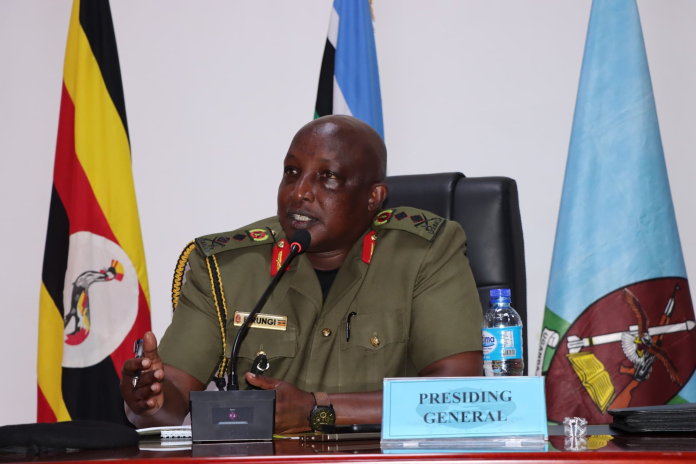
The Chief of Defence Forces (CDF), Gen Muhoozi Kainerugaba, has removed Maj Gen James Birungi from his position as commander of the Mountain Infantry Division just two months after his appointment, and reassigned him to Bujumbura, Burundi, as Uganda’s new Military Attaché and Defence Advisor.

The swift redeployment follows a recent reshuffle in which Maj Gen Birungi had swapped roles with Maj Gen Richard Otto, moving from the Chieftaincy of Military Intelligence (CMI) to the Mountain Division in April 2025.

Brig Gen Paul Muwonge, who has been serving as Deputy Commander of the division, has been elevated to replace Birungi as the new commander of the Fort Portal-based unit. He will also lead Operation Shujaa, the joint UPDF-FARDC mission against Allied Democratic Forces (ADF) rebels in eastern DRC.

“The Chief of Defence Forces (CDF) of the Uganda People’s Defence Forces (UPDF), General Muhoozi Kainerugaba, has appointed Brigadier Paul Muwonge as the new commander of the UPDF Mountain Infantry Division based in Fort Portal, western Uganda,” said Col Chris Magezi, the outgoing Acting UPDF Spokesperson.

He added, “Brigadier Muwonge has been elevated from his previous role as Deputy Commander of the same division, replacing Maj Gen James Birungi, who assumed command in April this year.”

The reassignment of Maj Gen Birungi to a foreign diplomatic military post comes at a time when the UPDF is grappling with internal investigations involving two senior intelligence officers linked to suspected subversive activity.

According to military sources, Col Peter Ahimbisibwe (Director of Counter Terrorism) and Lt Col Ephraim Byaruhanga (Director of Special Operations) were recently arrested from the Defence Intelligence headquarters in Mbuya. Both are reportedly former close associates of Maj Gen Birungi during his time as Chief of Military Intelligence.

“Brigadier Muwonge has been elevated from his current position of Deputy Commander in the same division, replacing Major General James Birungi who assumed command in April this year,” said Col Chris Magezi, Military Assistant to the Chief of Defence Forces – UPDF in a statement this Wednesday night.

The UPDF has not formally linked the arrests or Birungi’s reassignment to the ongoing internal probe. However, sources suggest the arrested officers oversaw units that may have been infiltrated by ADF operatives.

Maj Gen Birungi replaces Brig Gen Simon Ochan, who has completed his diplomatic tour in Bujumbura and will return to the Joint UPDF Services Headquarters for reassignment.

“Major General Birungi now moves to Bujumbura, Burundi, as Uganda’s Military Attaché and Defence Advisor (DA) in the country,” Magezi confirmed.

Brig Gen Muwonge, who recently accompanied the CDF on an official mission to Kinshasa, is now tasked with leading both the division and Operation Shujaa—a high-stakes deployment targeting one of the region’s most notorious terrorist groups.

“Brigadier Muwonge who recently accompanied the CDF on an official working trip to Kinshasa, DRC, now also assumes command of the ongoing Operation Shujaa, a joint operation with DRC’s military forces (FARDC) to degrade and destroy the Allied Democratic Forces (ADF) terrorist group that operate in some parts of eastern DRC.”

While the UPDF remains silent on whether Maj Gen Birungi’s reassignment is connected to the unfolding security probe, the timing has fueled speculation and intensified scrutiny of the inner workings of Uganda’s military intelligence apparatus.

Stories Continues after ad

Victoria University opens July 2025 Intake: Your step-by-step application guide

Victoria University.

Victoria University, Uganda’s leading private institution has officially opened applications for its July 2025 intake. With three intakes each year, this mid-year window offers a great opportunity for students ready to begin or advance their academic journey without waiting for the next academic calendar.

If you’re considering applying, here’s a simple, step-by-step guide to walk you through the process:

Step 1: Complete the Online Application Form

Visit Victoria University’s official website at www.vu.ac.ug and fill out the application form. Ensure all information is accurate and up to date to avoid processing delays.

For international undergraduate applicants, required documents include:

 · A copy of a diploma certificate (if applicable), certified by the National Council for Higher Education (NCHE)

 ·  A copy of an equated certificate (if applicable) from NCHE

 ·  A copy of an equated secondary certificate from UNEB

 ·   A valid form of identification (national ID, passport, or birth certificate)

Step 2: Application Fee Payment

After submitting the online form, you will receive a mobile payment prompt. The application fee is Shs50,000 for Ugandan applicants and Shs60,000 for international students. Complete this payment promptly to proceed.

Step 3: Application Review

Your application will only be reviewed once the application fee has been received. The admissions team will verify that all documents meet the necessary requirements.

Step 4: Further Instructions

If your application passes the initial review, you may be required to pay an admission fee—Shs200,000 for Ugandan students and Shs235,000 for international applicants. You may also be asked to submit any missing documents or correct incomplete information.

Step 5: Admission Decision

Victoria University is committed to a fast and efficient admissions process. Once your application is fully reviewed, you should receive your admission letter within one to two business days. In case of any delays, applicants are encouraged to contact the university’s admissions office for assistance.

Stories Continues after ad

Uganda overtakes Ethiopia to become Africa’s top coffee exporter

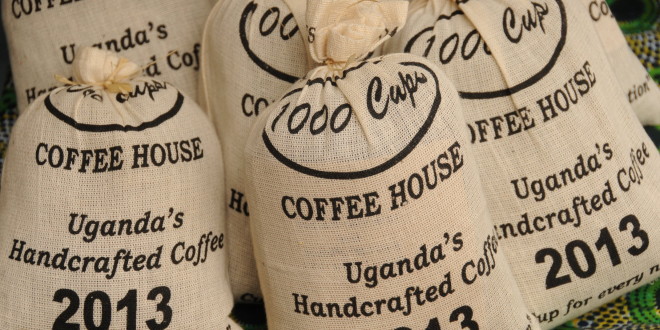
Coffee is Uganda's leading export.

Uganda has become Africa’s leading coffee exporter after overtaking Ethiopia for the first time in recent history, according to data released by the Ministry of Agriculture, Animal Industry and Fisheries.

In May 2025 alone, Uganda exported 793,445 60-kilogram bags of coffee, equivalent to 47,606.7 metric tons, earning approximately $243 million in revenue. This volume surpasses Ethiopia’s export tally of 43,481.02 tons for the same month, marking a significant turning point in the continent’s competitive coffee trade.

“Uganda’s coffee industry has reached a historic milestone,” the ministry said in a statement issued in Kampala.

The ministry added, “The country has now emerged as Africa’s leading coffee exporter, signaling a decisive shift in regional trade dynamics.”

While Ethiopia has long been regarded as the birthplace of Arabica coffee and a continental export leader, Uganda’s steady growth—driven by reforms, farmer education, and market expansion—has propelled the country into the spotlight.

The Ministry credited Uganda’s success to deliberate government interventions, including stricter quality control measures, intensive farmer training programs, and improved access to high-yielding seedlings and fertilizers. These measures, the statement said, have enhanced both the quantity and quality of Ugandan coffee, making it increasingly competitive in international markets.

“Ugandan coffee is now prized globally for its rich, diverse flavor profiles, particularly its Robusta and highland Arabica varieties,” the ministry added.

Industry analysts point to Uganda’s strategic focus on value addition and farmer empowerment—championed by agencies like the Uganda Coffee Development Authority (UCDA)—as key drivers behind the country’s upward trajectory in the global coffee value chain.

With the main coffee harvest season underway across major growing areas, including the Central, Eastern, and Western regions, officials anticipate even higher volumes in the coming months.

Uganda is currently the world’s largest exporter of Robusta coffee, and the second-largest coffee producer in Africa after Ethiopia, which grows mostly Arabica. However, in terms of export volumes, Uganda has now taken the lead—thanks to a strong logistical network and favorable export policies.

“This achievement is not just a statistical win, but a testament to the resilience and innovation of our farmers and traders,” said a senior ministry official.

Uganda exports coffee to more than 30 countries, with major destinations including: Italy, Germany, Spain, India, Sudan, Belgium, China, Algeria, United States and Morocco.

The broad global footprint reflects Uganda’s success in meeting the quality and certification standards of both traditional and emerging markets.

As global demand for specialty and sustainably produced coffee continues to rise, Uganda’s challenge will be to maintain its export momentum while also increasing domestic value addition and brand visibility.

Government officials say continued investment in processing infrastructure, farmer cooperatives, climate-smart practices, and digital tools for traceability will be essential for sustaining growth.

Stories Continues after ad

Museveni orders ban on Balaalo cattle movements, directs AG to criminalize land misuse

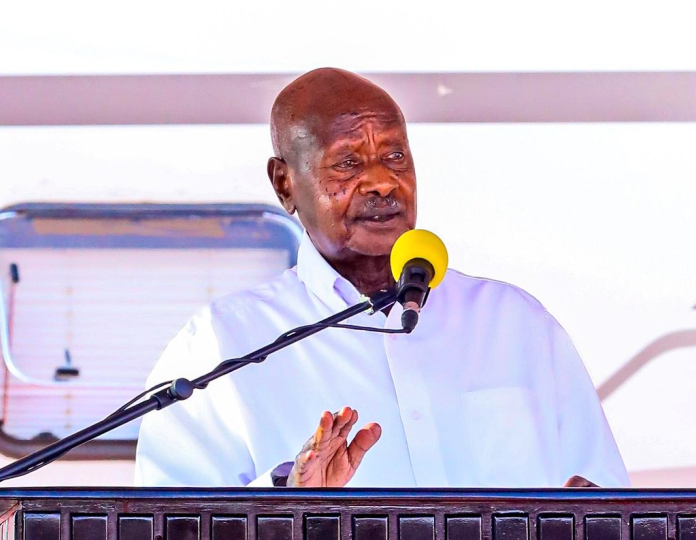
President Museveni.

President Yoweri Museveni has issued a new Executive Order banning the unregulated movement of Balaalo cattle herders into Northern, Eastern and North-western Uganda, citing escalating land conflicts, destruction of crops and public health risks.

In Executive Order No. 2 of 2025, issued on June 1, Museveni also directed the Attorney General to draft a law criminalizing the practice of free-ranging livestock in areas without fenced land and permanent water sources.

“It is now technically impossible to have a healthy, mutually beneficial, and conflict-free movement of unregulated cattle into these areas of our country,” the President said, pointing to land tenure disputes, blocked access to water and crop destruction by roaming animals.

The directive, which follows up on Executive Order No. 3 of 2023 comes amid growing tensions between local communities and incoming pastoralists, some of whom have been accused of forcefully settling on communal land, fencing off public resources and triggering violent conflicts.

“It is criminal and very unfair to the locals to introduce free-ranging cattle in these areas because they will inevitably trample and feed on people’s crops,” Museveni stated.

He added, “Even when you fence, but do not have a permanent water source, the cattle will stray during dry seasons in search of water and eat crops in the process.”

The President acknowledged that some herders had acquired land legally and established water sources but warned that these cases would still be audited. He announced the formation of a committee to vet land ownership claims and assess whether access to natural resources like the River Nile had been unfairly blocked.

“The logical answer is to remove all those cattle brought into these areas so that we achieve two long-term solutions: first, to ban completely any movement of free-ranging livestock into these areas; and second, to assess legitimate land claims without tension,” he directed.

He further condemned past incidents where herders, acting “blindly and indisciplined,” even crossed into Tanzanian national parks and triggered outbreaks of foot-and-mouth disease that affected Uganda’s dairy and beef industries.

Museveni emphasized that the National Resistance Movement (NRM) remains committed to patriotism, Pan-Africanism and social-economic transformation, but warned against “internal colonialism” where one group’s economic activities infringe on the rights of others.

“We must never frighten any of our communities with the fear of internal colonialism where some groups trample on the legitimate rights of others. There were such mistakes in the past they will not be permitted to happen under the NRM,” he declared.

The President’s remarks also addressed the broader East African integration agenda, making it clear that while Uganda supports the free movement of goods, services, labour and capital, rural-to-rural migration for agricultural purposes must be regulated to prevent tensions across the region.

“Whenever we are discussing the East African Federation, fears often arise about rural lands being invaded by land-hungry immigrants. It is, therefore, crucial to assure our partners that such migration can and will be regulated,” Museveni said.

He criticized what he described as “artificial overcrowding” narratives used by some herders to justify relocation, arguing that land scarcity is often the result of primitive agricultural methods. He called on displaced pastoralists to adopt modern, intensive farming on smaller plots or reinvest in trade and business in their home regions.

“Let them sell the cattle that have multiplied on account of the free pasture they have accessed in these unplanned actions and buy smaller pieces of land where they traditionally live or build shops in trading centres,” Museveni advised.

Museveni also reflected on historical land reforms, noting that Uganda’s 1995 Constitution deliberately decentralized land management to avoid politicized disputes.

“The Uganda Land Commission was removed from managing all land in the country. That power now rests with District Land Boards to avoid the distortion that outsiders are coming to take our land,” he said. Adding, “You can imagine the noise around this issue if the national commission was involved. But we foresaw that trap.”

He further noted that by not decisively acting, it encourages new influx. These colonial-style injustices should not and cannot happen under the NRM.

Stories Continues after ad

South Africa commended for leading HIV fight as UNAIDS pledges support

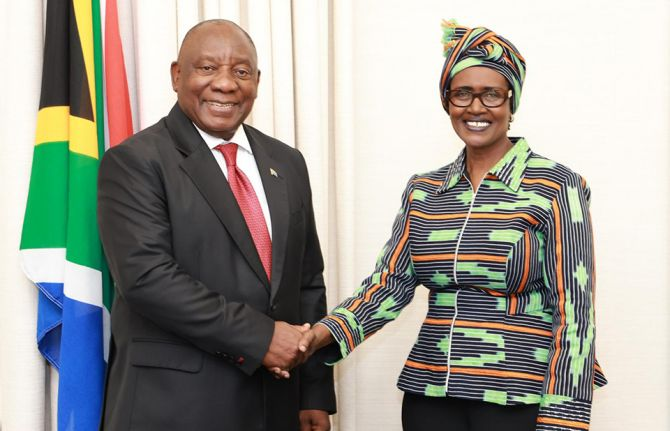
The Executive Director UNAIDS Winnie Byanyima with South Africa's President Cyril Ramaphosa after holding talks on the HIV/Aids fight.

The Executive Director of UNAIDS, Winnie Byanyima has concluded a four-day mission to South Africa with a powerful endorsement of the country’s commitment to fighting HIV, despite mounting pressure from global funding cuts that are threatening progress on the ground.

Her visit, which included high-level meetings with President Cyril Ramaphosa and Health Minister Dr. Aaron Motsoaledi, came at a time when South Africa—home to the world’s largest population of people living with HIV—is working to plug critical financial gaps in its national HIV response.

Ms Byanyima used the mission to spotlight both the urgency of the crisis and the resilience of the South African government and civil society.

“I came here to listen, to understand and to support South Africa, the country with the highest burden of HIV,” said Ms Byanyima.

She added, “Around 7.8 million people are living with HIV here. UNAIDS is supporting the government to ensure prevention is scaled up and that everyone in need gets access to treatment. The goal to end AIDS by 2030 is still within reach—if we act decisively.”

A key focus of her visit was the impact of global HIV funding cuts, particularly from the United States, which has significantly scaled back support for HIV services. Ms Byanyima visited the Itireleng Community Health Centre in Soweto where she met frontline health workers and community monitors who revealed how the loss of U.S. funding has led to the closure of 12 key population clinics, loss of over 8,000 health worker jobs, and disruptions in medicine supply chains and data systems.

“In Soweto, I saw firsthand what these disruptions mean,” said Ms Byanyima. “It’s being felt most by the vulnerable—especially adolescent girls and young women aged 15–24, who account for a third of all new HIV infections in the country. That’s 1,057 new infections each week. This is a gap we cannot afford.”

Despite these challenges, she praised South Africa’s determination to fill the gaps left by external donors. Seventy-six percent of the country’s HIV response is now funded domestically. She welcomed recent efforts to absorb patients from closed clinics into public health centres and initiatives like the new Hillbrow clinic providing targeted care for sex workers.

Ms Byanyima also revealed ongoing efforts by the South African government to secure additional resources for AIDS research, including talks with the Wellcome Trust and the Gates Foundation to address cuts that could stall vaccine development.

“Government leadership matters,” she said, adding, “The financial and political commitment South Africa continues to show—even in the face of international shortfalls—is inspiring. It proves that progress is possible with local ownership and determination.”

Her mission also aligned with the G20 Health Working Group meeting in Johannesburg, where South Africa is currently serving as G20 President. Ms Byanyima reaffirmed UNAIDS’ support for South Africa’s G20 leadership, particularly in efforts to expand access to medicines, support local pharmaceutical manufacturing, and advocate for financial reforms such as debt relief and fairer tax systems to unlock health spending in low- and middle-income countries.

She said, “The world must recognize that inequality is at the heart of the AIDS pandemic. Through the G20, South Africa is leading a global conversation to expand fiscal space and end the social and structural barriers holding back progress.”

Ms Byanyima also voiced her support for the Close the Gap campaign, recently launched to ensure 1.1 million more people in South Africa can access life-saving HIV treatment.

As South Africa prepares to co-host the Eighth Replenishment of the Global Fund to Fight AIDS, TB, and Malaria, UNAIDS has committed to working closely with the country to ensure global solidarity is restored and scaled up.

Stories Continues after ad

Uganda presents eight high-value investment cases in agriculture

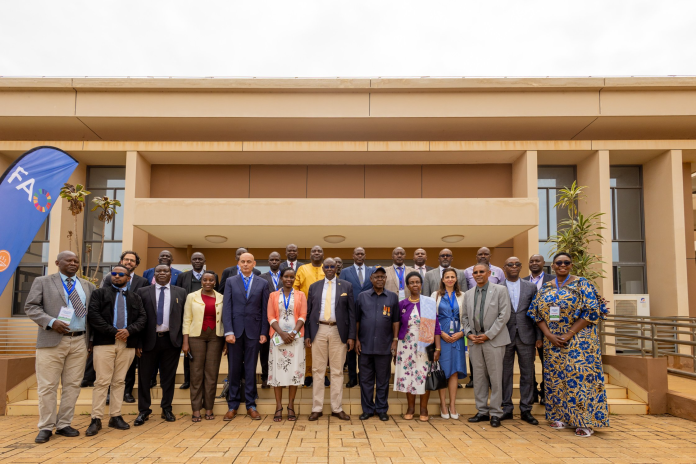
Participants at the ongoing Agrifood Systems Investment and Financing Conference.

Uganda has listed eight high value investments in agriculture as presented at the ongoing Agrifood Systems Investment and Financing Conference.

Samson Akankiza, Commissioner at Ministry of Agriculture, Animal Industry and Fisheries (MAAIF) has presented eight carefully analysed agricultural investment opportunities aimed at attracting both domestic and international investors.

Mr. Akankiza noted that Uganda’s economy, currently valued at $55 billion, continues to grow steadily at a rate of 5.3%, with agriculture contributing 24% to the GDP.

He emphasised that agriculture remains the backbone of Uganda’s economy and a key driver in the country’s ambition to grow its economy tenfold in line with Vision 2040.

He reported that Uganda’s strategic direction is focused on transitioning from subsistence farming to a middle-income status, while tackling poverty and unemployment.

This transformation, he explained, is aligned with the Hand-in-Hand Initiative of FAO and Uganda’s own commitments under the Sustainable Development Goals (SDGs).

Commissioner Akankiza emphasised that Uganda is among Africa’s most rewarding investment destinations, citing its location at the heart of regional trade blocs such as the East African Community (EAC), COMESA, and the African Continental Free Trade Area (AfCFTA), which collectively provide access to over 900 million consumers.

He added that investors benefit from a liberal economy, low labour costs, guaranteed profit repatriation, and generous tax incentives including income tax holidays and zero import duty on agricultural machinery.

He presented eight investment cases and expected returns:

Dairy Processing: Uganda currently produces 5.4 billion litres of milk annually, yet much of it remains unprocessed. Mr. Akankiza proposed establishing four modern milk processing plants across different regions, each with a capacity of 500,000 litres per day.

He reported an internal rate of return (IRR) of 25.8% and a payback period of four years for micro-scale investments starting at $1.2 million.

Animal Feeds and Pastures: He highlighted significant gaps in feed supply, including a 360,000-ton deficit for cattle and over 3 million tons for poultry. With a livestock population of over 122 million poultry, 16.4 million cattle, and 1.7 million pigs, the demand is clear.

The IRR stands at 26.7%, with investment options ranging between $2.3 million and $6.1 million.

Foot and Mouth Disease Vaccine Production: Uganda needs over 32 million doses annually. Mr. Akankiza revealed that government and private players could invest jointly in a $85.42 million facility, with an IRR of 6.8% and a payback period of four years.

Maize Processing : With annual maize production at 4.8 million tons, there is untapped potential in value-added products like maize oil, cornflakes and starch. Investors could expect returns as high as 29.4% IRR with micro-scale investments starting at just $100,000.

Beef Processing: The Commissioner reported that Uganda exports 125,000 metric tons of beef, valued at $1.53 billion. A modern abattoir capable of processing 100 cattle per day was proposed, with a projected IRR of 38.4% and a payback period of six years.

Hides and Skins (Leather) Processing: Uganda generates over 5 million hides annually. Mr. Akankiza said that value addition through wet blue, crust and finished leather processing could yield a 31.6% return and payback within four years.

One-Stop Input and Mechanization Centres: These centres would provide quality inputs, equipment, and advisory services to farmers. Investment starts at $140,000 for micro-level investors, with an IRR of 22.5%.

Banana Processing: As a major staple crop, bananas have great export potential. Investment in banana wine, juice and fibre could bring in returns of 30.4%, with payback in under five years.

He encouraged investors to take advantage of Uganda’s enabling environment, supportive government policies, and ready regional and global markets

Stories Continues after ad

Equity Bank Uganda donates Shs50m to support Benny Hinn Miracle Crusade

Equity Bank officials handover a dummy cheque to Miracle Centre lead Pastor Robert Kayanja.

Equity Bank Uganda has donated Shs50 million to Pastor Robert Kayanja of Miracle Centre Ministries in support of the highly anticipated three-day crusade featuring internationally renowned evangelist Benny Hinn.

The cheque was officially presented on Tuesday afternoon by Catherine Psomgen, Equity Bank Uganda’s Director of Public Sector and Social Investments. The gesture underscores the bank’s ongoing partnership with Pastor Kayanja’s ministry.

Over the years, Equity Bank has collaborated with Miracle Centre Ministries on various community development initiatives, including a transformational agriculture project launched in Karamoja in 2023. These initiatives align with the bank’s broader commitment to social impact and economic empowerment, particularly in vulnerable communities.

“This collaboration reflects our mission to transform lives and restore dignity within underserved communities,” said Psomgen. “It also supports our Africa Recovery and Resilience Plan, which prioritizes agricultural development—currently representing 30% of our total lending portfolio.”

The upcoming crusade will feature Toufik Benedictus “Benny” Hinn, a globally recognized televangelist of Israeli-Palestinian descent. Famous for his large-scale “Miracle Crusades” held in stadiums across the globe, Hinn’s healing and revival meetings are broadcast worldwide on his television program This Is Your Day.

The event is expected to draw thousands of worshippers and marks a major moment for Uganda’s faith community.

Stories Continues after ad

Parliament approves KCCA land leases amid council oversight dispute

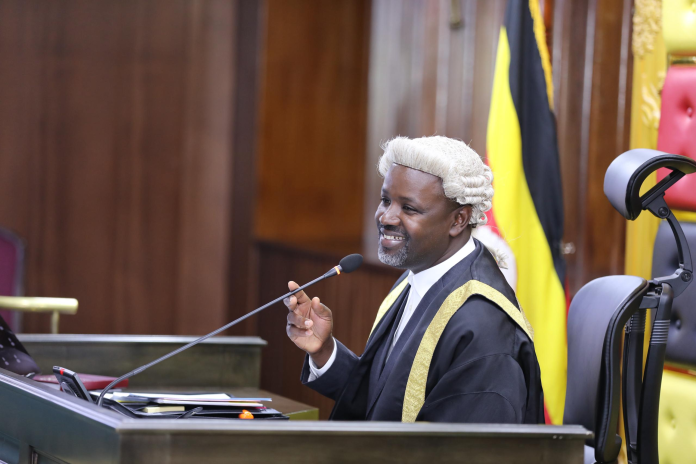
Deputy Speaker, Thomas Tayebwa.

Parliament has approved a proposal by the Kampala Capital City Authority (KCCA) to lease out prime land in Lugogo and Kamwokya to raise revenue for the Authority, despite objections from several Members of Parliament (MPs) who argued that the KCCA Council had not sanctioned the move.

The decision was made during Tuesday’s plenary sitting after Kabuye Kyofatogabye, Minister of State for Kampala Capital City and Metropolitan Affairs, tabled before the House valuation reports and clearances from the Ministry of Lands and the Ministry of Finance. These documents were among the requirements Parliament had earlier set before revisiting two previously rejected lease proposals.

However, the presentation drew resistance from Tororo Woman MP Sarah Opendi, who questioned the absence of a formal resolution from the KCCA Council—the statutory body mandated to initiate such transactions.

“I recall seeing a letter from the Speaker of the Council stating that the Council had not discussed the disposal of these properties,” Opendi said.

She added, “Would it not be proper and procedural for the Minister to also present a resolution by the Council before Parliament proceeds with approval? Otherwise, this House risks being used to rubber-stamp decisions driven by personal interests.”

Her concerns were echoed by Leader of the Opposition Joel Ssenyonyi, who emphasized the need for legal and procedural rigor in handling public assets.

“According to KCCA’s land use and management policy, Council must first authorise any lease or disposal by resolution,” Ssenyonyi argued. “There was no such resolution the last time this came up, and even now, one hasn’t been presented. Parliament must ensure that all properties under consideration—those already approved and the new ones—are backed by a proper Council resolution.”

Ssenyonyi referenced a letter, purportedly from the Council Speaker, confirming that no resolution had been passed authorising the Executive Director to proceed with the land leases.

Despite the objections, Deputy Speaker Thomas Tayebwa overruled the concerns, citing Section 34(6) of the Public Finance Management Act, which he said only requires parliamentary approval—not that of the local Council—for such leases.

“The law is clear: Parliament must pass the resolution. It does not require any institutional policy or Council resolution,” Tayebwa said. “If due process isn’t followed, the Solicitor General will reject it. But our legal mandate here is parliamentary approval.”

Tayebwa added that Parliament had previously debated the matter extensively and directed KCCA to provide the necessary valuation reports and clearances, which the Minister had now submitted. He then called a vote. Although the nays were louder, Tayebwa ruled that the ayes had carried the day.

Earlier in the day, before the plenary session, Monica Edemachu, Under Secretary at the Ministry of Kampala Capital City and Metropolitan Affairs, appeared before the Public Accounts Committee (PAC) and denied knowledge of KCCA seeking parliamentary approval to lease two key land parcels—one of which had been earmarked for youth development.

“The Ministry has no mandate to allocate land; that’s KCCA’s domain,” Edemachu said. “We only play an oversight role. The matter you’re raising is new to me, and I’ll need more information on the board that allocated the land.”

But Butambala County MP and PAC Chairperson Muwanga Kivumbi dismissed the response, accusing the Ministry of abdicating its oversight responsibility.

“You can’t say you’re unaware,” Kivumbi retorted. “The Ministry is charged with planning and development oversight. You were here in Parliament when you brought the lease approvals, including land meant for youth centres. Instead of implementing the Kampala Economic Development Strategy to set up youth empowerment centres, you’re giving away that land to furniture shops.”

Kivumbi further defended the need for parliamentary scrutiny, recalling that the law had been amended specifically to require parliamentary approval for local government land leases—to prevent the misuse and loss of public assets such as recreation grounds and youth centres.

Background on the land in question

On April 1, 2025, the Executive Director of KCCA wrote to Parliament seeking approval to lease not dispose of the following properties:

Plot 2, Kenneth Close in Kamwokya (Youth Alive)

Plot M731, Old Kira Road

Plot M880, off Spring Road

Plot 406, Namirembe

Plots M69 and M70 in Lugogo

KCCA justified the proposal as a revenue-generating measure through ground rent and property rentals, aimed at boosting the Authority’s budget for the next financial year.

Parliament had previously approved leases for Plot M880 (off Spring Road) and Plot 406 (Namirembe), but withheld approval for the Kamwokya and Lugogo plots. MPs directed KCCA to expedite valuation for Plot 2 (Kamwokya) and Plots M69 and M70 (Lugogo), and to obtain clearance from the Ministry of Finance for Plot M731 (Old Kira Road).

Despite lingering concerns over procedural gaps and alleged disregard for Council oversight, Parliament has now cleared all remaining plots—paving the way for KCCA to proceed with the leases.

Stories Continues after ad