Stanbic Bank
Stanbic Bank
23.4 C
Kampala
Stanbic Bank
Stanbic Bank
Home Blog Page 19

Why Africa’s Investment Story Is More Complicated Than It Looks

Africa is often presented as the next major frontier for global investment, with narratives built around rapid growth, expanding consumer markets, and untapped potential. While these elements are real, they only represent part of a much broader and more nuanced picture that investors must understand before committing capital.

In many cases, initial enthusiasm gives way to deeper evaluation, and then they hire the independent consultant to better interpret local market conditions, regulatory frameworks, and execution risks that are not immediately visible in high-level reports.

Growth Narratives Do Not Reflect Operational Reality

Economic projections often highlight strong GDP trends and demographic advantages, but these indicators do not fully capture the complexity of doing business across different African markets. Operational conditions vary widely between countries, and even within sectors, making standardized investment approaches ineffective.

  • Infrastructure gaps can impact logistics and increase operational costs
  • Regulatory environments may change depending on policy priorities
  • Access to financing can differ significantly across industries
  • Market fragmentation often limits scalability in the early stages

These factors create a disconnect between theoretical opportunity and actual execution, requiring investors to adapt strategies accordingly.

Capital Allocation Is Driven By Structure, Not Hype

Although Africa attracts attention from international investors, capital does not flow evenly across the continent. Investment tends to concentrate in areas where institutional support, regulatory clarity, and revenue visibility align.

FactorImpact On InvestmentExplanation
Regulatory StabilityHighProvides confidence for long-term capital deployment
Infrastructure ReadinessModerateDetermines operational efficiency
Market DepthVariableAffects liquidity and scalability
Policy ConsistencyCriticalInfluences risk perception and investor confidence

Understanding how these elements interact is essential for identifying where capital can be deployed effectively, stated on the WestAfricaTrade & InvestmentHub.

Risk Requires A Multi-Layered Perspective

Risk in African markets extends beyond currency fluctuations and political developments. It includes structural, operational, and strategic dimensions that can significantly influence outcomes over time.

  • Currency volatility can alter real returns for international investors
  • Policy shifts may affect sector-specific investment conditions
  • Execution risk often determines project viability
  • Local partnerships play a critical role in navigating market dynamics

A comprehensive approach to risk management must take all of these factors into account rather than relying on simplified models.

Timing And Adaptability Define Success

Entering African markets at the right moment is only part of the equation. The ability to adjust strategies as conditions evolve often has a greater impact on long-term performance.

Investors who remain flexible and responsive to policy changes, market signals, and operational challenges are better positioned to sustain growth over time.

A More Realistic View Of Opportunity

Africa’s investment landscape offers substantial opportunities, but they are closely tied to execution, discipline, and context-specific knowledge. Recognizing this complexity allows investors to move beyond simplified narratives and develop strategies that reflect real market conditions.

A more grounded perspective does not diminish the region’s potential. Instead, it provides a clearer path for aligning capital with opportunities that are both achievable and sustainable in the long run.

Stories Continues after ad

NUP’s Kadondi Wins Makerere Guild Presidency

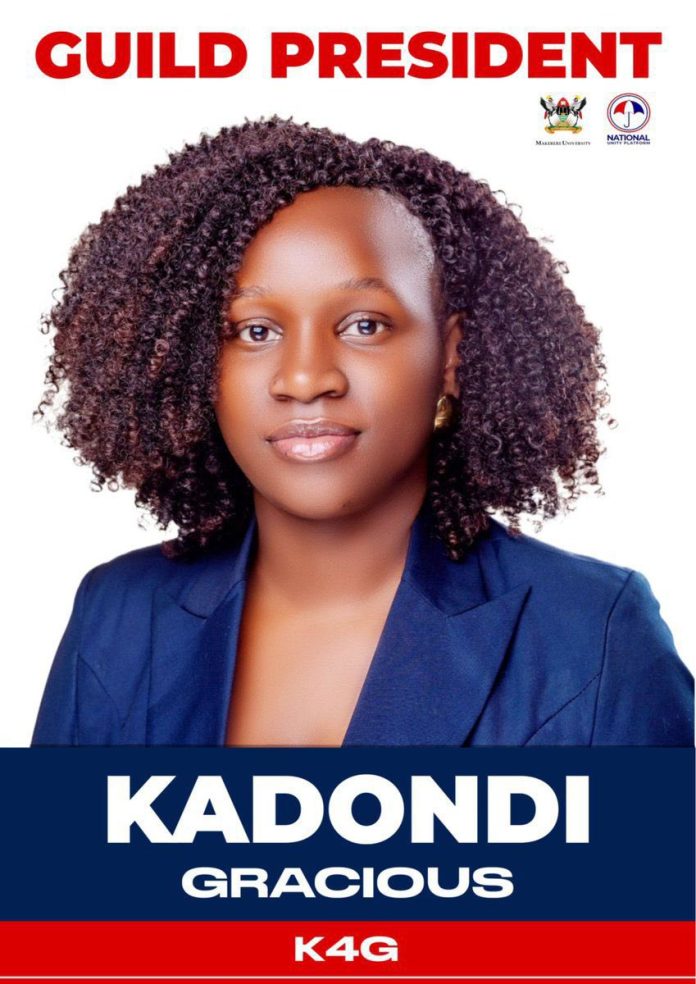
Gracious Kadondi.

Kampala, Uganda — April 9, 2026-Gracious Kadondi, a candidate aligned with the National Unity Platform (NUP), has been elected the 92nd Guild President of Makerere University following a closely contested student election.

According to official results released by the university’s electoral commission, Kadondi secured 6,801 votes, defeating her closest challenger, Hannah Karema Tumukunde, who garnered 5,787 votes in the race that attracted more than a dozen contestants.

The election drew widespread attention both within and beyond the university, underscoring the continued significance of student politics as a reflection of broader national political dynamics. Security remained visible across campus throughout the voting process, while turnout was reported to be strong.

Celebrations broke out shortly after the declaration of results, with Kadondi’s supporters gathering in various parts of the campus to mark the victory.

Kadondi’s win further consolidates the growing influence of NUP-leaning student structures in university leadership, continuing a trend that has seen the party’s supporters dominate guild politics in recent years.

The guild presidency, the highest student leadership office at Makerere University, plays a central role in representing student interests and engaging university management on issues ranging from welfare and academic affairs to governance.

Kadondi is expected to assume office in the coming days, succeeding outgoing guild president James Churchill Ssentamu, as she begins her tenure amid expectations of strengthening student representation and advancing key campus reforms.

Her victory is also seen as indicative of shifting youth political alignments, with Makerere’s guild elections often viewed as a bellwether for broader trends among young voters in Uganda.

Stories Continues after ad

MAO TO ANITA AMONG: Only head of family has final word on who can access which room in the home

Justice and Constitutional Affairs Minister Nobert Mao and Speaker Anita Among at the National Leadership Institute, Kyakwanzi, where the two faced off.

A sharp war of words has erupted within the ruling National Resistance Movement camp after Norbert Mao fired back at Speaker Anita Annet Among over her arrogont remarks on the race for the Speakership.

Mao, who is also eyeing the top parliamentary seat, dismissed Among’s comments as disrespectful and ill mannered, framing his response in a metaphor that underscored authority and hierarchy within a political family.

“This is not just bad politics. It is bad manners,”Mao said. 

Mao added that it’s only the head of the family that has the audacity to determine which room the visit has to enter. 

Mao further said that Among is also an adopted child into the NRM party and has no knowledge to lecture the members in the party. 

“Only the head of the family has the final word on who can access which room in the home. He does not need lectures from a recently adopted child. Above all, when you insult your father’s visitors you have insulted your father.”Moa fired Among. 

His remarks were a direct response to Among’s earlier statement at the ongoing retreat of NRM leaders at the National Leadership Institute, where she likened the Speakership to a private space that cannot be accessed through political cooperation.

“We do cooperate with other political parties, but it does not mean that if we are cooperating you come up to my bedroom; you remain in the compound. The bedroom this time round is the Speakership. You cannot cooperate to the tune of Speakership,” Among said.

Among has for a while been so confident that she will win the race but the Northern Uganda guru, Nobert Mao has shaken the tables and wines are spilling. 

The exchange reveals pressure within the NRM as contenders position themselves for the Speakership of the 12th Parliament, turning what has traditionally been an internal process into an increasingly public contest.

The disagreement comes against yesterday’s guidance by President Yoweri Museveni, who on Wednesday sought to steady the debate by clarifying the role of the party’s top decision making organ.

Museveni told legislators at the same Kyankwanzi retreat that recommendations made by the NRM Central Executive Committee are not binding, effectively opening the field for wider consultation within the party caucus.

“Regarding the issue of standing for Speaker, that is a matter we shall discuss at the appropriate time. CEC had earlier recommended that we maintain the current arrangement, as it has become something of a tradition. This remains a recommendation,” Museveni said.

His remarks signalled that the final decision on the Speaker and Deputy Speaker positions will rest with the NRM parliamentary caucus, a position that has emboldened aspirants and intensified behind the scenes lobbying.

The President’s intervention followed concerns raised by Aringa County MP Yorke Alioni Odria, who called for fairness in determining candidates for the top parliamentary offices, amid unease over perceived endorsements of the current leadership.

Museveni’s position appeared to ease tensions among legislators who have questioned the automatic retention of Among and her deputy Thomas Tayebwa, with critics arguing that such moves risk stifling internal competition.

The race for the Speakership contenders, includes Among, Mao, Odria, Lydia Wanyoto, Florence Akiiki and Persis Namuganza.

As the Kyankwanzi retreat continues, the ideological direction of the party and questions of discipline, competition and consensus are emerging as central themes, with the Speakership contest now hitting so hard.

Stories Continues after ad

Moms Gather returns for fifth edition at Speke Resort Munyonyo

The fifth edition of the popular “Moms Gather” event is set to take place on May, 9 at Speke Resort Munyonyo.

The event, which has grown into a signature platform for women’s connection and wellness, is expected to bring together mothers from different walks of life for a day of inspiration, reflection, and shared experiences.

According to promotional details, this year’s edition will feature a lineup of speakers including Lisa, Daisy, Brenda Kabibi, Apophia Segwaya, Allen Kagina, Patricia Rutiba and Christine N. Musinguzi, all of whom are expected to lead conversations around personal growth, motherhood, and empowerment.

The gathering is an unforgettable experience designed to connect, inspire and nurture with activities ranging from keynote sessions to smaller Mom Circle discussions aimed at fostering deeper engagement among participants.

“This year, we are bringing together an incredible lineup of moms who are ready to share, uplift, and ignite something powerful,” the organisers said in a statement, adding that the event will focus on meaningful conversations, wellness, sisterhood and joy.

The event will be held under a chic and glam dress code, with attendance set at a fee of Shs200,000. Booking is currently ongoing, with organisers noting that slots are limited and filling up quickly.

Partners supporting the event include CEA Lion, Speke Resort, Twine Shots, Cambridge Health Center and Dream House Events.

“Come as you are and leave transformed,” the organisers said.

The organizers encouraged women to secure their seats early for what promises to be a memorable experience.

Stories Continues after ad

Ministry of Gender develops catalogue to support Jua Kali sector

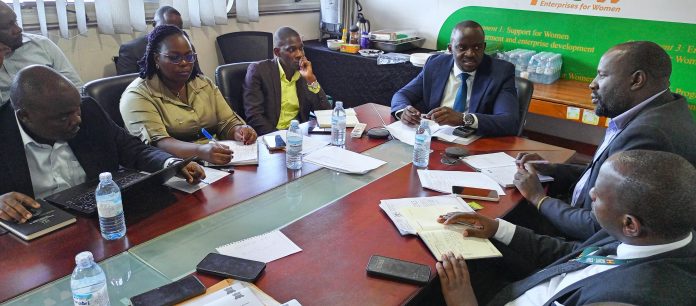
Members during the meeting at the Ministry of Gender, Labour and Social Development today.

The programme management unit of the Jua-Kali Programme at the Ministry of Gender, Labour and Social Development (MGLSD) has developed a comprehensive Jua Kali Business Equipment Catalogue and Maintenance Plan for the beneficiaries and applicants. 

This catalogue is intended to guide the Jua Kali sector on the proper use and maintenance of the equipment provided by the Programme.

Formally known as Empowering Informal Businesses into Formal Growth (Jua-Kali), the programme is a key intervention aimed at enhancing productive employment and supporting the transition of informal enterprises into the formal economy.

The programme supports the informal sector through providing business toolkits and equipment; policy research and innovation; programme management and supervision; and provision of business development services to all beneficiaries.

During the catalogue review meeting at the MGLSD today, Mr Kibenge urged all the stakeholders to provide the technical expertise, practical experience, and market knowledge necessary to ensure that the Catalogue is relevant, credible, and aligned with the industry standards.

“This Catalogue is intended for use by Government Ministries, Departments and Agencies, Local Governments, implementing partners, training institutions, and Programme beneficiaries. It will serve as a reference tool for programme implementation and coordination among stakeholders supporting Jua-Kali Programme, and at large, the informal sector,” Kibenge said.

The Permanent Secretary, who was represented by Assistant Commissioner Labour Productivity, Mr Hillary Businge, asked the stakeholders to identify any gaps across sectors and trades, and advise on the realism of the indicative prices in line with prevailing market conditions. 

“Your input will directly shape this Catalogue that is not only technically sound, but also practical and responsive to the needs of our beneficiaries,” he added.

The Jua Kali Programme is a response to the Cabinet Directive Minute 93 (CT2011), in which the Cabinet noted the Presidential Directive for the Ministry of Finance, Planning and Economic Development to work jointly with MGLSD on strategies to address job creation in Uganda. 

In a letter dated August 31, 2016, President Yoweri Kaguta Museveni directed Ministries, Departments, and Agencies (MDAs) to prioritize the provision of support to youth and women, such as market vendors, youth working in garages, metal fabrication, boda-boda operators, and car washing bays.

So far, the programme has supported over 855 enterprise groups, benefiting 30,245 direct individuals (13,220 males and 17,025 females) across 98 districts in 192 constituencies, across the country, with 11,609 sets of business toolkits and equipment, and complemented by the other programme components.

Today’s meeting was attended by representattives from the Ministry of Works and Transport; Makerere University; Uganda Manufacturers Association; Uganda Small Scale Industries Association (USSIA); members of the private sector; and the technical staff of MGLSD.

Members called for amplified publicity of the programme so that more Ugandans can get the information and benefit.

Stories Continues after ad

Gov’t releases Shs17.4t for fourth quarter of FY2025/26

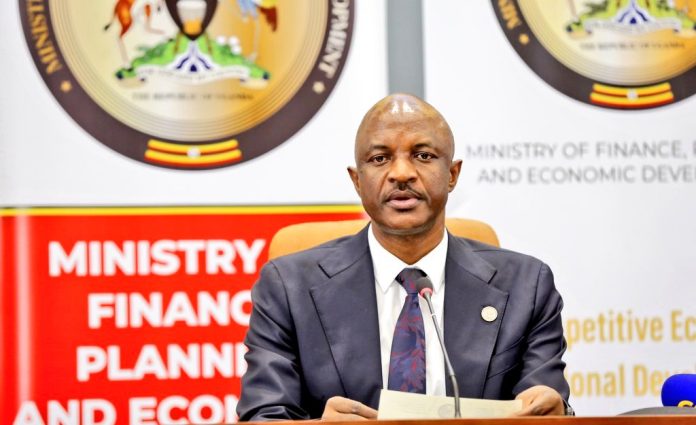
The Permanent Secretary and Secretary to the Treasury, Ramathan Ggoobi.

The Government has released Shs17.444 trillion for the fourth quarter of the Financial Year 2025/26, bringing the total cumulative release to Shs77.001 trillion, according to the Permanent Secretary and Secretary to the Treasury, Ramathan Ggoobi.

Presenting the quarter four expenditure framework, Ggoobi said the releases represent 106.4 percent of the approved budget and 95.1 percent of the revised budget, reflecting sustained fiscal operations.

“The quarter four expenditure limits have been informed by the need to sustain the momentum for implementation of the tenfold growth strategy, but within the framework of the fiscal consolidation agenda,” Ggoobi said.

He added that the approach prioritises macroeconomic stability and fiscal discipline while ensuring continued investment in key sectors of the economy.

“We have maintained total expenditures within the available resources while sustaining financing to wealth creation and critical priority actions under Agro industrialisation, Tourism development, Mineral development, and Science, Technology and Innovation,” he said.

A significant portion of the quarter four release has been allocated to statutory obligations, with Shs6.38 trillion earmarked for debt and treasury operations, Shs2.04 trillion for wages and salaries, and Shs343.39 billion for pensions and gratuity. Parliament, the Judiciary, and the Office of the Auditor General have also received funding to support their operations.

Under the government’s growth strategy, funding has been directed towards agro-industrialisation, tourism promotion, mineral development, including oil and gas activities, as well as expansion of internet connectivity and digitisation.

Ggoobi said the government has also fully released the remaining Parish Development Model funds, amounting to Shs542.3 billion, to support wealth creation at the grassroots.

In the security sector, allocations have been made to the Ministry of Defence, State House, Uganda Police Force, and other agencies to maintain national stability. At the same time, infrastructure development continues to receive substantial financing, particularly in transport, energy, and urban development projects in Greater Kampala.

The health and education sectors have also received significant funding, including Shs342 billion to National Medical Stores for essential medicines and Shs372.88 billion to the Ministry of Health. Additional funding has been provided to specialised institutions such as the Uganda Cancer Institute and the Uganda Heart Institute.

Local governments have received Shs519.8 billion to facilitate service delivery and implementation of development projects across the country.

The government has also set aside Shs454.2 billion in the quarter to clear domestic arrears, bringing the total allocation for arrears this financial year to Shs973.1 billion.

Ggoobi urged accounting officers to prioritise payment of service providers and avoid accumulation of new arrears.

“All Accounting Officers should prioritise payment of service providers, ensuring that all domestic arrears which have been released are settled, as well as non accumulation of new arrears,” he said.

He also called on citizens to actively monitor government programmes and track service delivery using available public information platforms.

On the state of the economy, Ggoobi said Uganda continues to register strong growth, with preliminary estimates indicating that the economy expanded by 8.5 percent in the second quarter of the financial year, up from 5.4 percent in the same period last year.

“The average economic growth for the first half of FY 2025/26 increased to 6.7 percent from 5.8 percent during the same period last year,” he said.

He attributed the growth to strong aggregate demand, increased investment and exports, as well as improved performance across the industrial, services and agricultural sectors.

According to the Treasury, the economy is projected to grow to 7.0 percent by the end of the financial year, with Gross Domestic Product expected to reach $68.4 billion.

Ggoobi noted that the Uganda shilling has remained stable while inflation has been contained at an average of 3.3 percent, reflecting prudent economic management.

“I wish to assure Ugandans that the economy has proven to be stable and resilient despite global shocks,” he said.

He added that the government will continue to monitor revenue performance and maintain prudent spending to ensure a strong close to the financial year.

Stories Continues after ad

Police arrest notorious panga-wielding robbery gang in Kampala

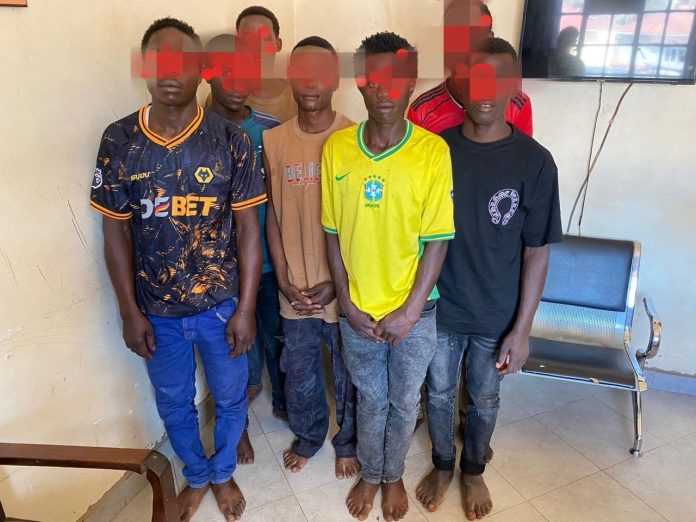
Some of the arrested criminals.

Police in Kampala have dismantled a suspected criminal gang accused of carrying out a string of violent robberies across several city suburbs, in an operation that led to the arrest of multiple suspects and the recovery of exhibits.

According to Kampala Metropolitan Police Deputy Spokesperson Luke Owoyesigyire, the operation followed intelligence-led efforts targeting a group that had reportedly been terrorising residents in Makindye, Kizungu in Salaama, Bunga and Katwe.

“Police in Katwe Division have successfully dismantled a notorious panga-wielding robbery gang that has been terrorising areas of Makindye, Kizungu (Salaama), Bunga, and Katwe,” Owoyesigyire said.

The breakthrough came on April 5, 2026, when one of the suspects, identified as Olwo alias Tom, was arrested along Mubaraka Road in Makindye Division while riding a motorcycle. Police say the suspect later admitted to being part of an organised group involved in violent robberies.

“Upon interrogation, he confessed to being part of an organised gang involved in violent robberies using pangas and motorcycles,” Owoyesigyire revealed.

Following the arrest, security agencies mounted a targeted operation in the early hours of April 8 in Kapeeke Zone, Kibuye I Parish, Makindye Division, leading to the arrest of nine additional suspects. Among those apprehended were Bogere Latif alias Musoga and Turyahirwa Ivan alias Musiramu.

Police also impounded four motorcycles believed to have been used in the commission of the crimes. Investigators say the suspects confessed to multiple incidents, including the theft of Shs350,000 from a motor vehicle in Kizungu Zone, Salaama Parish, as well as several cases of mobile phone snatching along Salaama Road.

“One suspected stolen phone was recovered,” Owoyesigyire added.

Preliminary investigations indicate that the group had been operating for a considerable period, mainly targeting cash and electronic devices, and relying on motorcycles—some suspected to be stolen—for quick escape after attacks.

“All suspects are in custody and will be arraigned in court upon completion of investigations,” he said.

Police have reiterated their commitment to intensifying operations against criminal gangs across the Kampala Metropolitan area to enhance public safety.

Stories Continues after ad

Tayebwa urges MPs to focus on service delivery, accountability

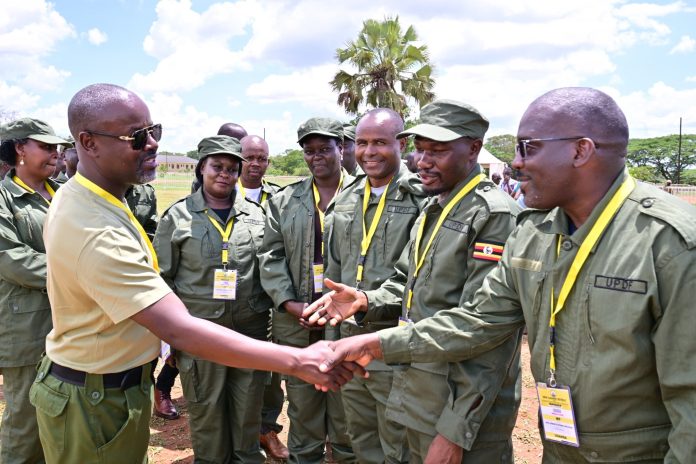
Thomas Tayebwa interacting with newly elected MPs to the 12th parliament at Kyakwanzi.

Deputy Speaker Thomas Tayebwa has called on Members of Parliament to shift their focus from routine legislative debates to ensuring that laws and budgets translate into meaningful impact for citizens.

Speaking at the ongoing NRM Leaders’ Retreat at the National Leadership Institute Kyankwanzi, Tayebwa challenged legislators to rethink their role and effectiveness in serving the public.

He noted that while debate and lawmaking remain central to Parliament, they are only part of a broader responsibility entrusted to MPs.

“I told fellow MPs that being effective goes beyond being an active participant on the floor of Parliament in making laws,” Tayebwa said, adding that legislators must also oversee government programmes, represent their constituents and ensure proper appropriation of public resources.

The Deputy Speaker emphasised the importance of active oversight, urging MPs to engage directly with communities to identify gaps in service delivery.

“To carry out oversight effectively, we need to be on the ground and work with communities to unearth what is not right,” he said.

Drawing from personal experience, Tayebwa cited an intervention in Mitooma District involving the Parish Development Model, where he uncovered irregularities in the sale of official forms.

“I discovered that forms that should have cost Shs10,000 were being sold at Shs30,000,” he said.

He noted that the matter was addressed through open community engagements, helping to restore public confidence.

He also urged legislators to master parliamentary rules of procedure, saying this is key to influencing debates and protecting the integrity of the House.

“In Parliament, we must master our rules of procedure. Every motion, debate and point of information matters, but only if raised in the right way,”Tayebwa explained.

He added that strategic engagement ensures effectiveness in legislative work.

Tayebwa further highlighted the critical role of parliamentary committees, describing them as the backbone of Parliament’s oversight function.

“Most parliamentary work happens in committees, and active participation allows members to influence decisions, monitor projects like roads and health centres, and ensure public funds are spent wisely,” he said.

He also urged MPs to develop expertise in specific sectors and remain focused on delivering results for the people they represent.

“I encouraged colleagues to focus on results and never forget the people we serve. This is how we can ensure that our work is impactful and accountable to the people of Uganda,” Tayebwa said. 

Stories Continues after ad

SPEAKERSHIP RACE: CEC recommendations not binding-Museveni

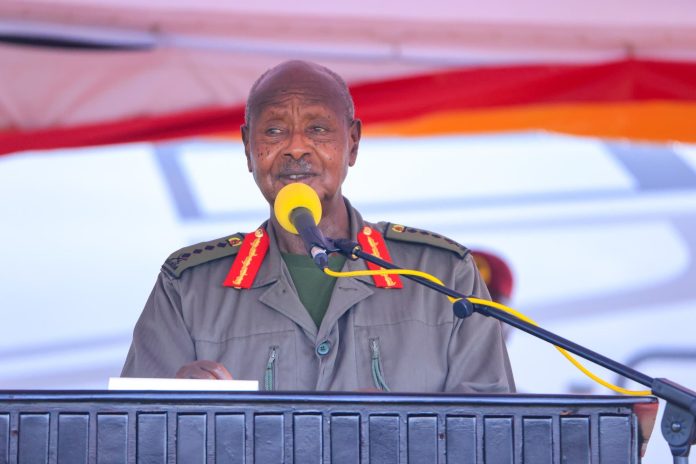
President Yoweri Museveni at Kyakwanzi.

President Yoweri Museveni has clarified that recommendations made by the ruling party’s Central Executive Committee (CEC) on the leadership of Parliament are not binding.

The final decision on the Speaker and Deputy Speaker positions will rest with the National Resistance Movement (NRM) parliamentary caucus.

Speaking during a retreat of NRM Members of Parliament-elect at the National Leadership Institute in Kyankwanzi District, Museveni said the party would take time to deliberate before settling on its flag bearers for the top parliamentary seats.

The President noted that while the CEC had earlier proposed retaining the current leadership of Parliament in line with party practice, this position remains advisory.

“Regarding the issue of standing for Speaker, that is a matter we shall discuss at the appropriate time. CEC had earlier recommended that we maintain the current arrangement, as it has become something of a tradition. This remains a recommendation,” Museveni told the legislators.

His remarks followed a submission by Aringa County MP Yorke Alioni Odria, who urged the party leadership to ensure fairness and equity in determining candidates for the positions of Speaker and Deputy Speaker.

Museveni’s response appeared to calm concerns among sections of legislators who have questioned the endorsement of incumbent Speaker Anita Annet Among and her deputy Thomas Tayebwa, with some arguing that the move limits internal competition within the party.

The race for the speakership has attracted several contenders among members elected to the 12th Parliament. Those who have publicly expressed interest include Among, Odria, Mbale City Woman MP Lydia Wanyoto, Laroo-Pece MP Norbert Mao, Masindi Woman MP Florence Akiiki, and Bukono MP Persis Namuganza.

Museveni said the party would weigh all relevant considerations before arriving at a position, leaving room for further internal discussion among NRM legislators.

During the same session, Odria raised concerns over accountability, questioning why more arrests had not been made in relation to reported corruption in government institutions, including the finance ministry and Parliament.

In response, Museveni defended ongoing enforcement efforts, citing previous prosecutions of public officials implicated in corruption-related cases.

“Why are you saying that corruption is not being addressed? People are being arrested. As I have said, they were arrested, they were prosecuted and due process was followed,” he said.

The President also used the retreat to emphasise the NRM’s ideological foundations, urging legislators to remain grounded in patriotism and socio-economic transformation. He cautioned that weak ideological grounding among leaders continues to undermine progress.

“Leadership that continuously embraces ideological orientation facilitates progress. On the other hand, ideologically bankrupt leadership retards progress and can be reactionary,” Museveni said.

The Kyankwanzi retreat, a regular platform for orienting NRM legislators, has also featured sessions on legislative responsibilities, party discipline, and constituency priorities. Several MPs-elect used the engagement to raise local concerns, including calls for infrastructure improvements and action against theft of medicines from government health facilities.

Stories Continues after ad

THIS IS FAKE: Fraudsters use tycoon Sudhir’s image to promote forgery money-making platform

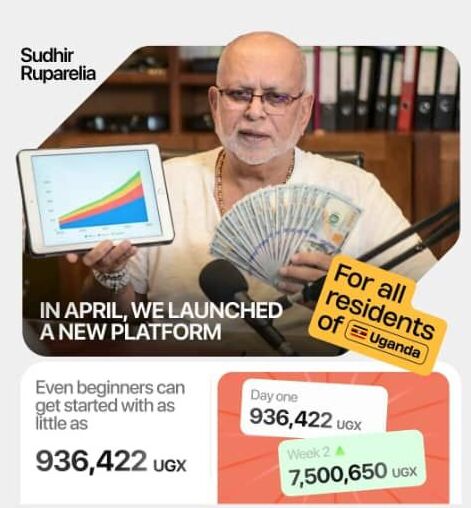
A misleading online advertisement circulating on social media is falsely using the image and name of city tycoon Sudhir Ruparelia to promote a suspicious investment platform targeting unsuspecting users.

The advert, shared as a sponsored post under a page branded “Uganda 24/7,” claims that a new platform launched in April allows individuals to earn quick money with minimal capital. 

It displays exaggerated figures, suggesting that users can start with as little as Shs936,422 and allegedly grow their earnings to over Shs7.5 million within weeks.

The promotional image features Ruparelia holding cash and a tablet showing a rising graph, alongside bold claims that even beginners can get started. It further labels the opportunity as being available for all residents of Uganda, creating the impression of a legitimate, locally endorsed financial product.

There is, however, no credible evidence linking Ruparelia to the platform being advertised. The businessman, known for his investments across real estate, education and hospitality, has not announced or publicly associated himself with any such digital earning scheme.

The advert also directs users to an unfamiliar website, raising further questions about its authenticity and ownership. Such tactics, including the use of well-known public figures and unrealistic profit projections, are commonly associated with fraudulent online schemes designed to attract quick sign-ups.

The circulation of the advert highlights the growing misuse of prominent Ugandan personalities in online scams, where fraudsters exploit public trust to give legitimacy to questionable ventures.

Members of the public are advised to treat such promotions with caution and verify information through official and trusted sources before committing any money.

Stories Continues after ad