Stanbic Bank
Stanbic Bank
23.4 C
Kampala
Stanbic Bank
Stanbic Bank
Home Blog Page 18

KAPATU promoters dismiss NCHE claims, say Karamoja University project meets all requirements

Promoters of the Karamoja Peace and Technology University (KAPATU) have strongly dismissed claims by the National Council for Higher Education (NCHE) that the project has stalled, describing the allegations as false and misleading.

In a detailed response, KAPATU officials said remarks made by NCHE Executive Director Mary J. N. Okwakol before Parliament’s Education Committee last week were intended to undermine the establishment of the institution.

“The promoters of KAPATU take very strong exception to these false allegations that are deliberately designed to mislead H.E. the President of Uganda, Parliament, the NCHE and all stakeholders,” the statement reads.

Prof. Okwakol had told legislators that the university project had stalled after failing to meet accreditation requirements, citing governance concerns and alleging that the Catholic-founded initiative had resisted applying for private university status.

However, KAPATU promoters insist the project is fully compliant with the law and has met all conditions set under the Universities and Other Tertiary Institutions Act.

“The establishment of KAPATU is in strict compliance with the provisions of the law, and the promoters have fully complied with the conditions set out in the Letter of Interim Authority issued by NCHE,” the statement adds.

The promoters further revealed that substantial financial and infrastructural investments have already been secured to support the university’s launch.

“For avoidance of doubt, the promoters have mobilised enough funds, including Shs30 billion donated by H.E. the President, and secured commitments from international development partners worth over Shs1.2 trillion for infrastructure and water provision in Karamoja,” the statement notes.

They added that the university already has essential facilities in place, including a functional library, lecture halls, staff accommodation, security systems, and more than 150 acres of land for expansion.

“This by far exceeds the minimum requirements set out under the law for establishment of a private university. As a matter of fact, no university in Uganda has ever started with these resources,” the promoters said.

KAPATU also rejected claims that it had refused to apply for private university status, clarifying that it formally applied for a provisional licence as a private institution in October 2025 and has since undergone verification by NCHE.

“It is therefore disingenuous… to state before Parliament that KAPATU has refused to become a private institution,” the statement says.

On the role of the Catholic Church, the promoters maintained that its involvement is lawful and protected under both Ugandan legislation and Canon Law.

“Section 27 of the Act permits the Catholic Church to participate in founding a university. It is therefore wrong to suggest that the Church is prohibited by law from acting as a foundation body,” they said.

The statement also defended the appointment of Yoweri Kaguta Museveni and Jessica Rose Epel Alupo as founding Chancellor and Deputy Chancellor respectively, saying their roles are legally sound and beyond the jurisdiction of NCHE.

“There is no legal impediment to these appointments under any law, and the positions are non substitutable,” the promoters stated.

KAPATU leaders accused some actors within government institutions of attempting to frustrate the project.

“The false allegations… fit in a deliberately calculated pattern of distortion by some actors… aimed at failing all efforts towards the realisation of the first ever university in Karamoja Region,” the statement adds.


Stories Continues after ad

BoU targets Shs990b from fresh Treasury bond auction offer

The Bank of Uganda has scheduled a Treasury bond auction worth Shs990 billion on April 15, 2026, as government steps up efforts to mobilise domestic financing and draw in long-term investors.

The sale will be conducted in line with the Public Finance Management Act and will reopen three existing bond tenures, providing a blend of medium and long-term investment opportunities.

Details from the central bank show that Shs230 billion will be offered under a three-year bond carrying a 15.55 percent coupon and maturing on July 6, 2028. A 10-year paper valued at Shs330 billion will attract a 16.25 percent coupon and mature on November 8, 2035, while a 20-year bond worth Shs430 billion will carry a 15.00 percent coupon with maturity set for June 18, 2043.

The issuance highlights the government’s continued dependence on domestic borrowing to fund its budget, while at the same time expanding the country’s capital markets.

Long-term investors are expected to find the longer tenures more appealing due to favourable tax treatment. The three-year bond is subject to a 20 percent withholding tax, whereas the 10-year and 20-year instruments attract a reduced rate of 10 percent, a factor likely to draw interest from pension funds and other institutional investors seeking steady returns.

Participation in the auction will follow strict guidelines set by the central bank. Competitive bidding has been rest,ricted to eight licensed Primary Dealer Banks, namely Absa, Citi, Centenary, DFCU, Equity, Housing Finance, Stanbic and Standard Chartered, with a minimum bid of Shs200.1 million. Other commercial banks and individual investors can take part through the Central Securities Depository under non-competitive bidding, with a minimum investment of Shs100,000 and a cap of Shs200 million per tenure.

Successful bidders will receive allocations at a uniform price based on the lowest accepted price per 100, which corresponds to the highest accepted yield.

The auction is set for April 15, 2026, with settlement expected a day later. Bids must be submitted by 10:00am on the auction day, although the central bank reserves the right to revise the amount on offer or reject applications depending on prevailing market conditions.

There is an anticipation of strong uptake, particularly for the longer-dated bonds, attractive yields and limited alternative long-term investment options. 

The move comes at a time when government borrowing remains elevated, with Treasury bonds continuing to play a key role in financing the fiscal deficit while offering relatively secure investment avenues.

Stories Continues after ad

Stanbic Black Pirates win Nondescripts to book first-ever Enterprise Cup final spot

KAMPALA — Stanbic Black Pirates Rugby Club delivered a spirited performance to defeat Nondescripts RFC 20-17 at Kings Park Arena on Saturday, securing a historic place in the Enterprise Cup final for the first time.

The semi-final clash drew massive support from Ugandan fans, who turned up in large numbers to rally behind their side, now the country’s sole representatives in the competition following the earlier elimination of Heathens Rugby Club and Kobs Rugby Club.

Nondescripts made an early statement, taking the lead in a tightly contested opening half and momentarily unsettling the hosts. However, the Pirates responded with resilience, leveling matters at 10-10 just before halftime after a crucial conversion by William Nkore.

The hosts returned for the second half with renewed intensity, launching wave after wave of attack. Standout performances from Conrad Wanyama, Frank Kidega, Desire Ayera and Alex Aturinda powered the Pirates into a commanding position, igniting the home crowd.

Tactical decisions by head coach Mervin Odongo also proved decisive. The introduction of Haruna Muhammad and Umar Duff added fresh energy and attacking impetus, helping the Pirates edge ahead in the closing stages.

By the final whistle, the Pirates had sealed a narrow but significant 20-17 victory, confirming their progression to the final of one of the region’s most prestigious rugby tournaments.

They will now face Kabras Sugar RFC, who booked their place in the final after defeating Menengai Oilers 29-18 in the other semi-final. The final is set to take place in Nairobi.

Speaking after the match, Stanbic Bank Executive Director Sam Mwogeza described the victory as a deserved milestone that reflects both the club’s determination and the bank’s commitment to growth.

“As a bank committed to fostering Uganda’s growth, seeing clubs like Stanbic Black Pirates rise from mere participation to reaching the finals is something we deeply associate with. It reflects the drive needed to support socio-economic transformation, especially among women, youth, and farmers,” Mwogeza said.

This marks the first time the Black Pirates have reached the Enterprise Cup final, underlining their steady rise in regional rugby and their growing reputation as a competitive force.

Coach Odongo expressed confidence ahead of the decisive clash, emphasizing the team’s readiness to compete at the highest level.

“After this step, we are going for the finals and we are ready for the showdown. We know the team we are facing is strong; they are winners of their national league, but Pirates are not just going to participate. We are going to give our best,” he said.

He added that the team will not only represent the club, but also carry the hopes of the entire nation into the final.

Stories Continues after ad

Minister Tumwebaze dismisses illness rumours, raises alarm on non-communicable diseases

Minister Frank Tumwebaze.

Minister of Agriculture, Animal Husbandry and Fisheries, Frank Tumwebaze has dismissed public concerns about his recent weight loss, saying he is in good health and that his new look is the result of deliberate lifestyle changes.

The minister’s clarification comes days after sections of the public expressed worry over his slimmer appearance, with some sending messages wishing him a quick recovery amid speculation that he could be unwell.

Addressing the concerns, Tumwebaze instead used the moment to warn about the rising burden of non communicable diseases, urging health professionals to take the matter seriously.

“To health educators and promoters, epidemiologists, nutritionists and all health professionals, I am really worried. And you too should be,” he said, noting that the fight against such diseases is far from over.

He pointed to widespread misconceptions about body weight as a major challenge undermining public health awareness.

“The dominant but mistaken thinking that being heavy, overweight, and obese equals being healthy, and on the other hand being slim and small-framed equals being unhealthy is a serious cause for alarm,” Tumwebaze said.

He emphasized that being lean should not be equated to poor health, arguing instead that it reflects strength and discipline.

“To the contrary, a lean body equals a strong one. Is this hard to understand?” he added.

The minister explained that weight loss should only raise concern when it is unintentional or linked to illness, but maintained that deliberate efforts to reduce weight are beneficial.

“Weight loss can only be worrying if it is unintentional, unexplainable and most times due to malnutrition or an involuntary metabolic syndrome associated with underlying chronic sickness,” he said, before adding that intentional weight management should be encouraged.

“But if weight loss is intentional and achieved through measures such as dieting or slimming that involve reducing one’s total body mass through calorie reduction, increased physical activity or lifestyle changes, it is nothing else but an act to celebrate,” he said.

Tumwebaze described maintaining a healthy body weight as a key goal for individuals seeking better health outcomes, stressing that discipline is essential in achieving it.

He acknowledged that his new appearance may have unsettled some people who are not used to seeing him that way, but reassured the public that there is no cause for alarm.

“Yes, looking lean or slim may worry some that may not be used to a person’s new looks, but it is all okay,” he said, adding that obesity should not be glorified.

“Obesity has never been a badge of honor,” he noted.

Responding directly to well wishers, the minister expressed gratitude while firmly dispelling rumours about his health.

“So dear friends sending me messages of quick recovery, especially those doing so out of love, please take heart, I am not sick. My new looks are intentional,” he said.

He added,“It is well with me and I thank God for all his blessings and mostly the gift of life.”

Tumwebaze said he was speaking from the National Leadership Institute in Kyankwanzi, where he is currently attending engagements.

Stories Continues after ad

Sudhir, Nepali community collect over 80 litres of blood in support of Kabaka birthday run

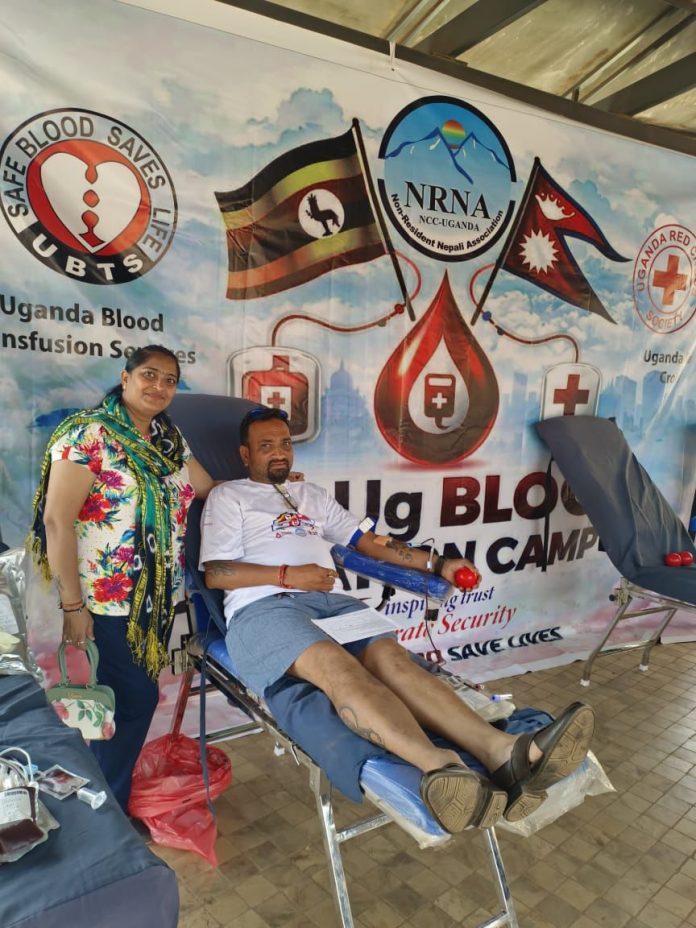
Tycoon Sudhir Ruparelia and members of the Nepali community have collected over 80 litres of blood in support of this year’s Kabaka Birthday Run, boosting efforts to address persistent shortages in Uganda’s blood bank.

The event was held at Acacia Mall in Kamwokya, Kampala in conjunction with Nakasero Blood Bank. 

The blood donation drive, organised by the Non Resident Nepali Association Uganda was held alongside the annual run in honour of Kabaka Ronald Muwenda Mutebi II, drawing strong participation from both Ugandans and foreign residents.

Speaking at the event, Samuel Davis Want, who led the blood mobilisation team, said the Kabaka’s message continues to inspire life saving efforts across communities.

“The Kabaka encouraged people to donate blood to save those in urgent need, especially mothers during childbirth. On a day like today, which marks his birthday, many women across Uganda require blood,” he said.

He also commended the Nepali community for their contribution, noting that it includes rare blood types that are often difficult to access.

“We appreciate the Nepali community because some of the blood they donate includes rare types such as Rhesus negative, which are critical in emergency situations,” he added.

Sudhir Ruparelia said the initiative was necessary given the continued strain on the national blood supply.

“There is a blood shortage in the country and the blood bank needs more supply. I want to thank the Non Resident Nepali Association for organizing this blood camp. They do it every year and this is not an exception,” he said.

He noted that the community had set an ambitious target for the day’s exercise.

“Today is about blood donation by the Nepali community in Uganda, and our target was to have at least 300 people donate. We are grateful to everyone who has turned up to support this cause,” he added.

Rama Aryal, chairperson of the association, said the drive is part of their continued commitment to saving lives.

“Today we are here for blood donation as the Non Resident Nepali Association Uganda. Our target was 300 donors. Donate blood and save a life,” she said.

The Non Resident Nepali Association has over the years organised regular blood donation campaigns in Uganda, contributing significantly to the national blood bank and supporting hospitals during periods of critical shortage.

This year’s Kabaka Birthday Run has attracted thousands of participants across Kampala and other parts of the country, with runners taking part in different categories in a show of unity and commitment to public health.

The run, a flagship initiative of the Buganda Kingdom aims to mobilise communities to tackle key health challenges. 

In recent years, it has focused on the fight against HIV and AIDS, particularly the elimination of mother to child transmission while also promoting testing, treatment and overall community awareness.

The efforts of this event reflect the importance of collective action in saving lives and strengthening Uganda’s healthcare system.

Stories Continues after ad

Gen. Muhoozi’s two years as CDF saves country Shs2t from corruption

Chief of Defence Forces, Gen. Muhoozi Kainerugaba.

The Chief of Defence Forces, Muhoozi Kainerugaba, has revealed that Uganda has saved more than Shs2 trillion over the past two years under the leadership of the Ministry of Defence and Veteran Affairs (MODVA), as he renewed his hardline stand against corruption.

In a statement shared on his official X platform, Gen Kainerugaba said deliberate efforts within the defence establishment have blocked large-scale theft of public funds.

“In the past two years of our command of the MODVA, we have saved our country more than Shs2 trillion from being stolen,” he stated.

He warned that the next phase of the fight will be more aggressive, targeting all individuals suspected of attempting to siphon government resources.

“In the next year we shall arrest all the thieves who were going to steal it. Foreigners are included,” he added.

Gen Kainerugaba has in recent months repeatedly taken a firm and public position against corruption, describing it as a critical threat to national progress and security. 

His messaging has consistently emphasised discipline, accountability and the need for decisive action against those abusing public office.

Since his appointment by President Yoweri Museveni, the army chief has placed strong focus on tightening financial controls within the defence sector, with a broader call for vigilance across government institutions.

His latest remarks signal an escalation in tone and intent, pointing to a period of intensified enforcement targeting individuals involved in financial misconduct. 

The warning that both local and foreign actors will be pursued shows a scope in the anti-corruption drive.

Muhoozi’s approach has been marked by a zero-tolerance posture, including threats of dismissal or prosecution for officials involved in the mismanagement of resources. The reforms are also linked to efforts aimed at improving the welfare of soldiers and ensuring better accountability in military expenditure.

Stories Continues after ad

Women entrepreneurs encouraged to apply for 2026 Women in Tech Accelerator Programme

Women entrepreneurs running technology and tech-enabled businesses have been encouraged to apply for the 2026 cohort of the Standard Chartered Women in Technology (WiT) Accelerator programme as stakeholders aim to unlock the potential of women-led enterprises in Uganda’s digital economy.

The call was made during the official launch of the programme’s second cohort at the Sheraton Kampala Hotel, where partners positioned the initiative as a strategic intervention to address systemic barriers that continue to limit women entrepreneurs from scaling high-growth ventures.

Delivered by the Standard Chartered Foundation in partnership with Innovation Village and Village Capital, and implemented by Future Lab, the three-year programme goes beyond traditional entrepreneurship training. It combines market access, investment readiness, mentorship, and catalytic funding to support sustainable business growth.

Speaking at the launch, Standard Chartered Bank Uganda Chief Executive Officer, Sanjay Rughani, urged women founders to take advantage of the opportunity, noting that the programme is designed to address structural challenges that hinder enterprise growth.

“Persistent inequalities across Uganda and the region continue to limit the growth of women-led businesses. Yet empowering women is critical to economic development and the prosperity of communities,” Rughani said.

Rughani added,“This accelerator goes beyond skills development to provide mentorship, networks, and funding needed to build resilient, revenue-generating enterprises.”

Running from April to October 2026, the 30-week accelerator targets women entrepreneurs with scalable, impact-driven solutions and is expected to deliver measurable outcomes, including job creation and increased market participation.

Unlike conventional accelerators, the Women in Tech programme adopts a three-pillar model aimed at tackling ecosystem-level constraints.

According to Japheth Kawanguzi, Team Lead at Innovation Village, the model comprises a Community of Practice, an Accelerator, and a Market Integration component.

“Beyond supporting individual enterprises, the programme is building a sustainable pipeline of women entrepreneurs while strengthening linkages across the technology ecosystem,” Kawanguzi said.

He added that up to 20 women-led businesses will be supported through the accelerator, with at least 14 expected to graduate as investment-ready ventures. The Market Integration pillar will connect participants to real business opportunities through pilot partnerships, commercial agreements, and investor networks. 

“A newly introduced Community of Practice will connect founders, investors, and industry leaders, ensuring continued support beyond the programme cycle,” Kawanguzi emphasised.

The launch comes at a time when gender disparities persist in Uganda’s technology sector, where women account for only about 18 percent of the workforce. Many continue to face limited access to financing, digital skills, and professional networks.

Minister of Science, Technology, and Innovation, Dr. Monica Musenero, said the government has taken deliberate steps to strengthen the innovation ecosystem and bridge gaps between policy and practice.

“We have established dedicated structures, including an economic unit for Science, Technology and Innovation metrics, to bridge the gap between policy and knowledge,” she said. “Through STI, we are rolling out town halls and platforms to improve access to information, facilities, and innovation spaces.”

She added that the Women in Tech programme aligns with Uganda’s national priorities. “It contributes directly to building a knowledge-based economy and advancing the country’s broader economic transformation agenda.”

Arthur Mukembo, Chief Executive Officer at Future Lab, noted that the inaugural cohort supported 12 women entrepreneurs, with top performers receiving up to $10,000 in catalytic funding to scale their ventures.

“In 2026, we aim to support up to 20 enterprises, deploy $50,000 in catalytic funding to top-performing entrepreneurs, and create over 100 direct and indirect jobs,” Mukembo said. “We also expect at least 60 new jobs and more than 10 live commercial pilots.”

Globally, the Standard Chartered Foundation has committed over $600,000 in grant funding for the 2026 cohort across 12 markets, including Uganda, Kenya, Nigeria, and South Africa. To date, the initiative has supported more than 4,000 women founders across 17 markets.

With applications now open, partners are positioning the Women in Tech Accelerator as a critical entry point for women entrepreneurs seeking to transition from early-stage ventures to scalable businesses.

Stories Continues after ad

Green Hope in Action: Rotary District 9213 DG Kitakule leads quiet environmental restoration drive across Uganda

Rotary District 9213 Governor, Geoffrey Martin Kitakule.

The environmental restoration movement led by Rotarians is steadily transforming communities across Uganda, with a focus on tree planting, conservation and sustainable living.

In a statement, Rotary District 9213 Governor, Geoffrey Martin Kitakule said the initiative is gaining momentum across the country, driven by partnerships with schools, communities and institutions committed to reversing environmental degradation.

“Across Uganda, a quiet but powerful movement is taking root, one tree, one community and one project at a time. Environmental restoration is becoming a defining pillar of Rotary’s impact, transforming landscapes while uplifting livelihoods,” Kitakule said.

Rotary and Rotaract clubs have mobilised communities and schools to plant trees and adopt environmentally friendly practices. Kitakule noted that the effort is not just about numbers but about long term impact on ecosystems and livelihoods.

“These efforts are not just about numbers. Each tree planted represents a step toward restoring degraded forests, a natural defense against climate change, and a boost to soil fertility and agricultural productivity,” he explained.

The initiative has also seen increased community involvement, with young people, local leaders and families taking part in environmental stewardship. In many areas, tree planting has become a shared responsibility that is strengthening local resilience.

Uganda’s wetlands and water sources, which are vital lifelines for both people and ecosystems, are also a key focus. 

Kitakule said Rotarians are working to protect and restore these fragile environments through awareness campaigns and conservation projects.

“Through campaigns and conservation projects such as Run for the Nile, Rotary is helping to reduce wetland degradation and protect the Nile and Lake Victoria. These efforts not only protect biodiversity but also strengthen resilience against climate related challenges,”he said. 

Schools have emerged as critical centres for change, with initiatives promoting energy efficient cookstoves and better waste management practices. According to Kitakule, these practical solutions demonstrate that environmental conservation can be simple and beneficial to everyday life.

“At the heart of Rotary’s environmental activities is education. By engaging schools, youth groups and community members, we are building a culture of awareness and responsibility,” he said.

Youth engagement has also been strengthened through Rotaract clubs, which are leading clean up drives and environmental campaigns aimed at inspiring innovation and sustainability among young people.

Kitakule highlighted the importance of partnerships in scaling up impact, noting that collaboration with local communities, government institutions and international partners has enabled Rotary to expand its reach.

“Together with Uganda Breweries Limited and the National Forestry Authority, we are restoring Namamaga Forest Reserve. With EACOP, we are greening schools in over six districts along the oil pipeline,” he said.

He added that the environmental work undertaken by Rotarians goes beyond conservation and speaks to broader issues of health, food security and climate resilience.

“The environmental work executed by Rotary in Uganda is more than conservation. It is a commitment to life, health and future prosperity. Healthy ecosystems mean better food security, more resilient communities and continued climate action,” Kitakule said.

Kitakule urged more Ugandans to take part in protecting the environment, stressing that collective action is key to achieving sustainable change.

“This is not just about healing the land. It is about inspiring a nation to care, to act, and to build a greener tomorrow. This is Rotary in action. This is hope growing,” he said.

Stories Continues after ad

Mufumbiro denied bail to bury his wife

National Unity Platform deputy spokesperson Waiswa Mufumbiro.

The Chief Magistrate’s Court has denied National Unity Platform deputy spokesperson Waiswa Mufumbiro temporary bail to attend the burial of his wife, Edith Katende Mufumbiro, who died early Wednesday after battling with Cancer.

Mufumbiro, who has been in detention since last year, remains on remand and is yet to be committed to the High Court for trial. He faces multiple charges, including incitement to commit an offence, unlawful assembly, and unlawful military drilling.

The decision means he will miss his wife’s burial, which is scheduled for tomorrow, deepening the emotional toll on his family and supporters.

According to National Unity Platform spokesperson Joel Ssenyonyi, the prosecution opposed Mufumbiro’s temporary release and successfully challenged the suitability of the sureties presented before court.

“The state prosecutor rejected two proposed sureties for Mr Mufumbiro’s release, including his father, Moses Baligeya, on grounds that he is too close to him,” Ssenyonyi said.

He added that another proposed surety, Kampala Lord Mayor elect Ronald Balimwezo, was also dismissed by the prosecution.

“They argued that Ronald Balimwezo is not sufficiently close to compel his attendance in court,” Ssenyonyi stated.

Ssenyonyi further revealed that the proceedings were conducted behind closed doors, with the media barred from covering the session.

“The media was barred from the session,” he said, raising concerns among observers about transparency in the handling of the case.

Mufumbiro’s continued detention and the court’s refusal to grant him temporary bail have brought debate on the rights of remand prisoners, especially in circumstances involving bereavement.

The family prepares to lay Edith Katende Mufumbiro to rest tomorrow. Mufumbiro will remain in custody, unable to attend the burial rites of his wife.

Stories Continues after ad

Ex-state minister Nandutu sentenced to four years in jail over Karamoja iron sheets scandal

Ex-State Minister for Karamoja Affairs, Agnes Nandutu.

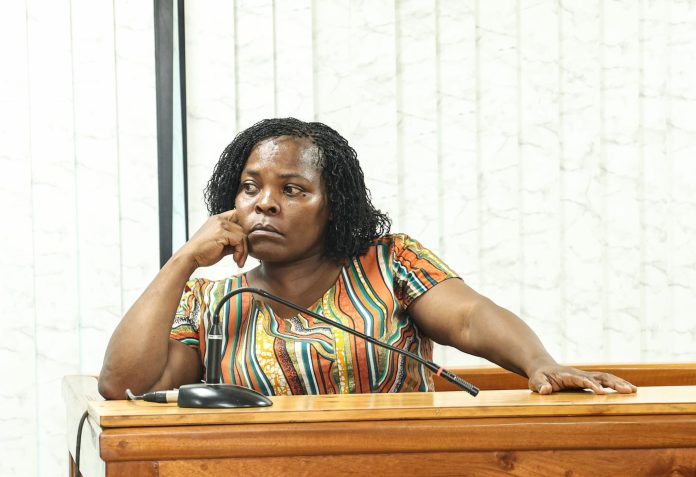
The Anti-Corruption Court has sentenced former State Minister for Karamoja Affairs, Agnes Nandutu to four years in prison for diverting 2,000 iron sheets meant for vulnerable communities in Karamoja.

In addition to the custodial sentence, the court barred Nandutu from holding public office for a period of 10 years. 

The conviction follows investigations by the State House Anti-Corruption Unit in collaboration with the Criminal Investigations Directorate and the Office of the Director of Public Prosecutions which begun in 2023.

Delivering the ruling, Anti-Corruption Court Judge Jane Kajuga said the gravity of the offense could not be overlooked, noting that aggravating factors outweighed any mitigation presented by the defense.

“Aggravating factors outweigh the mitigating factors set out and those that have been raised by the accused and the defense. The only saving grace is the public apology rendered which is public knowledge,”Judge Kajuga ruled.

The judge dismissed the defense’s plea for a fine, arguing that the penalties provided for under the law were too lenient to match the seriousness of corruption offenses.

“The highest penalty of a fine is one hundred and sixty currency points which comes to a paltry three million, two hundred thousand. By all standards, that amount is inadequate,” she said.

Kajuga further used the moment to call for legal reforms, stating that existing fines under the Anti-Corruption Act are too low to serve as effective punishment or deterrence.

“In my view, they are so low that they make it difficult to hand down sentences that reflect the crimes committed. One of the principles of sentencing is that the sentence must reflect the crime,” she emphasized.

Relying on sentencing guidelines, the court adopted a starting point of three and a half years, but moved upwards due to the weight of aggravating factors.

“I can only move upward from the starting range. I am of the view that the five years prayed for by the state is on the high side. I therefore find that a sentence of four years imprisonment is suitable for the offenses,” Kajuga noted.

The court, however, declined to issue a compensation order, citing recovery of the iron sheets and lack of clear evidence of loss.

“Compensation orders are intended to provide immediate relief to victims of crime and alleviate the grievances of complainants. In light of what I have stated about the recovery of the iron sheets, I decline the application,” she ruled, adding that the recovered iron sheets should be returned to government.

Earlier in the day, Nandutu had made an emotional plea for leniency, citing ill health and family responsibilities.

“I am a first-time offender. I would request this honorable court to have lenience on me,” she said.

She told court of her deteriorating health condition, stating, “I have been in and out of hospital and even the situation of having clots in my lungs makes me collapse at any time.”

Nandutu also appealed on humanitarian grounds, saying she is the sole provider for her family.

“I am a mother of four young school-going children, a single mother, and the only able person in the family to win bread. I am also taking care of orphans left by my siblings and my ailing mother suffering from dementia,” she said.

She offered an apology to government and the people of Karamoja.

“To government, I am apologetic. Whatever happened, I am sorry. To the people of Karamoja, I am sorry. And to the entire country, I am sorry,” she told court.

Nandutu insisted she had cooperated with authorities and returned the iron sheets upon realizing their intended purpose.

“The iron sheets that I received, I willingly returned them. I told the police that I have them and even those that were missing I paid all of them in cash to the government,” she said.

She pleaded for a non-custodial sentence, arguing that imprisonment would devastate her dependents.

“I would request this honorable court to give me a non-custodial sentence to allow me take care of my family. I am their only breadwinner,” she added.

Despite the plea, the court ruled that a custodial sentence was necessary to reflect the seriousness of the offense and serve as a deterrent.

Stories Continues after ad