Stanbic Bank
Stanbic Bank
18.2 C
Kampala
Stanbic Bank
Stanbic Bank
Home Blog Page 20

Is it the regime or police against Bobi Wine?

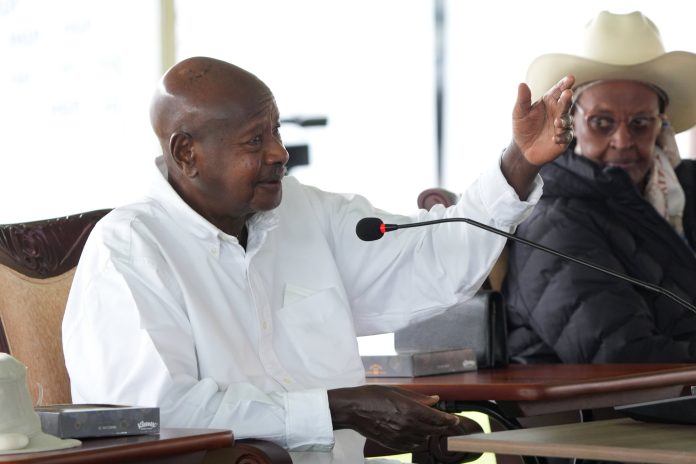
National Unity Platform (NUP) flagbearer, Robert Kyagulanyi in a standoff with secuirty personnel.

As Uganda’s campaign season intensifies ahead of the 2026 General Elections, National Unity Platform (NUP) presidential candidate Robert Kyagulanyi Ssentamu, alias Bobi Wine, has repeatedly been blocked, intercepted, and violently confronted on the campaign trail. From eastern Uganda to the west and north, his movements have been curtailed in ways that have triggered a persistent and unresolved question: is it the police acting within the law, or the political regime using state machinery to frustrate his campaign?

Kyagulanyi himself has been consistent in how he frames these encounters. In his public statements and social media posts, he rarely isolates individual institutions such as the Uganda Police Force or the military as acting independently. Instead, he repeatedly points to what he calls “the regime,” portraying security agencies as instruments executing political instructions rather than neutral enforcers of public order.

During several blocked campaigns, Kyagulanyi has stated that he is not fighting the police as an institution but a political system that fears open competition. In multiple posts on his X account, he has accused the ruling establishment of deliberately shrinking campaign space for opposition candidates, arguing that security explanations are often used to disguise political decisions.

This framing has been evident across the country. In eastern Uganda, Kyagulanyi complained of being blocked from entering towns where other candidates had already campaigned freely. In western Uganda, his convoy was intercepted and supporters arrested, prompting him to claim that the objective was to isolate him from urban voters and push him into less visible rural routes.

In northern Uganda, particularly Gulu City, his campaign was marked by chaos, violence and looting, after which he maintained that the disorder was a consequence of deliberate obstruction rather than poor crowd control.

“The regime does not want us to speak to the people,” Kyagulanyi has repeatedly stated in various forms, insisting that restrictions imposed on his campaign are not accidental or procedural but calculated. He has argued that last-minute changes to routes, denial of access to venues, and sudden security deployments are intended to exhaust, intimidate, and delegitimise his movement.

Police, on the other hand, have consistently rejected claims of political bias. Their explanations have centred on public order management, adherence to agreed campaign schedules, and concerns about crowd safety. In official statements following standoffs, police have said Kyagulanyi’s team often deviates from approved routes, makes unauthorised stopovers, or mobilises crowds beyond what security plans can accommodate. From their perspective, interventions are administrative and preventative, not political.

Yet the pattern of repeated disruptions has kept the debate alive. Critics of the state argue that enforcement appears selective, pointing out that other candidates rarely face similar levels of obstruction. Supporters of Kyagulanyi see the consistency of the incidents across regions as evidence of coordination rather than coincidence. To them, police explanations fail to account for why the same candidate is persistently affected.

The Gulu incident further sharpened this debate. What began as a campaign stop descended into violence, with civilians assaulted and property looted. While police later arrested suspected criminal elements, Kyagulanyi’s camp insisted that the chaos followed aggressive attempts to block his movement. Even in condemning the violence, he framed it as a symptom of repression rather than spontaneous lawlessness.

Importantly, Kyagulanyi has maintained a careful distinction in his language. He criticises “the regime” far more than individual officers, suggesting that responsibility lies with political command rather than operational enforcement. This distinction appears deliberate, aimed at separating institutional actors from the political power structure directing them.

As the campaign progresses, the lack of an agreed narrative remains stark. Police insist they are enforcing the law impartially. Kyagulanyi insists the law is being weaponized. Between these positions lies a deeper issue about trust in state institutions and the boundaries between security, politics and democratic competition.

For voters, the question is no longer only about individual incidents but about the overall climate in which the election is unfolding. Whether history will judge the disruptions as legitimate policing or political suppression will depend not just on official explanations but on whether all candidates are ultimately allowed to campaign freely, safely, and on equal footing.

Stories Continues after ad
Africa finance ministers launch forum to drive climate-responsive economic transformation in Lusaka

Participants at the conference.

Uganda’s Finance Minister Matia Kasaija has lauded Africa’s collective commitment to placing climate-responsive economic transformation at the heart of the continent’s development agenda.

Kasaija, who also serves as Chair of the Global Coalition of Finance Ministers for Climate Action, said the newly launched Pan-African Finance Ministers Forum for Climate Action will allow African leaders to speak with one voice, rooted in the continent’s priorities and realities.

The forum will promote peer-to-peer learning, strengthen institutional capacities and integrate climate risk and adaptation strategies into economic planning while leveraging green growth opportunities.

The minister’s remarks were delivered on his behalf by Dr. Albert Musisi, Commissioner for Macro-Economic Policy at Uganda’s Ministry of Finance, Planning and Economic Development during the opening of the second meeting of African Ministers of Finance in Lusaka, Zambia.

“The forum will enable finance ministries to embed climate action into public finance management, align national budgets with the Paris Agreement, promote carbon pricing, mobilize private finance, and share best practices for building low-carbon and resilient economies,” Kasaija said.

He added, “We see climate action as a catalyst for economic transformation, job creation, food security enhancement, expanded clean energy access, and protection of the natural assets on which our communities depend. This meeting is therefore timely and urgent for ministries of finance to use their fiscal power to shape macroeconomic, fiscal, and financial strategies that allow Africa to thrive.”

Dr. Sam Mugume Koojo, technical coordinator at Uganda’s Secretariat, highlighted that several African countries have already made progress in green budgeting, climate tagging and the establishment of climate finance units, green bonds, and other innovative financing instruments.

Zambia’s Accountant General, Nsandi Manza, who represented the Zambian Finance Minister, emphasized that despite Africa’s wealth of natural resources, renewable energy potential, and human capital, the continent is already experiencing the devastating impacts of climate change.

“The reality of climate vulnerability and climate opportunity defines the purpose of our meeting. Across Africa, droughts, floods, cyclones, and food insecurity are no longer distant risks, they are present and costly, reducing GDP, straining public resources and undermining long-term development gains,” Manza said. “

She added that Africa is central to the global climate solution, urging countries to translate potential into bankable and growth-enhancing economic strategies.

Stories Continues after ad

Airtel Africa, SpaceX partner to launch first-ever Starlink direct-to-cell connectivity across Africa

Airtel Africa has announced a partnership with Elon Musk’s SpaceX to introduce Starlink Direct-to-Cell satellite connectivity across the continent, marking Africa’s first satellite-to-mobile service aimed at expanding network access to millions of people in remote and underserved areas.

In a statement issued on December 16, 2025, Airtel Africa said the agreement will see Starlink Direct-to-Cell services rolled out across all its 14 African markets, which collectively serve about 173.8 million customers. The service will allow Airtel subscribers with compatible smartphones to access mobile connectivity via satellite in regions without terrestrial network coverage.

The partnership is expected to significantly improve digital access in hard-to-reach areas, enabling customers to stay connected even where deploying traditional mobile infrastructure is difficult.

“Through this partnership, Airtel Africa customers with compatible smartphones in regions without terrestrial coverage can have network connectivity through Starlink,” the statement said, describing the initiative as a major step toward closing Africa’s digital divide.

According to Airtel Africa, the satellite-to-mobile service will begin in 2026, initially supporting text messaging and data services for selected applications. The agreement also includes support for Starlink’s first broadband Direct-to-Cell system, powered by next-generation satellites capable of delivering high-speed connectivity to smartphones with up to 20 times improved data speeds.

The rollout will, however, proceed in line with country-specific regulatory approvals across Airtel Africa’s markets.

Airtel Africa said it is the first mobile network operator on the continent to offer Starlink Direct-to-Cell services, leveraging a constellation of about 650 satellites to provide seamless connectivity, particularly in remote and rural areas.

“The partnership reinforces Airtel Africa’s commitment to bridge the digital divide and offer seamless connectivity to its customers,” the statement noted, adding that the two companies will continue to explore further collaboration opportunities to advance digital inclusion across Africa.

Commenting on the development, Airtel Africa Managing Director and Chief Executive Officer, Sunil Taldar, said the partnership aligns with the company’s mission to deliver reliable and inclusive connectivity solutions.

“Airtel Africa remains committed to delivering a great experience to our customers by improving access to reliable and contiguous mobile connectivity solutions,” Taldar said.

Taldar added, “Starlink’s Direct-to-Cell technology complements the terrestrial infrastructure and even reaches areas where deploying terrestrial network solutions are challenging. We are very excited about the collaboration with Starlink, which will establish a new standard for service availability across all our 14 markets.”

Starlink Vice President of Sales, Stephanie Bednarek said the partnership will be transformative for connectivity on the continent, particularly in areas beyond the reach of traditional networks.

“For the first time, people across Africa will stay connected in remote areas where terrestrial coverage cannot reach. Through this agreement with Airtel Africa, we’ll deliver our next-generation technology to offer high-speed broadband connectivity, providing faster access to many essential services,” Bednarek said.

The Airtel Africa–SpaceX partnership is expected to play a key role in expanding mobile and broadband access across Africa, supporting economic growth, innovation, and access to essential digital services for millions of people.

Stories Continues after ad

2nd Diaspora Convention opens, advancing economic diplomacy at Speke Resort Munyonyo

The Permanent Secretary, Ministry of Foreign Affairs, Mr Vincent Bagiire Waiswa, addressing the convention.

The 2nd Ministry of Foreign Affairs Diaspora Convention has officially opened at Commonwealth Speke Resort Munyonyo, bringing together Ugandans from across the globe to shape the country’s economic and commercial diplomacy agenda.

The three-day convention was opened with welcoming remarks from the Permanent Secretary in the Ministry of Foreign Affairs, Mr. Vincent Bagiire Waiswa, and the Head of the Diaspora Services Department, Ambassador Johnny Muhindo. The event is also being attended by the Head of the State House Diaspora Unit, Mr. Mohammed Bagonza.

Addressing delegates, Mr. Bagiire reaffirmed the government’s recognition of the diaspora as a vital national asset, emphasizing that Uganda’s foreign missions exist to both promote and safeguard the country’s interests abroad. He urged diaspora members to actively contribute ideas as the government moves to finalize the National Diaspora Policy.

“Our missions are there to promote as well as protect Uganda’s interests, and your input is critical as we conclude the National Diaspora Policy,” Bagiire said.

He further revealed that government plans to institutionalize recognition of outstanding diaspora contributions, announcing intentions to organize a global diaspora awards event next year. He also thanked development partners, including the International Organization for Migration (IOM), for supporting diaspora engagement initiatives.

Reflecting on the ongoing policy formulation process, the Permanent Secretary underscored the Ministry’s commitment to delivering a policy that genuinely reflects the aspirations of Ugandans living abroad.

“As we seek partnerships with diaspora communities, we want to celebrate you,” he said, adding that government views the diaspora as a trusted partner in national development.

Bagiire also called for greater unity among diaspora communities, encouraging coordinated engagements abroad that go beyond cultural showcases. He noted that Uganda’s complex history requires a more integrated and inclusive narrative that supports national cohesion and development.

In his remarks, Ambassador Johnny Muhindo emphasized a shift in how the diaspora should be perceived, describing it as a strategic development partner rather than a peripheral contributor.

“The diaspora is no longer a mere contributor. It is a central development partner and a strategic force for shared growth,” Amb. Muhindo said.

He highlighted the urgency of concluding the National Diaspora Policy, pointing to ongoing skills-mapping exercises and benchmarking efforts in countries such as India, Ethiopia and Kenya, which have successfully transformed remittances into long-term investments. He also encouraged the adoption of secure digital remittance solutions to protect and grow diaspora financial flows.

Amb. Muhindo noted that the convention itself has grown steadily over the years, evolving from a simple idea into a key platform for structured engagement between government and Ugandans abroad.

“What started as a simple idea has steadily gained momentum, and this convention now plays a critical role in shaping diaspora engagement,” he said.

Held under the theme, “The Role of the Diaspora in the Economic and Commercial Diplomacy Strategy,” the convention will run until December 19, 2025. During the sessions, delegates are expected to harmonize inputs into the Diaspora Policy, strengthen ties between missions and diaspora communities, and identify practical pathways for skills transfer, investment facilitation and remittance optimization.

The State House Diaspora Unit, represented by Mr. Bagonza, will continue coordinating reforms and engaging diaspora communities to ensure the final policy responds to real and emerging needs.

In closing his remarks, Mr. Bagiire congratulated Ugandans in the diaspora for their achievements and resilience, assuring them of government’s goodwill.

“The Government of Uganda is a friend. It respects the diaspora and deeply values its contribution,” he said.

Stories Continues after ad

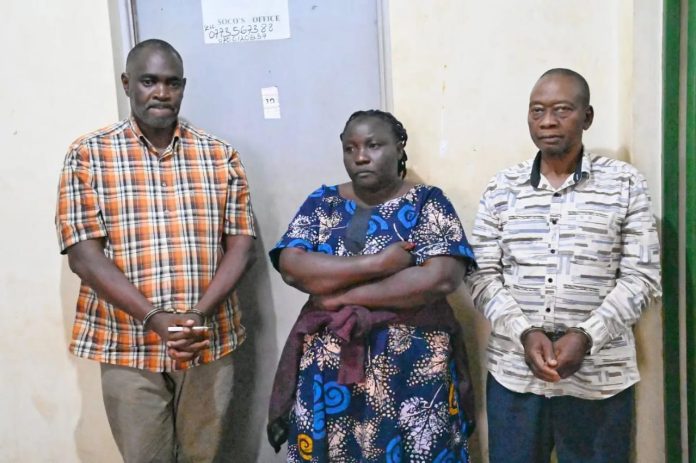
Police arrest ‘gang leader’ in NUP’s Gulu campaign violence

The alleged suspects as paraded by the police.

Police in the Aswa-Gulu region have arrested Aleng Fatuma, the alleged leader of criminal gangs responsible for violence and looting that occurred in Gulu City during a campaign visit by National Unity Platform (NUP) presidential candidate Robert Kyagulanyi Sentamu alias Bobi Wine.

The Regional Police Spokesperson for Aswa-Gulu, Mr. Ongom David Mudong said the arrest came as part of intelligence-led operation conducted on the night of December 18, 2025, targeting suspects involved in the incidents of December 6, 2025. A total of 41 individuals were detained at Gulu Central Police Station.

“Following the acts of criminality involving assaults and the looting of people’s property that occurred in Gulu City Centre on 6th December 6, 2025, during a campaign visit by the NUP Presidential candidate, Mr. Robert Kyagulanyi Sentamu, we wish to inform the public of the following developments,” Ongom said.

Police investigations relied on CCTV footage and intelligence from multiple sources to track down the suspects. The operation was described as well-coordinated and intelligence-driven, covering Gulu City and surrounding suburbs.

Aleng Fatuma is alleged to have orchestrated the mobilization of criminal gangs using various media platforms, including TikTok to coordinate attacks and theft during the campaign rally.

The December 6 campaign trail in Gulu drew thousands of supporters to welcome Bobi Wine. Still, it was later marred by chaos as suspected criminals took advantage of the crowds to assault civilians, steal property, and loot shops. Several victims reported the loss of money, phones, and other valuable items, prompting widespread public concern.

“Operations are ongoing to ensure that all accomplices are identified and apprehended. As earlier promised, all individuals found culpable will either be summoned or arrested in accordance with the law,” Ongom said.

He urged residents of the Acholi sub-region to remain calm, assuring them that the police are committed to restoring order and ensuring that justice prevails.

“We urge the general public, especially the people of Acholi Sub-region to remain calm as we remain committed to ensuring that all those responsible are brought to book so that justice prevails,” Ongom added.

Police indicated that further arrests could follow as investigations continue and more information emerges about the coordination of the criminal gangs.

Stories Continues after ad

Minister Balaam summons Chosen Becky over alleged misuse of children at private ceremony

Children who are under spotlight.

The Ministry of Gender, Labour and Social Development has summoned socialite Chosen Becky, also known as Rebecca Kukiriza over allegations of abusing children during a private wedding ceremony held on December 15, 2025.

In a statement dated December 17, 2025, the Minister of State for Youth and Children Affairs, Balaam Barugahara Ateenyi, said the ministry had taken note of “widely circulated images and reports” from the ceremony, in which children were allegedly used to carry placards bearing messages aimed at adults, exposing them to public controversy and possible emotional harm.

“Whereas the Ministry respects the right to privacy, family life, and freedom of expression, children must never be used as instruments in adult disputes, publicity stunts, or social media controversies,” Balaam said.

He emphasized that children are vulnerable and entitled to protection, dignity, and care, regardless of disagreements between adults.

“Children are innocent, vulnerable, and entitled to protection, dignity, and care from parents and guardians,” the minister noted, warning that involving minors in controversial messaging undermines their welfare.

The ministry said the alleged conduct raises serious concerns under Uganda’s child protection and privacy laws, including the Children Act, Cap. 59, as amended, which places the best interests of the child as a paramount consideration in all actions concerning children.

“A child has the right to protection from emotional, psychological, and social abuse, neglect, and exploitation, as well as the right to privacy, dignity, and protection from harmful publicity,” the statement reads.

The ministry also cited the Data Protection and Privacy Act, 2019, noting that the publication and circulation of children’s images in controversial circumstances, especially on social media, may amount to a violation of the law.

As a result, Ms. Chosen Becky has been summoned to appear before the Office of the State Minister for Youth and Children Affairs at the Ministry of Gender, Labour and Social Development on Tuesday, December 23, 2025, for a formal engagement regarding the matter.

At the meeting, the ministry said she will be required to formally withdraw the alleged actions involving the children and issue a public apology.

She is expected to “acknowledge that children should not be involved in adult disagreements or controversial messaging,” the statement adds.

She will also be required to provide a written commitment not to involve children in her personal, marital, or social disputes, whether online or offline, and to immediately delete and ensure the removal of all related social media content involving children.

Balaam also used the statement to issue a stern warning to public figures, artists, influencers, and socialites against exploiting children for publicity or online content.

“Children’s rights are protected by law. Social media popularity, celebrity status, or personal circumstances do not exempt anyone from complying with child protection laws,” he warned.

He stressed that the ministry will not hesitate to take legal and administrative action against anyone found misusing children in ways that undermine their safety and dignity.

“The Government of Uganda remains committed to upholding the rights, safety, dignity, and best interests of every child,” Balaam said.

Stories Continues after ad

Speke Resort Munyonyo to host Festive Boxing Day Brunch with fun for all ages

Brunch at Speke Resort Munyonyo.

Speke Resort Munyonyo is set to delight guests this festive season with a vibrant Boxing Day Bubbly Brunch at the Sunset Restaurant on Friday, December 26, from 12:00 pm to 4:00 pm. 

The event promises a perfect blend of fine dining, entertainment, and family-friendly activities.

Guests can enjoy a carefully curated culinary journey with a buffet of exquisite dishes, all served in the resort’s tranquil and picturesque setting. 

The Boxing Day brunch is designed to create a warm and celebratory atmosphere, ensuring every guest leaves with joyful memories.

The event offers something for everyone. Adults can indulge for Shs200,000, while children below 12 years can join the festivities for Shs90,000. 

Families are invited to enjoy activities including a live band, DJ sessions, a kids movie night, visits to the petting zoo, a Boxing Day Kids Carnival, and various interactive kids’ activities.

With its unique combination of gourmet dining, lively entertainment, and family-oriented fun, Speke Resort’s Boxing Day Bubbly Brunch promises to extend the joy of the festive season for all.

Stories Continues after ad

EC unveils Biometric Voter Verification Kits to boost credibility of 2026 elections

The Electoral Commission showcases how the Biometric Voter Verification Kit works.

The Electoral Commission (EC) has showcased the Biometric Voter Verification Kit (BVVK), a key technological safeguard to be used in the 2026 General Elections, in a live demonstration aimed at strengthening transparency, voter confidence and the integrity of the electoral process.

The demonstration, held on Wednesday at the EC headquarters in Kampala, was conducted for journalists, election observers and representatives of political parties. Although the statement was issued by the EC Chairperson, Justice Simon Byabakama Mugenyi, it was read on his behalf by the Deputy Chairperson, Hajjati Aisha Lubega.

A mock polling station was set up to allow participants to experience the voter verification process firsthand, as the Commission walked stakeholders through how voters will be identified and authenticated on polling day using biometric technology.

“The Electoral Commission has acquired 109,142 Biometric Voter Verification Kits which will be deployed during the 2025/2026 General Elections to improve the management and conduct of elections through accurate authentication of voter identity,” the statement read.

According to the Commission, the BVVK uses fingerprints and facial recognition to match a voter’s details with those contained in the Voters Register at a specific polling station. 

This, the EC says will help presiding officers confirm that a voter is indeed the rightful person registered to vote at that station.

“The system will ensure that only registered persons vote and that no voter votes more than once for the same election, thereby reinforcing the principle of one man or woman, one vote,” Hajjati Lubega read.

The Commission explained that officials at all levels, from the national headquarters to polling stations, are already undergoing training to competently operate the kits during the elections.

The live demonstration, the EC noted, is intended to demystify the technology and build public trust ahead of polling.

“The purpose of this demonstration is to sensitize stakeholders on polling day procedures, demonstrate how voters are identified using biometric and facial recognition technology, and build confidence, transparency and trust in the voter verification process,” the statement said.

Beyond the BVVK, the Commission also updated stakeholders on other key preparations, including the ongoing issuance of Voter Location Slips (VLS). The exercise, which began on December 15, 2025 and will end on January 13, 2026, is being conducted at parish and ward level across the country.

The VLS bears a voter’s photograph, names, date of birth and full polling location details, as well as a unique barcode that will be read by the BVVK machines on polling day.

“This exercise is a response to complaints raised in previous elections, where some voters reported difficulty in locating their polling stations,” the EC noted, adding that the slips are free of charge and must be collected in person.

The Commission further announced adjustments to polling dates for elections of representatives of Special Interest Groups, explaining that the changes are meant to allow affected voters to participate effectively in both the general elections and their respective electoral college processes.

As the session concluded, the EC invited stakeholders to actively observe, participate and ask questions about the BVVK system.

“We want stakeholders to clearly understand the safeguards in place to prevent multiple voting, impersonation and other electoral malpractices, and to appreciate how technology enhances the credibility, integrity and efficiency of our elections,” the statement emphasized.

The Commission reaffirmed its commitment to delivering free, fair and credible elections in 2026 with technology playing a central role in safeguarding the will of Ugandan voters.

Stories Continues after ad

Finance Ministry, BoU launch Okusevinga, Africa’s first gov’t-owned unit trust scheme

Bank of Uganda Governor, Dr. Michael Atingi-Ego, graced the launch.

The Ministry of Finance, Planning and Economic Development (MoFPED), in partnership with the Bank of Uganda (BoU) has launched the pilot phase of the Okusevinga Money Market Unit Trust Scheme, an initiative aimed at widening access to safe and affordable investment opportunities for Ugandans.

The pilot phase commenced on December 17, 2025, marking a major milestone in Uganda’s financial sector as Okusevinga becomes Africa’s first government-owned unit trust scheme. T

The initiative represents a strategic shift from merely expanding access to financial services to enabling meaningful participation in savings and investment.

According to MoFPED, Okusevinga builds on Uganda’s significant progress in financial inclusion, with 81 percent of adults now having access to financial services, largely driven by the widespread adoption of mobile money, as reported in the FinScope Uganda 2023 Survey.

“While access to financial services has expanded significantly, many Ugandans continue to save informally, which limits their ability to earn returns and build long-term financial resilience,” the ministry said.

The Okusevinga scheme has been designed to bridge this gap by allowing individuals to invest small amounts directly into regulated money market and bond funds using a simple, mobile-based platform. Through the platform, small savers will be linked to professionally managed, low-risk investment instruments.

The pilot phase will involve a limited group of participants who will test the platform’s full functionality, including registration, investment transactions and balance inquiries. Officials say the controlled rollout will help validate system performance, enhance consumer protection measures and improve the user experience before a nationwide rollout.

“The pilot reflects a prudent, phased approach to innovation, ensuring the platform operates efficiently, securely and in full compliance with regulatory standards before it is made available to the wider public,” MoFPED and BoU noted.

Authorities expect Okusevinga to strengthen household financial health while also contributing to the development of deeper domestic capital markets and supporting sustainable economic growth.

The pilot phase is being implemented with support from several partners, including the Capital Markets Authority, Uganda Communications Commission, National Information Technology Authority, Financial Sector Deepening Uganda, Uganda Investment Authority and Airtel Uganda.

As implementation continues, MoFPED and the Bank of Uganda will intensify stakeholder engagement, strengthen financial literacy initiatives and prepare for the next phase of the project. 

The public will be informed in due course about the full launch of Okusevinga and how Ugandans can participate, ahead of the planned nationwide rollout in early 2026.

Stories Continues after ad

Uganda’s economy records strong performance as inflation eases and exports soar in November 2025

Ministry of Finance, Planning and Economic Development.

Uganda’s economy continued to register steady improvement in November 2025, supported by stronger private sector activity, easing inflationary pressures, and a sharp rise in export earnings, according to the Ministry of Finance, Planning, and Economic Development’s latest Performance of the Economy Report.

The report indicates that economic activity remained on an upward trajectory, as reflected in improvements across several high-frequency indicators that track real-time performance of the economy.

“Economic activity continued to improve in November 2025, as reflected by the upward trends in high-frequency indicators such as the Purchasing Manager’s Index and the Composite Index of Economic Activity,” the Ministry stated.

The Purchasing Manager’s Index rose to 53.8 in November from 53.4 recorded in October, signaling improved business conditions in the private sector. The increase was driven by higher new orders, rising output, and improved supplier delivery times, particularly in manufacturing, wholesale trade, and services.

“The improvement in the Purchasing Manager’s Index signifies expansion in business activity, with firms reporting increased demand and higher production levels,” the report noted.

Similarly, the Composite Index of Economic Activity rose to 183.50 in October 2025 from 182.40 in September, confirming a sustained recovery in overall economic performance. The index aggregates data from electricity generation, vehicle registrations, cement production and trade volumes, among others.

Business confidence remained firmly positive during the period, with the Business Tendency Index standing at 57.20 in November, well above the neutral 50 mark.

“Perceptions about doing business in Uganda remained positive, with optimism mainly expressed in the manufacturing, wholesale trade and services sectors,” the Ministry said, adding that firms expect continued growth in sales, employment and investment in the near term.

Inflation continued to ease, further strengthening the macroeconomic environment. Annual headline inflation declined to 3.1 percent in November from 3.4 percent in October, remaining comfortably within the Bank of Uganda’s medium term target.

The slowdown in inflation was largely driven by a reduction in food crop inflation, which fell to 4.0 percent from 6.1 percent in the previous month, supported by increased food supply following improved harvests. Core inflation also eased slightly to 3.2 percent.

“The decline in headline inflation was attributed to lower food crop prices and a moderation in core inflation, reflecting stable exchange rates and prudent monetary policy,” the report stated.

Uganda’s external sector performance improved significantly, with a sharp reduction in the merchandise trade deficit. On a year-to-year basis, the trade deficit narrowed by 70.4 percent, improving from $251.56 million in October 2024 to $74.46 million in October 2025.

This improvement was largely driven by a strong rebound in export earnings, which more than offset the increase in imports during the same period.

“Uganda’s merchandise exports nearly doubled, increasing by 94.4 percent from $769.62 million in October 2024 to $1,496.45 million in October 2025,” the Ministry reported.

The growth in exports was mainly attributed to higher earnings from coffee, gold, crude oil, related agricultural products, including simsim, palm oil, and sunflower, as well as industrial products, cocoa beans, and flowers.

While imports also increased by $549.74 million, reflecting higher demand for capital goods and intermediate inputs, the pace of export growth remained significantly stronger, resulting in an improved trade balance.

The Ministry noted that the positive performance of exports underscores the benefits of ongoing efforts to enhance value addition, diversify export products and expand access to regional and international markets.

Overall, the November 2025 economic performance reflects growing resilience of Uganda’s economy amid global uncertainties, supported by sound macroeconomic management, stable prices and improving business confidence.

“The continued improvement in economic indicators points to strengthening growth momentum and supports the outlook for sustained economic recovery,” the Ministry noted.

Stories Continues after ad