Stanbic Bank
Stanbic Bank
17.3 C
Kampala
Stanbic Bank
Stanbic Bank
Home Blog Page 26

OPINION: This is why the Ruparelia Foundation & partners are investing in the Bukedea Eye Camp

In memory of Rajiv Ruparelia.

This weekend, from 27th to 29th March 2026, the Ruparelia Foundation will bring life changing eye care to Bukedea, reaching over 2,000 Ugandans with free screenings, surgeries, and spectacles in a bold response to the country’s growing burden of preventable blindness. 

In this thought leadership piece, Dr. Sudhir Ruparelia (Founder), Ms. Jyotsna Ruparelia (Cofounder), Ms. Sheena Ruparelia, Ms. Meera Ruparelia, and Ms. Naiya Ruparelia (Trustees) explain why this intervention matters not only as part of their long standing commitment to eye health, but as a deeply personal initiative carried out in honour of the late Rajiv Ruparelia, whose belief in service continues to shape the Foundation’s work today.

By the Board of Trustees, Ruparelia Foundation

Uganda is facing a silent but deeply consequential public health crisis one that too often goes unnoticed until it is too late. It is the crisis of preventable blindness and poor eye health. Today, an estimated 2.5 million Ugandans live with moderate to severe visual impairment, while over 150,000 are completely blind, much of it from conditions that are treatable or preventable.

Across our country, thousands of children struggle to learn because they cannot see clearly, parents lose their livelihoods because their vision has deteriorated, and elderly citizens who should be living with dignity instead retreat into isolation due to avoidable blindness.

It is against this backdrop that the Ruparelia Foundation has chosen to invest in the RR Eye Camp Bukedea, taking place this weekend from Friday, 27th to Sunday, 29th March 2026 at Bukedea Teaching Hospital. This initiative is not simply a medical outreach. It is a deliberate response to a national challenge, a continuation of a long standing commitment to eye care, and, most importantly, a deeply personal tribute to the life and values of Rajiv Ruparelia.

This initiative would not be possible without the strength of partnerships that have brought together public leadership, medical expertise, and private sector support around a shared cause. We are deeply grateful to Rt. Hon. Anita Annet Among, Speaker of Parliament, whose leadership, encouragement, and commitment to Bukedea have been instrumental in making this eye camp possible, and to Bukedea Teaching Hospital for providing the on ground platform through which these services will reach the people who need them most.

We also extend our sincere appreciation to our core medical partners, including Mulago Hospital and CCare, as well as to the many corporate and institutional partners who have rallied behind this effort: Joban Group, Royal Pharma 2011 Ltd, SINOUganda Mbale Industrial Park, Pepsi, Krisha International Ltd, Rotary Club of Nsangi and Rotary Club of Mbale, Win World Impex Ltd, Dembe, Gittoes Pharmaceuticals Ltd, Goldstar Insurance, Victoria University, Lato, Swastik Pharmaceuticals, Abacus, Kabira Country Club, Sanyu FM, the Indian Association, Rene Industries Ltd, and Midas Floors. Their support demonstrates the power of collaboration in confronting a national health challenge and is helping make it possible for more than 2,000 Ugandans to receive free screenings, for about 300 patients to undergo surgery, and for hundreds more to receive spectacles and preventive care this weekend in Bukedea.

A National Crisis Hidden in Plain Sight

Eye health in Uganda remains one of the most under addressed healthcare challenges, despite its far reaching consequences. Cataracts alone account for over 57% of blindness cases, while conditions such as glaucoma and uncorrected refractive errors continue to affect millions. Yet Uganda has only about 40 to 60 ophthalmologists serving a population of over 45 million people, with a significant concentration in urban centres like Kampala.

The consequences of this imbalance are profound. A single cataract surgery can cost as much as UGX 5 million per eye, while a pair of spectacles can cost up to UGX 1 million costs that are simply out of reach for most Ugandan households. As a result, many patients delay treatment until their condition becomes irreversible.

The impact extends far beyond health. When a parent loses their vision, a family loses its income. When a child cannot see the blackboard, their education suffers. When an elderly person becomes blind, their independence disappears. Eye health, therefore, is not merely a medical issue; it is an economic, educational, and social challenge that affects the very fabric of our society.

Why Bukedea and Why Now?

Our decision to focus on Bukedea and the wider Teso sub region is driven by both urgency and unmet need. Many communities here face significant barriers to specialised eye care, with patients unable to afford transport to referral hospitals and others delaying treatment until their conditions become irreversible. The RR Eye Camp is designed to close this gap by bringing services directly to the people. Over three days, the initiative will screen more than 2,000 patients, perform approximately 300 surgeries including around 50 for children and distribute over 800 reading glasses alongside hundreds of prescription spectacles.

This eye camp and every eye camp organised by the Ruparelia Foundation is not just about screening. In Uganda, more than 50% of camps are screening only camps and focus on identifying problems. But we believe that finding the problem is only half the job, the real impact comes from solving it. That is why we have teamed up with a medical team of over 25 Ugandan doctors and nurses enabling us to carry out as many sight restoring surgeries as possible so that patients don’t just leave with a diagnosis, but with their lives truly changed.

What makes this Camp even more special is that we have introduced pediatric eye care. In true Rajiv’s spirit, where doing the norm is not enough, we have gone a step further. Not only are we providing prescription glasses for children, but we are also performing surgical procedures for them something very few camps in Uganda can offer.

We chose Bukedea not only because of the facilities that make this possible, but because of the urgent need. A recent screening camp identified over 200 individuals requiring cataract surgery people who have been living with a treatable condition, yet without access to the care they need. Just imagine being told that your sight can be restored… but knowing that the cost of treatment is completely out of reach. The loss of sight is devastating. But the knowledge that it could be treated and still isn’t is even more heartbreaking.

This intervention is especially critical for children, among whom vision problems are rising sharply. In some areas, up to 60% are affected by refractive errors, yet many remain undiagnosed. Without timely treatment, these conditions can permanently affect learning and development. 

As Jyotsna Ruparelia noted, restoring a child’s sight opens the door to education, confidence, and future opportunity.

At the same time, the camp addresses the needs of the elderly and vulnerable, many of whom suffer from treatable conditions like cataracts but cannot afford care. By delivering free, onsite treatment, the initiative restores not only sight, but dignity, independence, and hope.

Why This Eye Camp Is Special: Turning Loss into Legacy

The RR Eye Camp Bukedea is deeply personal to us. It is being held in memory of Rajiv Ruparelia our son, our brother, and a young leader whose life was defined by compassion, generosity, and an unwavering belief in giving back. As one of our cofounders, Jyotsna shared during the launch, Rajiv believed deeply in helping others and uplifting communities; his instinct to give was natural, and his commitment to service was genuine. What makes this initiative even more meaningful is that it reflects something he had personally envisioned. In her words, Rajiv had once said, “Just fix the date for the eye camp, and I’ll do the rest.”

Those words continue to guide us.

This eye camp is therefore not simply being held in his memory it is a continuation of what he would have done himself. While his loss remains deeply felt, what gives us strength is the opportunity to carry forward his vision. Rajiv believed that true success is measured by the impact one has on others, and through this initiative, we are transforming loss into lasting purpose by restoring sight, dignity, and hope.

A Continuing Commitment to Eye Care and Collective Impact

This is not the first time the Ruparelia Foundation has invested in eye care. Since 2012, we have supported multiple eye camps across Uganda, reaching thousands of beneficiaries and witnessing firsthand how restoring sight can transform livelihoods, education, and dignity. Yet the Bukedea Eye Camp carries deeper significance it is both a continuation of this journey and a call to do more.

We recognise that addressing Uganda’s eye health crisis cannot be achieved by one institution alone. It requires sustained collaboration between government, the private sector, healthcare professionals, and communities to expand access, build capacity, and promote awareness.

At its core, this initiative is about more than medical care. It is about restoring the ability to see, to work, to learn, and to live with dignity. Through Bukedea, we aim to restore not only sight, but hope while honouring Rajiv Ruparelia’s legacy by ensuring no Ugandan lives in preventable darkness.

This opinion is authored by the Board of Trustees of the Ruparelia Foundation: Dr. Sudhir Ruparelia (Founder), Ms. Jyotsna Ruparelia (Cofounder), Ms. Sheena Ruparelia (Trustee), Ms. Meera Ruparelia (Trustee), and Ms. Naiya Ruparelia (Trustee).

Stories Continues after ad

URA allocated Shs877.4b to boost revenue collection and oil economy preparedness

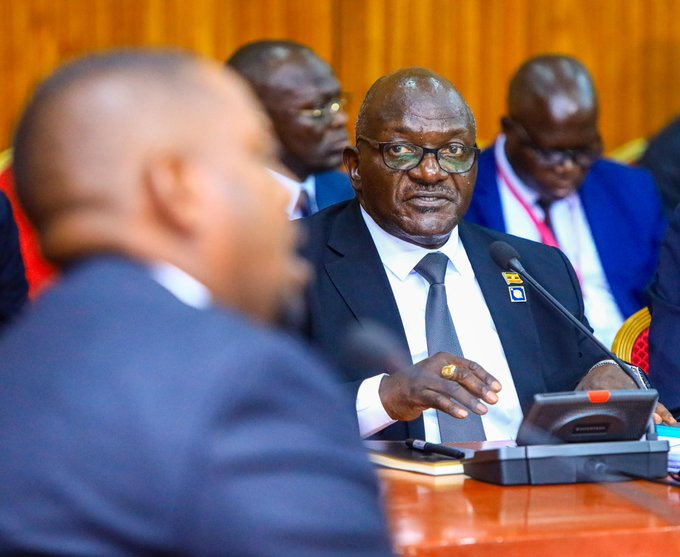
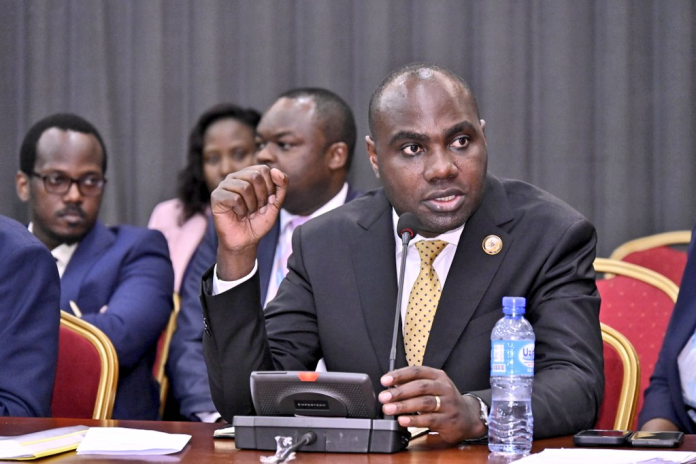
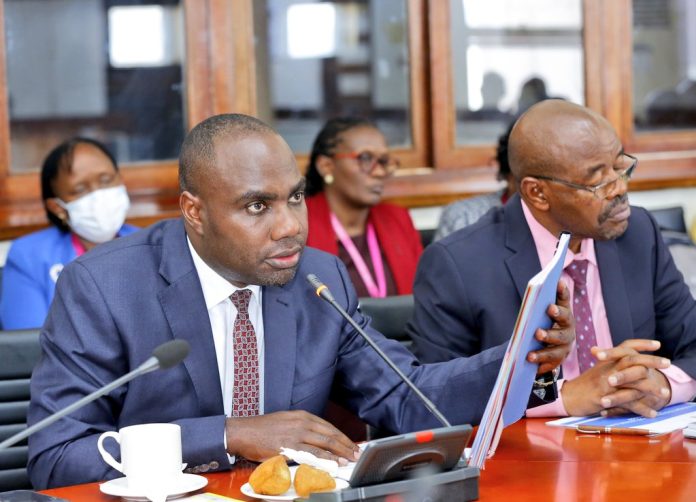
State Minister for Finance in charge of General Duties, Henry Musasizi and his colleague, Amos Lugoloobi in charge of Planning appearing before the Finance Committee of Parliament.

The government has allocated Shs877.396 billion to the Uganda Revenue Authority (URA) for the 2026/2027 financial year, as part of efforts to strengthen domestic revenue mobilisation and prepare for increased economic activity driven by the oil and gas sector.

The Minister of State for Finance (General Duties), Henry Musasizi, presented the Ministerial Policy Statement to Parliament’s Finance Committee yesterday, outlining the strategic priorities that will guide the authority’s operations.

“The allocation is structured to sustain revenue mobilization efforts, strengthen compliance and administrative efficiency, and support strategic investments necessary to harness emerging opportunities, including those associated with increased economic activity and the onset of oil and gas production,” Musasizi said.

The allocation comes against the backdrop of mixed performance in revenue collection, with URA registering both strong gains and notable shortfalls in recent financial periods.

In the 2024/2025 financial year, URA slightly exceeded its annual target, collecting about Shs31.6 trillion against a target of approximately Shs31.37 trillion, reflecting improved compliance and administrative efficiency.

However, the current 2025/2026 financial year has presented challenges. URA set an ambitious target of about Shs36.7 trillion but has experienced shortfalls during the course of the year.

By the first half of the financial year, the authority had collected about Shs16.8 trillion, representing roughly 93.7 percent of its target and leaving a shortfall of over Shs1 trillion.

Similarly, earlier figures indicate that between July and December 2025, URA collected about Shs16.47 trillion against a target of Shs17.5 trillion, partly affected by slowed economic activity during the election period.

Despite these gaps, Musasizi said URA is implementing several interventions to improve performance and widen the tax base.

“URA is carrying out various interventions to address the challenges of revenue mobilization,” he said.

He added that the authority is increasingly leveraging digital systems to enhance efficiency and transparency in tax administration.

“URA has increased the use of technology to bring more transparency, efficiency and simplification of processes for taxpayers,” he added.

Musasizi was accompanied by a URA technical team during the presentation, as Parliament begins scrutiny of the proposed budget.

The meeting was also attended by the Minister of State for Planning, Amos Lugoloobi, who later presented the Ministerial Policy Statement for the National Planning Authority to the same committee.

URA has now set an even more ambitious revenue target of over Shs41.5 trillion for the 2026/2027 financial year, as the government targets to finance its budget internally and reduce reliance on borrowing.

The authority’s performance will be critical as Uganda moves closer to oil production, with expectations that increased economic activity will expand the tax base and boost domestic revenue collections.

Stories Continues after ad

IGG starts valuation of seized properties recovered from corrupt officials 

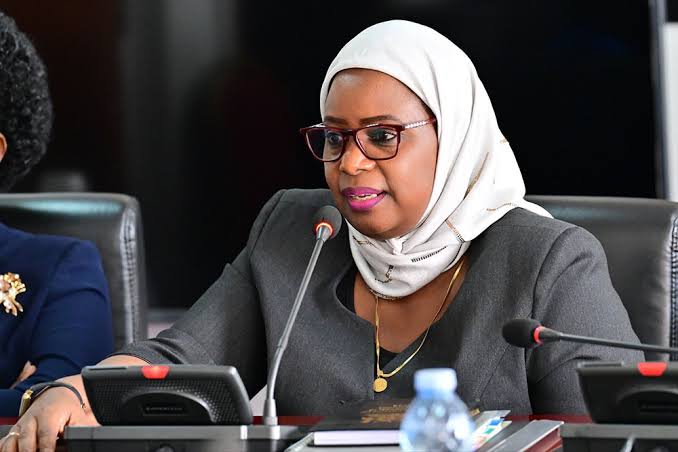
Inspector General of Government, Aisha Batala Naluze.

The Inspector General of Government, Aisha Batala Naluze has launched the valuation of 17 properties recovered from corrupt public officials in a bid to recover stolen public funds.

The exercise, being conducted by the Chief Government Valuer, is aimed at determining the reserve price for the eventual disposal of the assets.

During a site visit to one of the properties in Kitende along Entebbe Road in Wakiso District, Justice Naluze said the move demonstrates the government’s commitment to holding corrupt officials accountable through asset recovery.

“This process is part of our broader strategy to ensure that illegally acquired wealth is traced, recovered and returned to the public,” she said.

The visited property, formerly owned by a staff member of the Uganda National Roads Authority, was forfeited after investigations established that the official had underdeclared his assets by about Shs1.6 billion.

“In lieu of prosecution, the individual surrendered this property, which includes ten rental apartments,” she noted.

The apartments, located on Busiro Block 383 Plot 9726 land in Kitende, currently generate about Shs7 million in monthly rent. The funds are remitted to the IGG Asset Recovery Account held at the Bank of Uganda.

Justice Naluze praised investigators for what she described as diligent and professional work in uncovering illicit wealth.

“I commend our investigation teams for their dedication. We will continue tracing more assets to ensure that public resources lost through corruption are recovered,” she said.

The IGG said the ongoing process is part of its asset tracing and financial profiling strategy, which focuses on identifying and seizing properties acquired through corrupt means.

Of the 17 properties recovered so far, five are developed and already generating income, while 12 remain undeveloped. All the properties are currently managed by Knight Frank on behalf of the IGG.

The recovered assets have been secured either through court orders, voluntary forfeiture in exchange for leniency, or as a result of detailed investigations.

The IGG maintains that the recovery of such properties sends a strong signal that corruption can be detected and punished, and that the proceeds of illicit enrichment can be reclaimed for the benefit of the public.

“This should assure Ugandans that the fight against corruption is active and yielding results,”Justice Naluze said.

Stories Continues after ad

UNEB issues guidelines for Competency-Based Curriculum learners wishing to repeat senior four

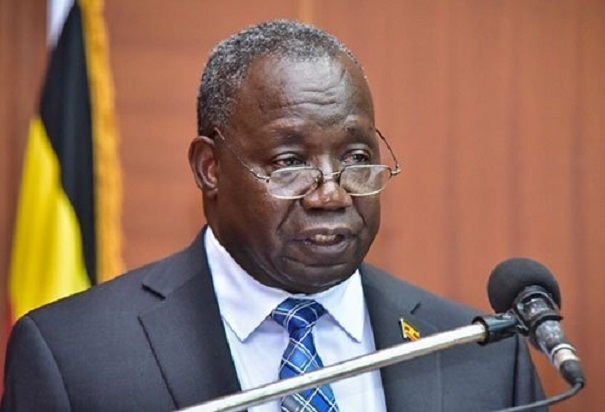
UNEB Executive Secretary, Dan Odongo.

The Uganda National Examinations Board (UNEB) has issued new guidance for schools admitting learners who studied under the Competency-Based Curriculum (CBC) and wish to repeat Senior Four (S.4). 

The move comes after a surge of applications from candidates who sat for the Uganda Certificate of Education (UCE) exams in 2024 and 2025 or who completed Senior Three (S.3) but were unable to progress.

Speaking from the Board’s Ntinda offices, UNEB Executive Director Dan Odong emphasized the need for structured reintegration of these learners.

“Schools are continuing to receive learners who wish to repeat S.4 or resume studies after completing S.3 under the CBC. Head teachers are guided to admit them, provided they meet the requirements we have set,” Odong said.

UNEB outlined that repeaters must attend S.4 classes for 2026 and be assessed at school. Their Continuous Assessment scores for Activities of Integration and Subject Achievement for Terms One and Two must be compiled and submitted to the Board. 

Additionally, S.3 learners resuming studies are required to continue with their project work for implementation, reporting, and dissemination, which will also be assessed by UNEB.

Odong noted that candidates should maintain the subjects they registered for in S.3 and schools must adhere to the submission timelines stipulated in our February circular.

UNEB is committed to ensuring that learners transitioning from the CBC are given an opportunity to complete their secondary education in a structured and regulated manner.

For further details, head teachers are required to contact UNEB via the Ntinda or Kyambogo offices or through the Board’s official email channels.

Stories Continues after ad

Gov’t halts new road projects to prioritise completion of ongoing works over funding cuts

Works and Transport Minister, Gen. Edward Katumba Wamala, appearing before parliament.

Government has announced that no new road projects will be undertaken in the 2026/27 financial year, as the Ministry of Works and Transport shifts focus to completing ongoing infrastructure works due to budget constraints.  

The decision was revealed by Works and Transport Minister Edward Katumba Wamala while presenting the Ministerial Policy Statement before Parliament’s Committee on Physical Infrastructure.

Officials from the Ministry of Works and Transport said the move is driven by a significant funding gap, with only Shs690.5 billion allocated for infrastructure projects against a requirement of Shs2.3 trillion.

“The Ministry is saying, let us finish ongoing projects as a priority. Let us get enough money to pay for land acquisition because we have contracts where we have a contractor on site and he has no access to land,” Katumba told lawmakers.

He emphasised that unresolved land compensation issues and unpaid contractors have slowed progress on several projects across the country.

“Now we are saying no, let us prioritise land acquisition for the projects so that the contractor does not have any reason why he should not deliver. Three; let us pay all these backlog areas because they are attracting interest, free money going, let us pay them, clear them,” he added.

The policy shift comes amid growing concern over delayed and stalled projects, including key road works such as the Mityana–Mubende highway, which has faced setbacks linked to compensation disputes and funding constraints.

According to Edward Ssimbwa, out of 67 projects currently under implementation, 28 have experienced delays while 13 have been abandoned or suspended.

“This implies that even the current budget given to us is insufficient to clear arrears and work within our required budget. If these arrears are not cleared, they will continue to incur interest, and we expect this position to further increase,” Ssimbwa said.

He noted that the decision is in line with guidance from the Ministry of Finance Planning and Economic Development directing government entities to halt new projects and prioritise the clearance of domestic arrears, with sanctions for non-compliance.

The Ministry closed the 2024/25 financial year with arrears amounting to Shs1.489 trillion. Of this, Shs541 billion has been paid in 2025/26, leaving an outstanding balance of Shs948 billion.

“We further expect to receive Shs218.456 billion once these arrears are released by the Ministry of Finance in the next quarter. However, in 2026/27, the Ministry is yet to receive a specific allocation for arrears clearance,” Ssimbwa added.

Despite the constraints, the Ministry’s overall budget has increased to Shs6.573 trillion for 2026/27, up from Shs5.920 trillion in the previous financial year, largely driven by planned investments such as the Standard Gauge Railway.

However, the ministry acknowledged that significant funding gaps remain across key priorities including national road rehabilitation, urban roads, drainage systems, ferry services and street lighting.

The shift shows the government strategy to consolidate existing infrastructure investments, rein in rising debt obligations and improve efficiency in project execution before embarking on new developments. 

Winston Katushabe, Commissioner of Transport Regulation and Safety also provided an update on the implementation of the digital number plates, revealing that the Ministry of Works and Transport has so far installed 218,781 digital plates on motorcycles and 71,472 digital plates on vehicles and refuted reports of shortage of number plates in Uganda.

“One of the challenges the supplier was having recently was in terms of transporting these other components, but at the moment, they assured us that the stocks are adequate. I think in the course of this week our team is also going to inspect and confirm what is available,” Katushabe said.

Stories Continues after ad

Gov’t secures Shs422b for new aircraft as Uganda Airlines undergoes leadership change

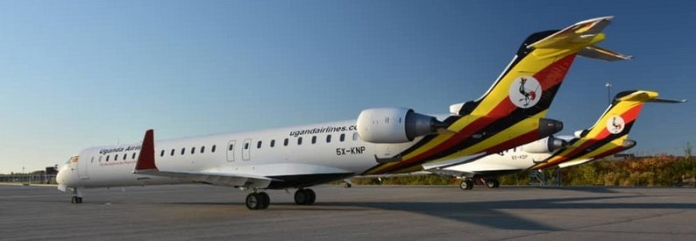
Uganda Airlines plane.

Government has secured Shs422 billion to support the acquisition of 10 new aircraft for Uganda Airlines, in a step aimed at strengthening the airline’s operational capacity and expanding its route network.

The funding, approved under a supplementary budget, will be used to secure production slots for the aircraft, a critical stage in aircraft procurement given global demand and long manufacturing timelines.

The investment is part of a broader plan to position the national carrier as a competitive player in both regional and international aviation markets.

The planned fleet expansion comes at a time when Uganda Airlines has been operating a relatively small fleet  which has limited its ability to scale up operations, maintain consistent schedules and fully exploit emerging travel and cargo opportunities.

However, the expansion drive is unfolding amid ongoing financial and governance challenges at the airline. Since its revival, Uganda Airlines has recorded significant operational losses, largely attributed to high start up and running costs, as well as the complexities of establishing new routes in a competitive industry.

The airline has also in recent months undergone major leadership changes, signaling a shift in government’s approach to its management. Former acting Chief Executive Officer Jenifer Bamuturaki was dismissed as part of efforts to restructure the airline and address concerns over governance and performance.

In February 2026, Yoweri Museveni appointed Ethiopian aviation veteran Girma Wake as Consultant, Advisor and Acting Chief Executive Officer of Uganda Airlines. His appointment is intended to address management weaknesses and strengthen institutional governance at the airline.

Girma Wake, a respected figure in African aviation is expected to serve in the role until July 2026 when a substantive Chief Executive Officer is appointed.

Government officials say the combination of new investment and leadership restructuring is aimed at putting the airline on a path toward efficiency and long term sustainability.

While the injection of funds is expected to boost capacity and improve competitiveness, analysts caution that the success of the expansion will depend on strong management systems, prudent financial discipline, and strategic route planning.

The developments show the government’s continued commitment to the national carrier, even as it works to resolve underlying structural and operational challenges that have affected its performance since the relaunch.

Stories Continues after ad

Police probe fatal school transport crashes as two students die in Budaka and Ngora 

Police have confirmed two fatal road crashes involving students traveling for school games in Budaka and Ngora districts, raising concerns over the continued use of unsafe means of transport despite repeated warnings from authorities.

According to Traffic Police spokesperson Michael Kananura, the two incidents, which occurred on March 23 and 24, 2026, claimed the lives of two students and left several others seriously injured.

“We have registered two fatal road crashes involving students traveling for school games in Budaka and Ngora districts,” Kananura said, adding that the tragedies could have been avoided if established safety guidelines had been followed.

The first crash happened on March 24 at Jami Malo Nine along Tirinyi Road in Budaka District. A driver transporting students of Iki-Iki Secondary School in an Isuzu Elf reportedly attempted to evade a police checkpoint by diverting onto a feeder road.

“While attempting to dodge a police checkpoint via a feeder road, the driver lost control of the vehicle while rejoining the main road, causing it to overturn,” Kananura explained.

Several students were injured in the crash and rushed to hospital, where a 17-year-old Senior Two student later succumbed to her injuries.

In a similar incident a day earlier, on March 23, a Fuso truck carrying students of Mukura Memorial Secondary School overturned along the Mukura–Kakise Road in Ngora District. Police say the crash was caused by overloading and unsafe seating arrangements.

“A driver transporting students lost control of the vehicle after the students sat on top, adding excessive weight that compromised its structure. The metal bars they were seated on gave way, throwing several of them off the vehicle,” Kananura noted.

Many of the students sustained serious injuries, while a 19-year-old Senior Four student later died in hospital.

Police have since taken action against both drivers, who are currently in custody, as well as the head teachers of the respective schools for negligence and failure to comply with safety regulations.

“We extend our deepest condolences to the families who have lost their children in these incidents,” Kananura said.

Authorities also pointed to existing guidelines issued by the Ministry of Education and Sports Uganda, which clearly prohibit the use of trucks to transport students. The Uganda Police Force has repeatedly warned against carrying passengers on cargo vehicles.

“Any school or individual found transporting students on trucks will face immediate legal action,” Kananura emphasized.

He called on parents, school administrators, and management committees to work closely with authorities to eliminate the dangerous practice.

“Road safety is a shared responsibility, and we must all act together to protect the lives of children,” he said.

Stories Continues after ad

Rajiv Ruparelia memorial eye camp in Bukedea set for this weekend

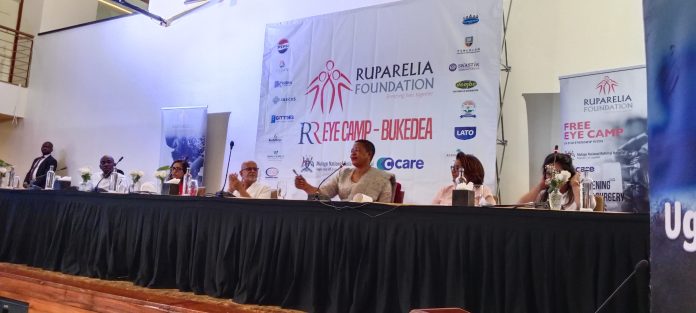
Ruparelia Foundation chairman, Sudhir Ruparelia, together with his wife, Jyotsna Ruparelia, hosted the Speaker of Parliament, Anita Among, during the launch of Rajiv Ruparelia Eye Camp on March 10, at Kabira Country Club.

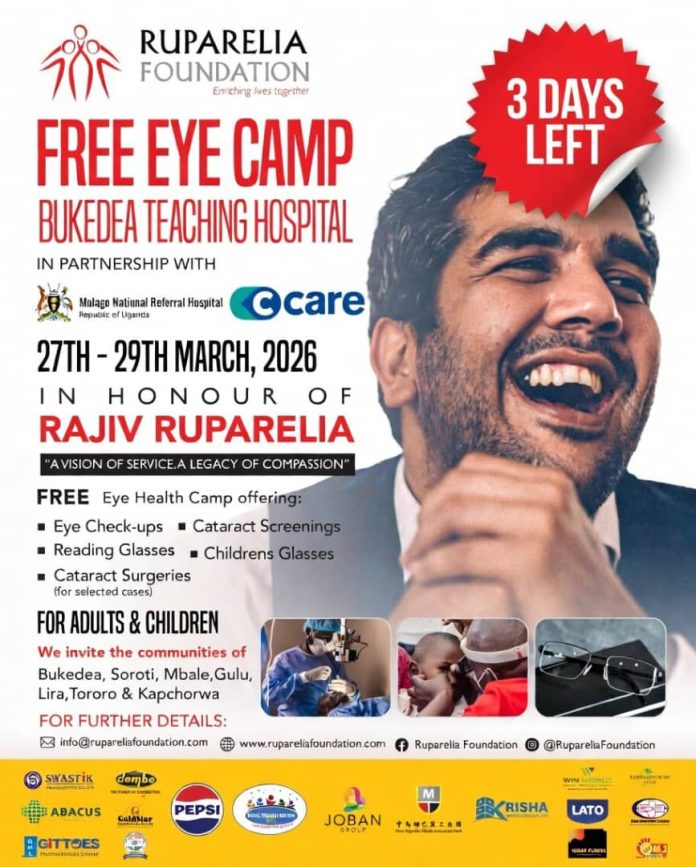
Bukedea District is set to host a major medical outreach this weekend with more than 300 free cataract surgeries scheduled during the Rajiv Ruparelia Eye Camp from March 27 to 29 at Bukedea Teaching Hospital.

The outreach, organised by the Ruparelia Foundation, is expected to screen over 2,000 residents, provide more than 800 reading glasses, and offer free specialised eye care services to communities that often struggle to access treatment.

The camp follows its official launch held on March 10 at Kabira Country Club, where members of the Ruparelia family and government leaders outlined the vision and impact of the initiative.

The programme is being conducted in memory of the late Rajiv Ruparelia, whose passion for philanthropy continues to inspire efforts aimed at improving lives across Uganda.

Speaking during the launch on March 10, Sudhir Ruparelia said the eye camp will grow into a nationwide initiative conducted every two years, rotating across different regions to ensure wider access to specialised eye care services.

“We want this to become a national programme that reaches different parts of the country so that more Ugandans can benefit from specialised eye care,” he said.

He revealed that after Bukedea, the next edition of the camp will be held in Kasese District.

At the same event, Jyotsna Ruparelia said the family chose to honour Rajiv by continuing the values he believed in.

“This eye camp is very special to us because it is being carried out in the name of our son Rajiv. He believed deeply in giving back and had an instinct to help people and communities,” she said.

She noted that restoring sight can have a profound impact on individuals and families, enabling people to return to work, education, and independent living.

Medical specialists involved in the outreach say cataracts remain the leading cause of blindness in Uganda, yet many patients fail to access treatment due to high costs.

“Many patients cannot afford surgery, which can cost millions of shillings in private facilities. This camp allows us to bring services directly to the people and operate on them free of charge,” one of the specialists explained.

The team also plans to operate on at least 50 children, warning that delayed treatment in young patients can lead to permanent vision loss.

The initiative has been welcomed by Anita Among, who commended the Ruparelia family for supporting healthcare delivery closer to communities.

“As government it is our responsibility to offer health services everywhere, but initiatives like this help bring services closer to the people. We appreciate you for supporting humanity and for the immense contribution you have made to Uganda,” she said during the launch.

She also pledged a Shs50 million contribution to support the outreach.

The Bukedea camp is among the series of planned nationwide outreaches aimed at tackling preventable blindness while sustaining Rajiv Ruparelia’s humanitarian legacy.

Stories Continues after ad

Uganda to earn over Shs2.2t from first oil exploration in 2026/27

State Minister for Finance in charge of General Duties, Henry Musasizi, during the presentation for the 2026/27 Ministerial Policy Statement before Parliament’s Committee on Finance.

Uganda is set to make history in the 2026/27 financial year with expected oil revenues surpassing Shs2.2 trillion from its first oil exploration activities. Of this, Shs4 trillion is earmarked to support the national budget, thus a huge milestone for the East African nation’s economy.

The announcement was made by Henry Musasizi, Minister of State for Finance during his presentation of the 2026/27 Ministerial Policy Statement before Parliament’s Committee on Finance.

“In preparation for the first oil, overall progress on the East African Crude Oil Pipeline is at 80 percent. Five engineering studies are underway for the oil refinery project. The Government expects about Shs2.2 trillion from oil revenues next financial year, of which Shs1.4 trillion is programmed to finance the budget,” Minister Musasizi said.

The Minister highlighted that these funds will help advance key national priorities while sustaining macroeconomic stability. The revenue injection from first oil is a historic step for Uganda, positioning the country as a rising player in the region’s energy sector.

Beyond oil, Minister Musasizi detailed achievements under the Parish Development Model and wealth creation funds. As of December 2025, all PDM SACCOs were capitalized with an additional Shs529 billion, with each of the 10,589 verified SACCOs receiving Shs50 million as the first tranche.

“Cumulatively, Shs3.63 trillion has been disbursed as parish revolving funds to last-mile beneficiaries, achieving financial inclusion for more than 3.6 million previously unbanked individuals,” he noted.

The Emyooga Programme has also made a significant impact, with over Shs100 billion disbursed in affordable credit benefiting more than 350,000 individuals. Additionally, Shs76.32 billion in seed capital supported 3,816 circles, assisting over 1 million beneficiaries and contributing to the creation and maintenance of more than 1.1 million jobs across the country.

Agricultural initiatives are also gaining traction. By December 2025, the government had provided Shs40.7 billion to the Agricultural Credit Facility and Shs7.5 billion to the Uganda Agricultural Insurance Scheme, benefiting nearly 960,000 farmers.

“These interventions are not only driving economic growth but also strengthening food security and rural livelihoods,” Musasizi said.

Looking ahead to the 2026/27 national budget, the Ministry of Finance is set to receive Shs2.78 trillion. Key subventions include Shs7.728 billion for the Tax Appeals Tribunal, Shs4.2 billion for the Public Procurement and Disposal of Assets Appeals Tribunal, Shs10.425 billion for the Economic Policy Research Centre, and Shs9.354 billion for the Capital Markets Authority. Enterprise Uganda will receive Shs26 billion, the Microfinance Support Centre Shs176.670 billion, the Uganda Development Bank Shs415.190 billion, and Pearl Bank (formerly Post Bank) Shs4.086 billion.

Minister Musasizi reassured Parliament that Uganda’s economic outlook remains positive.

“The economy is characterized by strong growth momentum, low inflation, stable financial markets, and improving external performance. Going forward, the Ministry remains focused on addressing emerging risks while sustaining the gains achieved under its core mandate of sound economic management,” he said.

Experts note that the anticipated oil revenues, combined with ongoing development programs, will strengthen Uganda’s fiscal position and provide opportunities for further investment in infrastructure, agriculture, and social programs. With these strategic interventions, the Government aims to ensure that economic growth translates into tangible benefits for ordinary Ugandans, particularly in previously underserved rural areas.

The 2026/27 budget framework shows Uganda’s potential as an oil-producing nation while highlighting the Government’s commitment to inclusive economic development, fiscal discipline and long-term prosperity for all citizens.

Stories Continues after ad

Makerere University to strengthen regional journalism training on peace and conflict

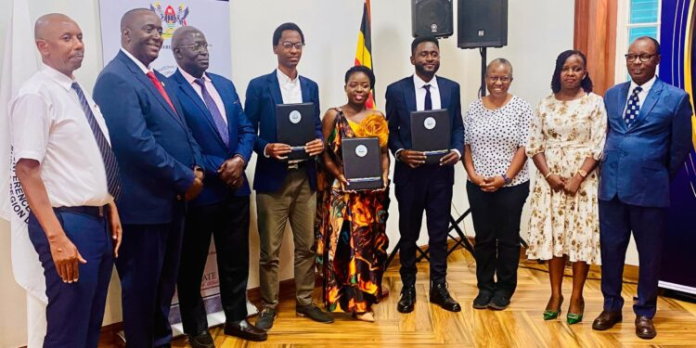
Participants at the awarding ceremony, from right to left, Dr. Gilbert Gomushabe, senior lecturer, School of Languages, Dr. Mutiba Luwabelwa, Executive Secretary of ICGLR, Amb. Robert Masolo, National Coordinator of ICGLR, journalists awardees, and Dr. Sarah Namusoga from the School of Languages at Makerere University.

Makerere University has strengthened its commitment to promoting peace and conflict-sensitive journalism in East and Central Africa through a strategic partnership with the International Conference on the Great Lakes Region and Ultimate Media Consult.

This collaboration was formalized with a memorandum of understanding signed on March 11, 2026, establishing a three-year program designed to provide intensive training for journalists from conflict-affected countries in the region. The first training program, already underway, is a two-week intensive course aimed at equipping media professionals with the skills to report on peace and conflict responsibly and effectively.

Dr. Ivan Lukanda, a senior lecturer in the Department of Journalism and Communication at Makerere University, emphasized the importance of the program. 

“We live in a region that is often volatile. Journalists play a vital role in shaping public understanding, and having professionals who understand the nuances of peace and conflict is critical for mitigating tensions and preventing the escalation of disputes into larger crises,” he said.

The MoU outlines three main pillars: joint training, research, and network-building. The two-week training covers multiple aspects of journalism, including investigative reporting, multimedia storytelling, ethical reporting practices, and immersive techniques such as video, audio, photography, and animation. 

“By integrating these methods, the program ensures that journalists can communicate complex conflict issues in ways that are accessible and impactful,” Dr. Lukanda explained.

He added, “Journalists are often the first line of information in communities facing tension and unrest. Providing them with the right tools ensures that stories on peace and conflict are reported accurately, responsibly, and in ways that foster understanding and reconciliation.”

Makerere University’s Department of Journalism and Communication, established in 1988 and independent since 1998, has a long history of media education and capacity building in the region. The department offers a range of academic programs, including undergraduate, graduate, and doctoral degrees. Beyond formal education, the department runs short courses in collaboration with Ultimate Media Consult, which have been instrumental in extending training opportunities to professionals across the region.

The initiative also aims to support the development of regional networks of journalists and researchers who can monitor conflict trends, produce high-quality reporting, and contribute to research on peace and security. This network approach enables continuous learning and fosters a culture of responsible journalism throughout the Great Lakes region.

Dr. Gilbert Gomushabe, Head of African Languages at Makerere University, highlighted the significance of ethical reporting. “Good journalism involves reporting the truth, but responsible journalism goes further, ensuring that the way information is presented does not exacerbate conflict and instead encourages understanding and reconciliation,” he said. “The department takes pride in training journalists who can navigate sensitive issues while upholding professional integrity.”

During the inaugural ICGLR Awards 2025 ceremony held at Makerere University, journalists from Burundi and the Democratic Republic of Congo were recognized for reporting that challenges narratives of perpetual conflict in the Great Lakes region. Ambassador Robert Masolo, the national coordinator for ICGLR, stressed that the media must offer balanced coverage that promotes unity and hope. 

“To the outside world, the Great Lakes region is often portrayed through the lens of conflict. We must empower journalists to tell stories that reflect resilience and community strength,” he said. 

The winners of the awards were celebrated for their exceptional reporting in radio and television, highlighting issues such as the impact of border closures on youth entrepreneurship and intercultural relations in the region. The ceremony emphasized that awards are merit-based and must be earned, reinforcing the need for high standards in journalism.

Dr. Mubita Luwabelwa, executive secretary of ICGLR, addressed the laureates during the event, stating, “Journalists are not bystanders. They are active participants in shaping society. Your work holds leaders accountable and gives a voice to the marginalized. This recognition validates the risks you take to report from some of the most challenging environments in Africa.”

The program is funded by the International Conference on the Great Lakes Region, with support from the German cooperation agency GIZ and the Kingdom of the Netherlands. 

The funding allows for sustainable delivery of the training and enables expansion to reach journalists across twelve countries in the region. The department also plans to continuously adapt the curriculum to reflect emerging trends and challenges in regional security, migration, and refugee issues.

Dr. Lukanda stressed the long-term impact of the initiative, “This is not just a one-off training program. It is part of our ongoing commitment to building a cadre of journalists capable of informing the public accurately, holding leaders accountable, and contributing to peacebuilding in East Africa. By focusing on professional development and regional collaboration, we aim to create a lasting impact on media practice and public discourse.”

Makerere University, in partnership with ICGLR and Ultimate Media Consult, aims to expand future sessions to include larger groups of journalists from all member countries. 

The vision is to ensure that the media in the Great Lakes region not only reports conflicts accurately but also provides stories of resilience, reconciliation, and hope. This collaboration represents a significant milestone for the university and a step forward in promoting responsible journalism as a tool for peace and stability in Africa.

Stories Continues after ad