The Office of the President has launched a comprehensive oversight inspection of three flagship government wealth creation programmes in the Teso and Lango sub-regions as authorities seek to determine whether billions of shillings invested in the initiatives are reaching intended beneficiaries or being lost through poor accountability.
The inspection, announced by the Minister of State for Economic Monitoring, Sandra Santa Alum, comes against a backdrop of persistent complaints ranging from irregular beneficiary selection and weak SACCO management to delayed access to funds and alleged diversion of public resources.

The exercise will focus on the Parish Development Model (PDM), the Presidential Initiative on Wealth and Job Creation, commonly known as Emyooga, and the Cattle Restocking Programme across eight districts in the two subregions.
In Teso, inspectors will visit Kapelebyong, Kalaki, Bukedea and Soroti City, while the Lango leg of the exercise will cover Apac, Otuke, Dokolo and Lira districts.
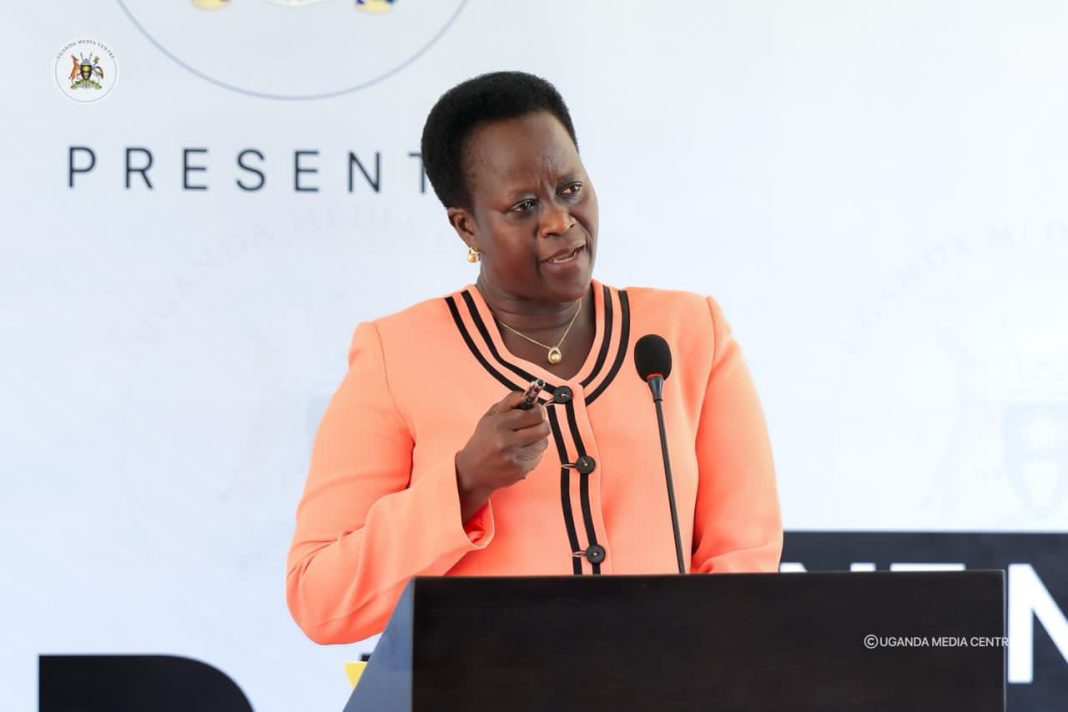
Addressing journalists, Alum said the monitoring exercise would establish whether the government’s priority wealth creation interventions are delivering the production, employment and household income gains required to support Uganda’s economic transformation.

“The Office of the President, through the Department of Socio Economic Monitoring and Research under my leadership, will be undertaking an oversight inspection exercise of three key Government Wealth Creation Programmes in the Teso and Lango subregions,” Alum said.
She explained that the three programmes were deliberately selected because they remain central to government’s strategy of moving households from subsistence livelihoods into the money economy through access to affordable finance and productive investments.
The minister said the interventions directly support the Fourth National Development Plan and President Museveni’s Tenfold Growth Strategy, which seeks to expand Uganda’s economy by strengthening household incomes, increasing financial inclusion and supporting enterprise development across agriculture, agro industry and other priority sectors.
Under the PDM, the government channels enterprise financing through parish-level structures to reach households directly. Emyooga provides affordable credit and encourages savings among organised occupational groups, while the Cattle Restocking Programme is intended to restore livelihoods destroyed by decades of cattle rustling and conflict that devastated livestock wealth in Teso and Lango.
Regions with a long history of recovery efforts
For decades, Teso and Lango were among Uganda’s hardest hit regions due to cattle rustling, insurgency and insecurity, which wiped out livestock, weakened household incomes and disrupted local economies.
Government has over the years implemented several livestock recovery programmes in the two subregions, including earlier restocking initiatives that supplied thousands of cattle before launching a new compensation-based programme that provides selected households with Shs5 million to purchase livestock.
In November 2025, President Museveni directed the implementation of the latest cattle restocking programme in Acholi, Lango and Teso, with government committing tens of billions of shillings to rebuild livestock wealth among affected households.
However, the programme has recently attracted scrutiny after Parliament uncovered allegations that some local leaders manipulated beneficiary lists, favoured relatives and demanded money from applicants during implementation in parts of northern Uganda.
Those concerns have heightened pressure on government to tighten oversight before rolling out subsequent phases.
Teams head to the ground
Unlike routine administrative reviews, Alum said the inspection will involve physical verification of projects and direct engagement with communities.
Monitoring teams will meet district leaders, technical officers and programme beneficiaries, inspect funded enterprises, review official records and conduct field discussions to establish the actual situation on the ground.
“We will review records, inspect enterprises and hold direct discussions to understand the realities on the ground,” she said.
She insisted that the exercise should not be interpreted as a witch hunt but rather as an opportunity to strengthen implementation.
“This exercise is not intended to intimidate anyone. It is an accountability and learning exercise. We want to know what is working so we can replicate it, and we want to identify gaps so we can fix them,” Alum added.
Fraud and poor governance under the spotlight
The minister disclosed that inspectors will pay particular attention to complaints that have repeatedly surfaced during implementation of the wealth creation programmes.
Among the issues under investigation are irregular beneficiary selection, weak governance within SACCOs, poor record keeping, delayed release or access to funds, low loan recovery rates and possible diversion of public money.
“Where weaknesses are identified, corrective action will be recommended. Where there is evidence of abuse of public resources, the matter will be referred to the mandated authorities to handle it,” she warned.
The latest inspection comes at a time when the government is under increasing pressure to demonstrate that flagship programmes such as PDM and Emyooga are translating into measurable improvements in household livelihoods, particularly after repeated reports of implementation challenges in various districts across the country.
Upon completion of the field exercise, the Office of the President will hold exit meetings with local governments and ministries, departments and agencies to validate the findings before preparing a consolidated report for President Museveni.
Alum called on district leaders, technical officers and beneficiaries to cooperate fully with inspectors and urged the media to support the exercise through accurate reporting.
“Accountability does not frustrate implementation; it protects it. It ensures that every shilling invested by the Government produces meaningful results for the people of Uganda,” she said.