Stanbic Bank
Stanbic Bank
20.3 C
Kampala
Stanbic Bank
Stanbic Bank
Home Blog Page 4

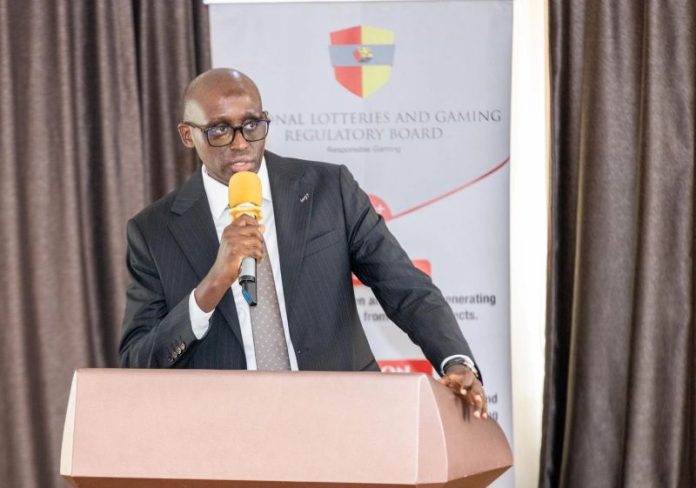
From oversight to impact: The National Lotteries and Gaming Regulatory Board’s journey in regulating gaming in Uganda

Finance Minister, Matia Kasaija congralating Mr Kenneth KITARIHO (right) upon his inauguration as Chairperson of the NLGRB. Looking on is outgoing board chairperson Aloysius Mugasa (2nd left) and CEO Denis Mudene Ngabirano.

Uganda’s gaming, betting, and lottery sector continues to expand, driven by technological innovation and increased public participation. At the center of this evolving industry is the National Lotteries and Gaming Regulatory Board (NLGRB), the statutory body mandated to regulate, supervise, and guide gaming activities nationwide.

Established under the Lotteries and Gaming Act, 2016, the NLGRB exists to ensure that gaming in Uganda operates within a fair, transparent, and socially responsible framework. Its mandate is twofold: to protect citizens from potential harms associated with gambling while supporting the orderly growth of a legitimate, economically beneficial industry.

A Mandate Rooted in Protection and Accountability

The NLGRB’s core responsibilities include licensing gaming operators, setting and enforcing regulatory standards, monitoring compliance, and addressing public complaints related to gaming activities. Through these functions, the Board ensures that only approved and accountable operators are allowed to offer gaming services in Uganda.

To strengthen enforcement and oversight, the NLGRB collaborates closely with key stakeholders, including the Uganda Revenue Authority, law enforcement agencies, and licensed industry players. This coordinated approach enhances compliance, deters illegal operations, and promotes a culture of responsibility within the sector.

Driving Awareness and Responsible Participation

Beyond regulation, public education is a central pillar of the NLGRB’s work. The Board regularly conducts awareness campaigns to promote responsible gaming behavior, with a particular focus on youth and other vulnerable groups. These initiatives help communities better understand the risks associated with gambling and encourage informed, responsible participation.

By prioritizing consumer protection alongside regulation, the NLGRB plays a vital role in reducing gambling-related harm while fostering public trust in the gaming ecosystem.

Measurable Progress and Sector Transformation

In recent years, the NLGRB has recorded significant achievements that reflect its growing impact on Uganda’s gaming landscape. Strengthened regulatory enforcement has led to improved compliance among operators and a notable increase in the sector’s contribution to national revenue, supporting broader development priorities.

The Board has also intensified efforts to eliminate illegal gaming through inspections, enforcement actions, and the confiscation of unlicensed machines. These interventions not only protect players but also create a level playing field for compliant operators.

The adoption of digital tools such as e-licensing systems has modernized regulatory processes, improved transparency, and made it easier for operators to meet legal requirements. These innovations mark an important step toward a more efficient, technology-driven regulatory framework.

How the Public Can Support the NLGRB’s Work

The success of gaming regulation in Uganda depends not only on institutions but also on public participation. Citizens and stakeholders can support the NLGRB in several meaningful ways.

Participating in and sharing responsible gaming messages helps extend awareness and prevent gambling-related harm at the community level. Compliance with established regulations by both operators and players strengthens trust and promotes sustainable sector growth.

Members of the public are also encouraged to report illegal gaming activities and harmful practices. Community vigilance is a powerful tool in protecting vulnerable groups and supporting enforcement efforts.

A Shared Responsibility

Through firm oversight, public education, and continuous modernization, the NLGRB is helping shape a gaming sector that serves both economic and social interests. By working together, regulators, operators, and citizens can ensure that gaming in Uganda remains fair, safe, and aligned with national development goals.

Stories Continues after ad

EXCLUSIVE: Museveni appoints Otafiire, Kadaga, and Muhwezi to CEC as historicals

Otafiire, Kadaga, and Muhwezi.

President Yoweri Kaguta Museveni has appointed Major General (Rtd) Kahinda Otafiire, Ms Rebecca Alitwala Kadaga, and Major General (Rtd) Jim Muhwezi to the Central Executive Committee (CEC) of the National Resistance Movement (NRM) as historicals, Eagle Online has exclusively learnt.

The appointments reveal a strategy to strengthen the party’s leadership and institutional memory. The appointments are yet to be communicated; however, security sources confirmed the development.

The Central Executive Committee (CEC) is the highest decision-making organ of the NRM. It oversees party policy, guides leadership decisions, endorses candidates for elections, and ensures alignment with national priorities. Its decisions influence both government policy and party operations across all levels.

Kahinda Otafiire: From guerrilla fighter to political strategist

Major General (Rtd) Kahinda Otafiire, born on 29 December 1950 in Bushenyi (Mitooma) District, joined the National Resistance Army (NRA) in 1981 and served as Chief Political Commissar during the liberation struggle. However, he was also a member of Front for National Salvation (FRONSA). FRONSA was a rebel movement formed in 1971 but established in 1973 by Yoweri Museveni. It played a critical role in the 1979 war alongside Tanzanian forces to overthrow President Idi Amin.

Since 1986, Otafiire has held numerous positions, including Minister of Local Government, Justice and Constitutional Affairs, Land and Urban Development, East African Affairs, Trade, Industries and Cooperatives, among others. He also served as Director General of the External Security Organisation. He is currently the Minister of Internal Affairs and represents Ruhinda County in Parliament. His appointment to the CEC recognises his extensive contribution to the NRM and his continuing influence in defence, security, and party strategy.

Rebecca Alitwala Kadaga: Parliamentarian and first woman Speaker

Ms Rebecca Alitwala Kadaga, born on May 24, 1956, in Kamuli District, has been a Member of Parliament since 1989. She first came to the August House in 1989 as a member of the National Resistance Council (NRC), and this makes her the longest-serving legislator. She made history as Uganda’s first female Speaker of Parliament, serving from 2011 to 2021, and currently serves as First Deputy Prime Minister and Minister for East African Community Affairs. Ms Kadaga has played a key role in legislative leadership, international parliamentary relations, and championing women’s participation in governance. Her CEC appointment confirms her place among the NRM’s most experienced leaders. She is the outgoing First Female Vice Chairperson of the National Resistance Movement, having been defeated by the current Speaker of Parliament, Anita Among, in the ballot.

Jim Muhwezi: Security architect and party pillar

Major General (Rtd) Jim Muhwezi, born on August 23, 1950, in Rukungiri District, is a lawyer and retired military officer who joined the NRA during the liberation struggle. Muhwezi has held senior positions, including Director General of the Internal Security Organisation, Minister of Health, Minister of Information and National Guidance, and currently serves as Minister of Security. He represents Rujumbura County in Parliament. His inclusion in the CEC recognises his contributions to national security and long-standing service to the party. He previously served on CEC as Chairperson of the Veterans League. However, he was soundly defeated by Lt. (rtd) Moses Mushabe.

The Role of the Central Executive Committee

The CEC comprises senior leaders, including vice chairpersons from all regions, national secretaries and heads of party commissions. It is responsible for political leadership, formulation and implementation of party policies, selection of flag bearers, and supervision of party programs. The committee ensures that the NRM’s strategic priorities are executed effectively across government and party structures.

Their presence in the CEC is expected to reinforce cohesion, preserve institutional memory and strengthen strategic decision-making as the party navigates national priorities.

Stories Continues after ad
Troubled ex-Trade Ministry PS, Geraldine Ssali, returns to Anti-Corruption Court over Shs3.8b case

Ms Geraldine Ssali

Former Permanent Secretary in the Ministry of Trade, Industry and Cooperatives, Geraldine Ssali returned to the Anti-Corruption Court on Wednesday, January 4, 2026, in connection with the Shs3.8 corruption case.

She appeared before Grade One Magistrate Paul Mujuni alongside her co-accused.

The Anti-Corruption Court on Thursday,5 halted proceedings in the Shs3.8 billion fraud case facing former Trade Ministry Permanent Secretary Geraldine Ssali after it emerged that the court could not sit without the Assistant Registrar.

The matter, which was scheduled for mention, was deferred to April 15, with bail for all accused persons automatically extended.

Presiding Principal Grade One Magistrate Paul Mujuni said the Assistant Registrar was engaged at the High Court on official duties related to the opening of the new law year, rendering the court unable to proceed.

With no business conducted, defence counsel Musimeta, appearing for Michael Mawanda and holding brief for the rest of the accused, placed it on record that the prosecution was absent and that the matter had not been fixed for hearing.

She requested an adjournment and the continuation of bail terms, submissions the court accepted without objection.

Beyond the procedural delay, the trial remains suspended pending a ruling from the Constitutional Court on a petition challenging the legality of the arrests and prosecution. The application against the Attorney General must be resolved before the criminal case can resume.

Prosecution alleges that in the 2021/2022 and 2022/2023 financial years, Ms Ssali irregularly included a cooperative society on the list of beneficiaries eligible for war-loss compensation, despite the entity not appearing in the approved supplementary budget.

Investigators further claim she authorised payments amounting to Shs3.8 billion to Kirya and Company Advocates, a firm owned by co-accused Taitankoko, contrary to the 2017 Treasury Instructions, occasioning financial loss to the government.

The proceedings were first suspended in October after court ruled that it could not continue without guidance from the Constitutional Court following a petition filed by MP Akamba, who alleges violations of his constitutional rights during arrest and prosecution.

Until that determination is made, the high-profile case remains on hold.

Stories Continues after ad
Museveni appoints former NSSF boss Richard Byarugaba Senior Presidential Advisor

Mr Richard Byarugaba.

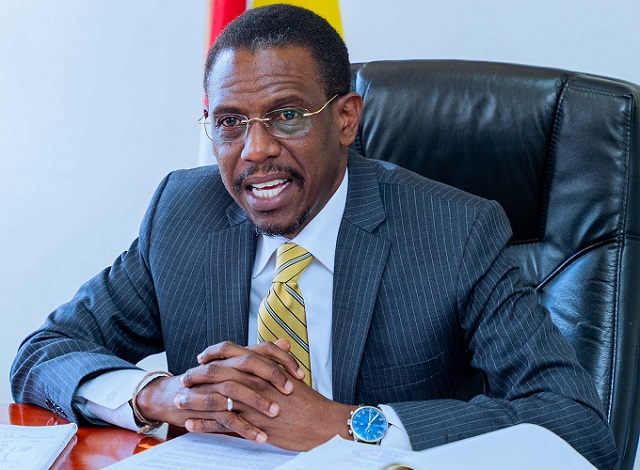
President Yoweri Museveni has appointed former National Social Security Fund Managing Director Richard Patrick Byarugaba as Senior Presidential Advisor on Exports and Industrial Development, returning the veteran banker and corporate executive to a senior role in government.

The appointment also includes Moses Sabiti to the same advisory position and is intended to strengthen the exports and industrial development function within the President’s Office.

When contacted by Eagle Online on Thursday, Byarugaba confirmed the appointment while speaking on the phone from Nairobi.

“It is true, H.E. the President has appointed me his Senior Advisor. I am grateful to him,” Byarugaba said.

Byarugaba’s appointment comes years after a turbulent and highly scrutinised exit from NSSF, where he served as managing director from November 2017 to November 2022. 

His final years at the helm were dominated by open confrontation with the then Minister of Gender, Labour and Social Development, Betty Amongi, under whose ministry the Fund falls.

The standoff culminated in multiple investigations and appearances before parliamentary committees, including the Committee on Commissions, Statutory Authorities and State Enterprises, following accusations raised by the minister against the former NSSF boss. 

Byarugaba consistently denied wrongdoing and defended his record before the committees.

A key point of contention was Byarugaba’s refusal to advance Shs6 billion from NSSF funds that the minister had reportedly demanded to facilitate supervision of NSSF activities. 

Byarugaba maintained that the money had not been budgeted for and that releasing it would contravene established procedures governing the Fund.

The disagreement escalated into a prolonged institutional crisis, with Amongi accusing Byarugaba of misconduct and poor governance, allegations he dismissed as false and politically driven. The confrontation effectively split the Fund’s leadership and disrupted normal operations.

Despite the controversy, President Museveni extended Byarugaba’s contract at the expiry of his first term, a move that deepened the rift between NSSF management and the supervising ministry. 

The extension was followed by continued friction, which critics say affected the stability and functionality of the Fund during that period.

Byarugaba left NSSF in 2022 after the end of his extended tenure, closing one of the most contentious chapters in the Fund’s history.

Born in 1961 in Mbarara, Byarugaba studied statistics and economics at Makerere University before qualifying as an accountant with the Association of Chartered Certified Accountants in the United Kingdom. He also holds a management diploma from Henley Management College.

He began his career at Standard Chartered Bank Uganda in 1983, rising to executive director for finance by 1992, before moving to the bank’s London headquarters as regional finance manager for Africa. He later returned to Uganda and joined Nile Bank Limited, becoming its managing director in 2003. Following the bank’s acquisition, he served as chief operating officer at Barclays Bank Uganda.

In 2008, he was appointed managing director of Global Trust Bank Uganda, a position he held until 2010 before taking over leadership at NSSF.

Since leaving the pension fund, Byarugaba has remained active in corporate leadership. He has served as chairman of Old Mutual Investment Group Uganda since August 2025 and is involved in several professional and health institutions, including Hospice Africa, the Palliative Care Association of Uganda and the Uganda Institute of Banking and Financial Services.

His appointment as Senior Presidential Advisor is apolitical rehabilitation and renewed confidence by the President in a technocrat whose tenure at NSSF divided opinion but reshaped debate around governance and political interference in public institutions.

Stories Continues after ad
UK sanctions Sudanese army and paramilitary leaders over ongoing conflict

Alvaro Andres Quijano, a mercenary to the Rapid Support Forces (RSF).

LONDON, Feb 5 (Reuters) – Britain sanctioned six individuals suspected of committing atrocities in Sudan’s war or of fuelling the conflict through the supply of mercenaries and military equipment, the government said on Thursday.

The measures targeted senior commanders in both the Sudanese paramilitary group, Rapid Support Forces (RSF), and the Sudanese Armed Forces, the government said.

The conflict between the two forces has displaced millions, drawn in regional powers, and caused a vast humanitarian crisis since it broke out in April 2023.

“We urgently need a ceasefire, and safe access for humanitarian relief agencies to reach all those in need,” British foreign minister Yvette Cooper, who visited the Sudan-Chad border this week, said in the statement.

“Through these sanctions, we will seek to dismantle the war machine of those who perpetrate or profit from the brutal violence in Sudan,” Cooper added.

The British government also sanctioned three individuals – Alvaro Andres Quijano, Mateo Andres Duque Botero, and Claudia Viviana Oliveros Forero – suspected of recruiting foreign fighters for the conflict or facilitating the purchase of military equipment.

Others sanctioned include Abu Aqla Mohamed Kaikal, a former RSF Commander and current head of the Sudan Shied Forces, RSF Field Commander Hussein Barsham, and RSF Financial Advisor Mustafa Ibrahim Abdel Nabi Mohamed.


Stories Continues after ad
Why renewed fighting between Ethiopian federal forces and Tigrayan forces isn’t good for regional stability

Writer of the article David Matsanga.

Dear Prime Minister Abiy Ahmed,

@AbiyAhmedAli

Peace Greeting, I write to you with deep respect and admiration for Ethiopia and for Addis Ababa. The progress you have made in infrastructure development and in stabilizing the country cannot be ignored. You are one of the few African leaders I can sincerely call a friend and a genuine ally of peace. I am, however, concerned by the renewed fighting between Ethiopian federal forces and Tigrayan forces, which threatens to undermine the 2022 peace agreement and risks reopening the door to a devastating civil war.

The clashes in Western Tigray, particularly in the Tselemti district, have already caused casualties and disrupted flights, raising serious fears of another humanitarian crisis. The escalation in this disputed area—reportedly involving the Ethiopian National Defense Force and allied Amhara militias against Tigrayan forces—deeply worries all who care about peace and stability in Ethiopia.

This situation risks damaging both critical infrastructure and humanitarian conditions, and could deal a serious blow to the spirit and substance of the 2022 Pretoria Agreement. I strongly believe that the guarantors and facilitators of that process—President Olusegun Obasanjo, President Uhuru Kenyatta, and South Africa—should urgently re-engage and initiate immediate diplomatic efforts to bring the parties back to dialogue.

Allow me to say this personally: Ethiopia represents the Africa I hope to leave behind when my time comes—an Africa of dignity, progress, and unity. You have made many of us proud through your investment in infrastructure and the transformation of Addis Ababa. Ethiopian Airlines, in particular, stands as a powerful symbol of African excellence and ambition. Now, more than ever, let us choose dialogue over conflict, and peace over division.

With respect and hope for peace, Dr. David Nyekorach-Matsanga, Founder & Chairman, Pan African Forum Ltd & Associates, London, UK

Stories Continues after ad

Muslims ‘massacred’ in Nigeria for refusing to join jihadists

Dozens of people have been killed in a ferocious shooting attack on two villages in Nigeria’s western state of Kwara after they refused to “surrender to extremists who preached a strange doctrine”, according to the state’s governor.

Governor AbdulRahman AbdulRazaq said on X that “75 local Muslims were massacred” in Tuesday’s raid, while a state lawmaker told the BBC that 78 people had been buried so far and the death toll could rise to an estimated 170 as more corpses were being recovered.

Blaming Islamist militant group Boko Haram for the killings, President Bola Tinubu deployed an army battalion to the affected area.

The assault was one of several across Nigeria in the last few days.

In addition to the killings in the villages of Woro and Nuku, 38 people were abducted while others fled and shops and homes were set alight, said Saidu Baba Ahmed, a member of the Kwara state house of assembly.

He added that Boko Haram activity had been gradually increasing in the area, saying the attack was triggered by the community’s rejection of a strict interpretation of Islam.

Ahmed explained that the Islamist group had written to the community about their arrival, saying they wanted to preach, but residents resisted and deployed local security forces.

Details about the exact number of people who died in the remote area are hard to confirm.

A Red Cross official in Kwara, Babaomo Ayodeji, told AFP that “reports said that the death toll now stands at 162, as the search for more bodies continues”.

Amnesty International said in a statement that over 170 people had died, noting many were shot at close range and some burnt alive.

The human rights group called for an investigation and said there was a “stunning absence of any form of security for the protection of lives”.

In recent months, jihadists – suspected to be from a Boko Haram splinter faction – have been active in Kwara, carrying out targeted killings, often riding in on motorcycles and attacking markets and vigilante groups set up to protect villagers.

In a press release on Wednesday, the state governor said the attack on the two villages was a result of recent counter-terrorism operations in the region.

AbdulRazaq believed it was “apparently to distract the security forces who have successfully hunted down several terrorist and kidnapping gangs”.

Tuesday also saw 21 people being killed in an attack on Doma village in Katsina state in the north, Amnesty said. On the same day 17 people were killed in a series of attacks in the north-eastern Borno state, by suspected Boko Haram militants.

The attacks come alongsidethe first official acknowledgement from Nigeria of an American troop presence since US President Donald Trump ordered the military in November to prepare for action in Nigeria to tackle Islamist militant groups.

Nigerian Defence Minister Chrisopher Musa did not provide any details about the team’s size, arrival date, location or duration of stay.

His comments follow those made on Tuesday by Gen Dagvin Anderson of US Africa Command (Africom), who said the deployment followed a Nigerian request and was focused on intelligence support.

“Our partnership with Nigeria is a great example of a very willing and capable partner who requested the unique capabilities that only the US can bring,” he said.

Nigeria faces an array of security challenges, including criminal gangs – known locally as “bandits” who loot and kidnap for ransom – an Islamist insurgency, clashes over land, and separatist unrest.

Stories Continues after ad
Minister Minsa Kabanda orders illegal street vendors, taxi, and boda-boda operators off Kampala streets

Kampala Minister, Minsa Kabanda.

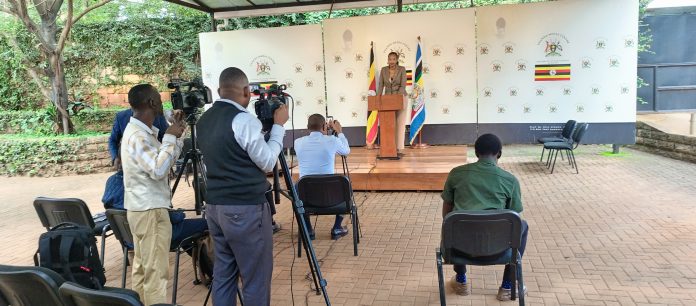
Kampala, Uganda: The Minister for Kampala Capital City and Metropolitan Affairs, Hajjat Minsa Kabanda, has issued a directive ordering all street vendors, taxi drivers, and boda boda riders operating without designated stages to immediately vacate the streets of Kampala.


According to the minister, the move is aimed at restoring order, improving traffic flow, and enhancing public safety within the city. She warned that individuals who fail to comply with the directive will face arrest and prosecution in courts of law.


Kabanda emphasized that only vendors and transport operators working from officially gazetted areas will be allowed to continue their activities. Enforcement teams are expected to begin operations to ensure full compliance with the new directive.


The announcement is likely to spark mixed reactions among city traders and transport operators, many of whom rely on street operations for their daily income. Kampala Capital City Authority (KCCA) is expected to work with security agencies to implement the directive in the coming days.
More details regarding designated operating zones and enforcement timelines are yet to be officially released.

Stories Continues after ad

Equity Bank launches affordable financing for electric cooking in Uganda

Equity Bank Uganda officials pose for a group photo with the Ministry of Energy officials after signing a partnership with UKAID, and the Ministry of Energy and Mineral Development launched affordable financing to support the adoption of electric cooking.

Equity Bank Uganda, in partnership with UKAID and the Ministry of Energy and Mineral Development has launched affordable financing to support the adoption of electric cooking (eCooking) technologies across Uganda.

The financing, known as the Modern Energy Cooking Services (MECS) Trust Fund, is intended to accelerate access to clean, efficient and modern cooking solutions for households and businesses, while supporting the growth of electric cooking companies operating in the country.

The Fund was officially launched during a Stakeholder Information Session held at the Four Points by Sheraton Kampala Hotel, bringing together government officials, development partners, private sector actors and electric cooking companies to discuss strategies for scaling clean cooking solutions nationwide.

Speaking at the launch, Catherine Psomgen, Director of Public Sector and Social Investments at Equity Bank Uganda, said the initiative will help businesses operate more efficiently while enabling households to transition to cleaner cooking methods.

“Today we have launched eCooking financing to support Ugandan businesses to operate more efficiently and competitively. While electricity costs remain a concern, affordability should be considered in terms of the total cost of cooking, not electricity alone,” Psomgen said.

She added that through the MECS Trust Fund, Equity Bank Uganda is providing financing to help businesses grow while supporting households to adopt safer, cleaner, and more affordable cooking options.

The Minister of State for Energy, Okaasai Opolot, said the high cost and limited availability of electric cooking appliances have slowed adoption in Uganda.

“One of the main challenges to implementing eCooking has been the limited availability of technology and financing to support importation. The launch of this Trust Fund is timely as it addresses these challenges by making funding available to suppliers,” Okaasai said.

Lydia Nandawula, UKAID Climate and Energy Policy Officer, said the financing reflects the United Kingdom’s long-term commitment to supporting Uganda’s clean cooking transition as both a climate and development priority.

“This initiative addresses a key bottleneck, access to short-term working capital, allowing viable eCooking businesses to grow, stock appliances and meet demand in a commercially sustainable way,” Nandawula said.

The MECS Trust Fund is financed by the British High Commission through UKAID under the Foreign, Commonwealth and Development Office (FCDO) and is being implemented by Equity Bank Uganda in partnership with the Ministry of Energy and Mineral Development.

The Fund targets households, SMEs, micro businesses, importers, manufacturers and institutions under government-approved programmes. Eligible borrowers can access financing ranging from UGX 30 million onwards.

As the implementing financial partner, Equity Bank Uganda will provide working capital and bridge financing to eligible electric cooking companies to help expand operations, strengthen supply chains and increase access to modern cooking appliances nationwide.

The initiative supports Uganda’s National eCooking Strategy and aims to reduce reliance on traditional fuels such as charcoal and firewood, contributing to improved public health, environmental protection, and reduced carbon emissions.

Stories Continues after ad

UNEB’s PLE grading is silently and steadily crushing top private schools

ON THE SPOT: UNEB Executive Director, Dan Odongo.

The debate over the credibility of Primary Leaving Examination (PLE) results can no longer be sustained on rhetoric. UNEB’s own statistics over the last three years show a clear, measurable pattern, a sharp contraction of top grades nationally, with the heaviest impact falling on long-established private schools that have historically anchored Uganda’s best PLE performance.

In the 2023 PLE cycle, UNEB reported 4,000 first grades nationally out of about 749,000 candidates. A year later, in 2024, the number of first grades fell further to 3,800 despite an increase in candidature to roughly 782,000 pupils. In the most recent 2025 results, first grades declined again to around 3,500 out of 817,883 candidates, according to figures released by UNEB.

That is a net loss of roughly 500 first grades in three years, even as enrolment rose by nearly 70,000 pupils.

This decline has not been evenly distributed. Data released alongside results shows that many of the schools losing the highest number of first grades are long-established private institutions in Kampala, Wakiso, Mukono, and other urban centres, schools that previously accounted for a disproportionate share of Uganda’s top performers.

These are schools like Kampala Parents School that pay teachers between Shs2 million and Shs3 million, invest billions in infrastructure, maintain low pupil–teacher ratios, and provide stable academic calendars. Yet UNEB’s grading outcomes increasingly compress them into second and lower divisions, wiping out their competitive edge on paper.

Over the same three-year period, UNEB has reported improved performance from hard-to-reach and rural schools, including those in Karamoja and other underserved regions. While national equity in education is a legitimate goal, UNEB has not published any statistical linkage between learning inputs and outputs to justify how schools with documented teacher shortages, limited instructional materials, and weak supervision structures are outperforming highly resourced institutions in raw examination scores.

The contradiction becomes starker when performance stability is examined. Schools associated with senior government officials, including those linked to State Minister for Higher Education John Chrysostom Muyingo, have largely remained within competitive performance brackets over the same period. UNEB has not explained why the decline appears concentrated among certain private schools while others remain insulated.

Equally damaging to UNEB’s credibility is its unresolved record on examination integrity. In previous cycles, the board acknowledged cases of 34 missing Science scripts for learners of Bamure Primary School, Koboko District, resulting in candidates being awarded X grades. To date, no comprehensive public report on who was held accountable. That silence sits uneasily alongside UNEB’s insistence that its grading is beyond reproach.

The numbers matter because they shape behaviour. When first grades shrink year after year, not because of falling enrollment or curriculum change but through unexplained grading compression, private investors read the signal clearly. Returns on quality investment are no longer predictable.

If this trajectory continues, private schools already carrying the financial burden will be forced to cut costs, freeze teacher pay or exit the sector entirely. Government does not have the fiscal space to absorb that collapse.

UNEB now faces a simple obligation: publish disaggregated data showing how grading thresholds have shifted, explain why top-performing schools are disproportionately affected and fully account for past examination failures under its watch.

Without that, the issue is no longer perception. The statistics themselves point to a system drifting away from credible, input-based assessment and towards a results regime that risks dismantling trust in primary education altogether.

Stories Continues after ad