Stanbic Bank
Stanbic Bank
17.7 C
Kampala
Stanbic Bank
Stanbic Bank
Home Blog Page 5

Lotteries and Gaming Board, URA strengthen partnership to boost compliance and revenue collection

The National Lotteries and Gaming Regulatory Board (NLGRB) has strengthened its partnership with the Uganda Revenue Authority (URA) in a bid to improve compliance and boost domestic revenue collection from Uganda’s rapidly growing gaming sector.

During a strategic engagement held on Wednesday between officials from the NLGRB and URA’s Domestic Taxes Office, the two institutions agreed to deepen collaboration through coordinated inspections, enhanced monitoring, and stricter enforcement of tax and regulatory obligations among gaming operators.

In a statement released after the meeting, the gaming regulator said the engagement focused on joint efforts to enhance compliance among gaming operators, including coordinated field inspections and strengthened oversight to ensure adherence to regulatory and tax obligations.

The partnership is intended to create a more transparent and accountable gaming industry while ensuring that companies operating in the sector make a meaningful contribution to Uganda’s economy through tax remittances and lawful operations.

ā€œThe engagement reflects a shared commitment to transparency, accountability, and a fair operating environment, while ensuring the sector contributes meaningfully to national development,ā€ the regulator said.

The gaming industry in Uganda has grown significantly over the past decade, driven by increased sports betting, online gaming platforms, casinos, and lotteries. However, the expansion has also raised concerns over tax compliance, illegal operators, and revenue leakages.

The NLGRB, which operates under the Ministry of Finance, Planning and Economic Development, is mandated to regulate and supervise all gaming and betting activities in Uganda.

The board has in recent years stepped up enforcement operations against unlicensed betting companies and non compliant operators, arguing that illegal gaming undermines government revenue collection and exposes consumers to exploitation.

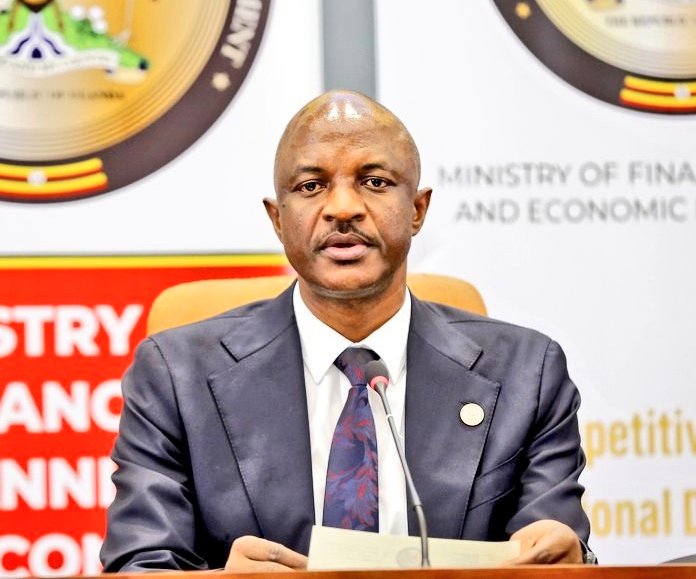
Under the leadership of Chief Executive Officer Denis Mudene, the regulator has increasingly pushed for responsible gaming, digital monitoring systems and stronger regional cooperation among African gaming regulators.

URA has also been expanding its focus on the digital and gaming economy as part of broader government efforts to widen the tax base and increase domestic revenue mobilization to finance public services and infrastructure development.

The strengthened cooperation between the two agencies will improve compliance levels within the gaming sector, which remains one of the fastest growing sources of tax revenue in Uganda’s entertainment and digital economy.

Stories Continues after ad

URA warns container leaders over cargo delays, opens help desk for affected traders

The Uganda Revenue Authority (URA) has warned individuals and companies commonly referred to as container leaders of delaying and withholding traders’ imported goods while allegedly engaging in tax evasion and overcharging unsuspecting importers.

In a public notice, Uganda Revenue Authority expressed concern over a growing number of complaints from traders who say their cargo is being held up after being shipped into the country through various logistics firms and individuals.

ā€œThe Management of Uganda Revenue Authority has noted with concern the increasing public outcry from traders regarding undelivered goods that were shipped into the country under various companies and individuals known as ā€˜CONTAINER-LEADERS’,ā€ the statement reads.

URA alleges that some of the operators are deliberately slowing down the declaration and clearance of goods while misleading importers to believe that the delays are caused by the tax authority.

ā€œIn an effort to evade government taxes and overcharge unsuspecting importers, Container Leaders continue to withhold and delay the declaration and clearance of traders’ goods, while falsely blaming URA for the delays,ā€ the notice adds.

To address the growing complaints, URA has invited affected traders to report their cases and seek assistance in tracking and clearing their cargo upon payment of the required taxes.

The companies and individuals already identified include Busundo Investments, Def Klin Enterprise, Segtex Logistics, Twine Logistics, Kyalusunga Investments, Maris Cargo U Ltd, Allia International, Awie Logistics Group Uganda, Lyon Shipping and Freight Co., Ship with US Cargo, Lift and Ride Cargo Agencies, Sifcargo, Finiva Logistics, Alivia Cargo Ltd, Ssalong Cargo, Simba Land, Gold Medal Supply and Logistics Ltd, Avirun Logistics, Intra Cargo, Odman Holdings, Junction Mall Ltd, M & E Logistics, Mevak Logistics, Campsbay Impex, Credify Africa Inc., B & P Limited, Apex Forwarders, Kaketo Pius, Faruk Mubiru, Chemical Ali, Timothy Sserunjoji, Mzeei Mukasa, and Uganda SMC Ltd, among others.

URA has directed all affected traders to report to its offices at URA Tower, Nakawa, 16th Floor, Office of the Commissioner Executive Office Operations, to lodge formal complaints.

Traders are required to come with supporting documents, including National Identification, receipts or proof of payment to shipping agencies, packing lists or invoices, Bills of Lading or tracking numbers where available, and any correspondence with logistics providers.

At the same time, the tax authority issued a stern warning to all individuals and entities involved in such practices to immediately desist, saying the conduct undermines fair trade and compliance.

Stories Continues after ad

BoU’s Atingi-Ego advocates for faster commercial dispute resolution to boost financial sector stability

Dr Michael Atingi-Ego, Governor Bank of Uganda.

The governor of Bank of Uganda, Michael Atingi-Ego, has called for the effective use of Alternative Dispute Resolution (ADR) mechanisms in commercial disputes.

Speaking during the Commercial Court Users ADR Round Table on Wednesday, Atingi-Ego said prolonged litigation continues to burden financial institutions, tie up capital, and weaken efforts aimed at expanding financial inclusion.

He said that faster and less costly settlement processes are critical for maintaining financial sector stability and supporting Uganda’s broader economic growth.

The round table brought together leaders from the Judiciary, the banking sector, and financial institutions ahead of the forthcoming Settlement Fortnight scheduled for May 18-29, 2026.

ā€œI am honoured to join you this morning and extend my sincere appreciation to the Honourable Chief Justice and the Judicial Training Institute for convening this important ADR Round Table,ā€ Atingi-Ego said in his opening remarks.

He commended the Judiciary for what he described as sustained efforts to promote quicker and more effective resolution of commercial disputes through ADR mechanisms.

ā€œAt the outset, allow me to commend the Judiciary for its sustained commitment to fostering faster and more effective resolution of commercial disputes,ā€ he said.

According to the Governor, the upcoming Settlement Fortnight and the ADR round table are direct outcomes of resolutions adopted during the recent Judicial Officers’ Colloquium on Alternative Dispute Resolution.

ā€œThis demonstrates a clear and commendable commitment to translating policy discussions into practical action, an approach that is both timely and necessary,ā€ he noted.

Atingi-Ego stressed that the effectiveness of Uganda’s judicial system is directly linked to the stability of the financial sector because banks and other financial institutions depend heavily on enforceable contracts and timely settlement of disputes.

ā€œProlonged litigation ties up capital in non-performing assets, constrains the banking sector’s capacity to support economic activity, and can significantly impede efforts to deepen financial inclusion,ā€ he said.

He added that ADR mechanisms offer ā€œa faster, less costly, and value-preserving pathwayā€ that benefits financial institutions, customers, and the wider economy.

The Governor revealed that through its supervisory engagements with financial institutions, the central bank has witnessed the strain caused by lengthy court battles on financial institutions’ balance sheets and operational efficiency.

ā€œThrough our supervisory engagement with financial institutions, we have observed first-hand the institutional strain that protracted litigation imposes on balance sheets, on operational focus, and on strategic resource allocation,ā€ he said.

He explained that unresolved disputes often force financial institutions to become more risk-averse, a situation that increases the cost of accessing financial services and ultimately undermines financial inclusion goals.

ā€œThis initiative is critically important for both the Bank of Uganda and the institutions we supervise. It strengthens confidence in dispute resolution mechanisms, supports prudent balance sheet management, improves risk management across the financial sector, and addresses some of the critical obstacles to expanding access to financial services,ā€ Atingi-Ego said.

The Governor also welcomed the involvement of Chief Executive Officers and Boards of financial institutions in the ADR process, saying leadership commitment is necessary to ensure ADR becomes embedded within institutional governance and practice.

ā€œLeadership commitment at the highest level is essential to ensure that ADR is embedded in institutional practice, supported by clear mandates and robust governance frameworks, so that it becomes the norm rather than the exception,ā€ he emphasized.

He applauded the Judiciary for championing reforms aimed at improving commercial justice and expressed optimism that the initiative would yield positive outcomes for the courts, financial institutions, and the wider economy.

ā€œThe Bank of Uganda looks forward to the positive outcomes it will generate for the courts, for the banking sector, and for the wider economy,ā€ he said.

Stories Continues after ad

Three arrested in Iganga over TikTok impersonation of Natasha Museveni and Ham Kigundu

Suspects accused of impersonating Mrs. Natasha Museveni Karugire and businessman Hajji Hamis Kigundu using fake TikTok accounts.

Police in Iganga District have arrested three suspects accused of impersonating Mrs. Natasha Museveni Karugire and businessman Hajji Hamis Kigundu using fake TikTok accounts, in a crackdown on online identity fraud and impersonation.

The suspects, identified as Mugoya Hassan, 27, Kyakatuka Ashiraf, 22, and Isanga Asuman, 20, were arrested from Nampirika A Village in Bukaye Parish, Nakalama Sub County in Iganga District following a joint security operation conducted by officers from Kiwule Police Station and Iganga Central Police Station.

According to Busoga East regional police spokesperson ASP Kasadha Micheal, the arrests followed reports of impersonation that had earlier been registered at Kiwatule Police Station in Kampala.

ā€œOn May 5, 2026, at around 11:00 am, a team of police officers from Kiwule Police Station, together with those from Iganga CPS, made a joint operation following a report of impersonation of Hajji Hamisi Kigundu at Kiwatule Police Station,ā€ ASP Kasadha said in a statement issued on Wednesday.

Police revealed that surveillance teams had first been deployed on the ground to monitor and identify the suspects before the operation was carried out.

ā€œPrior to the operation, a surveillance team had been on ground to monitor and identify the target point before carrying out the operation at around 2300/c,ā€ the statement added.

Investigators say the suspects were operating several TikTok accounts under identities linked to prominent individuals.

Police said Mugoya Hassan was found with a Samsung A06 mobile phone allegedly containing two active TikTok accounts operating under the names Natasha Karugire and The first daughter Natasha mus.

Kyakatuka Ashiraf was reportedly found with another Samsung phone allegedly used to create multiple TikTok accounts, including janet.kataha.muse5, natashakar7, first.daughter767 and ssenga.naisanga.04.

Meanwhile, police said Isanga Asuman was found in possession of a Samsung S10 mobile phone allegedly used to operate a TikTok account named ā€œNATASHA.K MUSEVENI SOULā€.

ā€œThe suspects were using TikTok accounts with identities of various people,ā€ ASP Kasadha stated.

Police further disclosed that the suspects are expected to be transferred to Kampala to face prosecution as investigations continue into what authorities believe could be a wider impersonation network operating on social media platforms.

ā€œThe suspects shall be transported to Kampala for prosecution,ā€ the spokesperson said.

Authorities also linked the latest arrests to an earlier operation conducted in February this year targeting alleged impersonators of Mrs. Natasha Karugire Museveni.

ā€œEarly this year, on the 3rd February 2026 at around 08:30am, a team of operatives from Defense Intelligence Security arrested several impersonators of Mrs. Natasha Karugire Museveni, and they have since been arraigned,ā€ the statement noted.

Police said more arrests are expected as investigations intensify.

ā€œFurther investigations are ongoing to have more suspects arrested,ā€ ASP Kasadha added.

Stories Continues after ad

Former Minister Kutesa loses bid to force US based woman to deposit security in land fraud case

Former Foreign Affairs Minister, Sam Kahamba Kutesa.

The High Court in Masaka has dismissed an application by former Foreign Affairs Minister Sam Kahamba Kutesa seeking to compel a United States-based woman to furnish security for costs in an ongoing land ownership dispute rooted in allegations of fraud.

In a ruling delivered on April 30, 2026, Justice Fatuma Nanziri Bwanika held that the application by Kutesa lacked a sufficient legal basis and warned against using financial considerations to block litigants from accessing justice.

The dispute stems from a substantive suit filed by Alice Nambooze Osaga, who is seeking to be declared the lawful owner of the land comprised in Mawogola/MSK 547, Folio 6, Block 83, Plot 520. Osaga alleges that fraudulent actions by Kuteesa and another party deprived her of ownership of the property.

Kutesa had asked the court to order Osaga to deposit security for costs before the main case could proceed, arguing that she resides in the United States, has no attachable property or known income in Uganda, and would likely fail to pay legal costs if the suit is dismissed.

However, Justice Bwanika ruled that the court’s discretion to order security for costs must be exercised sparingly and only in clear cases where sufficient cause has been demonstrated.

ā€œThe power to order for the payment of security for costs must be sparingly used as courts are required to ensure that parties with just claims are not prevented from accessing the seat of justice for their claims to be determined,ā€ the judge stated in the ruling.

The court further rejected Kutesa’s argument that Osaga’s case was frivolous and vexatious, saying the amended plaint disclosed a genuine cause of action arising from alleged fraudulent dealings in the contested land.

ā€œI am unable to say that the plaint is anywhere either frivolous or vexatious or still less an abuse of the process of court,ā€ Justice Bwanika ruled.

According to the court, merely alleging that a case lacks merit is insufficient unless it is plainly evident from the face of the suit that no reasonable person could consider it bona fide.

The judge also addressed the issue of Osaga’s residence in the United States, noting that living abroad alone cannot automatically justify an order for security for costs.

ā€œThere exists no universal rule or practice to the effect that a plaintiff resident abroad will for that reason only be ordered to give security for costs,ā€ the ruling noted.

Justice Bwanika further observed that Uganda has no formal reciprocal enforcement treaty with the United States for judgments, but emphasized that the court could not speculate on whether a future costs order would or would not be enforceable abroad.

ā€œA court of law as a general rule cannot rely on speculations, conjectures or guesswork, but must depend upon competent proof,ā€ she stated.

The judge also took note of Osaga’s claim that she was staying at her parents’ home because Kuteesa had allegedly taken over her residence, which forms part of the core dispute before court.

ā€œIt would be manifestly unjust to use a housing predicament allegedly created by the Applicant as a weapon to bar the Respondent’s access to the seat of justice,ā€ Justice Bwanika ruled.

In dismissing the application, the court stressed that poverty or lack of property within Uganda is not, by itself, a sufficient reason to compel a litigant to provide security for costs.

ā€œTo grant this application would be to elevate the Applicant’s financial anxiety over the Respondent’s constitutional right to be heard,ā€ the judge added.

The application was dismissed with costs in the cause, meaning the issue of legal costs will be determined after the main suit is concluded.

The substantive land case between Kutesa and Osaga is still pending before the High Court in Masaka.

Stories Continues after ad

Nile Star Bus operations suspended after deadly Nwoya crash, report reveals 56 deaths in one year

Accident scene.

The Ministry of Works and Transport has suspended the operations of Nile Star Bus Limited for 30 days following a fatal road crash in Nwoya District that left at least seven people dead on May 4, 2026.

The suspension, which takes effect today at 6pm, was announced by the State Minister for Transport, Fred Byamukama who cited a worrying pattern of repeated fatal crashes involving the company over the past year.

ā€œFollowing the fatal road crash in Nwoya District involving a Nile Star Bus, which claimed at least seven lives, government has taken a firm decision to suspend the operations of Nile Star Bus Limited for 30 days with immediate effect from 6pm today,ā€ Byamukama said.

He revealed that government data covering the period between May 2025 and May 2026 shows a disturbing trend of repeated crashes linked to the same bus company.

ā€œWe have made statistics for the last one year. From May 2025 to May 2026, these Nile Star buses have caused 11 accidents across various locations. In these accidents, 56 lives have been lost and 91 people are currently nursing injuries, some with broken arms and legs. This is unacceptable,ā€ he said.

The Minister added that the pattern of crashes shows systemic failure and disregard for road safety standards.

ā€œWe cannot allow this trend to continue. Eleven accidents in one year, 56 lives lost, and 91 injured is not just a coincidence. It is a serious safety concern that requires immediate intervention,ā€ he emphasized.

Authorities also raised concerns about one of the drivers allegedly linked to multiple incidents, accusing him of reckless and impaired driving behavior.

ā€œThe driver in question is a 64-year-old man who was previously dismissed in Waiwai over allegations of overdrinking. He has been linked to crashes in Kisumiat, Oriyo, and Kakira. Passengers had earlier suspected he was under the influence of intoxicants, but their complaints were ignored,ā€ Byamukama said.

The Minister confirmed that the driver, identified as Mandela Kasimu, is currently in police custody.

ā€œMandela Kasimu is currently detained at Moyale Police Station. He will be processed and prosecuted. We believe justice will take its course,ā€ he said.

Byamukama further stressed that while court remains the only authority with powers to cancel driving permits, government is pushing for reforms to strengthen road safety enforcement.

ā€œOnly courts have the power to withdraw driving licences, but we are engaging stakeholders including Parliament and Cabinet to consider empowering the licensing authority to act faster in such cases. Dangerous drivers should not continue operating freely on our roads,ā€ he noted.

He dismissed claims that poor road conditions were responsible for the crashes, insisting that driver discipline remains the major cause of road accidents.

ā€œIt is not about bad roads. The problem is discipline. We are investing heavily in road safety, but accidents continue because of human behavior,ā€ he said.

The Minister also called for accountability from transport operators, including compensation for victims and public apologies to affected families.

ā€œTaxis and bus companies must take responsibility. Those who cause accidents should compensate families who lost their loved ones and also come out publicly to apologize to the nation,ā€ he said.

He added that even if courts release the accused driver, he will not be allowed to operate any bus in Uganda for the remainder of his professional driving period.

ā€œEven if court releases him, he will not drive any bus in this country again, whether privately or publicly. We are taking a firm stand on road safety,ā€ Byamukama noted.

Stories Continues after ad

Gov’t moves to create a million green jobs

Group photo of Secretariat and participants during the workshop in Entebbe today.

Government of Uganda will generate over two million green jobs in the next ten years, Ministry of Gender, Labour and Social Development Permanent Secretary, Aggrey David Kibenge, has revealed.

This was during a stakeholders’ validation workshop on the draft ten-year Uganda National Green Jobs Creation Strategy and Plan in Entebbe today.

Kibenge said Uganda’s rapidly growing working and employed population comes with escalating activities – both commercial and subsistence – such as expanding settlements, sand mining, car washing, cultivation, infrastructure development, and urbanisation, among others.

These activities, he said, have resulted into deterioration of natural resources such as forests, wetlands, soils, vegetation and fresh water.

In his message delivered by Zachary Kansiime, the Ministry’s Senior Skills Development, Technology Uptake and Innovation Officer, Kibenge said Uganda’s environmental stress is further compounded by heavy reliance on non-sustainable energy sources, citing the 92.7% of households who depend on biomass for cooking, with 64.5% using firewood and 28.2% using charcoal. This widespread dependence contributes to deforestation, land degradation, and increased carbon emissions. Climate change further compounds these challenges.

Participants making their submissions during the workshop in Entebbe.

In the recent past, Uganda has been exposed to several climate change related natural hazards such as flooding, prolonged droughts, erratic rainfall and landslides especially in Mount Elgon region and Kasese areas where there has been devastating loss in life and property.

He added that transitioning to green growth is stimulated by the low labour productivity. According to ILO Modelled Statistics (2022), Uganda’s labour productivity is USD 3.6 GDP per hour worked, ranking Uganda 175th out of 185 countries. As a result, this low labour productivity negatively impacts on direct foreign investment and economic expansion, and hampers Uganda’s labour competitiveness within the region and internationally.

ā€œA key contributing factor is the persistent skills gap and education system inefficiencies. While millions enter the education system, only a small proportion complete secondary and post-secondary education,ā€ he said.

ā€œIn order to reverse the trend and address these challenges, all key economic sectors should adopt climate smart low carbon technologies which require a new set of skills/jobs – the green jobs – for expanding green and decent employment and promoting a just transition to a sustainable economy,ā€ Kibenge added.

Green jobs are tasks, especially ones that are paid, that efficiently use energy/raw materials and minimise the generation of wastes and pollution.

According to UN-ILO (2016), Green Jobs are decent jobs that contribute to preservation or restoration of the environment, in traditional sectors such as manufacturing and construction, or in new, emerging green sectors such as renewable energy and energy efficiency.  The green jobs incorporate aspects such as improving energy and raw materials efficiency; limiting greenhouse gas emissions; minimizing waste and pollution; protecting and restoring ecosystems; and supporting adaptation to the effects of climate change.

Mr Kibenge said it is within this context that the Ministry has developed the ten-year framework to guide Uganda’s transition towards a greener, more productive, and employment-intensive economy.

The strategy aims to promote the creation, protection, and sustainability of decent green jobs that enhance productivity, environmental stewardship, and inclusive economic growth across all sectors of the economy.

According to the draft strategy, green jobs must respond to the decent work principles. ā€œA decent job involves opportunities for work that is productive, delivers fair income, provides security in the workplace, offers social protection and better prospects for personal development, gives people the freedom to express their concerns and guarantees equal opportunities and equal treatment for all,ā€ it partly reads.

Isaac Rubagumya, the Green Jobs Programme Coordinator, said the move to green jobs is arguably one of the most important elements of the green transition due to its criticality in creating economic incentives for change (financial capital), stabilising social sentiment for change, equity and mandate for change.

ā€œThis strategy will provide policy options that enhance and exploit synergies between economic growth, environmental sustainability and social equity across all sectors of the economy,ā€ said Rubagumya. ā€œBesides addressing persistent development challenges that seem insurmountable by the conventional development model, empirical evidence suggest that accelerated achievement of medium term and long-term targets is therefore highly hinged on the transition to green growth which makes this transition a must rather an alternative.ā€ 

The workshop was attended by representatives from Ministries, Departments and Agencies; development partners; employers’ and workers’ organisation; the private sector, civil society organisations and academia.

Stories Continues after ad

Could Uganda Skip Cinemas and Go Fully Mobile for Film Releases?

The cinema industry in Uganda has never really taken off in the same way that it has in other African nations like Nigeria. There are only a handful of cinemas in the country, all of which are found in Kampala, and these have limited screens between them.

Instead of cinemas, the country has relied on video halls known as bibandas up to now, and there are thousands of these. Smartphone usage is now spreading across Uganda, though, and there’s an argument for leaning into mobile-first creation rather than trying to expand the cinema industry.

Ugandan Market Driven by Mobile Consumption

The reason why filmmakers and production companies should consider skipping cinemas in Uganda entirely now is the fact that mobile has taken the country by storm. It’s estimated that over 43 percent of Ugandans now own a smartphone, and this number is steadily growing. Internet availability is still low at around 50 percent, however, meaning that there’s a lot of potential for growth.

Those who do have smartphones and access to the internet are mainly 34 years old and below, and entertainment is one of the primary uses of these devices. YouTube is hugely popular in the country, with music videos and short-form content reigning supreme. There’s also a growing interest in casino games, with Ugandan online casinos emerging: the industry grossed UGX 8 trillion in 2024/2025. These platforms offer games geared towards African audiences, with Safari Rumble a prime example. 

Because mobile is becoming the number one go-to option for entertainment, it makes sense to release Ugandan films directly onto this medium. Indeed, these devices could be set to replace bibandas, as they give users more choice in what they can watch.

Reinventing How People Watch and Handing Power to Creators

Uganda has the chance to align itself with global trends now, where on-demand content is seen as the future. In other countries, the cinema industry has been detrimentally affected by the rise of streaming platforms, with companies having to work harder to pull people back in. That suggests that it may be a waste of time and resources to try to build up the Ugandan cinema market, and it would be better to skip this and go straight to mobile.

This modern approach is better for filmmakers and means that they have much more power when it comes to distribution. It’s much easier to get content out on YouTube than it is to secure cinema screenings, and the platform instantly gives them access to a much wider audience as well. This can also enable experimentation with different formats, such as shorter films or movies with episodic releases. There’s even the chance that these films could get clipped up and lead to viral moments that spread across social media and promote them further.

If Ugandan film is to start getting wider attention in the country and globally, making movies with mobile in mind is key. With a low barrier to entry in this format, there could soon be an increase in Ugandan filmmakers whose content appeals to a global audience.

Stories Continues after ad

The Future of Online Betting in SA: Less Generous, More Competitive

JOHANNESBURG, South Africa — South Africa’s online sports betting industry is entering a pivotal new phase. After years of rapid, mobile-driven growth, the sector is now facing increased regulatory scrutiny—most notably through the National Treasury’s proposed 20% national tax on gross gambling revenue (GGR).

The proposal, which closed for public comment in February 2026, is designed to both raise state revenue and address concerns around problem gambling. But its implications run far deeper. For operators, it introduces meaningful cost pressure. For punters, it could reshape the value of every bet placed online.

At its core, this is no longer just a tax debate—it’s about what the South African betting market will look like over the next decade.

A R75 Billion Industry at a Turning Point

South Africa’s gambling sector has expanded rapidly, with gross gambling revenue increasing from approximately R32 billion in 2019/20 to around R75 billion in 2024/25. Sports betting has been the primary driver of that growth, fuelled by:

  • Widespread smartphone adoption
  • Live and in-play betting markets
  • Strong engagement with football, rugby, and cricket
  • Aggressive acquisition strategies from bookmakers

The growth story extends beyond sports betting. Online casinos have emerged as a significant contributor to overall GGR, with players gravitating toward slots, live dealer tables, and instant-win games through the same mobile-first platforms that drove betting adoption. Operators like 10bet, ZarBet, Lucky Fish, PantherBet, and YesPlay have built out both verticals—offering sports betting and casino products under one roof—meaning the proposed tax, if enacted, would squeeze margins across the full spectrum of online gambling, not just the sportsbook.

Why the 20% GGR Tax Matters

The structure of the proposed tax is critical. Unlike a profit tax, it applies to gross gambling revenue—the portion bookmakers retain after paying out winnings, but before operational costs.

Given that sportsbook margins typically sit in the 5%–10% range, a 20% tax on GGR is not trivial. It effectively reduces operator margin at a structural level, forcing adjustments elsewhere in the business.

Those adjustments rarely happen in isolation.

How the Market Is Likely to Respond

Operators faced with higher costs tend to respond in predictable ways—not dramatically overnight, but gradually and consistently.

Punters are likely to notice changes in three key areas:

  • Odds and pricing: Margins may tighten slightly, particularly on high-volume markets like football and horse racing
  • Promotions: Welcome bonuses, free no deposit bonus, free spins no deposit and odds boosts may become less frequent or less generous
  • Bonus conditions: Wagering requirements and terms may become stricter to manage risk

Individually, these shifts may seem minor. Collectively, they reduce long-term betting value—especially for regular bettors.

“We’re already seeing punters ask harder questions about value,” said Dennis Kumar, analyst at Betting.za.com. “When the promotional environment tightens, the bettors who understand margins and shop across bookmakers will have a real edge over those who don’t.”

The Risk of Unintended Consequences

The policy goal behind the tax is clear: curb harmful gambling behaviour while ensuring the state captures a fair share of industry revenue.

However, there is a well-documented risk in global markets: over-taxation can weaken the regulated ecosystem.

If licensed bookmakers become less competitive, some bettors may drift toward offshore platforms that:

  • Do not pay local taxes
  • Operate outside South African regulation
  • Offer fewer consumer protections

This creates a paradox. A policy designed to strengthen oversight can, if miscalibrated, push activity into less controlled environments.

Regulation Needs More Than Taxation

A sustainable betting market is rarely built on taxation alone. Effective regulation typically combines multiple levers, including:

  • Responsible gambling tools such as deposit limits and self-exclusion
  • Enforcement against illegal and offshore operators
  • Clear advertising and promotional standards
  • Transparency around bonus terms and pricing

The challenge for South Africa is finding the balance between consumer protection and market competitiveness.

What This Means for Punters

For everyday bettors, the shift will be gradual but meaningful.

The era of aggressive promotions and high-value bonuses may begin to taper, replaced by a more measured, efficiency-driven market. Odds may become slightly sharper, and value harder to find.

According to analysis from Betting.za.com, this shift places greater emphasis on informed betting. Comparing bookmakers, understanding margins, and evaluating the real value behind offers will become more important than simply chasing bonuses.

In other words, the advantage may shift from promotions to knowledge.

Where the Market Goes From Here

The proposed 20% GGR tax represents more than a fiscal policy—it marks a transition point for the South African betting industry.

The market is likely to become:

  • More regulated
  • More consolidated
  • Less promotion-driven
  • More focused on long-term sustainability

Whether that transition ultimately benefits or harms punters will depend on how well policy is implemented—and how effectively the regulated market remains competitive.

One thing is clear: the future of online sports betting in South Africa will look very different from its past.

We Recommend the punter to try the following sports betting sites:

#SportsBettingWelcome Bonus PackageBonus Code
110bet CasinoFree Spins & Free Bets Up To R5,000N/A
2ZARbet50 Free Spins on Big Blue Fishing50BBF
3HollywoodbetsR25 Free Bet + 50 Free SpinsOn Sign-Up
4Pantherbet50 Free Spins Bonus + R22,000 High-Roller Bonuses Over 3 Deposits.HIPANTHER
5YesPlay100% bonus up to R3,000N/A (Automatic)
6Jabulabets30 Free Spins On Sign-Up + R35,000 Welcome BonusJABULA30
7Lucky Fish CasinoR25 Free Bet On Sign UpOn Registration

About Betting.za.com

Betting.za.com is South Africa’s leading authority on legal online betting sites, covering bookmaker reviews, sports betting trends, regulatory developments, and market analysis. As the regulatory landscape evolves, the platform helps punters compare licensed operators, understand their rights, and make more informed decisions with confidence.

Stories Continues after ad

Uganda pushes for fair competition in air transport at continental aviation workshop held at Speke Resort Munyonyo

Uganda Civil Aviation Authority has convened a high-level continental workshop at Speke Resort Munyonyo aimed at strengthening fair competition frameworks across Africa’s air transport sector as the country deepens its commitment to aviation reforms.

The three-day capacity-building workshop, officially opened on Wednesday by UCAA Director General Fred K. Bamwesigye, focuses on drafting, revising, and implementing competition regulations in air transport services across the continent. The event runs from May 6 to 8, 2026.

Organized by the African Civil Aviation Commission in partnership with the McGill Institute of Air and Space Law and funded by the European Union Aviation Safety Agency, the workshop is part of broader efforts to operationalize the Single African Air Transport Market under the Yamoussoukro Decision.

In his opening remarks, Bamwesigye underscored the need to balance liberalization with strong oversight.

ā€œOpen skies must be matched with fair competition. Strong regulatory frameworks are essential to prevent market distortions, safeguard consumer interests, and ensure a level playing field for airlines,ā€he said.

He reaffirmed Uganda’s commitment to building a transparent and competitive aviation industry, pointing to recent milestones.

ā€œWe have enacted a Competition Act in 2024, established a Consumer Protection Unit within UCAA, and are developing draft competition and consumer protection regulations aligned with continental frameworks,ā€ Bamwesigye noted.

Although Uganda is not yet a full member of SAATM, he said the country is making steady progress toward accession.

ā€œWe are undertaking consultations and preparing for Cabinet consideration as part of deliberate steps toward joining the Single African Air Transport Market,ā€ he added.

The workshop has drawn aviation regulators, legal experts, and representatives from regional economic communities across Africa, creating a platform for knowledge-sharing and policy alignment.

Participants are engaging in technical sessions, comparative legal analysis, and hands-on drafting exercises designed to equip them with practical tools for enforcing competition regulations in line with continental standards.

Bamwesigye commended AFCAC and its partners for advancing Africa’s regulatory capacity and urged member states to accelerate implementation of SAATM.

ā€œFull implementation of SAATM is critical for unlocking the growth and integration potential of Africa’s aviation sector,ā€ he said.

Stories Continues after ad