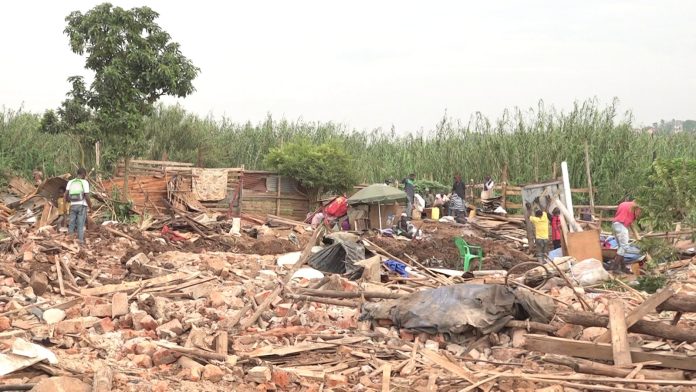
The National Environment Management Authority (NEMA) has concluded the restoration of sections of the Lubigi Wetland in Kampala in an enforcement operation that saw the demolition of 58 illegal structures and the recovery of nearly 25 acres of degraded wetland.
According to a press release issued on Friday, the restoration exercise concluded on Thursday in Kawaala Zone following the expiry of a voluntary relocation grace period that had earlier been issued to individuals illegally occupying parts of the wetland.
NEMA said the operation was conducted in collaboration with the Wetlands Management Department under the Ministry of Water and Environment, local government authorities, the Uganda Police Force and the Uganda People’s Defence Forces.
“A coordinated restoration exercise conducted yesterday, Thursday 28th May 2026, successfully restored close to 25 acres of degraded wetland and led to the removal of 58 illegal structures established within the protected ecosystem,” the Authority stated.
The environmental body noted that the exercise forms part of broader nationwide efforts to reclaim and restore degraded wetlands that have increasingly come under pressure from illegal settlements, dumping and unregulated construction.
Lubigi Wetland, one of the key ecological systems within the Kampala Metropolitan Area, has for years faced encroachment that experts say has contributed to persistent flooding, environmental degradation and sanitation challenges in surrounding communities.
NEMA said the restoration of the wetland is expected to generate significant environmental and public health benefits.
“The Authority notes that the restoration of Lubigi Wetland is expected to yield significant environmental and public benefits, including improved flood control, enhanced water filtration, biodiversity conservation, climate regulation, and improved public health and sanitation for surrounding communities and the wider Kampala Metropolitan Area,” the statement read.
Authorities also praised residents who voluntarily complied with restoration directives and vacated the affected areas peacefully before the demolitions commenced.
“The Authority further appreciates the cooperation demonstrated by the majority of residents who peacefully complied with the restoration directives and voluntarily vacated the affected areas,” NEMA said.
According to the statement, affected residents were given time to remove their valuables before both temporary and permanent structures were brought down to pave way for ecological restoration.
“No fatalities or injuries were recorded,” the Authority added.
However, NEMA disclosed that the operation was met with resistance from a few individuals who allegedly attempted to mobilise others against the enforcement teams.
“Five defiant and violent suspects were arrested and are currently detained at Lubigi Police Station pending further action,” the Authority revealed.
The Authority warned that similar restoration and enforcement exercises will continue in other degraded wetland systems across the country where restoration orders had previously been ignored.
“These include affected sections of Kaliddubi, Kyetinda, and other critical wetland ecosystems across the country,” the statement noted.
NEMA further defended the ongoing operations as necessary interventions aimed at protecting the constitutional right of Ugandans to a clean and healthy environment.
“The ongoing restoration efforts are intended to safeguard the constitutional right of all Ugandans to a clean and healthy environment, as opposed to allowing a few private individuals to illegally degrade and benefit from protected ecosystems at the expense of the wider public interest and future generations,” the Authority said.
The environmental regulator also reminded the public that wetland degradation remains a punishable offence under Section 55 of the National Environment Act, Cap 181.
The Authority called upon Ugandans to support wetland conservation efforts and desist from illegal encroachment, dumping, and construction activities within protected wetland areas.
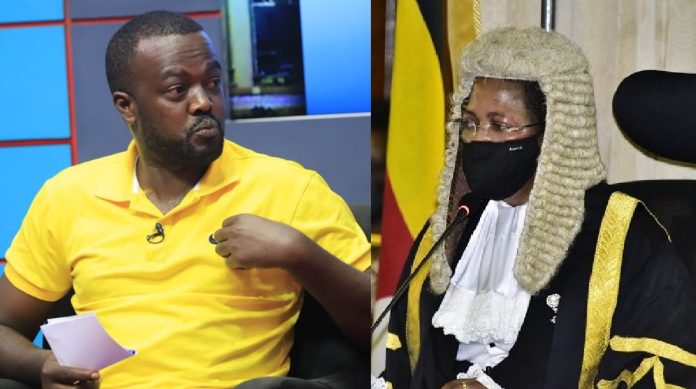
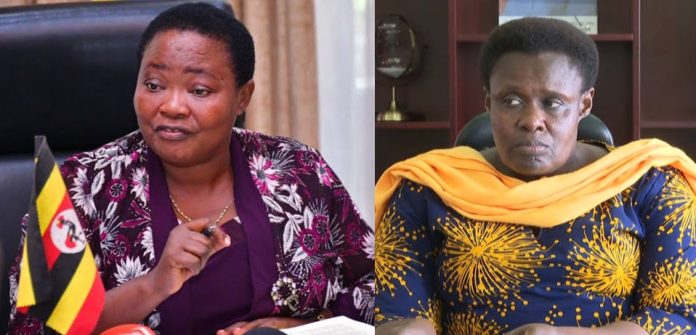
Former Rubaga Deputy Resident City Commissioner Herbert Anderson Burora and former Speaker Anita Among.
Former Rubaga Deputy Resident City Commissioner Herbert Anderson Burora has announced plans to table a petition seeking the removal of Speaker of Parliament Anita Annet Among from her powerful position as Second Vice Chairperson of the ruling National Resistance Movement (NRM).
Burora made the declaration through his social media platforms, signaling what could become one of the most politically charged internal battles within the ruling party ahead of the 2026 elections.
“Next week we shall table a Petition seeking to remove Anita Annet Among from the Position of 2nd Vice Chairperson of @NRMOnline, a highly reputable office/Position of the Party,” Burora stated.
The latest development places renewed focus on the long running controversy surrounding Among, whose tenure as Speaker of Parliament has been overshadowed by corruption allegations, lavish spending accusations, international sanctions and investigations into the accumulation of immense wealth.
Burora emerged last year as one of the most outspoken critics of the Speaker, accusing her and sections of Parliament leadership of presiding over corruption, intimidation and misuse of public resources.
At the time, Burora was serving as Rubaga Deputy RCC.
His attacks on the Speaker intensified during the height of the parliamentary service award controversy and allegations of inflated expenditure within Parliament. Through social media posts and public commentary, Burora accused Among of living extravagantly while ordinary Ugandans struggled with economic hardships.
The remarks quickly escalated into a direct confrontation with the Speaker.
In March 2024, government suspended Burora from his position to pave way for investigations over what authorities described as conduct inconsistent with public service regulations. He later resigned from office, insisting he could not remain silent in the face of corruption allegations involving top government officials.
Months later, heavily armed security operatives arrested Burora from his home in Ntinda following complaints linked to his continued statements against the Speaker.
He was subsequently arraigned before court and charged under the Computer Misuse Act with hate speech and spreading malicious information.
According to prosecution, Burora used his X account to refer to Among as corrupt, a kidnapper, murderer and torturer, accusations authorities argued were intended to promote hostility against the Speaker.
Although the case later softened after reconciliation efforts between the two sides, Burora’s latest declaration signals that the political fallout never truly ended.
His renewed offensive comes at a time when Anita Among remains under intense scrutiny both locally and internationally over corruption allegations and questions surrounding her wealth.
Last year, the United States government imposed sanctions on Among and her husband, Budiope East MP Moses Magogo, accusing the Speaker of involvement in significant corruption linked to her role in public office. The sanctions included visa restrictions imposed by the US Department of State.
The sanctions marked one of the most serious international actions ever taken against a sitting Ugandan Speaker of Parliament and further intensified scrutiny around her financial dealings and lifestyle.
Among’s name has repeatedly surfaced in public controversy over luxury properties, extravagant spending and high end vehicle acquisitions.
One of the biggest public debates surrounded reports that the Speaker had acquired a Rolls Royce Cullinan reportedly valued at more than Shs2 billion, a purchase that drew widespread criticism on social media amid growing public anger over corruption and the cost of living crisis. Images and videos of the luxury vehicle circulated widely online, fueling questions about the source of wealth among top government officials.
The Speaker has also repeatedly faced scrutiny over high value residential properties associated with her and her family in upscale areas including Nakasero, Kigo and other prime locations around Kampala and Wakiso District.
Anti-corruption activists and critics have over time demanded investigations into the source of funds used in acquiring some of the properties, arguing that the rapid expansion of wealth among political leaders continues to raise accountability concerns.
Pressure around Among further intensified after Parliament offices linked to the Speaker and senior parliamentary officials came under heightened public scrutiny during broader anti corruption investigations involving parliamentary expenditure, procurement processes and classified spending.
The Parliamentary Commission itself has faced criticism over accountability concerns involving service awards, procurement deals, operational expenditure and large supplementary budget allocations approved during Among’s tenure as Speaker.
Several anti corruption activists have repeatedly petitioned government agencies demanding investigations into expenditure patterns at Parliament, while opposition legislators have accused Parliament leadership of operating with limited transparency on public funds.
Among has consistently denied wrongdoing and dismissed many of the allegations as politically motivated attacks orchestrated by her opponents.
Despite the controversies, she remains one of the most influential figures within the ruling party and government, having rapidly consolidated political power after becoming Speaker in 2022 following the death of Jacob Oulanyah.
Her rise within NRM structures saw her elevated to the powerful position of Second National Vice Chairperson Female, cementing her position among the party’s top leadership hierarchy.
Burora’s latest move now threatens to reopen deep internal tensions within the ruling establishment as questions surrounding corruption, accountability and influence continue to dominate political discourse around Parliament.
The African Development Bank (AfDB) has reaffirmed its commitment to financing the construction of Uganda’s long awaited Standard Gauge Railway (SGR), offering a major boost to the country’s ambitious infrastructure and economic transformation agenda.
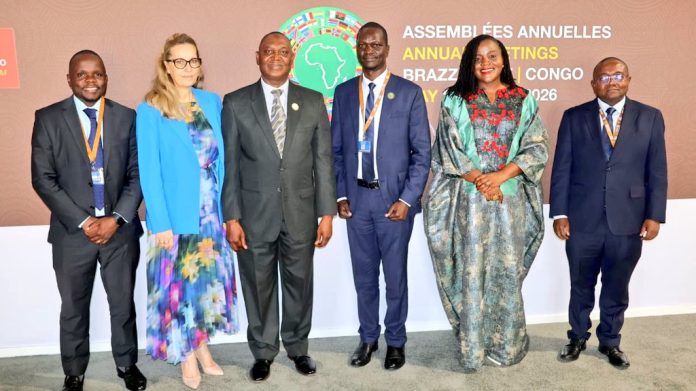
The commitment was announced during a high-level meeting held on the sidelines of the 2026 African Development Bank Annual Meetings in Brazzaville, Republic of Congo, where the Bank’s Vice President for Regional Development, Integration and Business Delivery, Dr. Abdul Kamara, met a Ugandan delegation led by Mustapha Achidri, the Assistant Commissioner at the Ministry of Finance and Uganda’s Temporary Governor to the Bank.
Dr. Kamara confirmed that the AfDB is ready to support the construction of the 326-kilometre SGR section stretching from Malaba to Kampala, describing the project as one that aligns with the Bank’s broader vision of building resilient and transformative infrastructure across Africa.
“The SGR project is well aligned with the Bank’s cardinal priority of building resilient infrastructure on the African continent,” Dr. Kamara said during the meeting.
The Bank has already tentatively allocated 480 million Units of Account, approximately $650 million, towards the project. However, the final financing arrangements are expected to be concluded during the next appraisal mission scheduled for June 2026, subject to the approval of the African Development Fund 17.
The latest commitment marks a significant milestone for Uganda, which has for years pursued financing and implementation plans for the Standard Gauge Railway project seen as a critical driver of trade, industrialisation and regional connectivity.
The Malaba to Kampala section is expected to form part of the wider regional railway network connecting Uganda to Kenya and eventually to other East African countries. Once completed, the railway is projected to reduce cargo transportation costs, ease pressure on roads and enhance trade efficiency between the port of Mombasa and Uganda’s inland markets.
Ugandan officials at the meeting welcomed the Bank’s support, saying the railway remains central to the government’s Tenfold Growth Strategy aimed at accelerating economic expansion and competitiveness.
Achidri revealed that the Government of Uganda is currently mobilising about EUR 2.7 billion to finance the broader construction of the SGR infrastructure.
He described the railway as “a key enabler under the Tenfold Growth Strategy” and noted that improved transport infrastructure would play a crucial role in stimulating investment, boosting exports and facilitating industrial growth.
Achidri also thanked the African Development Bank for what he described as continued and reliable support towards Uganda’s development priorities.
He specifically cited recently approved projects by the Bank’s Board, including additional financing worth EUR 7.33 million for the Uganda Rural Electrification Project I, as well as EUR 101.23 million allocated to the Uganda Rural Electrification Access Project Phase II.
The Ugandan delegation used the meeting to strengthen diplomatic and institutional ties with the Bank’s leadership following the election of Dr. Sidi Ould Tah as the new President of the African Development Bank Group.
On behalf of the Government of Uganda, Achidri congratulated Dr. Tah upon his election and pledged Uganda’s support during his tenure.
“The Government of Uganda pledges its support to your endeavours during your tenure,” Achidri said.
Beyond infrastructure financing, the African Development Bank also pledged emergency support to Uganda in the fight against Ebola, committing $1 million towards the country’s response efforts.
The support comes at a time when Uganda continues to strengthen surveillance, emergency preparedness and public health interventions following renewed concerns over Ebola outbreaks in parts of the region.
The Bank’s additional support is expected to reinforce ongoing efforts by Uganda’s health authorities to contain the disease and protect vulnerable communities.
Observers say the dual commitment towards both infrastructure development and public health demonstrates the Bank’s broader role in supporting African countries beyond traditional financing.
The meeting was attended by several senior AfDB officials including Bhebhe Themba, the AfDB Country Manager for Uganda, Yvette Glele Ahanhanzo, Director for Regional Development, Integration and Business Delivery, and Maria Antonia Joy Kategekwa, Director of the Regional Coordination Office.
Uganda’s Standard Gauge Railway project has long been viewed as a transformative initiative capable of reshaping the country’s transport and logistics sector.
The railway is expected to provide faster, safer and more efficient cargo and passenger transport services while positioning Uganda as a strategic trade and transit hub within the East African region.
Analysts believe the latest commitment by the African Development Bank could reignite momentum around the project after years of delays linked to financing negotiations and regional coordination challenges.
If implemented successfully, the SGR is expected to support Uganda’s industrial parks, agricultural exports, mineral transportation and oil sector logistics, while also reducing the high cost of doing business associated with road transport.
The development also signals growing confidence by international financial institutions in Uganda’s long term infrastructure ambitions and economic growth prospects.
With financing discussions now entering the appraisal phase next month, attention will turn to the final approval processes and implementation timelines that could determine when construction of the Malaba Kampala section officially begins.
The Uganda National Examinations Board has extended the deadline for normal registration of candidates for the 2026 Primary Leaving Examination, Uganda Certificate of Education and Uganda Advanced Certificate of Education examinations to June 30, giving schools additional time to complete the exercise.
The extension, according to UNEB Executive Director Dan N. Odongo, is intended to accommodate newly accredited examination centres that are still processing registration requirements.
In a press statement issued on Thursday, UNEB warned schools and examination centres against delaying the registration process, cautioning that congestion usually intensifies toward the closing dates.
“Normal registration has been extended to 30th June 2026 to accommodate the new centres that have just been accredited,” Odongo said.
He added that late registration would begin on July 1 and close on July 31, attracting a surcharge of 100 percent for PLE candidates and 50 percent for UCE and UACE candidates.
“There will be no more registration of candidates after July 31st 2026. Centres are urged to complete the registration process early within the period allowed to avoid the congestion that tends to occur towards the deadline,” Odongo warned.
UNEB also maintained the registration fees for privately sponsored candidates at Shs34,000 for PLE, Shs164,000 for UCE and Shs186,000 for UACE.
The Board clarified that government will continue meeting registration costs for learners studying under the Universal Primary Education, Universal Secondary Education and Universal Post O Level Education and Training programmes.
“The government will continue to pay the registration fees of all the candidates sponsored under any of the three programs,” Odongo said, urging heads of schools to ensure all qualifying learners are registered within the normal registration period.
UNEB further directed schools and parents to ensure that all candidate details are correctly captured before registration, especially names and dates of is that candidates should use. The names of the candidates should be got from the birth certificate, or NIRA forms submitted by the parents,” the statement reads in part.
The Board also outlined strict conditions for candidates seeking registration for the 2026 UCE examinations under the Competency Based Curriculum.
According to UNEB, this year’s candidates will be the third cohort to sit UCE examinations under the new curriculum, which requires learners to register for a minimum of eight and a maximum of nine subjects.
“Continuous Assessment scores for the subjects offered, as well as Project scores shall be a requirement for certification,” Odongo noted.
Only learners who sat PLE in 2022 or earlier and obtained Division One to Four or their equivalent will be allowed to register for UCE next year, provided they have completed four years of lower secondary education.
UNEB also cautioned learners against changing names or optional subjects after Continuous Assessment scores have already been submitted to the Board.
“Candidates whose Continuous Assessment scores have been submitted to UNEB are advised not to change names and optional subjects at S.4 registration,” Odongo said.
For repeaters, the Board stressed that all Continuous Assessment scores for Senior Three and Senior Four must be complete before registration is approved.
At UACE level, UNEB announced that the 2026 candidates will be the pioneer group assessed under the aligned Advanced Level curriculum following the rollout of competency based learning at lower secondary.
The Board said the candidates would be examined using scenario based assessment methods aligned to the revised curriculum framework.
“Only candidates who passed UCE and obtained the Uganda Certificate of Education in 2024 or earlier or possess an equivalent qualification can be registered for the 2026 UACE Examination,” Odongo explained.
He added that all candidates must have pursued Advanced Level studies for at least two years before registration.
UNEB also warned school administrators against fraudulent registration practices, particularly the illegal registration of privately sponsored students as government sponsored candidates.
“Any head of an examination centre or school director that will be found indulging in this practice shall pay twice the amount that has been defrauded,” Odongo warned.
He added,“Relevant laws on fraud will also be applied on such head teachers or directors and in addition, the examination centre number of the school shall be withdrawn.”
The Board further directed all examination centres to publicly display candidate registers at school noticeboards at least 60 days before the commencement of examinations as required under the UNEB Act.
Heads of centres were instructed to print registration slips from the UNEB portal and ensure candidates verify the accuracy of their biodata before appending signatures.
“Candidates MUST verify the correctness of the details and append their signatures as proof that they have verified the information,” Odongo emphasized.
The details to be verified include names as they appear on birth certificates, dates of birth, gender, photographs and subject combinations for UCE and UACE candidates.
In a move aimed at improving transparency, UNEB also announced that parents and guardians will be able to confirm registration status through an SMS platform by sending candidate index numbers to 6600.
“The Board therefore urges parents and guardians of candidates to take keen interest in the registration of their children and verify the correctness of the information submitted,” Odongo said.
UNEB also issued a final warning to candidates against using erasable pens during examinations, stressing that such materials remain prohibited in all UNEB assessments.
“Finally, the Board wishes to notify learners, parents and Heads of Centres that the use of erasable pen is not permitted during any of the UNEB examinations,” Odongo stated.
The Board’s latest communication comes at a time when the country is continuing to adjust to reforms in the education sector, particularly the implementation of the Competency Based Curriculum and changes in assessment methods at both lower and upper secondary levels.
Education stakeholders have in recent years raised concerns over errors in candidate biodata, delays in registration and irregularities in examination financing, issues UNEB says it is determined to eliminate through tighter supervision and enforcement measures.
With registration now entering the final phase, UNEB has called upon school administrators, parents and learners to comply with all guidelines to avoid disqualification and last minute complications ahead of the 2026 national examinations.
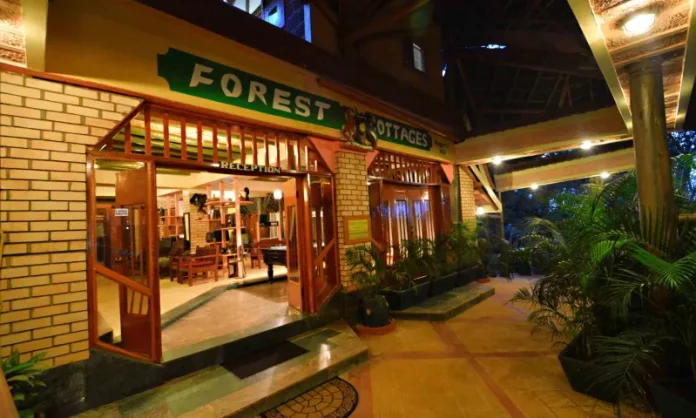
Positioned at the leafy slopes of Naguru Hill in Bukoto, Kampala, Forest Cottages has quietly built a reputation as one of Uganda’s most distinctive hospitality brands, blending eco-tourism, business convenience and African-inspired luxury in a city increasingly dominated by concrete high-rises and commercial bustle.
At a time when Kampala’s hospitality sector is becoming fiercely competitive, the Bukoto-based establishment has managed to carve out a unique niche by positioning itself not merely as a hotel, but as a nature-centered urban retreat that appeals to business executives, tourists, conference organizers and local staycation enthusiasts alike.
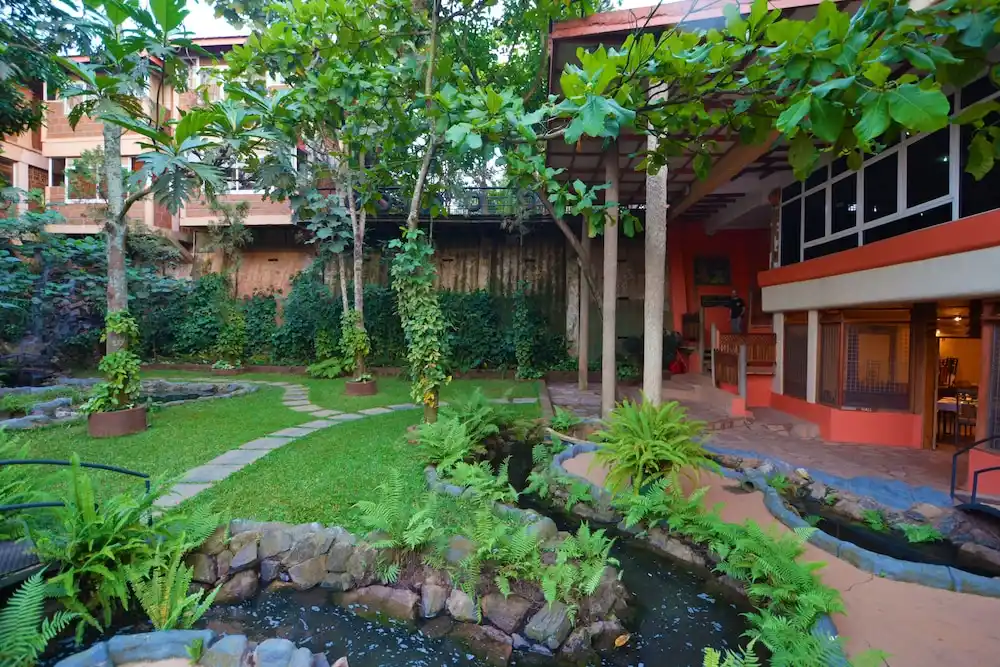
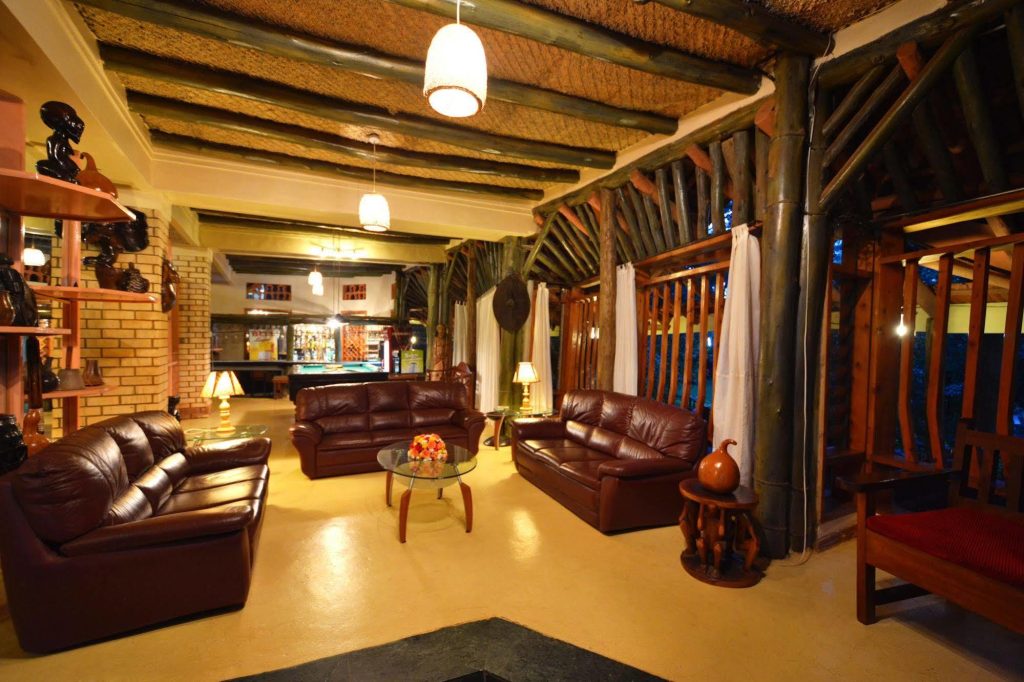
Located less than 30 minutes from Kampala’s central business district, the facility sits in a carefully preserved tropical environment that gives guests the rare feeling of being inside a forest while remaining within the city. The property is part of one of Uganda’s largest hospitality chains.
Founded in the mid-2000s, Forest Cottages was designed with a strong ecological philosophy aimed at preserving the indigenous trees and natural landscape that characterize Naguru Hill. Over the years, this environmental approach has become the hotel’s biggest selling point, especially in an era where eco-friendly tourism and sustainable hospitality are gaining increasing global attention.
Unlike many city hotels that focus on glass towers and corporate aesthetics, Forest Cottages has remained committed to an African-inspired architectural style featuring wooden cottages, landscaped gardens and open green spaces that attract travelers looking for tranquility in the middle of Kampala’s fast-paced urban life.
Industry analysts say this positioning has allowed the hotel to stand out in a hospitality market where many establishments often offer similar services and experiences.
Tourism and hospitality observers note that modern travelers are increasingly seeking experiential accommodation rather than just rooms, and Forest Cottages appears to have capitalized on that trend by marketing itself as both a leisure and business destination.
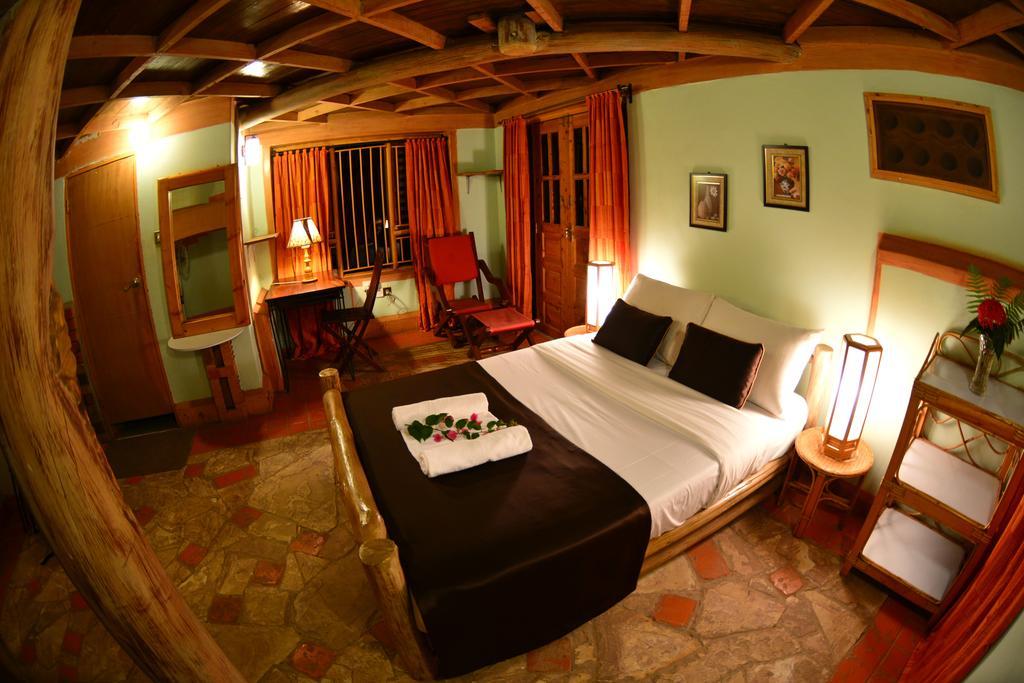
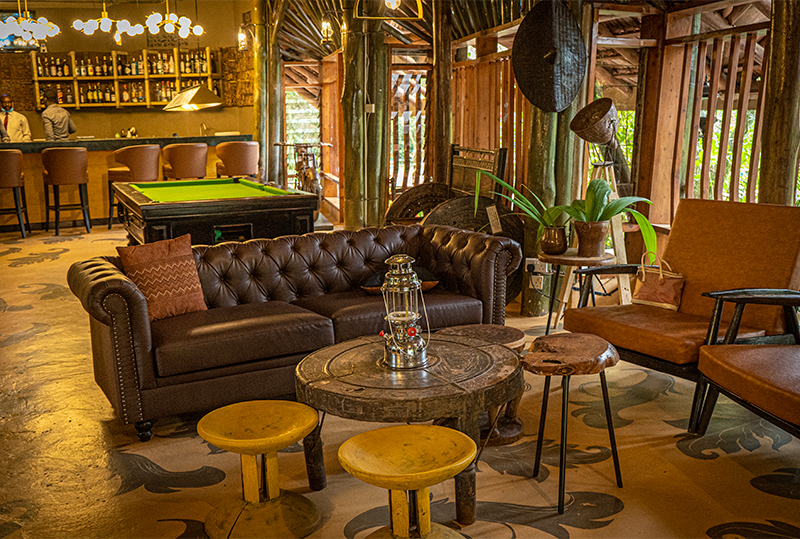
The hotel currently boasts several rooms and cottages designed in safari-style themes while offering modern amenities including wireless internet, conference facilities, business-friendly workspaces and access to recreational services.
Its room categories range from standard rooms to fully furnished family cottages equipped with kitchens, living areas and self-catering facilities, a strategy that has widened its appeal to both short-term travelers and long-stay guests.
For business travelers, proximity to Kampala’s commercial zones has become a major advantage. Bukoto itself has evolved into one of Kampala’s most strategic residential and commercial suburbs, with quick access to areas such as Kololo, Ntinda, Naguru and the city center.
This geographical advantage has enabled Forest Cottages to attract diplomats, corporate executives, NGO workers and international consultants who require quiet accommodation away from the congestion of the central business district while still maintaining easy mobility across Kampala.
The business dimension of Forest Cottages has particularly expanded in recent years as Kampala witnesses growing demand for conference venues, corporate retreats and business meeting spaces.
Several hospitality and tourism publications have highlighted the hotel’s increasing popularity as a venue for conferences, cocktail receptions, launches and social events because of its balance between affordability and serene surroundings.
Hospitality experts argue that the post-pandemic travel industry has shifted significantly toward wellness and calm environments, making facilities such as Forest Cottages more attractive compared to conventional urban hotels.
This transformation has also coincided with the rise of Uganda’s domestic tourism sector, where middle-income Ugandans increasingly seek weekend staycations and short leisure escapes within Kampala and nearby areas.
Online travel reviews indicate that many visitors appreciate the property’s greenery, calm atmosphere and accessibility. Many guests describe the hotel as perfectly green with a central yet peaceful setting, factors that continue to attract both foreign and domestic travelers.
Several travel and tourism platforms have further ranked Forest Cottages among Kampala’s preferred eco-friendly destinations because of its blend of affordability and unique ambiance.
Beyond accommodation, the hotel has also leveraged partnerships and integration within the wider hospitality ecosystem to strengthen its market competitiveness.
Guests at Forest Cottages enjoy access to additional recreational facilities including swimming pools, gym services and wellness amenities, giving the property added value without necessarily expanding its physical footprint.
This integrated hospitality model has become increasingly important in Uganda’s tourism sector where consumers are now looking for comprehensive experiences rather than isolated services.
The rise of remote work and digital nomad culture has further boosted Bukoto’s attractiveness as a hospitality zone. Travel discussions frequently describe Bukoto as one of Kampala’s safer and more convenient neighborhoods for expatriates and remote workers due to its restaurants, internet access and strategic location.
This has indirectly strengthened the position of Forest Cottages, which benefits from being located in one of Kampala’s fastest-growing mixed-use suburbs.
The property has also increasingly become associated with Kampala’s nature and wellness tourism narrative. While Uganda’s tourism industry has historically focused on national parks and wildlife safaris, urban eco-tourism concepts are slowly emerging, and Forest Cottages has positioned itself within that growing segment.
Its heavily forested environment, birdlife and indigenous vegetation offer visitors a mini safari feel without leaving Kampala. Hospitality listings describe the area as home to colorful bird species, further enhancing its appeal to eco-tourists and nature enthusiasts.
The facility’s branding around “feeling the touch of nature” has become central to its corporate identity and marketing strategy.
Business analysts say the success of such hospitality brands lies in differentiation, especially in cities like Kampala where hotel development has accelerated rapidly over the last decade.
Rather than competing directly with five-star luxury chains on scale, Forest Cottages appears to have focused on authenticity, tranquility and affordability.
This strategy has enabled the property to maintain relevance even as newer hotels emerge across Kampala.
Industry observers also point to the growing importance of sustainable tourism in Uganda’s broader economic future.
Uganda’s tourism sector continues to recover and evolve following disruptions caused by the COVID-19 pandemic. Stakeholders increasingly emphasize environmentally conscious tourism products capable of attracting international travelers seeking authentic African experiences.
In that context, facilities such as Forest Cottages are seen as examples of how urban hospitality businesses can align profitability with environmental preservation.
The hotel’s management has repeatedly emphasized customer experience and personalized service as part of its business philosophy.
This emphasis on service quality is critical in Uganda’s hospitality industry where customer loyalty and word-of-mouth recommendations remain major drivers of business growth.
Online communities discussing travel and staycations in Uganda have also increasingly referenced Forest Cottages as one of Kampala’s attractive relaxation spots because of its quiet atmosphere and accessibility.
As Kampala continues to expand and urban pressure intensifies, the value of green hospitality spaces is expected to rise even further.
Urban planners and environmentalists have repeatedly warned about the reduction of natural spaces within the city, making preserved environments such as those at Forest Cottages increasingly rare and commercially valuable.
The property’s ability to retain its forest identity while adapting to modern hospitality demands may ultimately determine its long-term sustainability and competitiveness.
Still, like many businesses in Uganda’s hospitality industry, Forest Cottages faces challenges including rising operational costs, changing consumer expectations and competition from serviced apartments, Airbnb properties and international hotel chains entering Kampala’s market.
Some guest reviews have pointed to areas requiring modernization and maintenance, especially regarding room facilities and event-related noise.
However, despite such challenges, the hotel continues to maintain strong visibility within Kampala’s tourism and business hospitality sector.
Its enduring appeal appears to lie in the balance it offers; combining nature, affordability, business convenience and African-style comfort in a city where such a mix is becoming increasingly difficult to find.
For Kampala’s hospitality landscape, Forest Cottages represents more than just accommodation. It reflects the growing importance of eco-conscious urban tourism and the shift toward experiential hospitality where guests seek calm, authenticity and connection with nature without sacrificing modern convenience.
In a capital city rapidly transforming into a dense commercial hub, the Bukoto-based establishment has managed to turn greenery, silence and simplicity into a competitive business advantage.
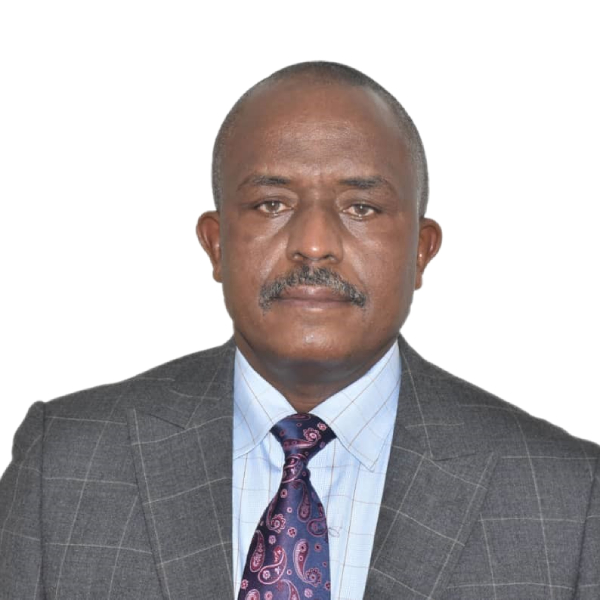
Permanent Secretary, Ministry of Internal Affairs, Lt. Gen. Joseph Musanyufu.
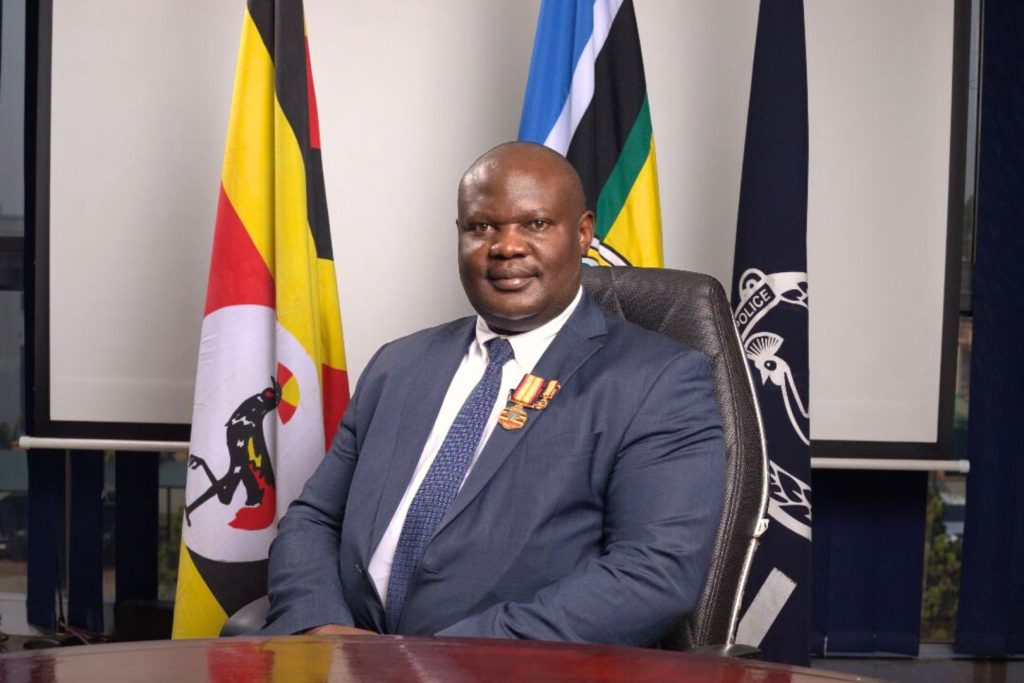
President Yoweri Museveni has ordered the suspension of the Permanent Secretary, Ministry of Internal Affairs, Lt. Gen. Joseph Musanyufu, and Police Under-Secretary Aggrey Wunyi, and has sent them on a six-month leave as investigations commence into their dealings in the procurement of police spy cameras.
The President further ordered the suspension of Assistant Inspector General of Police Felix Baryamwitsakyi.
“Lt. Gen. Joseph Musanyufu and the Under-Secretary Police, Mr. Aggrey Wunyi, go on forced leave for six months as the Anti-Corruption Unit is investigating their matter to its conclusion. Barbaraa Katisi, of Dealan Associates Limited, should be paid her money.” The President wrote in his May 23, 2026 letter that was copied to the Vice President, Inspector General of Police, among other key stakeholders.
He added, “By the copy of this letter, AIGP Felix Baryamwitsakyi should go on forced leave as this investigation is reviewed and concluded. You should designate an acting Permanent Secretary”. He concluded and directed Mrs. Lucy Nakyobe, the head of Public Service and Secretary to Cabinet.
The President stated in his letter that he had received an intelligence dossier from outgoing Internal Affairs Minister, Gen. Kahinda Otafiire, detailing massive corruption at the Ministry of Internal Affairs and Uganda Police.
“I have got a report from Major-General Kahinda Otafiire regarding the corruption in the Ministry of Internal Affairs and the Uganda Police in the matter of maintenance of the police cameras. I arranged with Huawei to supply road cameras to Uganda to fight the rampant crime of that time. When Huawei faced US and EU sanctions in the year 2019, they tactically decided to rely on a private Ugandan company to do the maintenance of cameras. Dealan Associates Limited, owned by some Ugandan scientists, was selected by the Ministry of Internal Affairs to be the one to do that.
Police Under-Secretary Aggrey Wunyi, who has been suspended.
Following a spike in high-profile murders, the Ugandan government secured a $104 million (approx. Shs382 billion) loan from Standard Chartered Bank to fund the first two phases of a nationwide CCTV project. The contract was awarded to Chinese tech giant Huawei Technologies.
By 2025, the Uganda Police Force (UPF) was seeking an additional $62 million (about Shs200 billion) to implement Phase III of the system, which includes introducing body-worn cameras to close operational blind spots. This continuous request for funding faced heavy scrutiny from Members of Parliament due to the immense national debt.
The CCTV project has been plagued by hardware malfunctions, with a significant portion of cameras rendered inoperative due to fiber optic cable cuts, vandalism, and crashes from reckless drivers. This sparked public outcry, as millions of shillings were being spent on “dummy” cameras and repairs instead of addressing systemic crime.
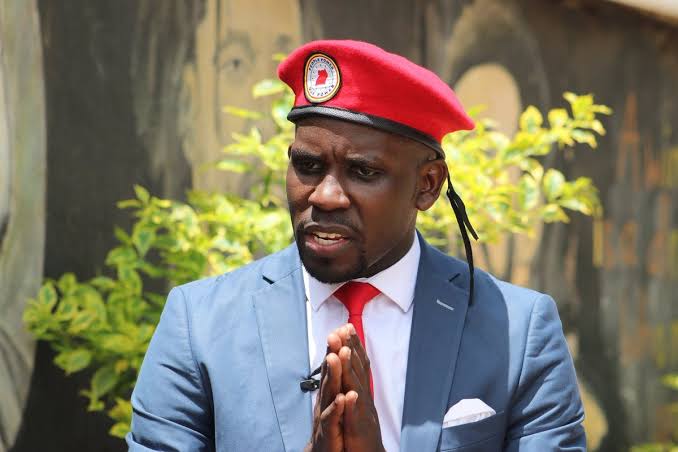
The National Unity Platform (NUP) has maintained Joel Ssenyonyi as Leader of the Opposition in the Parliament of Uganda, confirming its parliamentary leadership structure for the 12th Parliament. The decision follows internal consultations within the opposition caucus as the party seeks to strengthen coordination and streamline its legislative agenda in the new parliamentary term.
Ssenyonyi continues as opposition chief
Ssenyonyi, the Nakawa West MP, will continue leading the opposition in Parliament, where he is tasked with coordinating debate strategy, responding to government policy statements, and steering opposition oversight on national issues. His continued leadership reflects the party’s preference for continuity as it navigates a Parliament expected to handle significant debates on governance, public expenditure, and institutional accountability.
Nambeshe joins Parliamentary Commission
Manjiya County MP John Baptist Nambeshe has been appointed as a parliamentary commissioner representing the opposition. The Parliamentary Commission oversees the administration of the legislature, including budgeting, staffing, and internal governance matters. Nambeshe’s role places him at the centre of institutional decision-making within Parliament, where he is expected to safeguard opposition interests in administrative processes.
Mwiru named Opposition Chief Whip
Jinja South East MP Paul Mwiru has been appointed Opposition Chief Whip, a position responsible for maintaining discipline within the opposition caucus, coordinating attendance, and managing voting strategy on key motions and bills.
Opposition gearing up for legislative term
The leadership changes come as NUP consolidates its parliamentary structure ahead of an active legislative period in which opposition parties are expected to focus on accountability, budget scrutiny, and governance reforms. Party officials say the structure is designed to enhance coordination and ensure a unified opposition voice in the House.
Vice President Jessica Alupo and Prime Minister Robinah Nabbanja before the Appointment Committee of Parliament.
Parliament has approved the appointment of Jessica Alupo as Vice President, granting her another term in the country’s second highest office following a vote by Members of Parliament during plenary. The approval was conducted in accordance with Article 108(2) of the Constitution, which provides that the President’s nominee for Vice President must be approved by Parliament through a simple majority vote. Alupo previously served as Vice President from June 2021 to May 2026 and now returns to the office as President Yoweri Museveni finalises the formation of his new administration. Her approval places her among the few senior government officials retained in top executive positions as the government begins a fresh political term. Speaking during the sitting, legislators described Alupo as an experienced public servant with a long record in government, Parliament and national leadership. Before rising to the vice presidency, Alupo served as Minister of Education and Sports between 2011 and 2016. During her tenure, the ministry handled major national education programmes, including policy reforms and expansion of access to education institutions across the country. She earlier served as State Minister for Youth and Children Affairs from 2009 to 2011, where she was involved in youth empowerment programmes and child welfare initiatives. Alupo’s political journey has also included military service and representation of Katakwi District in Parliament, where she established herself as one of the influential female politicians within the ruling National Resistance Movement (NRM). Her return to office comes at a time when the government faces increasing pressure to address unemployment, improve service delivery and strengthen economic growth amid rising demands from the youthful population. Analysts say her experience in both Cabinet and Parliament could play a significant role in supporting government coordination and legislative engagement during the new term. Under the Constitution, the Vice President deputises the President and performs duties assigned by the Head of State, including representing the country at national and international engagements. The approval of Alupo was part of Parliament’s ongoing consideration of key executive appointments as the House settles into the opening phase of the 12th Parliament. With the endorsement now complete, Alupo is expected to officially resume her duties and continue serving in the Executive alongside President Museveni and the newly appointed Cabinet team.
Uganda has closed the border with the Democratic Republic of Congo (DRC) following the continued escalation of the Ebola outbreak in the neighboring country with an aim to prevent the deadly virus from spreading into Uganda.
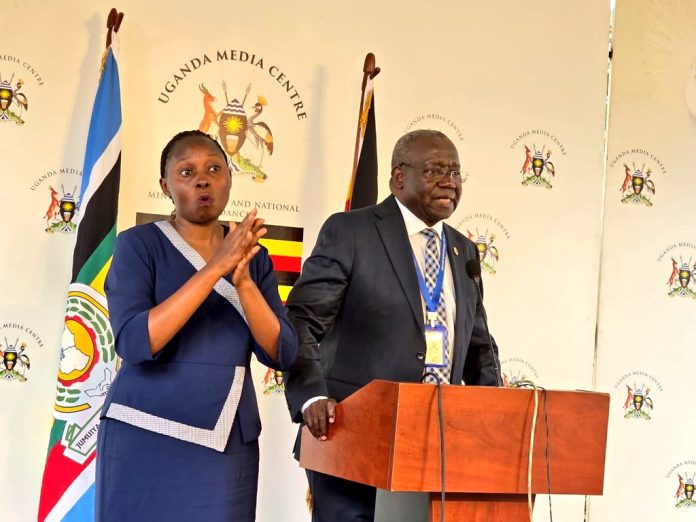
The measures have been announced by the Permanent Secretary in the Ministry of Health, Dr Diana Atwine, after a meeting of the National Task Force on Ebola Response chaired by Vice President Jessica Alupo.
“Uganda is temporarily closing the border with the DRC with immediate effect. The only exceptions are for authorized Ebola response teams, humanitarian operations, food and cargo transportation, and security under strict health screening and monitoring protocols,” Dr Atwine said.
Under the new directives, immigration authorities have been instructed to permit only authorized Ebola response teams, humanitarian workers, cargo transporters, and essential security personnel to cross between Uganda and the DRC.
“All authorized entrants shall be subjected to strict health screening, completion of locator forms, documentation, and continuous monitoring at all ports of entry in accordance with Ministry of Health surveillance protocols,” she said.
Dr Atwine further announced that every person returning from the DRC into Uganda will be required to undergo mandatory self isolation for twenty one days under the supervision of Ministry of Health officials and district surveillance teams.
“Any person returning from the DRC into Uganda shall undergo mandatory self isolation for twenty one days under the supervision of the Ministry of Health and district surveillance teams,” she said.
The latest measures come amid heightened fears over the possibility of imported Ebola infections through porous border points and continued interaction between communities living along the Uganda DRC frontier.
Uganda has so far registered seven Ebola cases and one death linked to the outbreak. According to the Ministry of Health, no new confirmed Ebola case had been recorded since Monday, May 25, 2026, although the number of contacts traced from confirmed cases has continued to increase.
“Most of these contacts are health workers,” Dr Atwine noted.
The Ministry of Health, however, said schools in border districts will remain open but under strict observance of Ebola prevention guidelines.
“Schools in border districts shall remain open. They must strictly observe all Ministry of Health Standard Operating Procedures,” Dr Atwine said.
She added that school authorities must identify all students who recently returned from the DRC and ensure their temperatures are monitored daily for twenty one days.
“Districts along the Uganda DRC border shall designate at least one health facility to accommodate and monitor any learner who develops symptoms such as fever during the observation period, pending further assessment,” she said.
Resident District Commissioners and Resident City Commissioners have also been directed to ensure full enforcement of Ebola prevention measures in their respective jurisdictions.
“All RDCs and RCCs are instructed to strictly ensure implementation and enforcement of all Ebola prevention and control guidelines issued by the Ministry of Health and the National Task Force,” Dr Atwine said.
In a move aimed at increasing public awareness, the government also ordered all media houses to dedicate at least thirty minutes of prime time programming daily to Ebola sensitization campaigns.
“All media houses are required to dedicate at least thirty minutes of prime time programming daily to public education and sensitization on Ebola prevention, detection, and reporting,” she added.
Chief of Defence Forces Gen. Muhoozi Kainerugaba also issued a stern warning, saying security agencies had already begun sealing the border.
“The security forces are sealing our entire border with the DRC until further notice. No movement of people between the two countries is permitted,” Gen. Muhoozi said.
“This is in response to the Ebola outbreak in DRC. Trying to breach this order will endanger your life. We will update you on the situation as it develops,” he added.
Muhoozi also noted that all people entering the country must have their temperatures taken and this must start immediately.
The border closure shows Uganda’s strongest containment measures in recent years as authorities race to prevent a wider outbreak inside the country.
Uganda and the DRC share deep social and economic ties, with thousands of people crossing the border daily for trade, work, and family visits. Health experts have repeatedly warned that the porous nature of the border remains a major challenge during infectious disease outbreaks.
The public is urged to remain calm but vigilant, report suspected Ebola symptoms immediately and comply with all health guidelines as surveillance teams intensify monitoring operations across high risk districts.
President Yoweri Museveni has directed the Inspector General of Government, Justice Aisha Naluzze Batala, to launch immediate investigations into irregularities in procurement under the National Agricultural Advisory Services (NAADS), including claims of ghost supplies, contract manipulation, and possible abuse of public funds.
In a directive dated May 5, 2026, addressed to the Inspector General of Government, the President said he had received information suggesting irregular influence in the award of certain NAADS contracts.
According to the directive, some individuals and companies allegedly received government payments despite supplying ghost or non existent seedlings under the programme.
The President also singled out allegations involving Agriculture Minister Hon. Aggrey Bagiire, stating that claims had emerged suggesting he may have improperly influenced the award of some of the contracts.
“I have received information alleging that there was irregular influence in the award of certain NAADS contracts,” Museveni wrote.
The President further indicated that the allegations go beyond procurement procedures and extend to the actual implementation and delivery of the contracted supplies.
“Some individuals and companies that were awarded these contracts supplied ghost or non existent seedlings while receiving payment from the government. There are also allegations that Hon. Aggrey Bagiire improperly influenced the award of some of the contracts,” the directive stated.
Museveni instructed the Inspectorate of Government to conduct a broad investigation covering all parties linked to the allegations.
Under the terms of reference, investigators are expected to examine individuals and companies connected to the alleged ghost supplies, officers who awarded and approved the contracts, and establish the actual delivery status of the supplies.
The investigations will also seek to determine whether there was abuse of office, conflict of interest, fraud, or theft of public funds connected to the procurement process.
“You are directed to immediately investigate all individuals and companies connected to the alleged ghost supplies, the officers who awarded and approved the contracts, and establish the actual delivery status of the supplies,” Museveni directed.
Museveni further ordered coordination with several state agencies where necessary, including the Criminal Investigations Directorate (CID), Internal Security agencies, the Auditor General, and the State House Anti Corruption Unit to support the inquiry.
Museveni also set a strict reporting timeline, directing that preliminary findings be submitted within twenty one days.
The directive orders oversight in the government procurement systems and the management of agricultural support programmes, which have periodically faced concerns over accountability, value for money and service delivery.