Stanbic Bank
Stanbic Bank
25.9 C
Kampala
Stanbic Bank
Stanbic Bank
Home Blog Page 63

Gov’t signs fertiliser MoU to boost agricultural production

Prime Minister Robinah Nabbanja, Finance Minister Matia Kasaija, and Itracom Fertilizers officials at the signing ceremony.

The Government of Uganda, through the Ministry of Agriculture, Animal Industry and Fisheries (MAAIF) has signed a Memorandum of Understanding (MoU) with Itracom Fertilizers to enhance crop yields and promote sustainable agriculture across the country.

Itracom Fertilizers, based in Bujumbura, Burundi, is a leading producer of organo-mineral fertilisers and currently supplies several African countries, including Tanzania, Kenya, Burundi, Zambia, Malawi and the Democratic Republic of Congo [DRC].

Under the agreement, the government has allocated 130 acres of land in Kampiringisa, Mpigi district, for the establishment of a fertiliser production plant. The facility is expected to significantly reduce the cost of fertilisers for local farmers and increase accessibility.

“This development will enable our farmers to access fertilisers at affordable rates, leading to improved productivity and increased household incomes,” said Gen. David Kasura Kyomukama, Permanent Secretary at the Ministry of Agriculture, speaking at the MoU signing on Wednesday in Kampala.

Kasura added that organo-mineral fertilisers are essential for revitalising depleted soils, especially as climate change continues to challenge agricultural systems.

“Modern agriculture requires the enhancement of soil fertility, improved water supply through irrigation, the use of quality seeds, and farmer training on proper input application,” he emphasised.

Factory to produce 240,000 tonnes monthly

The agreement was facilitated by the Prime Minister Robinah Nabbanja, who revealed that the Kampiringisa-based factory will have the capacity to produce up to 240,000 tonnes of fertiliser per month.

“These investors have assured me that they will produce at least 240,000 tonnes of fertiliser monthly, not only for our farmers but also for export to neighbouring countries such as the DRC and Central African Republic,” said Nabbanja.

She urged the investors to fast-track construction of the plant, noting the availability of both local labour and a ready market.

Eco-friendly fertiliser and local sourcing

Jean-Luc Bigirimana, Itracom’s Country Director for Uganda, highlighted that the fertiliser is environmentally friendly, made from natural ingredients such as cow dung, potassium, and phosphorus sourced from nature.

“The world no longer needs more chemicals in the food we consume. We’ve seen the effects. That’s why we developed a natural fertiliser solution,” he said.

Bigirimana assured farmers that the fertiliser will be affordably priced to ensure accessibility for all categories of farmers, regardless of scale.

“We face persistent food insecurity in the region, largely due to poor harvests. This fertiliser can change that. We want every farmer to have access to it to ensure food security for all,” he said.

He stressed that the product has been certified as safe for the environment, suitable for all crop types, and proven to increase yields.

Fertiliser varieties and raw material sourcing

The first batch of fertilisers to be produced will include: Fomi Otesha – Applied during planting; Fomi Kuzia – Suited for crops like maize, tomatoes, beans, and other cereals; and Fomi Nenepesha – Designed for root and tuber crops such as cassava, potatoes, and sweet potatoes.

The factory is also expected to create a new market for animal waste, especially cow dung, which is a key raw material. Bigirimana revealed that the company has developed an open-market collection strategy to source cow dung from the Karamoja region, where livestock owners will be paid upon delivery.

“Uganda does not currently have enough cattle to supply all the organic waste required, hence we are engaging communities in Karamoja to bridge this gap,” he said.

A PPP for agricultural transformation

The MoU outlines that Itracom Fertilizers will produce and distribute the fertiliser at relatively low prices. In turn, the government will provide enabling infrastructure, including access roads, electricity, and security for the plant’s operations.

The establishment of this fertiliser plant marks a significant step towards improving agricultural productivity and food security in Uganda.

Stories Continues after ad

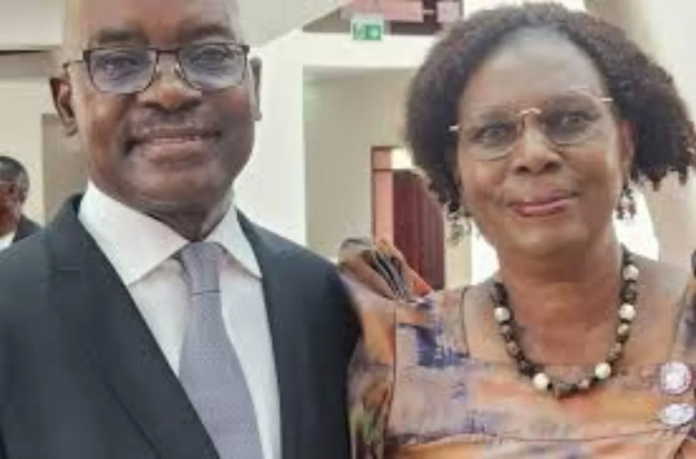
Police raise bounty to Shs60m in hunt for killers of Entebbe couple

The late Mr. and Mrs. Mutaaga.

The Uganda Police Force has increased the reward for information leading to the arrest of suspects behind the brutal murder of Mr. and Mrs. Mutaaga in Entebbe.

Police spokesperson Rusoke confirmed on Tuesday that the bounty has been raised from Shs50 million to Shs60 million as investigations intensify.

“The Uganda Police Force continues to search for those responsible for the murder of Mr. and Mrs. Mutaaga in Entebbe. We initially offered a reward of Shs50 million for information leading to the arrest of the suspect, whose photo and voice we have shared. This reward has now been increased to Shs60 million,” Rusoke said.

He dismissed claims circulating that police had already identified the suspects.

“It has been suggested that we have identified the actual suspects; however, this is not the case. For clarification, we highlighted individuals whom our investigative sources suspect may be connected to the crime. Once conclusive evidence is established against any suspect(s), we will formally release their details to the public,” he explained.

The double murder, which shocked residents of Entebbe, occurred late last month when unidentified attackers raided the couple’s home in Katabi Town Council. According to preliminary findings, the assailants broke into the residence during the night, tied up the couple, and inflicted fatal injuries before fleeing with valuables.

Neighbors reported hearing unusual noises but only realized the tragedy in the morning when the bodies were discovered. Police forensic teams later recovered several items believed to have been used in the attack, including blood-stained clothing and broken restraints.

The killings have raised fear in the community with local leaders urging residents to remain vigilant and cooperate with security agencies. Police say they are pursuing multiple leads, including possible links to organized crime groups targeting prominent families in the area.

“We appeal to the public to share any information that could lead to the arrest of those behind this heinous act. Together, we can ensure that justice is served for the Mutaaga family,” Rusoke added.

Stories Continues after ad

Road carnage: Over 90 road crashes, 38 lives lost in seven days

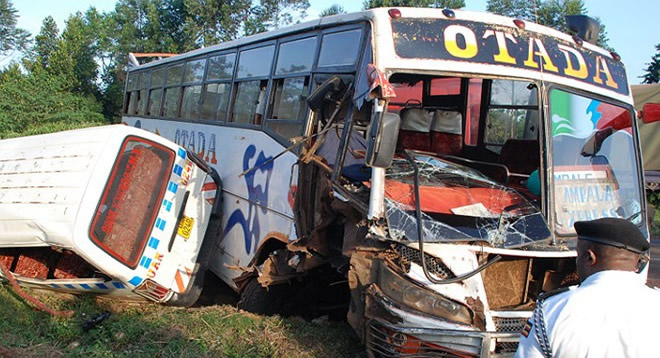
An accident scene.

At least 38 people have been confirmed dead and dozens injured in over 90 road crashes recorded across Uganda in the past week, according to figures cited by the Centre for Policy Analysis (CEPA).

Police statistics indicate that an average of 10 Ugandans die every day due to road traffic incidents, making road carnage one of the leading causes of preventable death in the country.

In a statement issued on Tuesday, CEPA described the fresh surge in accidents as both tragic and avoidable.

“These tragic events are a stark reminder of the persistent and preventable nature of road carnage in our country,” CEPA said.

The warning comes as the September–November rainy season sets in, with the Uganda National Meteorological Authority (UNMA) forecasting above-normal rainfall in central and western regions. The downpours have created slippery roads, reduced visibility, and increased the risk of hydroplaning.

CEPA urged drivers, pedestrians, cyclists, and boda boda riders to exercise extra caution.

“We call for reduced speeds, especially in high-traffic and flood-prone areas, proper vehicle maintenance including tire and brake checks, increased vigilance at pedestrian crossings and school zones, and avoidance of reckless overtaking and distracted driving,” the statement added.

Through its Road Safety Advocacy Programme, CEPA said it will continue working with youth leaders, civil society actors, and local authorities to promote behavioral change, civic education and policy reform.

“Our recent road safety trivia campaigns and public perception surveys have revealed critical gaps in awareness and enforcement, gaps that must be urgently addressed,” CEPA emphasized.

The organization reaffirmed its commitment to supporting Uganda’s Vision 2040 and the global Decade of Action for Road Safety (2021–2030).

“Let these recent tragedies not be just statistics but a wake-up call for collective action,” CEPA noted.

Stories Continues after ad

URA queried over double retirement benefits and costly vehicle repairs

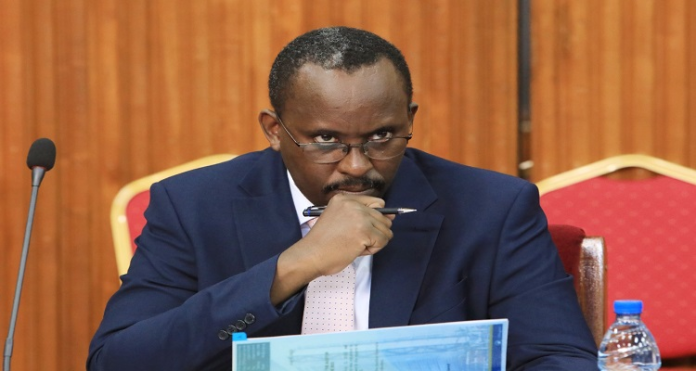
John Musinguzi, Commissioner General of URA before the committee.

Uganda Revenue Authority (URA) is under scrutiny in Parliament following the Auditor General’s concerns about government’s “double contribution” to the tax body’s staff retirement benefits, as well as high expenditure on repairing an aging fleet of vehicles.

During the September 11, 2025, plenary sitting, MPs considered the Committee on Commissions, Statutory Authorities and State Enterprises (COSASE) report on URA’s corporate services for the financial year ending December 2024. The report was presented by committee chairperson Medard Sseggona (Busiro East).

Auditor General Edward Akol revealed that in FY2023/24, the government contributed Shs47 billion towards URA staff retirement benefits. This included Shs24.6 billion (10%) to the National Social Security Fund (NSSF), and an additional Shs22.4 billion to URA’s internal retirement benefits scheme — a practice auditors described as “double payments.”

However, URA defended the arrangement, arguing that the internal scheme is a critical tool for attracting and retaining staff amid rising attrition to other government agencies and private institutions offering higher pay.

Sseggona backed URA’s defense, noting that compared to other state agencies, URA offers relatively lower salaries and fewer allowances. He warned that scrapping the in-house scheme could trigger “spiraling talent attrition” and undermine the Authority’s ability to mobilize revenue.

“The Committee did not find any legal or regulatory impediment, especially considering that the amount has always been appropriated by Parliament. Withdrawing the benefit may amount to breach of employee contracts with attendant legal ramifications,” Sseggona told Parliament.

He also pointed out that URA is not the only institution running a parallel retirement scheme. Others include the Bank of Uganda, Uganda Bureau of Standards, National Water and Sewerage Corporation, and Uganda Electricity Generation Company Limited.

To address inconsistencies, Parliament tasked the Uganda Retirement Benefits Regulatory Authority (URBRA) to streamline approval processes for retirement schemes across ministries, departments, and agencies (MDAs), and to introduce a cap to prevent budgetary distortions.

URA was also faulted for excessive spending on vehicle repairs. The Auditor General’s review found that over the last three years (2021/22–2023/24), the Authority spent Shs6.4 billion on repairing just 61 vehicles, averaging Shs106 million per vehicle. In some cases, repair costs for a single vehicle reached Shs106 million in one year.

Auditors noted that the costs were a sign of an old, uneconomical fleet.

In response, URA explained that the vehicles in question had been in service for 8–12 years, with some undergoing major engine overhauls. Of the 61 vehicles, 21 were deployed in upcountry regions, 16 were used in enforcement operations, and 12 had full engine replacements.

The Authority assured Parliament that resources amounting to Shs6.7 billion had been allocated in FY2024/25 to purchase new vehicles. Procurement for 25 new vehicles was already underway, with delivery expected in December 2025. Meanwhile, URA said the disposal of 38 old vehicles was in its final stages.

Stories Continues after ad

From Despair to Hope: How a Lira Woman Rebuilt Her Life with Masunga Doctors

For years, Lilian Akello, a 35-year-old tailor in Lira City, lived a life that felt like an endless cycle of pain, loss, and hopelessness. Her story reflects the struggles of many hardworking Ugandans living from paycheck to paycheck, battling health issues, strained marriages, and businesses on the verge of collapse.

The Struggles Begin

Lilian’s problems started slowly. At first, it was her health.

“I used to suffer from constant headaches that made it impossible to sleep. I tried medication from different clinics and even bought herbs from roadside vendors, but nothing worked,” she recalls.

Then came problems at home. Her husband, once her biggest supporter, became distant. Arguments over school fees, food, and money became routine.

As if that wasn’t enough, her tailoring shop in Lira Main Market where she stitched school uniforms and dresses for weddings began to sink. Loyal customers drifted away, orders reduced, and cloth suppliers demanded upfront payment she couldn’t afford. Rent for her small kiosk, UGX 150,000 per month, piled up unpaid.

“I felt cursed,” Lilian admits. “Everything I touched seemed to collapse. My health, my home, and my shop it was like life had turned against me.”

A Ray of Hope

In August last year, while visiting her cousin in Gulu, Lilian overheard women sharing testimonies about Masunga Doctors, a traditional and spiritual healing center that many across Uganda say has changed their lives.

At first, she dismissed it as rumor. But when she returned to Lira and found her shop padlocked for rent arrears and her children sent home for unpaid fees, desperation forced her to act.

The Turning Point

Lilian contacted Masunga Doctors in Lira. She was welcomed with empathy and guided through a consultation. Unlike at hospitals where she only received prescriptions, here she was asked about every part of her life—her health, her relationships, her business, and even her dreams.

The healers explained that her struggles were not just physical but also spiritual. They recommended:

  1. Cleansing rituals with herbal baths at dawn to wash away negativity.
  2. Blessed protective charms to shield her from envy and bad luck.
  3. Restoration prayers for harmony in her marriage.
  4. Business rituals to attract loyal customers and open new financial doors.

The Transformation

Within weeks, Lilian noticed improvements:

  • The crippling headaches vanished.
  • Her husband grew kinder and even helped reopen her shop.
  • Old customers returned, and she landed a big order from Amach Primary School to sew 60 uniforms.
  • Slowly, debts were cleared, and she began saving a little every week.

Her husband, George Odongo, admits he almost lost hope in their marriage.

“I thought my wife was just being lazy and moody. I didn’t realize she was carrying such heavy burdens. After she went to Masunga Doctors, I saw the change with my own eyes. Peace returned to our home, and our children are happy again,” he says.

At the market, her neighbor, Margaret Akullo, a fellow tailor, noticed the difference too.

“For many months, Lilian’s stall was always closed. When it was open, she looked weak and tired. These days, she opens early, works late, and even attracts more customers. I asked her what happened, and she confidently told me it was Masunga Doctors,” Akullo says with a smile.

A Lesson for Others

Lilian’s story is one of many testimonies from people across Uganda who claim they found help at Masunga Doctors. While some remain skeptical, for those like Lilian, the results speak for themselves.

“I used to believe nothing could change. But now I know that healing is possible. Sometimes, you need both medical help and spiritual help. I am proof that life can be rebuilt,” she emphasizes.

Masunga Doctors – Contact Information

For those seeking guidance, Masunga Doctors can be reached at:

AFRICA OFFICES

Stories Continues after ad

EC confirms political party symbols and independent candidate options for 2026 elections

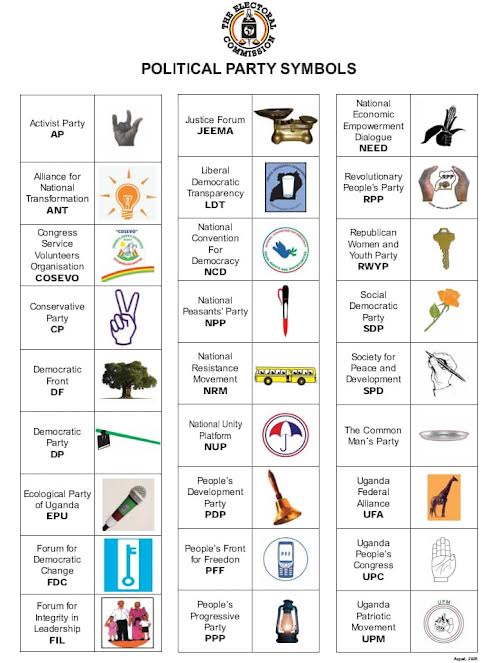
Symbols for political parties and independent candidates ahead of Uganda’s 2026 General Elections.

The Electoral Commission (EC) has officially confirmed the symbols for political parties and independent candidates ahead of Uganda’s 2026 General Elections.

The revelation was made by Julius Mucunguzi, Electoral Commission spokesperson via his X (formerly Twitter) handle.

He revealed, “Know the Political Parties on the Uganda Electoral Commission register and their symbols. Political Parties in Uganda are established by the Political Parties and Organizations Act of 2005, which came in after the country returned to the multiparty system following the referendum of 2005.”

He added, “Candidates running as Independents during the 2026 General Elections will choose from the following the Uganda Electoral Commission approved symbols. These will be picked by the aspirants on a first come, first served basis during nominations.”

Among the major parties, the National Resistance Movement (NRM) retains its iconic yellow bus, while the National Unity Platform (NUP) continues under the umbrella symbol. The Forum for Democratic Change (FDC) sticks with the key, and the Democratic Party (DP) holds on to the hoe. Other notable symbols include a light bulb for the Alliance for National Transformation (ANT), a peace sign for the Conservative Party (CP) and a tree representing the Democratic Front (DF).

The Ecological Party of Uganda (EPU) is represented by a microphone, the National Peasants’ Party (NPP) by a pen and the People’s Progressive Party (PPP) by a lantern. The Uganda Federal Alliance (UFA) will campaign under a giraffe, while the Revolutionary People’s Party (RPP) is symbolized by two hands holding the map of Uganda.

For independent candidates, the EC has curated a list of 20 everyday items as symbols designed to be easily recognizable and resonate with grassroots voters. These include a ball, banana, boat, book, borehole, candle, car, chair, clock, coffee, cup, house, jerrycan, kettle, megaphone, pot, radio, saucepan, table, and television.

The EC’s announcement is aimed at ensuring transparency and providing voters with clear visual cues on the ballot and helping citizens make informed choices in next year’s elections.

Stories Continues after ad

Former Minister Maria Kiwanuka’s son Kyam Nsereko, to be buried on Wednesday, 17

RIP Kyam Nsereko Kiwanuka.

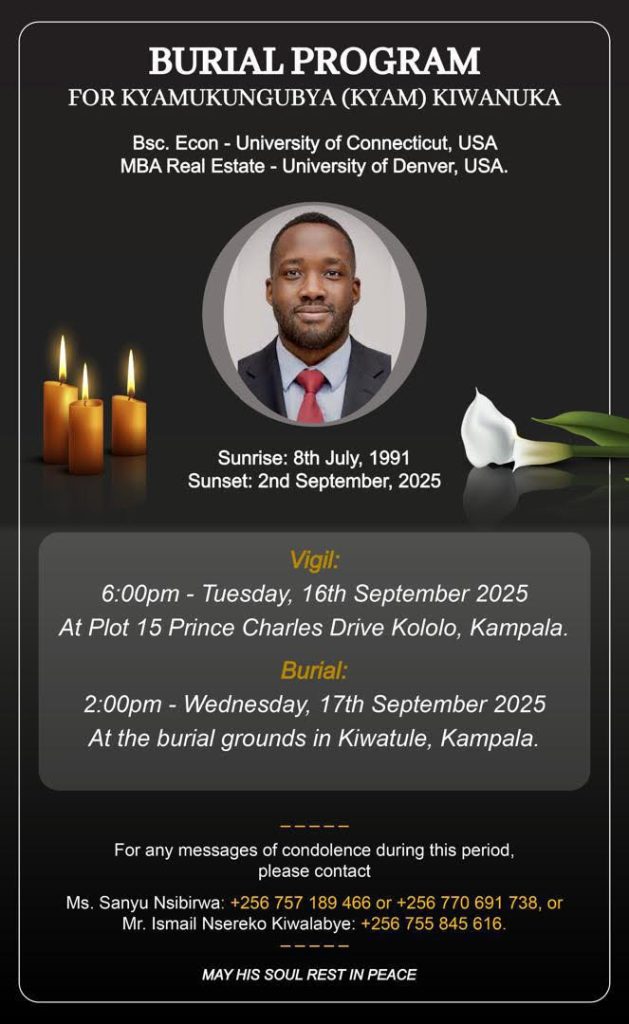
The family of city businessman Mohan Kiwanuka and his wife, former Finance Minister and current Presidential Advisor Maria Kiwanuka, is set to bury their son Kyamukunguya Nsereko Kiwanuka on Wednesday, September 17, 2025, at their burial grounds in Kiwatule, Kampala.

Late Nsereko’s remains arrived in the country yesterday evening from Washington D.C., United States, where he collapsed and died of a heart attack.

He died on September 2, 2025. Nsereko had just completed his Master’s Degree (Real Estate) from the University of Denver, USA. He also held a Bachelor of Science in Economics from the University of Connecticut, USA. He was aged 34.

According to family sources, a post-mortem confirmed that Kyam died of a heart attack. He was discovered in his apartment after friends raised concern when he failed to report to work, something unusual for him.

“The TV was still on in the background, tuned to his favorite sports channel,” a source close to the family revealed. Kyam had recently completed his Master’s degree in Real Estate from the University of Denver after earlier obtaining a Bachelor’s in Economics from the University of Connecticut. He had just passed probation at his new job in Finance, a milestone that greatly excited him”. A family source who preferred anonymity told Eagle Online

He added “He was ambitious and full of life. We know our Kyam is okay and that his Jaaja Kiwanu is looking after him,” a family member said in tribute.

“A vigil will be held on Tuesday, September 16, 2025, at the family home in Kololo, starting at 6:00 p.m. Burial will follow the next day, Wednesday, September 17, at 2:00 p.m. at the family burial grounds in Kiwatule, Kampala”.

Leveling of grounds for the car parking lot at Kiwatule burial grounds.

His passing comes barely a month after the family laid to rest his grandmother, Ms. Rhoda Kalema, a trailblazing Ugandan politician, adding to the family’s sorrow.

Kyam is remembered for his academic brilliance, humility and love for family and friends.

May his soul rest in peace.

Stories Continues after ad

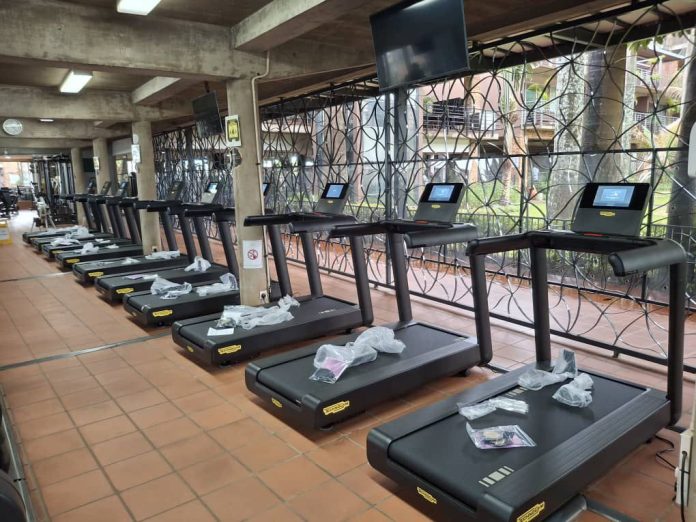
Kabira Country Club installs new gym equipment as facility gears up for 5-star status

Kabira Country Club has boosted its status as one of Uganda’s leading hospitality destinations by installing brand-new, state-of-the-art TechnoGym equipment at its fitness center, a key step in its journey toward five-star hotel classification.

The development is part of the facility’s brigger preparations to attain a five-star hotel rating, a milestone that will position Kabira as one of the country’s top luxury hospitality brands.

“We are excited to unveil the new TechnoGym machines, which will give our guests a dynamic and engaging fitness experience,” management announced.

The management added, “Your wellness journey starts here, and we welcome both members and visitors to enjoy a modern, health-focused workout environment.”

The new machines, sourced from the globally renowned Italian fitness brand TechnoGym, are designed to provide a wide range of workouts, from cardio to strength training, catering to both casual exercisers and professional athletes.

Kabira Country Club, already known for its lush gardens, serene environment and extensive leisure amenities, has steadily been upgrading its facilities. The addition of the new gym equipment underscores the hotel’s commitment to offering guests world-class services that match international standards.

Industry experts note that Uganda’s hospitality sector is becoming increasingly competitive, with hotels investing heavily in wellness, conference and leisure facilities to attract both domestic and international clients. Kabira’s latest move reflects this trend while reinforcing its reputation as a lifestyle hub.

The club has also called on fitness enthusiasts to join and take advantage of the enhanced gym experience.

For inquiries and membership, Kabira can be reached at +256 702 711 175.

Stories Continues after ad

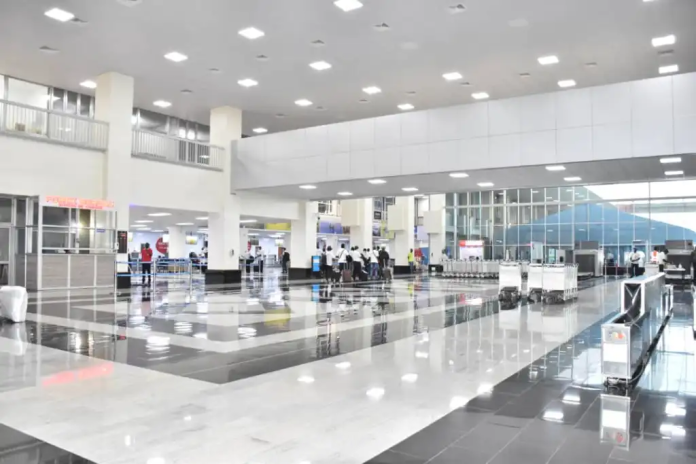
Entebbe Airport sets record with 243,000 passengers in August

The passenger exit terminal at Entebbe International Airport.

Entebbe International Airport registered its highest monthly international passenger traffic in history this August, cementing its position as a growing regional aviation hub.

According to Mr. Vianney Luggya, spokesperson of the Uganda Civil Aviation Authority (UCAA), the airport handled 116,507 arrivals and 126,582 departures in August 2025 — a combined total of 243,089 international passengers. This translates to an average of 7,841 travellers per day, surpassing the previous record set just a month earlier in July 2025.

“The growth is significant and encouraging. Sports tourism and international conferences were among the major contributors to the higher figures,” Mr. Luggya said.

The new record highlights the sustained recovery of Uganda’s aviation sector, which has steadily rebounded since the COVID-19 downturn, supported by an increase in international events and rising demand for travel.

On the cargo side, Entebbe handled a total of 5,257 metric tonnes in August — including 2,010 tonnes of imports and 3,247 tonnes of exports. Fresh produce such as fruits, vegetables, and flowers continued to dominate outbound cargo, reflecting Uganda’s competitive edge in agricultural exports.

“Fresh produce remains one of the leading exports through Entebbe, underscoring the airport’s role in facilitating trade and connecting Ugandan farmers to global markets,” Mr. Luggya noted.

With steady growth in both passenger and cargo traffic, Entebbe International Airport is expected to remain central to Uganda’s tourism, trade, and investment sectors heading into the peak travel season later this year.

Stories Continues after ad

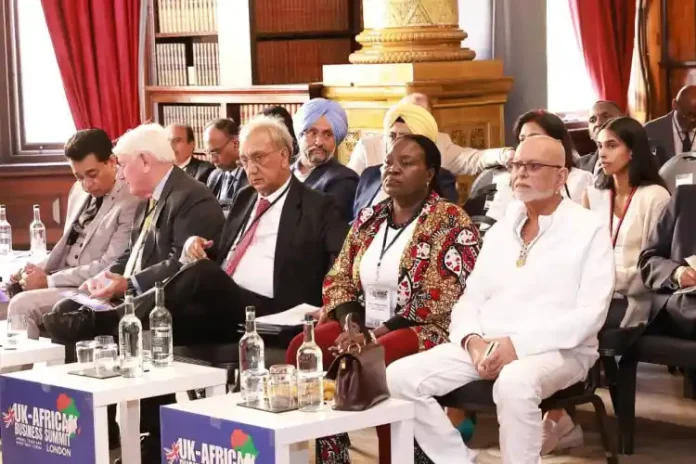
Tycoon Sudhir urges investors to tap Uganda’s booming sectors at London Summit

Tycoon Sudhir Ruparelia seated next to Energy and Mineral Development Minister Ruth Nankabirwa, and other officials at the UK-Africa Business Summit 2025.

Sudhir Ruparelia, Ugandan billionaire and real estate mogul, has urged investors to explore Uganda’s thriving real estate, agriculture, hospitality, and tourism sectors, describing them as key drivers of economic growth and job creation.

Speaking at the 15th UK-Africa Business, Trade & Investment Summit in London he highlighted the country’s untapped potential and opportunities for both local and international investors.

At the sidelines of the summit, Sudhir, Chairman of the Ruparelia Group underscored his family’s extensive investments in Uganda which have created thousands of jobs and positively impacted millions of citizens.

“Together with my family, we have invested wholeheartedly in Uganda, our beloved home,” he said.

He added, “The real estate sector is vibrant, agriculture is full of opportunities, and our hospitality and tourism industries are thriving. Let’s continue to harness these sectors to uplift our economy.”

The summit, held on September 12 at The Royal Horseguards Hotel, brought together over 300 leaders including government ministers, CEOs and representatives from the World Bank, to explore ways to strengthen UK-Africa trade ties post-Brexit and leverage the African Continental Free Trade Agreement (AfCFTA).

Uganda’s delegation, featuring First Deputy Prime Minister Rebecca Kadaga and Energy Minister Ruth Nankabirwa, showcased the nation’s investment potential across energy, technology, and agriculture sectors.

Sudhir, whose net worth is estimated between $1.2 and $1.6 billion, shared his inspiring journey: from working as a taxi driver in the UK during exile under Idi Amin’s regime to returning to Uganda in the 1980s to establish the Ruparelia Group.

What began as a small forex bureau has grown into a diversified conglomerate spanning real estate, hospitality, education, floriculture, and insurance. The Group owns over 300 properties, including the newly launched RR Pearl Business Park, and operates high-profile hospitality establishments like Speke Resort Munyonyo and Kabira Country Club.

“Uganda offers immense potential for growth,” Sudhir said. “Investors should seize the opportunities in real estate, agriculture, hospitality, and tourism to build a stronger economy for all.”

His remarks resonated with Uganda’s recent economic indicators, including a 6.3% GDP growth rate, 3.8% inflation, and $3.7 billion in foreign direct investment, signaling attractive prospects for UK and global investors in oil, agritech, and tourism.

The summit also featured discussions on digital trade and infrastructure, with potential UK-Uganda collaborations highlighted. Through his vision and philanthropy via the Ruparelia Foundation, Sudhir continues to position Uganda as a gateway to Africa’s 1.4 billion consumers, inspiring optimism for sustainable and inclusive growth under AfCFTA.

Stories Continues after ad