Stanbic Bank
Stanbic Bank
17.8 C
Kampala
Stanbic Bank
Stanbic Bank
Home Blog Page 8

Rajiv Ruparelia: The dreamer who built, the leader who gave, the spirit Uganda won’t forget

There are lives that pass quietly, leaving behind little more than fading memories. And then there are lives like that of Rajiv Ruparelia, vibrant, restless, generous and deeply woven into the fabric of a nation’s progress. 

His story is not one that can be confined to boardrooms, balance sheets or headlines. It is a story of energy, of risk, of privilege matched with purpose and of a young man who seemed determined to compress a lifetime of impact into every single year he lived.

As Kampala prepares for a massive tribute under the theme ā€œRemembering RR,ā€ the weight of his absence feels almost unreal. Yet, in many ways, Rajiv is still present in skylines he helped shape, institutions he nurtured, communities he uplifted, and a generation he inspired to think bigger.

Born into the influential Ruparelia family, Rajiv was the son of prominent businessman Sudhir Ruparelia and Jyotsna Ruparelia, founders of the Ruparelia Group. For many, that alone would have been enough, to inherit, to maintain, to preserve. But Rajiv was not wired for maintenance. He was driven by expansion, disruption and reinvention.

From an early age, he demonstrated an appetite for enterprise that went beyond obligation. Educated abroad and exposed to global systems of business and innovation, he returned to Uganda not just to take part in the family empire, but to inject into it a new rhythm, one that embraced modernity, youth culture, and bold investment.

Within the Ruparelia Group, Rajiv played a central role in driving growth across key sectors including real estate, hospitality, education, and finance. Under his watch, the group did not merely expand; it evolved. Landmark developments such as the Pearl Business Park, home to the iconic RR Pearl Tower, stand today not just as structures of steel and glass, but as symbols of Kampala’s growing ambition.

Yet to reduce Rajiv’s legacy to buildings would be to misunderstand him completely. His influence extended far beyond infrastructure. He had a rare instinct for people, for understanding the aspirations of young Ugandans, the needs of communities, and the gaps within systems that required urgent attention.

In education, his footprint is both visible and transformative. One of his most notable contributions was his role in repositioning Victoria University into a modern, industry focused institution. Under his leadership, the university embraced innovation, technology driven learning and practical training models that aligned education with the demands of the job market. He championed a vision that placed students at the center, investing in infrastructure, faculty and global partnerships that elevated the university’s profile not just in Uganda, but across the region. Thousands of students have since benefited from an environment designed to nurture creativity, confidence and competence.

In hospitality, he helped redefine Uganda’s standards. From luxury resorts to city hotels, Rajiv understood that experience mattered, that Uganda could compete globally not only in natural beauty, but in service excellence. Places like Speke Resort Munyonyo became more than destinations; they became stages upon which Uganda presented itself to the world.

But perhaps it is in philanthropy where Rajiv’s spirit becomes most evident. Unlike performative giving, his approach to charity was deliberate and often personal. Through initiatives under the Ruparelia umbrella, he supported health programs, youth empowerment projects, and community outreach efforts that touched thousands of lives.

The upcoming prosthetic leg donation drive at Mulago National Referral Hospital is not an isolated act of remembrance. It is a continuation of a philosophy Rajiv lived by, that dignity matters, that mobility matters, and that true success is measured not only by wealth accumulated, but by lives improved.

Rajiv’s connection to sports added another dimension to his character. He was not a distant sponsor, but an active participant and enthusiast. His involvement in rally driving, in particular, revealed a man drawn to adrenaline, precision, and challenge. On the track, as in business, he embraced speed, risk and the thrill of pushing limits.

To many young Ugandans, Rajiv represented possibility. He was proof that success could be dynamic, that leadership could be youthful, and that influence did not have to be rigid or detached. He moved with ease between corporate meetings and social spaces, between high level negotiations and grassroots engagement. That duality made him relatable in a way few figures of his stature manage to achieve.

His sudden death, a tragic event that sent shockwaves across Uganda, brought that reality into sharp focus. Rajiv died on May 3, 2024, following a fatal car accident along the Entebbe Expressway, one of the country’s busiest highways linking Kampala to Entebbe International Airport. Reports indicated that he was driving when the high performance vehicle lost control and crashed, leading to his instant death. The news spread rapidly, plunging the nation into mourning and disbelief at the loss of a young, energetic leader whose journey seemed far from complete.

Behind the public figure was a family man. Rajiv is survived by his wife, Nisha Ruparelia, and their young daughter, Inara Ruparelia. To them, his passing is not just a national loss, but an irreplaceable personal void. Friends often described him as deeply devoted to his family, balancing the demands of business with moments of warmth, laughter, and presence at home.

The outpouring of grief that followed his death was telling. From business leaders to boda boda riders, from policymakers to students, tributes came from every corner of society. Each message carried a common thread, that Rajiv was not just known, he was felt.

And now, as Kampala gathers to honour him, the structure of the tribute itself reflects the breadth of his life. A morning dedicated to restoring mobility for the vulnerable. An afternoon memorial drive capturing his energy and love for movement. An evening candle lighting vigil symbolising reflection, unity, and continuity.

The memorial drive from Pearl Business Park is particularly symbolic. It is not merely a procession of vehicles. It is a moving tribute to a man who lived life in motion, who believed in momentum, in progress, in never standing still. The roads of Kampala, which he traversed so often, will once again carry his spirit, this time through the people he inspired.

The candle lighting ceremony at Speke Resort Munyonyo will likely be the most emotional moment of the day. In that quiet glow, surrounded by those who knew him and those who admired him from afar, there will be a collective recognition of both loss and responsibility. Loss, because a bright light has been extinguished too soon. Responsibility, because the legacy he leaves behind demands continuation.

It is tempting, in moments like this, to romanticise a life, to smooth out its edges and present only its highlights. But Rajiv’s story does not need embellishment. It stands on its own, defined by real achievements, real risks, and real impact.

He was not perfect, as no one is. But he was present. He showed up in business, in community, in moments that mattered. And in doing so, he built something far more enduring than wealth. He built a connection.

His relationship with his father, Sudhir Ruparelia, adds another layer to this narrative. Together, they represented continuity and evolution, the foundation laid by one generation and the expansion driven by the next. Rajiv was not just an heir; he was a partner in growth, a bridge between legacy and future.

For the Ruparelia family, this loss is deeply personal. But for Uganda, it is also profoundly collective. Because Rajiv’s life intersected with so many aspects of national development, urban growth, private sector expansion, youth empowerment, and social responsibility.

As the theme of the tribute suggests, ā€œRestoring Hope, Honouring a Legacy, Changing Lives,ā€ the true measure of this moment will not be in attendance numbers or ceremonial speeches. It will be in what follows.

Will businesses continue to invest boldly? Will young entrepreneurs take risks with renewed courage? Will acts of generosity multiply, not out of obligation, but out of conviction?

Rajiv’s life poses these questions, even in his absence.

There is a certain cruelty in losing someone at the height of their potential. But there is also a challenge embedded within that loss, to ensure that potential does not vanish, but instead disperses into the lives of others.

Perhaps that is what this weekend represents. Not closure, because there is none. Not even finality. But a transition from a life lived by one man to a legacy carried by many.

In the end, Rajiv Ruparelia’s story is not defined by how it ended, but by how it was lived. Fully. Fearlessly. Generously.

And as candles are lit across Kampala and engines roar in tribute and lives are changed through acts of kindness done in his name, one truth will remain clear.

Some lives do not end. They echo. And Rajiv’s echo will be heard for a long time to come. Keep resting in peace Rajiv, till we meet again. 

Stories Continues after ad
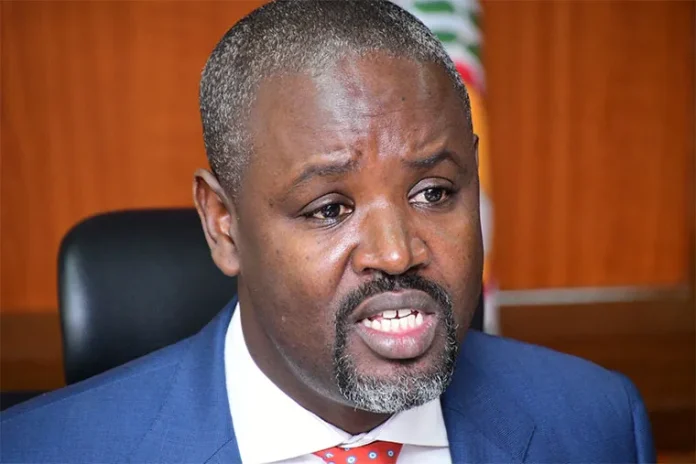
ONE YEAR ON: Rajiv Ruparelia’s memory lives on in love, legacy, and quiet strength

RIP Rajiv Ruparelia.

One year after the passing of Rajiv Ruparelia, his family has opened their hearts in a deeply emotional tribute that speaks to loss, love and the quiet strength that has carried them through the most difficult chapter of their lives.

In a message that resonates with raw honesty and grace, his parents, Sudhir Ruparelia and Jyotsna Ruparelia reflect on a year defined not only by grief, but by reflection, remembrance, and a renewed understanding of what it means to live with loss.

ā€œTo lose a son is to carry a silence the world cannot hear. A quiet, enduring ache that time does not erase, but gently reshapes,ā€they wrote.

For the Ruparelia family, the past twelve months have not been about moving on, but about learning how to move forward with Rajiv’s memory woven into every part of their lives. They describe grief not as something to overcome, but something to live with, drawing strength from the love that remains unbroken.

ā€œAs one year has passed, we have come to understand that grief is not something to overcome, but something we learn to live with, holding close the love that will never fade,ā€ the family shared.

Rajiv, who played a vital role in the growth and dynamism of the Ruparelia Group, was widely admired for his vision, energy, and ability to connect with people across all walks of life. To his father, he was more than a successor in business. He was a pillar of pride, a trusted companion, and a symbol of continuity for a family enterprise built over decades.

Those close to Sudhir Ruparelia often speak of the unique bond he shared with his son, a relationship that blended mentorship with deep personal affection. Rajiv’s presence in the business was not merely functional. It represented the future, a bridge between generations, and a reflection of values carefully nurtured over time.

In their tribute, the family emphasized that this bond remains unbroken.

ā€œIn that silence, the bond we share with our son remains alive. In every cherished memory, every story retold, and every act of kindness inspired by his life,ā€ they wrote.

Over the past year, Rajiv’s memory has continued to inspire quiet but meaningful acts across communities. Friends, business associates, and well wishers have come together in various ways to honor his life, from charitable outreach to community support initiatives that reflect his generous spirit. 

These memorial efforts, though not always publicized, have created a ripple effect, turning remembrance into action and grief into purpose.

Within the Ruparelia Group, his influence still lingers in both vision and culture. Colleagues remember his hands on approach, his warmth, and his ability to energize teams. His legacy is reflected in ongoing projects and the continued commitment to growth and excellence, values he championed during his time.

For the family, however, the most powerful legacy is deeply personal.

His presence is felt in everyday moments, in shared memories and in the quiet spaces where love continues to endure. They describe a sense of guidance that has not faded, but transformed.

ā€œHis presence continues to guide us, not in absence, but in the lasting imprint he has left on our hearts,ā€they said.

The family also extended heartfelt gratitude to all who stood by them during their time of grief, acknowledging the overwhelming support that has helped sustain them.

ā€œWe extend our deepest gratitude to all who have stood beside us through this journey. For your prayers, your compassion, and for keeping his memory alive with us,ā€ they noted.

As the first anniversary passes, the Ruparelia family makes it clear that remembrance is not confined to a single day or moment. It is a continuous journey, shaped by love, memory, and the enduring impact of a life that, though gone too soon, continues to inspire.

ā€œThough a year has passed, our remembrance is not bound by time. It lives on, steadfast, beautiful, and eternal,ā€ they wrote. 

In that enduring remembrance, Rajiv Ruparelia’s story remains alive, not only in the legacy he helped build, but in the countless lives he touched and the love that continues to define him.

Stories Continues after ad
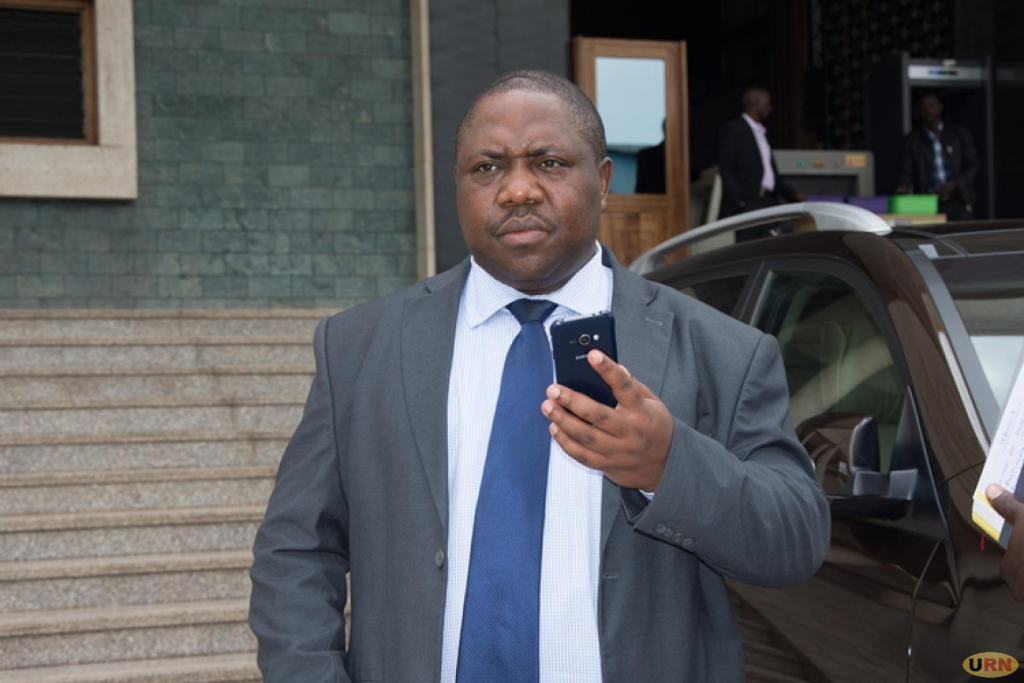
Senior lawyer and former Buganda Minister Peter Mulira passes on

RIP: Peter Mulira.

Kampala, Uganda — May 2, 2026 — Peter Mulira, a veteran Ugandan lawyer and former minister in the Buganda Kingdom government, has died at the age of 76.
His death, confirmed on Saturday, marks the loss of a seasoned legal mind whose influence stretched across constitutional debate, cultural governance, and public affairs in Uganda.

A distinguished legal career

Mulira was widely known for his depth of knowledge in constitutional law and governance. Over the years, he established himself as a consistent voice in Uganda’s legal circles, contributing to discussions on the rule of law and institutional development.
His legal practice and public commentary earned him respect among peers, with many turning to him for guidance on complex constitutional questions.

Service in Buganda Kingdom

In addition to his legal career, Mulira served in the Buganda Kingdom government as a minister, where he played a role in shaping policy and advising on matters concerning the kingdom’s administration.
He was part of a generation that helped redefine Buganda’s place within Uganda following the restoration of traditional institutions, often engaging in discussions about the balance between cultural authority and state governance.

Public image and intellectual influence

Mulira was frequently described by colleagues as a ā€œwalking encyclopedia,ā€ reflecting his extensive understanding of Uganda’s political and legal history.
His measured approach to public discourse, combined with a strong grounding in historical context, made him a respected figure in both academic and policy discussions.

Passing and early reactions

By the time of publication, details surrounding the cause of his death had not been publicly disclosed.
News of his passing has since drawn tributes from across the legal fraternity and cultural institutions, with many acknowledging his role as a mentor and thought leader.

Lasting impact

Mulira’s legacy is closely tied to:

His contribution to Uganda’s constitutional thought

His service within the Buganda Kingdom

His influence on legal scholarship and mentorship

His role in shaping governance conversations

His death signals the departure of a figure whose work helped define the intersection of law, culture, and governance in contemporary Uganda.

Stories Continues after ad

Corruption and mismanagement cited as UEDCL Board Chairperson, MD fired/sent on forced leaveĀ 

UEDCL Board Chairperson, Lydia Ochieng-Obbo, who has been fired, and the Managing Director, Paul Mwesigwa, have been sent on forced leave.

The Government has removed the Board Chairperson of Uganda Electricity Distribution Company Limited and sent the Managing Director on forced leave, in a shake-up aimed at strengthening governance and accountability within the state electricity distributor.

Eagle Online reliably informs that the fired Board Chairperson is Lydia Ochieng-Obbo, and the Managing Director sent on forced leave is Paul Mwesigwa.Ā 

The changes, announced by the Ministry of Energy and Mineral Development, took effect this week following a government-led review of the company’s management and operations.

Energy Minister Ruth Nankabirwa Ssentamu said the move is part of the efforts to reinforce oversight and institutional performance at the utility.

ā€œThe services of the Board Chairperson have been terminated, and the Managing Director placed on forced leave to allow for a comprehensive review of the company’s management and operations,ā€ she said.

The shake-up follows emerging governance and accountability concerns at UEDCL, although the government did not disclose specific individuals affected or detail the exact nature of the issues under review.

To stabilize operations, shareholders have appointed an Interim Board Chairperson to replace the outgoing office holder, while an Acting Managing Director has been installed to take charge of day-to-day operations during the transition.

ā€œThese interim arrangements will remain in place until the vacant positions are substantively filled,ā€ the Minister noted.

Despite the leadership changes, government was quick to reassure the public that electricity supply across the country remains stable.

ā€œUganda’s power supply remains stable and secure. However, to address emerging governance and accountability issues at UEDCL and strengthen oversight, the Government has undertaken targeted measures to safeguard service delivery and operational efficiency,ā€ the statement reads.

The intervention is a routine governance action rather than a response to a breakdown in service delivery.

ā€œThese actions are part of routine governance to reinforce accountability and institutional performance,ā€ the Minister added.

She further reassured consumers that there will be no disruption in electricity distribution during the transition.

She noted,ā€œI assure all Ugandans that electricity distribution services will continue uninterrupted during this transition.ā€

The development marks one of the most leadership changes at UEDCL since the company assumed a central role in Uganda’s electricity distribution as government moves to tighten control and improve efficiency in the sector.

Stories Continues after ad

Activist Bireete questions legitimacy of amended Sovereignty Bill

Ms Bireete, extreme right, while on Radio One's Spectrum show with other panelists and host Anderson Lukwago.

Kampala, Uganda — May 1, 2026 — Ugandan lawyer and governance advocate Sarah Bireete has cast doubt on the legitimacy of the ongoing legislative process surrounding the Sovereignty Bill, citing the scale of amendments introduced.
Bireete argued that the bill has been altered so extensively that it no longer reflects its original intent, and should instead have been withdrawn and reintroduced for fresh consideration.

ā€œThe amended bills have more than 50% change. Actually, the Sovereignty Bill should have been withdrawn — that would have been the right thing,ā€ she stated.

Her remarks add to growing scrutiny over how Parliament is handling the contentious piece of legislation, which has sparked debate across political and civil society circles.
Legal observers note that significant amendments to a bill can raise procedural concerns, particularly when they alter key provisions without reopening broader consultations. Bireete emphasized that such practices risk undermining public trust in the legislative process.
Originally framed as a tool to strengthen Uganda’s sovereignty in policy decision-making, the bill has since evolved through multiple revisions, drawing both support and criticism from different stakeholders.
Critics warn that without clear and consistent provisions, the law could face interpretation challenges or even legal disputes if passed in its current form.
As pressure builds, attention is now focused on whether Parliament will heed calls to reset the process or proceed with the bill despite the controversy surrounding its amendments.

Stories Continues after ad

Police recover gun, arrest 26-year-old in Kyengera security operation

The gun security operation recovered from Kyengera.

Wakiso District, Uganda — May 1, 2026 — Uganda Police have recovered an illegal firearm and arrested a suspect during an intelligence-led operation in Kyengera Town Council.
Kampala Metropolitan Police spokesperson Luke Owoyesigyire confirmed that officers from Nsangi and Kyengera divisions acted on a public tip-off, leading to the arrest of Kimbugwe Vincent, also known as Kasumali, aged 26.
Police said the suspect was apprehended in Massanda Cell, where a subsequent search of his residence resulted in the recovery of an AK-47 rifle.
Authorities noted that the firearm appeared rusted and had an obscured serial number, and it has since been taken for forensic examination to determine its source and possible use in previous incidents.

ā€œThe suspect is currently in custody as investigations continue,ā€ Owoyesigyire said.

Security officials praised members of the public for providing timely information that supported the operation, describing community cooperation as key in tackling illegal firearms.
Investigations are ongoing to establish whether the suspect is connected to any wider criminal network or illegal arms trafficking activities in the region.

Stories Continues after ad

That’s not the Sovereignty Bill I initiated- Museveni

President Yoweri Museveni.

President Yoweri Kaguta Museveni has clarified the intent of the proposed Sovereignty Bill, dismissing claims that it seeks to restrict foreign investment, remittances and financial support to religious institutions.

In a statement to the public, Museveni said the discussion around the Bill has been distorted by misinformation, stressing that the version circulating in public discourse is not the one he presented to Cabinet.

ā€œI have noticed a lot of noise regarding the Sovereignty Bill. Which Sovereignty Bill is the noise about? The one I initiated in Cabinet or another one? The claims that the Bill will stop foreign direct investments, support for religious bodies from abroad, or remittances are not true. That is not the Bill I initiated,ā€ he said.

The President explained that the proposed legislation is rooted in protecting Uganda’s independence in policy decision making, drawing from Africa’s long struggle against colonialism and external control.

ā€œThe sovereignty we fought for is about policy decision making. It is about deciding on political, social, economic, and diplomatic issues as a country without interference,ā€ Museveni said.

He stressed that sovereignty means Uganda must be allowed to determine its path without external pressure, particularly through funding aimed at influencing national decisions.

ā€œSovereignty means please leave us alone so that we make our own decisions. Do not fund groups to influence our decisions as a country,ā€ he said.

Museveni also reassured Ugandans that the country’s liberal economic framework remains unchanged, noting that the Bill does not in any way interfere with financial flows or private sector activity.

ā€œNone of our policies says do not send money to Uganda or take it out. We run a free economy. Forex is bought and sold in privately run bureaus, and this freedom is the strength of our economy,ā€ he said.

He added that the flexibility of the private sector has continued to sustain economic growth despite inefficiencies within sections of the public service.

ā€œThe freedom of the private sector compensates for the obstruction of corrupt or non patriotic public servants and political opportunists,ā€ Museveni said.

The President revealed that he has already engaged parliamentary leaders to ensure the Bill remains focused strictly on safeguarding policy independence and does not extend into areas that could disrupt economic activity.

ā€œI have talked to the relevant leaders in Parliament to make the Bill concentrate on the sovereignty of policy decision making and not to meander into private enterprise or money transfers,ā€ he said.

He further cautioned against attempts to influence Uganda’s internal affairs through coercion or financial pressure, urging instead for persuasion through example.

ā€œInfluence people by example and not by coercion or manipulation,ā€ Museveni said.

The clarification comes amid heightened public debate over the proposed legislation, with sections of the public expressing concern about its potential implications.

Museveni also reaffirmed Uganda’s commitment to independence and self determination.

Stories Continues after ad

Toddler killer Okello sentenced to death

Killer Christopher Okello Onyum.

Justice Alice Komuhangi Khaukha has sentenced Christopher Okello Onyum to killing four toddlers aged between one and two years at the Ggaba Early Childhood Development Centre, early this month.
While sentencing Okello, Justice Komuhangi said she took into consideration several factors, including the prosecution evidence, the defence mitigation requests, and the fact that Okello wasn’t remorseful for his actions.
She further noted that the case fell among the rarest of the rare cases, since Okello committed the murders as a blood sacrifice for wealth, he meticulously planned and premediated the killings in which he attacked defenceless innocent children on April 02nd, who depend on adults for their protection and survival, among other things, to pass the sentence.

ā€œI agree with the prosecution that this case falls in the rarest of the rare, the probation officer informed court that he heard from the community that such offences has never happened in the area, having said that, the convict must be given a sentence that will not speak to him but also to his friend of his that he refused to disclose and any people out there who believe in sacrificing blood for wealthā€ she said.
Justice Komuhangi noted that in light of the circumstances found in the case, she didn’t find any reason as to why she shouldn’t sentence Okello to the maximum penalty of death.
ā€œI hereby sentence you to suffer death for the murder of Eteku Gideon in count one, Keisha Ageno Ruth in count two, Sseruyange Ignatius in count three, and Odeke Rayan in count four, in a manner authorised by law,ā€ she said.
Justice Komuhangi informed Okello that he had the right to appeal the sentence within 14 days before the Court of Appeal.
During mitigation, Chief State Attorney Mr Jonathan Muwanganya called for a deterrent sentence to achieve the vision of a safe society while referring to the case of imprisoned Masaka businessman Kato Kajubi, who killed a boy for blood money sacrifices.
ā€œIf this court is pleased to issue the highest sentence, the children of our beloved nation will be safer because their tormentor would have been permanently eliminated from circulation. My lord, if you’re not persuaded to issue the highest sentence of death, at least be pleased to pass a sentence of imprisonment for life, so that the convict stays behind the bars, all his natural life; it’s only then that our society will be safer without him,ā€ he said.
Mr Peter Lwanga Mayanja, a probation officer at KCCA, told the court that upon interaction with residents in the Ggaba area, he found them to be in great shock.
ā€œThey all informed me that they had never seen anything like this ever committed,ā€ he said.
The court further heard from the parents of the deceased toddlers, who agreed with the prosecution’s request for the harshest sentence.
However, when given an opportunity to address the court, Okello, who appeared calm and composed throughout the trial, declined to talk and only nodded his head while holding the microphone.
ā€œYes, My Lord, I don’t have anything to say,ā€ Okello told the court when pressed by the judge to say something or at least apologise for the crime he committed.
Okello’s defence lawyer, Sarah Awilo, during mitigation, asked for a lenient sentence since Okello was a first-time offender with no previous conviction or no relevant or recent conviction, suffers from sickle cell, and can still be productive to the community since he bought land in Nwoya to farm.
She further told the court to consider that Okello comes from a broken, dysfunctional family where the siblings don’t talk to each other.
ā€œBroken and dysfunctional families always lead to dysfunctional people, and as a society, we need to work hard to see that every family that is broken and dysfunctional comes back together, but this can only be done as a society. We pray that the period the convict has spent on remand is taken into account, and we trust this honourable court will come up with a fair and just sentence,ā€ she said.
Justice Komuhangi’s sentence sent the gallery into jubilation, with many applauding the death sentence for Okello.
The last civilian executions in Uganda, where 28 people were hanged at Luzira Maximum Security Prison, took place in April 1999.

Stories Continues after ad

Museveni proposes tax exemption for scientists to boost economic growth

President Yoweri Museveni.

President Yoweri Kaguta Museveni has revealed plans to propose the removal of Pay As You Earn (PAYE) tax on scientists with an aim to strengthen Uganda’s scientific community and accelerate economic transformation.

Speaking during a public address, Museveni said the government has already taken deliberate steps to improve the welfare of scientists, including enhancing their salaries despite resistance from some stakeholders.

ā€œI have been working to stabilize our science community. That’s why although I had opposition from other people, I insisted on increasing the pay of the scientists,ā€ Museveni said.

However, Museveni noted that the impact of salary increments is significantly reduced by taxation, leaving scientists with limited take-home pay.

ā€œBut I would want us to do more. Because the scientists, even when you give them what we gave them, starting pay, with a tax of thirty percent, they go back to very little,ā€he explained.

Museveni pointed to existing tax exemptions granted to security forces as a model worth extending to scientists, emphasizing their critical role in national development.

ā€œFor the soldiers and the policemen, we give them tax-free pay. They don’t pay tax. You Ugandans, if you really want your economy to stabilize, what if we treated these scientists as soldiers and said, ā€˜okay, you are doing a special job, the little you have got, your tax is exempt,ā€he proposed.

He stressed that scientists are relatively few in number but have a disproportionately large impact on the economy, particularly through innovation, agriculture, and job creation.

ā€œThey are not many. They are not like other people. Like this one, there are about sixteen institutions, but all of them are now employing seven hundred people. So that is a big number,ā€Museveni said.

The President also indicated that similar measures could be extended to other critical professions such as doctors and engineers, noting that targeted incentives are essential for sectors that directly drive development.

ā€œSo you have to do it for the doctors. And we did the same for the doctors so they stabilize. And the engineers, they are not very many. This is what I am going to propose,ā€he added.

In a passionate remark, Museveni underscored his commitment to the proposal, framing it as a matter of national importance.

ā€œIf they kill me, then you know that I have died for the truth. I will die like Jesus died for the truth,ā€ he said.

The President further highlighted the central role of science in solving practical challenges facing the country, particularly in agriculture.

ā€œYou may quote literature and Shakespeare, but that will not solve the problem of ticks. These scientists, as you see the impact they will have in agriculture, is very big,ā€ he noted.

Museveni called for greater prioritization of scientific disciplines in national planning, urging other sectors to support and complement the work of scientists in building a resilient and productive economy.

The proposal will be tabled for discussion in the next government, where policymakers will consider its implications on revenue and national development priorities.

Stories Continues after ad

Gov’t secures Shs11b to improve clean energy access in Uganda

Officials from Absa Bank Uganda and the Uganda Energy Credit Capitalisation Company (UECCC) during the signing of a Shs11.085 billion concessional financing agreement.

Uganda’s energy transition has gained fresh momentum after Absa Bank Uganda and the Uganda Energy Credit Capitalisation Company (UECCC) signed a Shs11.085 billion concessional financing agreement to accelerate access to affordable clean energy solutions nationwide.

The facility, anchored under government’s Electricity Access Scale-Up Project, is designed to unlock financing for solar home systems, institutional solar installations, productive-use equipment for small businesses, and clean cooking technologies.

It comes at a critical juncture for Uganda’s energy sector, where gains in electricity generation have yet to translate into widespread access fully. Although installed capacity has surpassed 2,000 megawatts, national electrification remains uneven, averaging about 60 per cent. Rural access lags significantly at 42.4 per cent, compared to 76.4 per cent in urban areas.

Underlying these figures is a deeper structural challenge. High connection costs, limited grid expansion, and restricted access to off-grid financing continue to hinder adoption, leaving more than 90 per cent of households reliant on firewood and charcoal, with mounting economic and environmental consequences.

The new partnership seeks to alter this trajectory by addressing one of the sector’s most persistent barriers: affordable financing.

Under the arrangement, UECCC will extend concessional capital to Absa Bank Uganda, which will in turn on-lend to approved energy service companies such as Greenlight Planet Uganda Limited. These firms will finance the large-scale deployment of clean energy solutions, supported by enhanced liquidity and working capital.

The three-year facility will be disbursed in performance-based tranches, with lending capped at 15 per cent per annum. The structure is intended to reduce the cost of capital, improve affordability for end users, and sustain commercially viable private sector participation.

Absa Bank Uganda Managing Director David Wandera said the agreement reflects the bank’s strategic shift towards financing solutions that address both market demands and climate realities.

ā€œThis partnership enables us to support clients transitioning to clean energy through more accessible and well-structured financing solutions. By combining concessional capital with our lending expertise, we can better manage climate-related risks while unlocking opportunities in underserved sectors,ā€ Wandera said.

He added that Absa is deliberately expanding its sustainable finance portfolio to channel capital towards low-carbon growth and long-term economic resilience.

UECCC Managing Director Roy Nyamutale Baguma described the partnership as a significant step in mobilising private capital into Uganda’s renewable energy sector.

ā€œBy working with Absa Bank Uganda, we are able to channel concessional funding through the banking system, enabling energy companies to scale while ensuring financing remains accessible and grounded in strong environmental and social standards,ā€ he said.

Beyond improving household energy access, the facility is expected to generate wider economic benefits, including enhanced SME productivity, expanded markets for clean energy providers, and a stronger energy value chain.

More broadly, the deal signals a shift in how Uganda is financing development, with blended finance structures increasingly being used to de-risk sectors that have traditionally struggled to attract large-scale private investment.

For Absa, the partnership represents more than a funding arrangement. It is a strategic investment in the future of sustainable finance in Uganda, where banking is becoming increasingly aligned with environmental outcomes.

As demand for clean energy grows, the message from this agreement is clear: the transition is no longer solely about expanding infrastructure. It is also about who finances it, how it is financed, and how quickly capital reaches those who need it most.

Stories Continues after ad